

Mingxin Health Bridges Payment Gaps for China's 20 Million Rare Disease Patients Ahead of HK IPO
Given the large population base, rare diseases are not actually rare in China.
According to statistics, there are nearly 7,000 internationally recognized rare diseases, and China currently has approximately 20 million patients with various rare diseases. This large patient population has long faced a series of predicaments, including high misdiagnosis rates, prolonged time to diagnosis, low treatment rates, scarcity of pharmaceuticals, limited access to medical security coverage, and heavy economic burdens.
Fortunately, in recent years, driven by the active advocacy of various patient organizations and caring individuals across society, relevant policies are being introduced, and numerous innovative enterprises are actively helping patients address their practical needs. For instance, the “Love Is Not Rare, Health Payment Goes Hand in Hand” launch event, hosted by Shanghai Medbanks Health Technology Co., Ltd. (hereinafter referred to as “Medbanks Health”), was recently held in Shanghai.
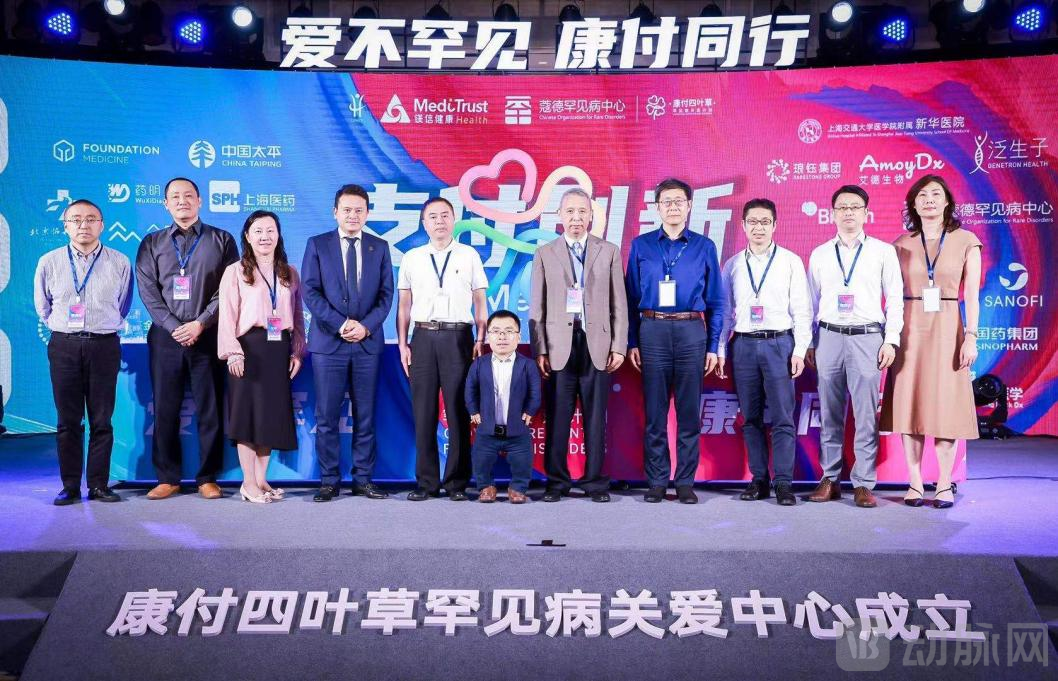
On the day of the event, Magnesium Health announced a series of initiatives aimed at building a protective “safety net” for patients with rare diseases through comprehensive innovative payment solutions, and at further advancing the improvement and development of China’s rare disease diagnosis and treatment system.
Specifically, this includes the establishment of the “Kangfu·Four-Leaf Clover Rare Disease Care Center,” which places payment at its core and collaborates with ecosystem partners across the industry to provide comprehensive service guarantees for patients with rare diseases:
I.Product Innovation in Commercial Health Insurance:Based on broad-coverage products (student accident insurance, million-yuan medical insurance) as the foundation, with specific products as an extension;
II.Expansion of the City-Specific Inclusive Insurance Catalog: On the basis of ensuring sustainable project operations, expand coverage for rare disease medications by broadening the formulary;
III.Innovative Payment and Patient Services:
– For self-paying patients, the flexible application of innovative payment methods serves as a key link in resolving the “last mile” challenge of payment, thereby contributing to a multi-tiered medical security system;
– Leveraging internet hospitals and diversified payment methods to further build a multi-tiered patient service system centered on patients, including convenient medication supply, multidisciplinary and remote consultations, disease education, patient care, precise monitoring, early screening guidance, psychological counseling, and the introduction of overseas specially approved drugs.
IV.Charitable Foundation Donation: Establish a special fund for rare diseases to alleviate the financial burden on patients.
Why has Magnesium Health focused on the field of rare diseases? What is the underlying logic? And how will it improve the accessibility of drugs for rare diseases? VCBeat has compiled and analyzed these issues.
As is well known,The Medication Burden for Patients with Rare Diseases Is Extremely High. According to the “2019 Comprehensive Social Survey of Rare Disease Patients in China,” conducted with the participation of the Chinese Alliance for Rare Diseases and Peking Union Medical College Hospital, nearly half (49.2%) of rare disease patient households had an annual income below RMB 50,000, including 2.4% of households that reported no income at all in 2018. Against this backdrop,Reducing the medication burden for patients with rare diseases has become one of the core issues of greatest concern to governments and industry stakeholders.
On the day of the event,“The establishment of the ‘Kangfu Four-Leaf Clover Rare Disease Care Center’ is undoubtedly the most eye-catching”, it is a significant initiative by MedXin Health, in collaboration with resources from all sectors of society, to improve the accessibility and convenience of diagnosis, treatment, and medication for patients with rare diseases, as well as to address challenges in medical payment.
“The launch of this project is of great significance for improving the accessibility of therapeutic drugs and alleviating the difficulties and high costs faced by patients in seeking medical care,” said Zhou Qingnian, Vice Chairman and Secretary-General of the China Primary Health Care Foundation, at the conference.
Huang Rufang, Founder of the Cord Rare Disease Center, also stated in his address: “The advancement of rare disease care requires joint efforts from diverse stakeholders across the industry. We look forward to collaborating with MedXin Health to enhance the accessibility and convenience of diagnosis, treatment, and medication for rare disease patients through multi-party cooperation, thereby promoting the healthy development of the entire rare disease treatment landscape.”
Not only that,Magi Health has also launched the Yao Kang Fu Comprehensive Solution for Rare Diseases, focusing on commercial health insurance product innovation, expansion of urban inclusive insurance catalogs, innovative payment and patient services, and charitable foundation donations, to provide more comprehensive service protection for patients with rare diseases.
In terms of product innovation in commercial health insurance,Magpie Health Joins Hands with China Re and Taiping Pension to Jointly Innovate and Upgrade Student Accident Insurance, building upon the coverage provided by existing student accident insurance, we have selected high-incidence malignant tumors, rare diseases, and specific chronic conditions (such as diabetes) among students to supplement multiple layers of protection, including specialized drugs for malignant tumors, medications for rare diseases, and chronic disease management. “Basing our approach on broadly covered products and extending it with targeted offerings will become a key strategy in developing solutions for rare diseases,” said Yang Su, General Manager of the Health Insurance Division at MedXin Health.
Why has Magnesium Health been able to rapidly enter the rare disease field? Why can the “Kangfu · Four-Leaf Clover Rare Disease Care Center” improve medication accessibility and streamline payment pathways? This is related to Magnesium Health’s “corporate DNA”:As a leading innovative healthcare service brand in China, Medbanks Health starts from the payment side by aggregating the needs of self-pay patients. By integrating the upstream and downstream segments of the medical value chain, it enables patients to access cutting-edge pharmaceuticals and medical services more conveniently and at a lower cost.
Taking “Yao Kang Fu,” an innovative medical payment and patient benefits platform under Magnesium Health, as an example, the platform provides patients with “Internet + healthcare management” services. By leveraging innovative payment models, innovative retail channels, and innovative services, Yao Kang Fu deeply integrates a value chain between chronic disease management and specialty pharmaceuticals. It brings together pharmaceutical companies, pharmacies, and commercial insurance providers, thereby addressing long-standing challenges such as difficulties in accessing medications, high drug costs, and lack of efficacy guarantees for patients, while simultaneously enabling pharmaceutical companies to achieve precise sales outreach and efficient conversion.
As of now,Yaokangfu has become one of the most influential comprehensive pharmaceutical benefit brands in China.Data shows that Yaokangfu has established partnerships with over 50 pharmaceutical companies, listing a variety of rare disease medications. Its business covers 90% of the DTP pharmacy network across China, spanning more than 400 cities, benefiting millions of patients, and cumulatively saving them over RMB 1 billion in medical expenses.
“We will actively facilitate the interconnectivity of rare disease diagnosis and treatment, break down the ‘information silos’ among insurance, healthcare, and pharmaceutical sectors in the field of rare diseases, and contribute MedXin Health’s strength to solidifying the multi-party payment model for rare diseases,” said Zhang Xiaodong, CEO of MedXin Health.
Since its inception, MedXin Health has been committed to innovating medical payment models by leveraging “Internet+” to connect patients, pharmaceutical companies, and commercial insurance providers, thereby promoting the deep integration of financial instruments with the healthcare sector, in order to realize its corporate vision of “universal coverage for all and healthy living for every family.”The establishment of the “Kangfu·Four-Leaf Clover Rare Disease Care Center” marks another significant practice and breakthrough in Medxjoy’s innovative medical payment model.
According to data from the National Health Commission, out-of-pocket expenditures by patients in China currently account for approximately 50% of the total healthcare market size, amounting to roughly RMB 1.2 trillion. This proportion is even higher in the fields of major diseases such as cancer and innovative therapies, placing a greater financial burden on patients. Although basic medical insurance provides fundamental coverage and commercial health insurance serves as a supplement,Even after suffering from serious illnesses, the public remains vulnerable to “poverty caused by illness” and “relapse into poverty due to illness.”
To this end,Magxin Health: Starting from the Payment End, Continuously Exploring the Boundaries of Healthcare ServicesFor example, in the insurance sector, Magnesium Health has been actively expanding its city-specific inclusive supplementary medical insurance business since 2019, launching products such as “Su Hui Bao” and “Hangzhou Citizen Insurance.” By the end of 2020, Magnesium Health’s urban supplementary medical insurance programs had covered 34 cities, with a cumulative total of 20 million policies issued, providing patients with tangible medical security.Magxin Health has further expanded coverage for rare disease medications in the inclusive insurance programs launched across multiple cities by broadening the formulary.: Hangzhou’s “Xihu Yilianbao” includes medical coverage for six rare disease medications, with a reimbursement rate of up to 60%; Shanghai’s “Huhuibao,” launched in May this year, also receives exclusive drug support from Medbanks. In its coverage for specific high-cost medications, it has recently added five drugs, including Fabryzyme and Haerysi, for the treatment of four rare diseases. These initiatives have significantly reduced the out-of-pocket medical expenses for families of patients with rare diseases.
In addition, Magnesium Health has successively launched multiple innovative services, including financial installment plans for high-value medications and efficacy insurance. Specifically, in collaboration with commercial insurance companies, Magnesium Health has introduced nearly 50 medication insurance products. Building on this foundation, the company has developed more comprehensive health insurance innovations covering medications, medical devices, and novel therapies, delivering high-quality services to tens of millions of healthy individuals and families.
By focusing on rare diseases, Magi Health’s latest move is undoubtedly another innovative attempt.It is important to recognize that although the rare disease market holds significant potential with a patient population of nearly 20 million, it faces numerous challenges. “China lacks clinical practice guidelines and consensus statements for rare diseases based on international standards, and capabilities in disease identification, diagnosis, and treatment remain weak,” stated Professor Yuan Yun, Chief Physician at Peking University First Hospital and President-Elect of the Rare Disease Branch of the Beijing Medical Association. He expressed hope that all stakeholders would ensure the sustainable development of the rare disease discipline by providing support in areas such as infrastructure, talent pipeline development, medical equipment, and pharmaceuticals, while strengthening management and improving the accessibility of diagnosis and treatment.
As can be seen, Magi Health is actively building an “Internet + Healthcare + Pharmaceuticals + Insurance” ecosystem, benefiting more patients through integrated innovation and ultimately contributing to the well-being of society.
Notably, the establishment of a special fund for rare diseases and the provision of educational content on rare diseases at this launch ceremony are concrete manifestations of MedXin Health’s commitment to corporate social responsibility. In other words,In addition to its strategic presence in commercial health insurance, MedXin Health is also advancing the development of a multi-tiered medical security system through public welfare initiatives.
This aligns perfectly with China's policy trends.In February last year, the State Council issued the “Opinions on Deepening the Reform of the Medical Security System,” further clarifying the need to accelerate the establishment of a multi-tiered medical security system and promote reforms in payment methods and supply-side structural reform of pharmaceutical and healthcare services.
Driven by this policy,China’s healthcare delivery, medication use, and payment systems are accelerating their optimization and evolving toward a multi-tiered medical security system.“In recent years, with the introduction of a series of national policies, China’s rare disease diagnosis and treatment system has been gradually improved. Relying on resources from all sectors of society and implementing multi-party payment mechanisms are crucial to establishing a multi-tiered social security system for rare diseases,” said Jin Chunlin, Director of the Shanghai Health Development Research Center.
Following the trend, technology-driven companies such as Magnesium Health have entered the health insurance industry through digitalization, leveraging internet technologies to address the issue of infrequent communication between insurers and customers, therebyIt has brought about a triple transformation in user experience, distribution channels, and marketing for the insurance industry, returning insurance to its essence.From the user’s perspective, after purchasing health insurance, users can receive long-term health promotion and health improvement,transforming the role of insurance from a mere post-event “payer” into a genuine service provider and companion.As a result, users’ health coverage has gained broader value potential.
Interestingly, the event took place on the eve of Children’s Day. With public welfare support from MedTrust Health, CORD launched the “Family Dream Travel Plan” series of activities. MedTrust Health volunteers joined 20 families of children with rare diseases for a fun-filled day at Shanghai Disney Resort, allowing these children to experience the wonder and excitement of a fairy-tale world and presenting them with a unique Children’s Day gift.
 (Rare Disease Children’s Families Enjoy Shanghai Disneyland)
“As a renowned expert in the field of rare pediatric diseases, Professor Wang Yi specifically highlighted the unique characteristics of these conditions at the event, noting that over 80% are genetic disorders and 50% manifest during childhood.”Currently, rare diseases in children face significant challenges in disease-modifying therapies, precision medicine, and drug accessibility., we look forward to increasing participation from various sectors of society to effectively reduce the disease burden on patients, ensure medication affordability, and make compassionate care accessible.”
“Addressing the challenges of rare diseases requires a comprehensive approach encompassing policy design, enhancement of medical services, assurance of drug supply, innovation in healthcare payment mechanisms, and public welfare assistance,” said Zhang Xiaodong, CEO of Medbanks Health. “We believe that through collaborative efforts across all sectors of society, we can usher in a new era for the diagnosis and treatment of rare diseases, further improve healthcare accessibility, and better enhance patients’ quality of life.”
Global business history has proven that,An excellent enterprise not only demonstrates value within its industrial chain but also extends that value outward, assuming greater social responsibility.Magnesium Health’s user-centric, comprehensive health services exemplify its ongoing commitment to fulfilling social responsibilities.
We have reason to believe that, with the participation of more outstanding enterprises, public welfare organizations, and individuals from all walks of life, China’s multi-tiered medical security system will make even greater strides.