

Med-Zenith's E-Chord™ Achieves Global First-in-Human Application in Percutaneous Mitral Chordal Reconstruction Surgery
Recent Major Breakthrough in China’s Interventional Mitral Valve Diagnosis and Treatment: On May 27, 2021, Professor Wang Chunsheng and Professor Wei Lai’s team from the Department of Cardiac Surgery at Zhongshan Hospital, Fudan University, successfully performed Asia’s first percutaneous mitral valve chordae tendineae reconstruction using the E-Chord™ Mitral Valve Repair System developed by Beijing Medvalley Medical Technology Co., Ltd. This case also marked the first patient application of the E-Chord™ system worldwide.
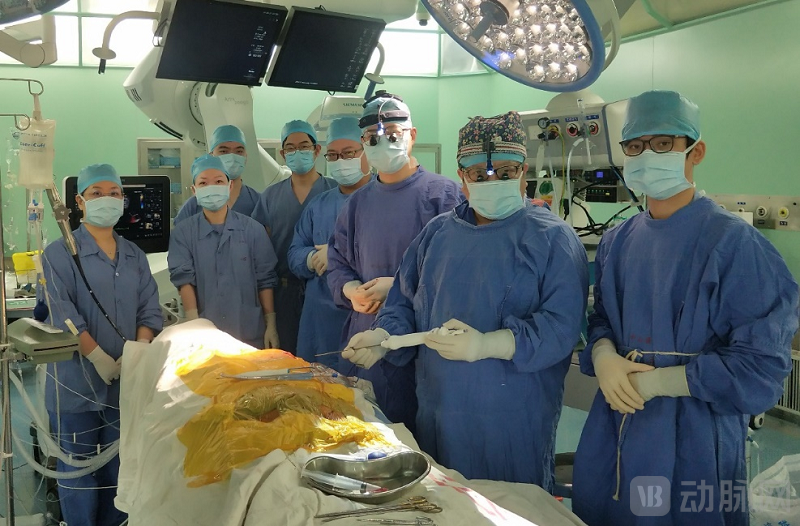
The patient presented with posterior mitral leaflet prolapse, ruptured chordae tendineae, and severe regurgitation prior to surgery. Due to the patient’s concurrent chronic renal insufficiency, the risk associated with conventional surgical intervention was deemed high. Following comprehensive analysis and evaluation by the Zhongshan Heart Team, it was decided to perform “Puncture-Based Mitral Chordae Reconstruction” using the E-Chord™ Mitral Valve Repair Device, which was successfully developed over five years through a collaborative effort between Beijing Medtronic Peak Company and Zhongshan Hospital.
During the procedure, the E-Chord™ device, independently developed by Medtop with a diameter of only 3 mm, played a crucial role. Guided precisely by echocardiography, Professor Wei Lai performed positioning and puncture via the patient’s cardiac apex. Within just one hour, three pairs of artificial chordae tendineae were implanted onto the leaflets of the mitral valve. Throughout the operation, the patient’s heart continued to beat normally, resulting in minimal surgical trauma and virtually no bleeding. Upon completion of the surgery, mitral regurgitation was completely eliminated. The patient recovered rapidly and was discharged smoothly on the third postoperative day. A pre-discharge echocardiographic re-examination showed that the previously slightly enlarged left atrial diameter had significantly decreased to within the normal range (from 45 mm preoperatively to 40 mm), with normal mitral valve structure and function and no evidence of regurgitation.

Preoperative Severe Mitral Regurgitation
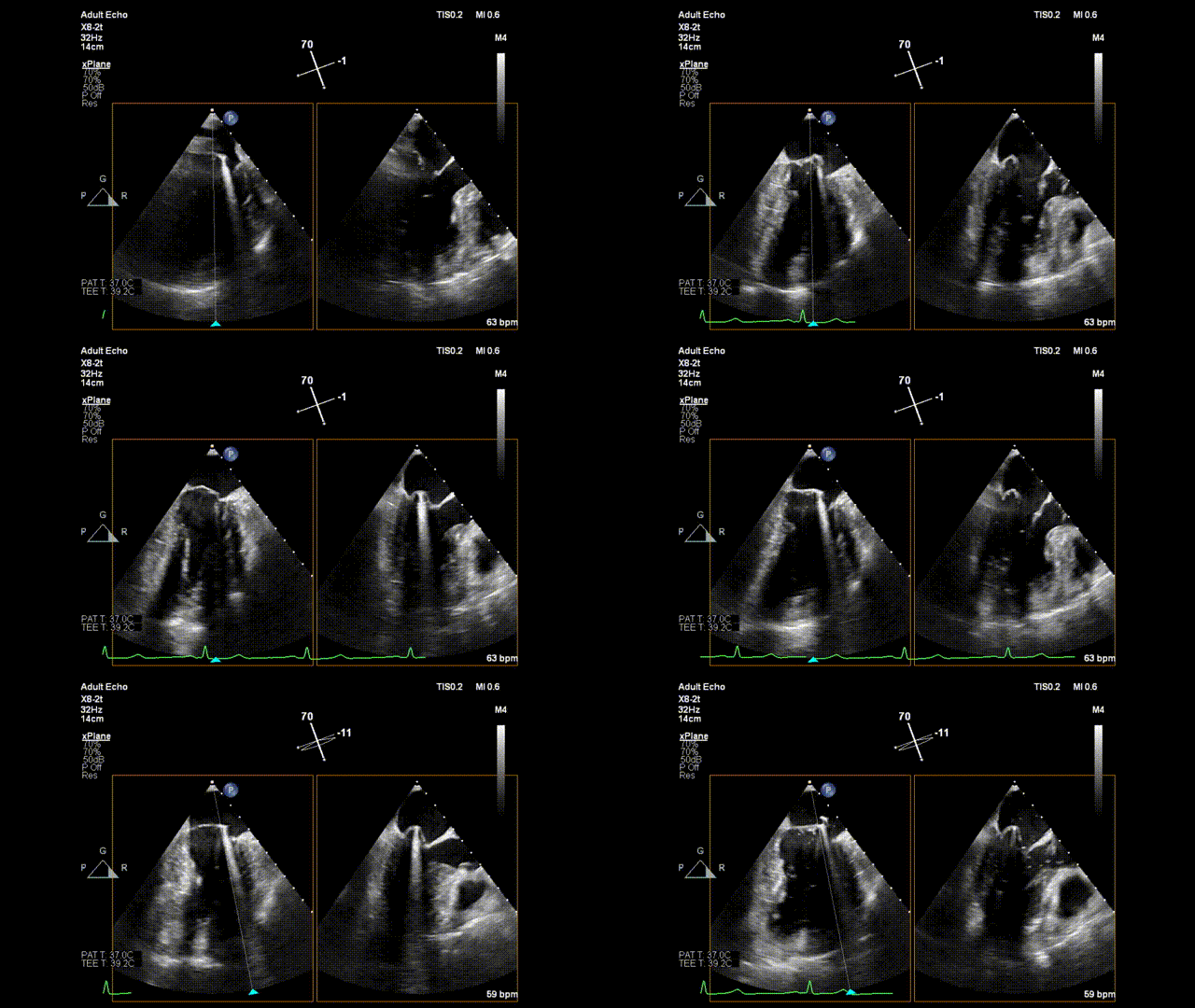
Intraoperative Device Deployment
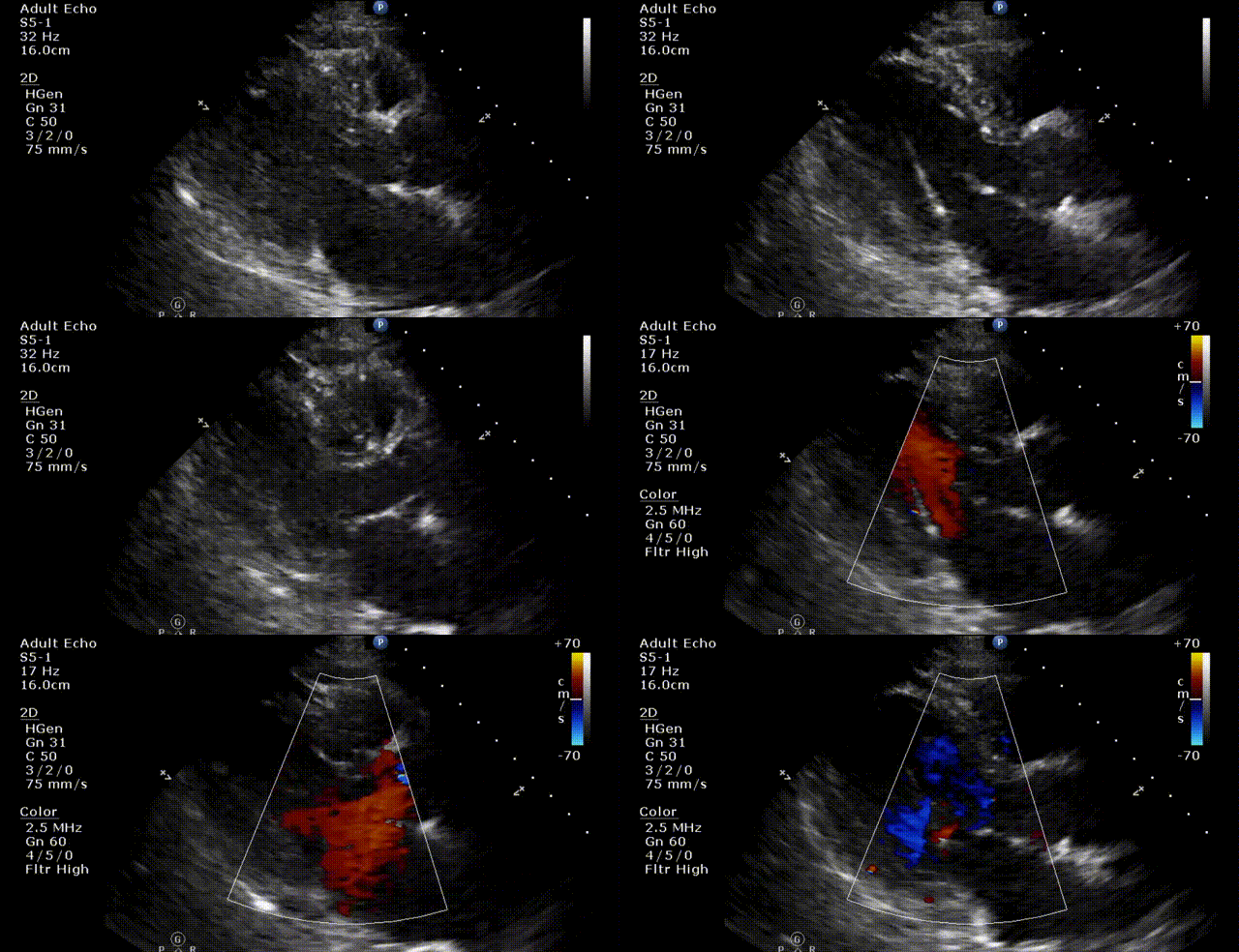
Mitral regurgitation resolved at the conclusion of surgery.
Pre-discharge reexamination three days postoperatively showed no mitral regurgitation.
Mitral regurgitation (MR) is the most common valvular heart disease, with a prevalence far exceeding that of aortic stenosis. Its prevalence exceeds 10% in individuals older than 75 years (Lancet, 2006). In China, there are millions of patients with moderate-to-severe or severe mitral regurgitation (MR ≥ grade 3) who require treatment; once severe heart failure develops, the annual mortality rate reaches 34% (NEJM, 1996). Although conventional surgical intervention yields definitive outcomes, it is associated with drawbacks such as significant invasiveness, prolonged operative time, substantial blood loss, and slow recovery. The application of minimally invasive transcatheter mitral valve interventions will bring benefit and hope to patients with moderate-to-severe mitral regurgitation, particularly those at high surgical risk or with contraindications to surgery.
Dozens of mitral valve-related interventional devices are currently under development worldwide. However, due to the anatomical and functional complexity of the mitral valve, only a handful of products have successfully completed development and obtained CE marking in Europe and FDA approval in the United States. Most domestic and international mitral valve repair products adopt approaches such as implanting artificial chordae by grasping the leaflet edges or achieving edge-to-edge coaptation. Upholding the spirit of independent innovation, Beijing Medtop Medical Technology Co., Ltd. organized a team of engineers to work in close collaboration with experts from the Department of Cardiac Surgery and the Department of Echocardiography at Zhongshan Hospital. After five years of effort, the company successfully developed E-Chord, the first product in Asia to utilize a puncture-based approach for implanting artificial chordae tendineae.™Mitral Valve Repair Device.
The design concept of the E-Chord™ mitral valve repair device is derived from surgical techniques, achieving physiological repair of the mitral valve through a minimally invasive approach. In this case, the E-Chord™ device demonstrated excellent echogenicity under ultrasound, with flexible maneuverability, clear orientation, and precise positioning of the chordae tendineae implantation sites. Leaflet puncture and chordae release were performed synchronously, making the procedure rapid and straightforward. As the heart continued to beat, the artificial chordae could be precisely adjusted in length and fixed under ultrasound guidance according to the patient’s physiological status. In addition to enabling chordal repair, the E-Chord™ device can be used in conjunction with MedTop’s commercially available product, Easy-Knot.ⓇIn theory, it can also be used to achieve "edge-to-edge" repair of the mitral valve leaflets, triangular plication, and "annuloplasty" of the mitral/tricuspid annulus.
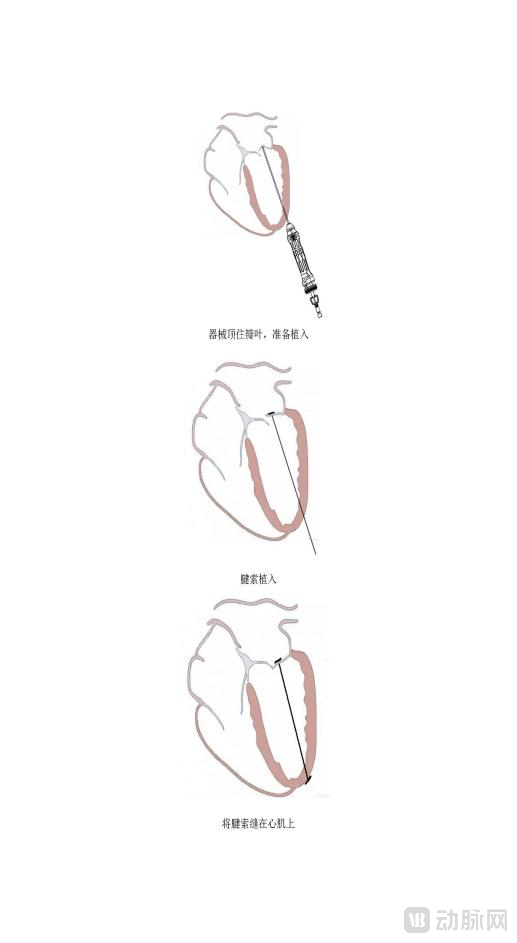
According to Professor Wei Lai, the E-Chord™ mitral chordae tendineae reconstruction procedure offers the following advantages compared with other minimally invasive interventional mitral valve procedures:
(1)More Physiological: Specifically designed for mitral valve leaflet elongation, prolapse, and chordae tendineae rupture, it enables physiological reconstruction of the normal mitral valve anatomy without compromising the valve orifice area or increasing transvalvular flow resistance;
(2)Less Trauma: The delivery catheter for the puncture needle has a diameter of only 3 mm and can be further reduced, resulting in negligible trauma to the cardiac apex; it requires neither cardiopulmonary bypass nor damage to peripheral vessels or the interatrial septum;
(3)Broader Applicability: Thanks to the ultra-fine diameter and precise positioning of the puncture needle, lesions in zones 1 to 3 can be treated when anatomical conditions are favorable; theoretically, it can also be combined with the "edge-to-edge" technique to treat the most challenging junctional zone lesions, which may be unique worldwide;
(4)Scalable: In addition to chordae tendineae reconstruction, reversible triangular plication of the posterior mitral leaflet and mitral annuloplasty “ring cinching” may be attempted in the future; this approach is also a worldwide innovation.
(5)No Radiation: The entire procedure requires only ultrasound guidance, involves no radiation, is truly "green" and environmentally friendly, and can be performed in a standard operating room;
(6)Easy to Promote: The surgical procedure is simple and rapid, with a short learning curve, thereby facilitating wider adoption of the technique.
Innovation knows no bounds, and the future holds even greater promise! As an innovative enterprise in China’s high-end medical sector, Medtop will further advance the clinical application of the E-Chord™ Mitral Valve Repair System, providing more robust technical solutions for the diagnosis and treatment of cardiovascular diseases in China. This will enable more optimized and precise therapies for a broad population of cardiovascular patients, while positioning Chinese companies on par with leading global enterprises in the field of transcatheter mitral valve repair devices and related R&D.