

Boao Global Health Forum Signals WHO's Strategic Focus on Digital Health; WeDoctor Files IPO Prospectus
From June 2 to 4, the 2nd Boao Forum for Asia Global Health Conference was held in Qingdao, Shandong Province. Themed “Health for All: The 2030 Era of Sustainable Development,” the forum brought together guests from various sectors around the world to the beautiful island city, combining online and offline formats to jointly discuss the development of global health undertakings and international cooperation in the health sector. Distinguished attendees included Li Bin, Vice Chairperson of the National Committee of the Chinese People's Political Consultative Conference; Ban Ki-moon, Chairman of the Boao Forum for Asia; Zhou Xiaochuan, Vice Chairman of the Boao Forum for Asia; and Liu Jiayi, Secretary of the Shandong Provincial Committee of the Communist Party of China, along with government officials from various countries, heads of international organizations, and experts and scholars. Margaret Chan, former Director-General of the World Health Organization and Chair of the Global Health Conference, presided over the opening ceremony.
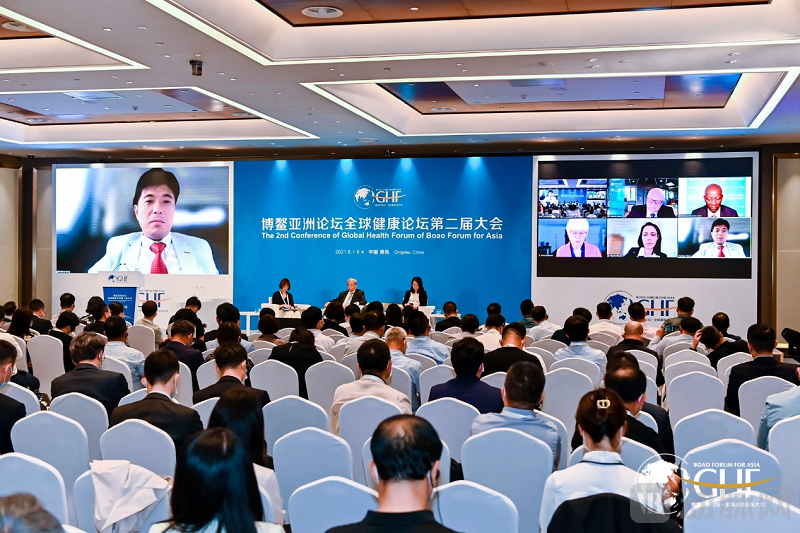
During the conference, focusing onUnder the theme “Innovation for Health – Digital Healthcare: Disruption and Innovation,” Bernardo Mariano, Director of the Department of Digital Health and Innovation and Chief Information Officer at the World Health Organization; Wang Yang, President and Chief Technology Officer of WeDoctor Group; Wen Ku, Vice Chairman and Secretary-General of the China Communications Standards Association; and the Development Research Center of the State Council⼼Qiu Yue, Researcher and Director of the Second Research Department at the China Development Research Foundation; Professor Ai Fei at ETH Zurich· Ilona Kickbusch, Founder and Chair of the Centre on Global Health Security at the Graduate Institute of International and Development Studies in GenevaNa·Kirchbuehland other experts and scholars from China and abroad, throughForward-looking intellectual exchanges, forInnovation in Digital HealthDevelopment ContributionsextremelyLeadingofPerspectives and Insights.
“During the past 18 months of fighting the COVID-19 pandemic, I have indeed witnessed significant innovation,” Bernardo Mariano noted in his remarks. He pointed out that the healthcare sector has lagged behind other industries in digital transformation, with half of the global population still lacking internet connectivity; however, the pandemic has accelerated digitalization within healthcare. The World Health Organization believes that technological advancements can transform the entire health system and is committed to ensuring that digital health benefits everyone.
“As the founder of China’s first internet hospital, WeDoctor has pioneered a series of integrated innovations, including online follow-up consultations, electronic health record sharing, and remote consultations for electronic prescriptions, providing digital healthcare services across China and enabling people to access high-quality medical and health services anytime, anywhere,” said Wang Yang in his speech. He emphasized that continuously improving the accessibility of healthcare services is key to innovation in digital healthcare, which has also made it a significant force in the fight against the epidemic.
Regarding the role of digital healthcare in combating the epidemic, WeDoctor, as a practitioner, launched a real-time assistance platform for COVID-19 within an extremely short period after the outbreak. It provided free services to users in China, especially in Wuhan, including online consultations, traditional Chinese medicine services, psychological aid, online follow-up visits, medical insurance-covered medications, and popular science education on epidemic prevention. At its peak, the platform recorded over 11 million daily visits. Meanwhile, WeDoctor also launched a Global Anti-Epidemic Platform, covering more than 3.6 million people across over 220 countries worldwide, providing anti-epidemic services to local Chinese communities and international friends.
WeDoctor continuously enhances the accessibility of healthcare services through extensive and in-depth connectivity with medical resources. As China’s largest digital healthcare service platform, WeDoctor had connected more than 7,800 hospitals across China by the end of 2020, covering over 95% of the country’s Grade A tertiary hospitals. Among its 270,000 registered physicians, 86% hold the title of attending physician or higher. Of the 27 internet hospitals operated by WeDoctor, 17 have been designated as medical insurance providers, enabling online reimbursement through public medical insurance.
To further promote equitable access to medical services, WeDoctor has also deployed its self-developed “Mobile Hospital” to deliver high-quality healthcare to grassroots communities in China, particularly in rural and remote areas. Data shows that by the end of 2020, WeDoctor’s Mobile Hospital services had reached 28 million rural residents across 69 counties in 12 provinces of China.
“We believe that with the engagement of key stakeholders, such digital health innovations can certainly integrate core innovations into healthcare systems,” Ilona Kirchbusch pointed out in her remarks. She emphasized that practice has proven that digitalization, as a transformative engine in the healthcare and health sectors, must enhance the public value of digital technologies.
“It is not the case that advancing digital healthcare should increase the financial burden on the public or even on the entire healthcare system; rather, we must leverage advanced medical and digital technologies to reduce healthcare costs,” stated Wen Ku in his remarks. He emphasized that the development of digital healthcare must enhance the affordability of medical services while lowering insurance premiums and expenditures, thereby achieving broader coverage.
Wang Yang stated in his share that future medical and health services should be user-health-centric. The health maintenance services currently being rolled out by WeDoctor leverage internet hospitals to provide users with personalized treatment and rehabilitation plans, as well as health management. These services include online follow-up consultations, prescription renewals, medication dispensing, monitoring of key health indicators, and professional guidance on diet, wellness, and exercise, thereby enhancing the effectiveness and affordability of healthcare services through digital means.
WeDoctor established China’s first city-level chronic disease management service model with direct medical insurance settlement in Tai’an, Shandong Province. By 2020, this model reduced the average consultation time for local chronic disease patients from 2–3 hours to 30 minutes, decreased the average cost per prescription by 12.7% compared with 2019, and simultaneously reduced expenditures from the local medical insurance fund. Leveraging its internet hospital platform, WeDoctor’s diabetes management program helped users achieve a glycated hemoglobin (HbA1c) control rate of approximately 64.1%, significantly higher than the industry average of 49.4%.
“Technologies are all data-driven. To ensure they operate in accordance with our intended purposes, we must guarantee their effectiveness and value.” Effy Viena also stated in her speech that technological innovations in digital health must fully safeguard the efficacy and equity of pharmaceuticals and medical care.
In the long run, how can digital healthcare be better integrated with various systems through institutional development? As a policy research expert, Qiu Yue identified three major challenges in her remarks: lack of data interoperability among medical institutions, significant disparities in digitalization levels across different regions, and the absence of key payers such as basic medical insurance and commercial health insurance. Only by adopting an application-oriented approach to break down data silos, bridge regional digital divides, and continuously improve the payment system can digital healthcare benefit a broader population.
At the conference, Wang Yang cited WeDoctor’s practices in Tianjin as an example to share WeDoctor’s solutions as a digital healthcare practitioner. In Tianjin, WeDoctor, led by the Tianjin WeDoctor General Hospital and in collaboration with 267 primary healthcare institutions across the city, established the Tianjin Primary Digital Health Consortium. Through “connectivity, upgrading, and efficiency enhancement,” it has built a new health accountability system oriented toward health outcomes.
Leveraging its “Four Clouds” platform—comprising cloud-based management, cloud services, cloud pharmacy, and cloud diagnostics—WeDoctor has established efficient connectivity and collaboration among healthcare institutions, physicians, and between doctors and patients in local regions. By empowering comprehensive service upgrades through digital technologies, it has achieved standardized diagnosis and treatment, centralized medication and diagnostic testing, and continuous, end-to-end patient care. In terms of efficiency improvement, WeDoctor has explored capitation-based disease management services, thereby establishing a responsibility and performance mechanism centered on health.
“Through the implementation of Tianjin’s Digital Health Community, we have fundamentally transformed the traditional primary healthcare service model by shifting services from offline to online and from within hospitals to community and home settings. This has not only improved the medical experience and health outcomes for patients, particularly those with chronic diseases, but also achieved significant savings in healthcare costs,” said Wang Yang. He noted that WeDoctor’s innovative practices in Tianjin have benefited from China’s supportive policies for digital health innovation and the local spirit of pioneering initiative.
“WeDoctor’s practice in Tianjin represents an active exploration of digital health innovation.” Dr. Gauden Galea, WHO Representative to China, stated in his concluding remarks that the World Health Organization has identified digital health as a key priority area for development. The transformation it brings is not only evident within the healthcare sector but will also drive profound changes across society at large, thereby meeting people’s increasingly diverse needs for health services.