

Hyowon Pharma Soars Nearly 400% on STAR Market Debut, Focused on Small-Molecule CDMO Services

Haoyuan Chemexpress
Small Molecule Drug Developer
Today, Shanghai Haoyuan Chemexpress Co., Ltd. (Stock Code: 688131; Stock Abbreviation: Haoyuan Chemexpress) made its debut on the STAR Market. As of June 8, 2021, Haoyuan Chemexpress opened at RMB 335 per share, reaching a high of RMB 349.95. At the time of press, the current price stood at RMB 323.36, representing a gain of 397.55%.
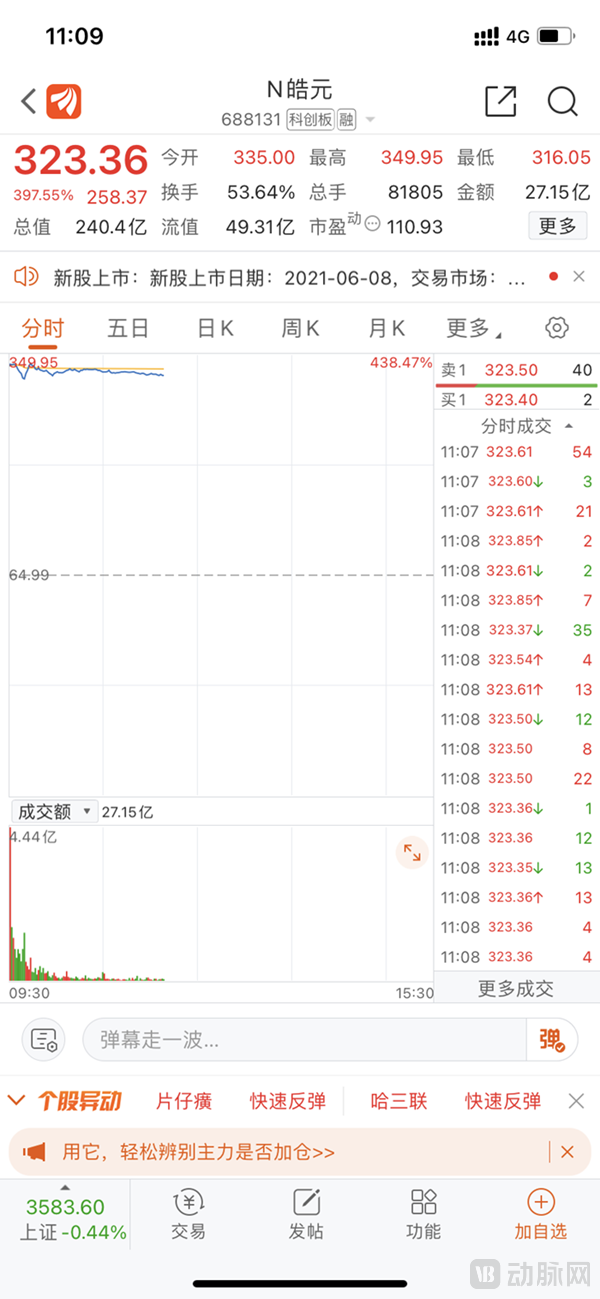
Image source: East Money
Haoyuan Chemexpress is issuing approximately 18.6 million shares in this public offering, at an issue price of RMB 64.99 per share, raising a total of RMB 1.208 billion. After deducting issuance expenses, the proceeds will be invested in the following projects:
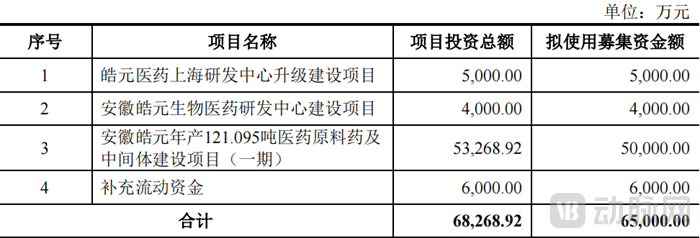
Image source: Prospectus
Haoyuan Chemexpress completed three rounds of financing prior to its initial public offering: Series A in 2014, Series B in 2016, and Series C in 2019, with total fundraising exceeding RMB 190 million. The investors included Zhenjin Venture Capital, Jingjia Venture Capital, Chuanliu Investment, Hantai Venture Capital, Xinyu Chengzhongtang, Guohong Medical, Taili Venture Capital, Huyue Yongwo, Huangshan Venture Capital, Suxin Fund, and Fenyi Jinji, among others.
Currently, Haoyuan Chemexpress has eight controlled subsidiaries and three equity-participated companies. The controlled subsidiaries are Haoyuan Biology, Haohong Biology, Kaixin Biology, Anhui Haoyuan, Hong Kong Haoyuan, Anhui Leyan, MCE, and CS; the equity-participated companies are Gansu Haotian, Zhenhao Biology, and Hezheng Medicine.
Haoyuan Chemexpress was established in 2006, jointly funded by Zheng Baofu, Gao Qiang, Xue Jijun, Shi Jieqing, and Lu Xinyu.It is a platform-based high-tech enterprise specializing in R&D services and industrial applications of small-molecule drugs.
Currently, Zheng Baofu and Gao Qiang are the actual controllers of Haoyuan Chemexpress. According to the prospectus, during the reporting period, founder Zheng Baofu has consistently served as Chairman of the Board and General Manager, while founder Gao Qiang has continuously held the positions of Director and Deputy General Manager. Together, they are responsible for key matters including the company’s business development direction, market expansion, and operational decision-making.
Zheng Baofu received his bachelor’s degree from the Department of Chemistry at Nankai University and earned his Ph.D. from the Department of Chemistry at the University of Hong Kong in 2005. In the second year after graduation, he participated in founding Shanghai Haoyuan Chemical Technology Co., Ltd. (Haoyuan Chemexpress was established in 2015 through the overall restructuring of Haoyuan Chemical). Another co-founder, Gao Qiang, obtained his bachelor’s degree from the School of Chemistry and Chemical Engineering at Lanzhou University and graduated from the Department of Chemistry at the University of Hong Kong in 2004. He served as a Research Fellow in the Department of Chemistry at the University of Hong Kong from May 2004 to February 2006, and later joined other founders in establishing Shanghai Haoyuan Chemical Technology Co., Ltd.
In addition to the founder of Haoyuan Chemexpress, who holds a Ph.D. in Chemistry from the University of Hong Kong, all current directors and core technical personnel at Haoyuan Chemexpress possess at least a master’s degree or a senior professional title in relevant fields, along with more than ten years of work experience in related areas.
Currently,Haoyuan Chemexpress's main business includes the research and development of molecular building blocks and tool compounds in the field of small-molecule drug discovery, as well as process development and production technology improvement for active pharmaceutical ingredients (APIs) and intermediates of small-molecule drugs., providing global pharmaceutical companies and research institutions with relevant products and technical services spanning from drug discovery to the scaled-up production of active pharmaceutical ingredients (APIs) and pharmaceutical intermediates. Notably,Haoyuan Chemexpress is one of the few integrated front-end and back-end enterprises in China specializing in the research, development, and manufacturing of small-molecule drugs, with its main products and services spanning both the R&D and production stages of active pharmaceutical ingredients.
In the field of molecular building blocks and tool compounds, Haoyuan Chemexpress offers a relatively novel and comprehensive product portfolio, establishing itself as one of the key players in this niche market and forming"MCE", "Leyan"and other proprietary brands, which enjoy high recognition within the industry. In the field of active pharmaceutical ingredients (APIs) and intermediates, Haoyuan Chemexpress is one of China’s most capable R&D platforms for high-difficulty chemical drug synthesis technologies. Independently developed by Haoyuan Chemexpress,Eribulin, Trabectedinsuch products are widely recognized in the industry as compounds with extremely high difficulty in synthesis and drug registration research.
Haoyuan Chemexpress has entered into cooperation agreements with internationally renowned pharmaceutical companies, generating revenue through technology licensing while retaining rights to sales royalties for post-launch products. Furthermore, Haoyuan Chemexpress has systematically developed high-potency active pharmaceutical ingredients (HPAPIs) and related technologies, such as vitamin D derivatives, establishing itself as one of the most competitive enterprises in this niche sector.
Molecular building blocks and tool compounds are primarily applied in life science research and drug development. They generally have not yet achieved commercial sales, and the data related to their R&D projects are highly confidential. Among them, molecular building blocks refer to small-molecule compounds used for designing and constructing pharmacologically active substances; tool compounds refer to small-molecule compounds that possess biological activity, physiological effects, and potential druggability.
According to Evaluate Pharma’s estimates, global pharmaceutical R&D expenditure reached $182 billion in 2019. As indicated in the jointly authored paper by professors from Tufts University and Duke University, “The price of innovation: new estimates of drug development costs,” 30% of global pharmaceutical R&D spending is allocated to reagent inputs for preclinical research. Based on this calculation, the global market size for molecular building blocks and tool compounds was approximately $54.6 billion in 2019.
Currently, Haoyuan Chemexpress can provide customers with tens of thousands of novel and functionally diverse molecular building blocks and tool compounds.Among them, there are over 10,000 types of self-synthesized molecular building blocks and tool compounds., Haoyuan Chemexpress also provides molecular building blocks and tool compoundsCustom Synthesis and Other Technical Services。
Haoyuan Chemexpress offers molecular building blocks in quantities ranging from milligrams to kilograms, encompassing dozens of product series across various chemical structural classes, including quinolines, azaindoles, tetralones, piperazines, pyrrolidines, cyclobutanes, and spirocycles. These products cover nearly all chemical structural types commonly used in small-molecule drug development. The company’s tool compounds are widely applied to most high-profile targets associated with major therapeutic areas such as cancer, cardiovascular and cerebrovascular diseases, the endocrine system, antiviral therapies, metabolism, the nervous system, and inflammation/immunity, thereby supporting the development of diverse pharmaceutical agents.
Notably, Haoyuan Chemexpress had previously faced scrutiny due to an insufficient number of patents for its molecular building blocks and tool compounds; specifically, while the company had independently synthesized over 10,000 types of molecular building blocks and tool compounds, it held only 53 patents. In response, the current prospectus includes a “risk warning regarding potential third-party patent infringement involving certain molecular building block and tool compound products.”
The prospectus indicates that Haoyuan Chemexpress’s molecular building blocks and tool compounds business is dedicated to the pharmaceutical sector, serving pharmaceutical manufacturers, research institutions, and academic organizations for scientific research and drug registration applications, with supply volumes kept minimal. Haoyuan Chemexpress has implemented a series of stringent internal control measures—including product screening, sales management policies, website disclaimers, contractual restrictions, customer qualification reviews, distributor management, and patent product monitoring and oversight—to ensure that the end use of its products is strictly limited to scientific research and drug registration purposes.Haoyuan Chemexpress’s related business activities do not involve large-scale drug production or commercial use, nor have they impaired the patent holder’s interests during the commercialization phase of the drugs; therefore, Haoyuan Chemexpress has not been involved in any litigation disputes to date.
To date, the end customers served by Haoyuan Chemexpress’s molecular building blocks and tool compounds encompass most biomedical research institutions and pharmaceutical companies worldwide, including multinational pharmaceutical giants such as Pfizer, Eli Lilly, Merck & Co., AbbVie, and Gilead Sciences; research institutes and higher education institutions such as the U.S. National Institutes of Health (NIH), Harvard University, Shanghai Institute of Materia Medica, Shanghai Institute of Organic Chemistry, Peking University, and Tsinghua University; as well as renowned CROs such as WuXi AppTec, Pharmaron, and ChemPartner.
In terms of CDMO services,Haoyuan Chemexpress specializes in active pharmaceutical ingredients (APIs) for specialty generic drugs and their related intermediates, as well as innovative drug CDMO services.. The broad definition of the active pharmaceutical ingredient (API) industry encompasses both APIs and intermediates. According to a report by Markets and Markets, the global API market size was approximately USD 182.2 billion in 2019 and is projected to reach USD 245.2 billion by 2024, representing a compound annual growth rate (CAGR) of approximately 6.1%.
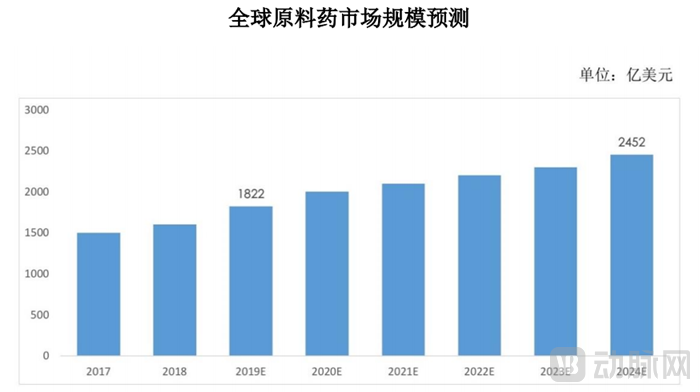
Source: IPO prospectus; Data source: Markets and Markets, Ping An Securities Research Institute
Four Factors Influencing Market Growth in the Active Pharmaceutical Ingredient (API) Industry:
One of the significant trends in the global pharmaceutical market is the impending expiration of patents for many blockbuster drugs. The high risk and high reward nature of new drug development dictate substantial returns during the patent protection period. However, once patent protection for innovative drugs expires, their prices will drop sharply under the pressure of low-cost generic alternatives.
At that point, the importance of active pharmaceutical ingredient (API) costs will begin to emerge, with their proportion of the final drug selling price increasing significantly, becoming one of the decisive factors influencing the profitability of both originator and generic drug manufacturers.Under financial pressure, originator drug manufacturers are more inclined to seek professional pharmaceutical outsourcing to optimize processes and reduce costs, while generic drug manufacturers aim to seize this opportunity to break the monopoly of traditional European and American pharmaceutical companies and rapidly expand their market share.
According to Evaluate Pharma, 2022 will witness a peak in patent expirations for innovative drugs, affecting medications worth $40 billion and resulting in potential revenue losses of $16 billion. From 2020 to 2024, the total sales of drugs facing patent expiration are projected to reach as high as $159 billion.
Currently, in developed countries such as those in Europe, the United States, and Japan, the market share of generic drugs has exceeded 50% under government advocacy and support, maintaining a rapid growth rate of approximately 10%, which is twice the growth rate of innovative drugs. In 2018, global pharmaceutical expenditure increased by approximately $335 billion compared to 2013, with spending on generic drugs contributing 52% of this growth.Approximately 83% of the growth in emerging pharmaceutical markets is driven by generic drugs.
Over the past decade,Global API Production Capacity Is Gradually Shifting from Europe and the US to Emerging Markets, India and China have become the primary recipients,Currently, India is the biggest beneficiary of API production capacity transfer due to its linguistic and technological advantages. Meanwhile, China will rapidly catch up with India in technology, product quality systems, and DMF certification by leveraging its more mature basic industrial system and cost advantages.
First, China boasts an abundant supply of biochemical talent, which facilitates domestic companies in rapidly mastering the engineering technologies for global mainstream chemical drug production and establishing a comprehensive R&D and manufacturing service system. Second, according to estimates by Chemical Weekly, the manufacturing stage accounts for approximately 30% of the total cost of originator drugs. By outsourcing production to China, where relative costs are only one-half to one-third of those of European and American CMOs, this portion of the cost is expected to decrease by 40% to over 60%, resulting in an overall reduction of total costs by approximately 15%. Leveraging these advantages, China’s position in the global API industry chain is rapidly ascending.
In recent years, driven by environmental protection policies and regulations and the resulting rise in costs, a large number of small and medium-sized active pharmaceutical ingredient (API) manufacturers have been squeezed out of the market, leading to an improved supply landscape for APIs. Meanwhile, as the global scale of generic drugs continues to expand, demand for novel and specialized APIs has rapidly increased, significantly accelerating the international transfer of specialized API production. Consequently, the proportion of specialized APIs in export products has also risen quickly.
Leveraging a relatively complete support system for basic chemical raw materials and a large-scale domestic market,China's API industry has expanded from traditional bulk APIs to specialty APIs and the CMO sector, while continuously extending and upgrading along the downstream value chain.
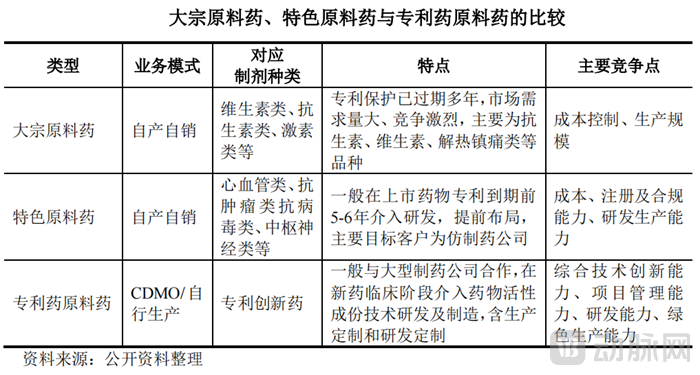
Source: Prospectus
Internationally,Constrained by high R&D, manufacturing, and environmental costs, pharmaceutical companies in Europe and the United States are gradually shifting their CDMO businesses to emerging markets with cost advantages, represented by China and India.According to data from the “Research Report on the Current Market Competition Status and Investment Strategy of High-Throughput Drug Screening and Innovative Drugs in China (2018–2024)” released by Zhiyan Consulting:
The number of Investigational New Drug (IND) applications for domestically developed new drugs in China remained at approximately 30 per year between 2003 and 2012. After 2012, the number of IND applications for domestically developed new drugs began to accelerate, reaching 131 in 2017, a 46% increase from 2016. In 2018, the number of IND applications for domestically developed new drugs surged again to 224, representing a 71% increase from 2017.
The global CDMO market size was $53.8 billion in 2019. According to forecasts by Everbright Securities Research Institute, the global CDMO industry is expected to reach $83.2 billion in 2024, representing a compound annual growth rate (CAGR) of 9.1% from 2019 to 2024. In China, the CDMO market size was approximately RMB 30.2 billion in 2019. Building on this foundation and benefiting from the shift in global industrial chains and favorable policy dividends, China’s CDMO market size is projected to reach RMB 52.6 billion in 2024.
Currently, the end customers served by Haoyuan Chemexpress’s active pharmaceutical ingredients (APIs) and intermediates encompass numerous pharmaceutical companies, including internationally renowned firms such as Athena Pharmaceuticals, Nissan Chemical Industries, Sawai Pharmaceutical, Daiichi Sankyo, Eisai, Teva Pharmaceutical Industries, Sun Pharmaceutical, and Cipla; major domestic pharmaceutical enterprises such as Salubris, Joincare, Yangtze River Pharmaceutical Group, Hengrui Medicine, Qilu Pharmaceutical, and CSPC Pharmaceutical Group; as well as innovative drug R&D companies such as Revolution Medicines, Viracta Therapeutics, Prelude Therapeutics, RemeGen, Allist, Genfleet Therapeutics, and Xuanzhu Biopharma.
Driven by the R&D and expansion of its two core business segments, and under the leadership of its core personnel, Haoyuan Chemexpress has currently developed and established the following platforms: a High-Potency Active Pharmaceutical Ingredient (HPAPI) development platform, a multi-chiral complex drug technology platform, a vitamin D derivative API R&D platform, a specialized targeted drug development platform, a pharmaceutical solid-state chemistry research technology platform, and a development and incubation platform for molecular building blocks and tool compound libraries.
Through the translation capabilities of six major technology R&D platforms, the company has completed process development, process optimization, and quality research. Notably, leveraging its specialized targeted drug development platform, the company has developed a series of cutting-edge high-potency toxins for antibody-drug conjugate (ADC) therapies; designed and established a linker library encompassing a wide range of bifunctional linkers; and constructed a diverse toxin-linker library. By utilizing this toxin-linker library to achieve rapid conjugation with monoclonal antibodies, the company has accelerated the ADC drug development process.
The Company is also among the early domestic enterprises to engage in the research and development of antibody-drug conjugate (ADC) therapeutics, possessing strong professional expertise and extensive project R&D experience across ADC medicinal chemistry-related R&D, process optimization, process validation, regulatory filing, and industrialization.Six patents have been filed for key technologies, two of which have been granted, and one PCT international patent application has been accepted. Furthermore,Haoyuan Chemexpress also assisted RemeGen in advancing China’s first Class 1 anticancer ADC drug to enter the clinical trial application stage into the marketing approval application phase.
Haoyuan Chemexpress leverages its platform-based technological innovation and R&D achievement commercialization capabilities to support continuous product development and innovation in the fields of active pharmaceutical ingredients (APIs) and intermediates.Currently, the company has completed process development for over 100 active pharmaceutical ingredients (APIs) and intermediates, among which 88 products have established a foundation for industrial-scale production. These products cover therapeutic areas including oncology, antiviral treatments, diabetes, and cardiovascular and cerebrovascular diseases.
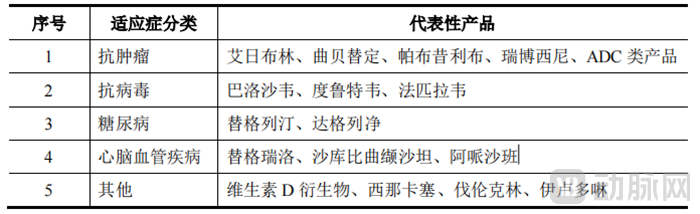
Representative Products of the Company, Source: Prospectus
Driven by rapid market growth and the continuous expansion of Haoyuan Chemexpress’s business, the company’s cumulative operating revenue from 2018 to 2020 exceeded RMB 1.34 billion, with a compound annual growth rate (CAGR) of 45.45% during this period. In 2018, 2019, and 2020, Haoyuan Chemexpress’s gross profit from core operations amounted to RMB 154 million, RMB 232 million, and RMB 359 million, respectively, while the gross profit margins for its core business were 51.67%, 57.47%, and 56.86%, respectively.
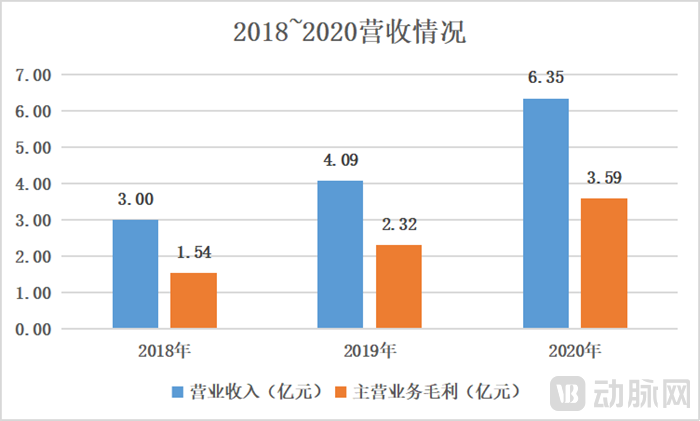
Source: Prospectus; compiled by VCBeat
In the future, Haoyuan Chemexpress will strive to achieve its business development goal of “Two Centers and One Base” by aligning with its production and operational conditions as well as industry development trends.
Specifically, we will implement the upgrade of the Shanghai R&D Center and the construction plan for the Anhui Haoyuan Biopharmaceutical R&D Center. Building on our core competitive advantages in existing niche markets, we will target cutting-edge industry technologies and high-end products, continue to increase R&D investment, establish an R&D center that meets international standards, and create a drug research and development service platform integrating CRO, CMC, and CDMO services for high-end active pharmaceutical ingredients (APIs). This will enhance the quality of our products and services while expanding production capacity. Furthermore, we will accelerate the implementation of the Anhui Haoyuan project with an annual production capacity of 121.095 tons of pharmaceutical APIs and intermediates, thereby building an industrialization platform for APIs and intermediates that meets Haoyuan Chemexpress’s international standards, further expanding production capabilities and increasing the output of Haoyuan Chemexpress products.