

PlusLife Files IPO Prospectus: Pioneering Affordable, At-Home Molecular POCT Solutions to Rival Cue Health

Pluslife
Molecular Diagnostics Product Developer
On May 21, Guangzhou suddenly reported one locally transmitted case, marking the first such case in 276 days. The emergence of this new case shattered the city’s tranquility, and the epidemic once again became a hot topic of discussion among Guangzhou residents. As of June 8, the number of existing confirmed cases in Guangdong Province had reached 157.Example, since entering the phase of normalized epidemic prevention and control, this is the seventh instance of locally transmitted cases linked to imported infections that Guangdong has experienced.
With the normalization of COVID-19 monitoring and the policy-driven promotion of tiered diagnosis and treatment, the primary care testing market is set to expand gradually, presenting significant development opportunities for POCT products. AndMolecular POCT products integrate the precision of molecular diagnostics with the flexibility and convenience of point-of-care testing, making them more suitable for deployment in primary healthcare institutions, airports, communities, and other settings.
By the end of 2020, with the FDA approval and deployment of home-use molecular point-of-care testing (POCT) products for COVID-19 by companies such as Lucira Health and Cue Health, molecular POCT was introduced into a new home-based setting from a regulatory perspective for the first time.
Lucira Health’s product includes a test tube and a battery-powered base, with the entire unit designed for single use. Shipments reportedly exceeded 100,000 units in Q1 of this year. AndCue Health, with just a single product platform, has raised a cumulative total of $820 million in funding from last year to date.The high level of attention paid to at-home COVID-19 testing products overseas also reflects the substantial demand for molecular diagnostic products in these new scenarios.
Today, new players are also emerging in this sector in China. Guangzhou Pluslife Technology Co., Ltd. (hereinafter referred to as "Pluslife") has currently achievedChina's First IVD-Commercialized Molecular POCT Test Product for Primary Care/Home Use Settings. This product features ease of use, delivers positive results within 10 minutes, and offers sensitivity comparable to qPCR.
Furthermore, the device is built upon independently owned and optimized core proteins, detection technologies, and domestically produced components, eliminating any reliance on foreign-controlled critical technologies. Its overall configuration cost is only one-tenth to one-hundredth that of common molecular POCT products currently on the market, making it suitable for home use.
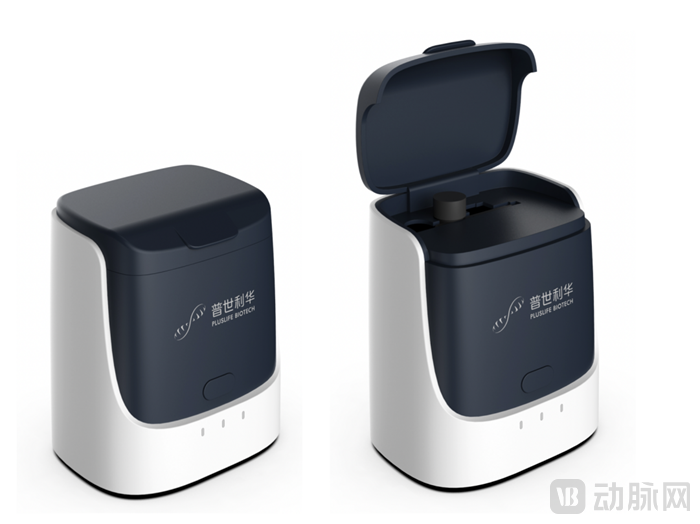
Based on this platform’s products, Pluslife has currently developedThe product portfolio covers a comprehensive range of application scenarios, including human respiratory tract infections, reproductive tract infections, genotyping, and pet diseases.To address different target markets, Pluslife has also partnered with multiple enterprises to co-develop customized testing products. Through joint development or technology licensing, the company leverages the synergistic advantages of its multi-product portfolio, significantly expanding the application scenarios for molecular POCT testing products.
Song Yangzhou, founder of Pluslife, stated that it is both meaningful and intriguing to make molecular POCT as low-cost and convenient as immunoassay-based POCT products, while retaining the precision of molecular testing.
However, conventional qPCR technology products suffer from drawbacks such as reliance on thermal cycling and stringent hardware requirements, resulting in high overall instrument costs. Meanwhile, the vast majority of existing isothermal amplification technologies exhibit insufficient stability in sensitivity (i.e., while they may achieve low limits of detection, they cannot consistently reach these limits) and often face issues with specificity, making them incomparable to qPCR. Consequently, for a considerable period, there has been a lack of molecular POCT products with suitable forms for use in homes and community health centers.
During the research and development of molecular POCT testing technologies and products, the Pluslife team also recognized the limitations of the aforementioned existing detection techniques. After extensive efforts to overcome technical challenges, they developed a new system with independent intellectual property rights, distinct from current isothermal amplification and CRISPR-based detection methods, and named it RHAM.Pluslife has also leveraged this system to develop molecular POCT products.. The RHAM detection system offers the following advantages:
(1) Compared with traditional isothermal amplification technologies, the RHAM technology offers superior sensitivity and specificity. Clinical sample testing has demonstrated that RHAM can achieve stable, 100% rapid detection at 400 copies/mL, with a limit of stable sensitivity reaching 100 copies/mL. Its actual performance is comparable to that of qPCR, thereby breaking the status quo where traditional isothermal amplification technologies have always lagged behind qPCR in terms of sensitivity, stability, and specificity.
(2) RHAM technology offers broader tolerance and better compatibility, enabling an all-in-one, one-step procedure for extraction, amplification, and detection without the need for opening caps or transferring liquids, thereby imposing low requirements on supporting hardware;
(3) Positive results using RHAM technology can be detected in under 10 minutes, significantly accelerating the speed of molecular testing, with the entire assay completed in approximately 30 minutes;
(4) RHAM technology can sensitively identify single-base differences in nucleic acid sequences, expanding its application scenarios to include mutation site detection, SNP detection, and more.
To date, Pluslife has filed 52 patent applications covering multiple technologies, including RHAM technology, with several patents already granted.
All the aforementioned technologies are provided by Pluslife, an emerging company in the molecular POCT sector. Founded by Professor Song Yangzhou in July 2017 and headquartered in Guangzhou (known as the “Ram City”), Pluslife is dedicated to leveraging next-generation gene technologies to develop independently innovated molecular diagnostic products. The company offers comprehensive solutions spanning from core protein research and development and molecular assay methodology development to molecular POCT testing products.
As early as 1990–1998, Professor Song Yangzhou studied and worked at Tufts University, Harvard University, and the Massachusetts Institute of Technology in the United States. From 1998 to 2009, he served successively as Associate Professor, Tenured Professor, Endowed Chair Professor, and Director of the Center for Molecular Drug Discovery and High-Throughput Experimentation at Baylor College of Medicine. In 2009, Professor Song returned to China and served as Dean of the School of Life Sciences at Sun Yat-sen University. His primary research interests include protein function and interactions, mechanisms regulating cellular senescence and regeneration, pluripotency and differentiation regulatory networks in stem cells, and the development and application of gene-editing technologies.
Professor Song Yangzhou has published more than 150 representative papers as first author and corresponding author in many internationally renowned journals such as Cell, Nature, and Science. His total citations exceed 19,000, with an H-index of 64 in 2020. He has led numerous major domestic and international scientific research projects.
Professor Song Yangzhou introduced, “As early as 2011–2012, our team initiated platform research on high-throughput protein–protein interactions and enzyme engineering., we alsoOne of the earliest teams in China to work on gene editing. We began translating our reserve technologies into practical clinical applications in 2017, aiming to develop clinically advanced diagnostic and therapeutic products. During this process, we independently developed and improved multiple high-performance raw material proteins, and, based on the requirements of target scenarios, conducted targeted R&D to establish our proprietary RHAM technology.”
In addition to its founders, who possess extensive professional and technical expertise, the rest of Pluslife’s R&D and management team also has rich experience across the entire value chain of the in vitro diagnostics (IVD) industry. Mr. Chen Chong, Chief Executive Officer, has previously worked at several leading IVD companies both in China and abroad. With many years of experience in the IVD sector, he is well-versed in all aspects of IVD product development, regulatory registration, market promotion, and sales. He also serves as a director of the Industrial Technology Innovation Alliance for Infectious Disease Diagnostic Reagents.
More than 60% of Pluslife's employees work in R&D-related roles., the company adopts a distinctive collaborative model that combines R&D technologies from its scientific team with development and operational expertise from its management team, thereby enabling efficient industrialization of scientific research achievements.
Looking ahead, Professor Song Yangzhou stated, “Our team possesses strong capabilities in overcoming challenges related to core proteins, detection technologies, product architecture, and stable production. We have a seasoned team with extensive experience in rational design, and”Established a Fully Automated Directed Irrational Evolution Platform for Proteins, One of the Few Realized Globally, and jointly established a protein AI analysis platform with the Tsinghua Pearl River Delta Artificial Intelligence Research Center.
These advancements will continue to provide us with high-quality, high-performance proprietary core proteins. In the future, our company aims to continuously optimize our core proteins, detection technologies, and products, while expanding into new testing scenarios. Our products are poised to become the first domestically industrialized molecular diagnostic solutions designed for primary care settings and home use. Aligning with the trends in primary healthcare and home monitoring, Pluslife will provide extended services to subjects and users, and integrate with internet-based healthcare, big data management, and cloud services to build a future ecosystem for diagnosis and treatment.”