

Tongxin Medical Leverages Multimodal AI to Bridge Brain Disease Diagnosis and Clinical Decision-Making

Sophmind
Internet Medical Examination Platform
Compared with exploring the vast universe, it is equally exciting to explore humanity itself; brain science will be the next technological frontier for mankind.
In November 2020, China’s “14th Five-Year Plan and Long-Range Objectives Through the Year 2035” pointed out that a batch of forward-looking and strategic national major science and technology projects would be implemented in frontier technological fields such as artificial intelligence and brain science. Brain science has been incorporated into the national strategic development agenda, underscoring its paramount importance.
China’s Brain Project, with its “one body, two wings” framework, focuses on fundamental issues in brain science: “diagnosis and treatment of major brain disorders” and “research and development of brain-inspired artificial intelligence.”Among these, the track of diagnosing and treating major neurological disorders is poised to give rise to unicorn companies with valuations exceeding RMB 100 billion.Attention to neurological disorders has also enabled the AI-powered medical platform specializing in neurology toSophmind Medical Alliance, came into our view.
Brain AI: A Trillion-Yuan Blue Ocean Market, with Multimodal AI Diagnosis Creating Technical Barriers
According to the China Health and Health Statistical Yearbook 2020, cerebrovascular disease ranked third among the leading causes of death in 2019, following malignant neoplasms and heart disease. Specifically, the mortality rate from cerebrovascular disease was 129.41 per 100,000 population among urban residents and 158.63 per 100,000 among rural residents in 2019, with an estimated annual death toll exceeding 1.8 million.
Furthermore, the number of patients with neurodegenerative diseases of the brain, such as Alzheimer’s disease (AD), reaches 8 million, while the number of epilepsy patients stands at 9 million. As population aging intensifies, the number of individuals affected by neurodegenerative diseases is expected to increase further.
The AI sector in neurology represents a market worth hundreds of billions, yet not all companies can capitalize on this opportunity. The reasons are as follows:Due to the complexity of neurological diseases, AI in neurology is a field with high professional barriers.:
1. Driven by policy factors, hospitals have a demand for clinical AI products
With the deepening of healthcare reform, the implementation of cost-containment measures such as volume-based procurement and DRG/DIP case-based payment has prompted hospitals and physicians to alter their treatment pathways.In the long run, hospitals are motivated to acquire products capable of accurately diagnosing patients and supporting clinical decision-making.After all, the complexity of diagnosing and treating neurological disorders leads physicians to focus more on questions such as “whether surgical intervention is indicated” and “what are the risks of surgical complications.”Clinical AI products for neurology that provide AI tools to assist physicians in making precise diagnoses and treatment decisions hold significant market potential.
For instance, cerebral aneurysms are often described as “ticking time bombs” in the brain. While there are 70 million individuals with potential cerebral aneurysms in China, only 0.5% to 1% of these aneurysms will rupture. In the past, physicians tended to recommend surgical intervention upon detection of a cerebral aneurysm. However, with clinical AI tools facilitating the implementation of precision diagnosis and treatment, the majority of patients no longer require surgery and can be managed with conservative therapy.Reducing unnecessary surgeries helps minimize patient injury and suffering, and also facilitates cost containment in health insurance.
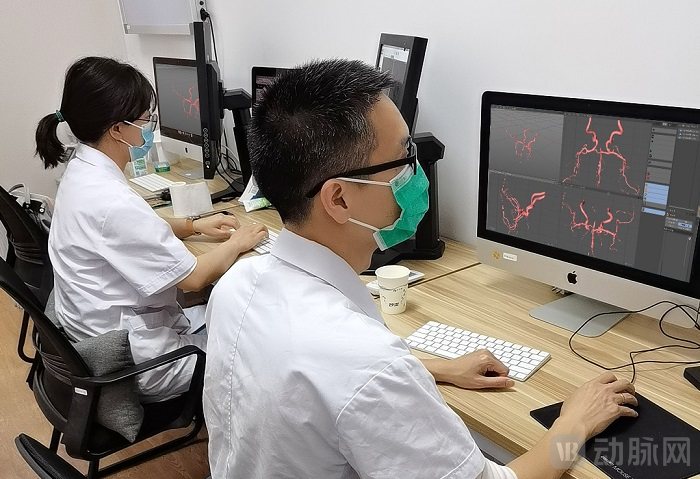 Sophmind Aneurysm AI Product
Previously,AI products are more focused on assisting medical imaging departments, but image recognition technology alone is insufficient to address the complex clinical challenges of neurological diseases.Image recognition can only obtain morphological indicators of lesions, such as lesion location and size. However, neurologists also focus on hemodynamic characteristics and need to acquire various parameters, including wall shear stress and mean pressure.
Sophmind has conducted extensive exploration in areas such as image segmentation and hemodynamics, mastering multiple medical imaging recognition and analysis technologies, includingAn algorithm for whole-brain segmentation that automatically partitions brain images into 113 anatomical structures within 100 seconds, a lesion detection technology that achieves automatic identification of lesions larger than 3 mm with an accuracy of up to 94.58%, and an automated vascular reconstruction technologyetc. Its hemodynamic algorithm can efficiently calculate 11 hemodynamic indices for clinical application.. Based on the aforementioned technologies,Sophmind has developed a high-dimensional, multimodal AI-based analytical diagnostic solution.
2. Clinical Application of Traditional Deep Learning Algorithms Is Limited, Urgently Requiring Innovative Algorithms
There are two issues with the adoption of deep learning algorithms in the medical field: first, the results are uninterpretable; second, the models exhibit poor generalization. Deep learning employs black-box training, making it difficult to ascertain how the results are generated.Achieving accurate predictions requires that the distribution of training data aligns with that of application data; however, in practice, significant discrepancies between the two often lead to suboptimal predictive performance or even model collapse.To this end, deep learning technologies need to be improved for better application in the healthcare sector.
Sophmind is the first technology enterprise in China to combine “causal inference” with “deep learning” technologies.The adoption of innovative algorithms can effectively identify statistical confounders, pinpoint disease association indicators with true causal relationships, and achieve stable predictions across different data distribution scenarios. By addressing various neurological disorders through a unified algorithmic platform, the generalizability and interpretability of the algorithms have been significantly enhanced.Its “GeWu Neosoph AI Platform” has been submitted as a key project for the National Medical Center at Peking Union Medical College Hospital., committed to resolving the bottleneck issues in core technologies.
The technical pathway integrating image recognition, hemodynamics, and causal inference is highly suitable for addressing complex neurological medical issues. After two years of follow-up validation,Sophmind’s Aneurysm Stability Prediction Model Achieves Over 85% Prediction AccuracyThere was a 5-year-old patient whose parents hesitated over whether to proceed with surgery for a cerebral aneurysm: without surgery, the risk of rupture was extremely high; with surgery, they worried about potential negative impacts on the child’s brain development. Following assessment using the Sophmind aneurysm risk model and under medical guidance, conservative treatment was adopted along with continuous follow-up, thereby preserving a healthy childhood for the child.
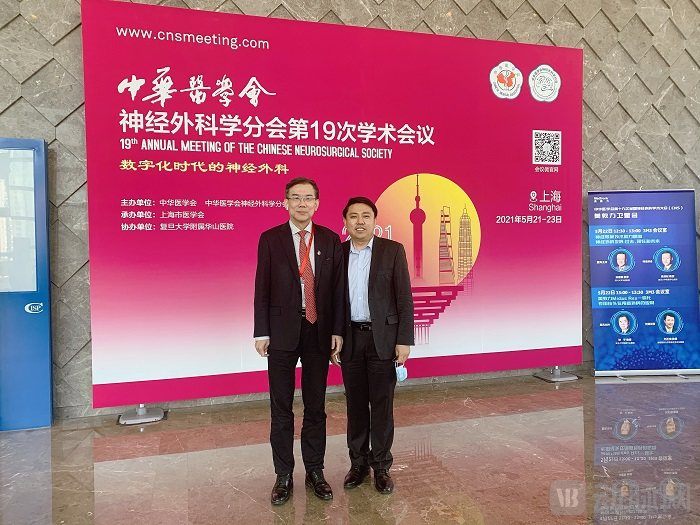
Photo of Director Wang Shuo, Chairman of the Neurosurgery Branch of the Chinese Medical Association, and Liu Weiqi, CEO of Tongxin Medical Union
Based on previous research, in 2021,With the support of Director Wang Shuo, Chairman of the Neurology Branch of the Chinese Medical Association,Beijing Tiantan Hospital and Sophmind have initiated the “AI Platform for Aneurysms in 100 Regional Medical Centers” project, approved by the Chinese Medical Association and the Chinese Stroke Association.In collaboration with 23 renowned hospitals across China, Tsinghua University, and the Shenzhen Institute of Advanced Technology of the Chinese Academy of Sciences, we have established the world’s largest aneurysm case database and will deploy Sophmind’s aneurysm solutions.Meanwhile, the drafting of clinical guidelines for aneurysms was launched in May. As the sole corporate participant, Sophmind will align its product promotion efforts with the implementation of these clinical guidelines.
Sophmind’s Class III medical device registration certificate for its AI-based aneurysm solution is also under intensive application, and it may currently be the fastest-moving product in the field of aneurysm risk assessment.Its product is currently undergoing clinical trials and is expected to receive approval in the first half of 2022.
Early Market Entry, Capital Backing, Multiple Neurology AI Products Under Certification
Our commitment to building an AI-powered neurology healthcare platform, and the initial success we have achieved today, are closely tied to Sophmind’s long-term, in-depth strategic deployment.
Guided by AI-powered neurology products, Sophmind has accumulated substantial resources. Established in 2014, SophmindEstablished partnerships with numerous hospital clients by building an online medical imaging examination platform.. Subsequently, the imaging centers collaborating with hospitals have accumulated substantial data while completing their commercial closed loop.Its internet hospital has accumulated over 29 million imaging medical records over the years, with 67% of patients having a medical history.Building on its prior foundation, it has developed over 40 specialized diagnostic products tailored to the needs of neurosurgeons, neurologists, and neurointerventional specialists. Currently,Its products cover more than 500 offline medical institutions, with over 70% of its revenue derived from specialized diagnostic products.
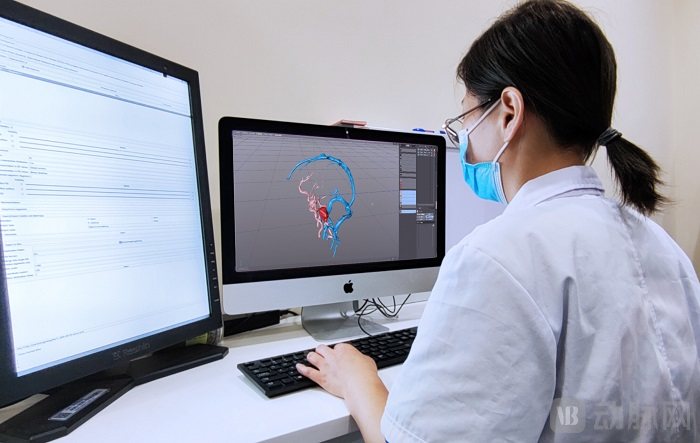
Sophmind AI Product for Brain Tumors
Sophmind has established in-depth collaborations with leading hospitals and universities in China. Over the past seven years,Sophmind has established long-term, in-depth collaborations with 118 key opinion leaders (KOLs) from top-tier neurology teams at Tiantan Hospital, Xuanwu Hospital, Peking Union Medical College Hospital, and other institutions, focusing on research initiatives and product development.Based on ongoing collaboration and research, Sophmind obtained its first Class II medical device certification in 2020.Currently, it has five AI-powered neurology products undergoing clinical certification for medical devices.Among these, products for acoustic neuroma and Alzheimer’s disease are expected to receive regulatory approval in the near future. In addition, Sophmind is developing multiple other solutions, including 3D reconstruction and analysis of the entire cerebral vasculature, risk assessment and prediction for cerebral infarction, and risk assessment and prediction for intracerebral hemorrhage.
Companies with strong technological and product capabilities are often more favored in the capital market. Capital support also reflects recognition of Tongxin Medical Alliance.Sophmind has completed four rounds of financing to date, with investors including prominent venture capital firms such as Legend Star, Legend Capital, Matrix Partners China, and CICC Capital.
Regarding future development, Liu Weiqi, CEO of Sophmind, stated that the company will continue to deepen its expertise in the field of brain science, achieve precise diagnosis and treatment for neurological disorders, and help patients address their health challenges by providing products with clinical value, thereby fulfilling Sophmind’s mission and vision of “making life’s journey less painful and more dignified.”