

How Are Internet Hospitals in Hainan Performing? An Overview of Operations and Business Models
Since Hainan Province issued the Implementation Plan for Promoting the Development of “Internet + Healthcare” in 2019, local internet hospitals have developed rapidly. In April 2019, the Hainan Tencent Internet Hospital received approval, marking the beginning of a centralized approval period for enterprises to independently establish internet hospitals in the region. According to the official website of the Hainan Provincial Health Commission, as of April 2021, there were 58 independently established internet hospitals.
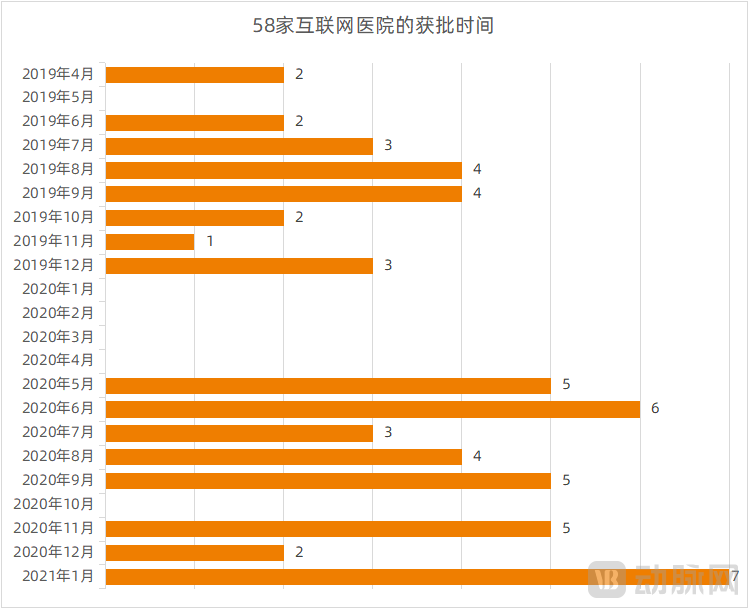
Approval Dates for 58 Internet Hospitals, Data Source: National Health Commission’s Medical Institution Query Database and Hainan Provincial Health Commission Website
In terms of approval timing (calculated from the start date of the practice license), except for the period from January to April 2020 during the pandemic when no internet hospitals were approved, the number of approvals in other periods has maintained a steady upward trend; especially after the pandemic, the monthly approval volume has increased overall compared to the pre-pandemic period.
Currently, most internet hospitals in China are led by physical hospitals, especially public hospitals, which have significant advantages in doctor resources and patient access but suffer from inadequate operations. So, what are the 58 enterprise-led internet hospitals in Hainan doing? How effective are their operations? How can they be effectively managed? VCBeat explores these questions through an analysis of multi-source data.
Online follow-up consultations and prescription services are the most fundamental offerings of internet hospitals. Due to differences in the core businesses of their investors and builders, internet hospitals vary in their functional positioning and service content. VCBeat’s analysis of public disclosures and service portfolios from 58 internet hospitals has identified five overarching development models.
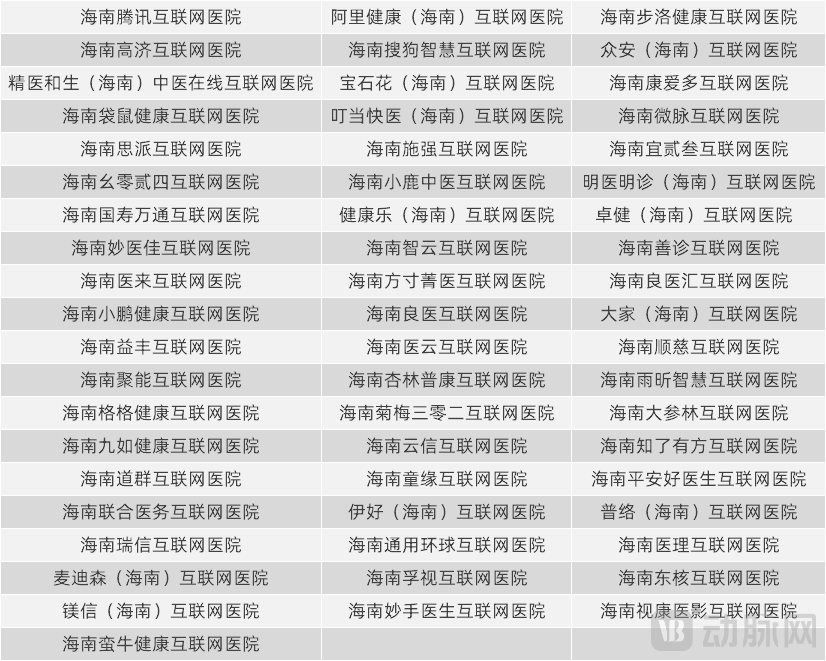 List of 58 Internet Hospitals; Source: Official Website of the National Health Commission, Official Website of the Hainan Provincial Health Commission
Internet and Internet Healthcare Companies Enhance Their Strategic Layouts
Major internet companies, including Baidu, Alibaba, Tencent, Sogou, and ByteDance, have all established internet hospitals in Hainan.
First, it is no longer novel for major internet companies to expand into the healthcare sector, particularly internet-based healthcare, although their strategic approaches differ. For instance, Baidu and Sogou emphasize the application of AI technologies; Tencent focuses on cloud computing, content services, and investments in internet healthcare companies; Alibaba Health exhibits distinct e-commerce characteristics, with pharmaceutical sales accounting for the majority of its total revenue; ByteDance entered the market relatively later, adopting a model that combines online internet hospitals with offline clinics. Internet hospitals represent one component of these tech giants’ broader healthcare strategies, operating in synergy with their other business units.
Secondly, the Hainan Eco-Software Park, where the internet hospitals of major companies are located, serves as the primary carrier and platform for Hainan’s development of the digital economy industry. The park has actively attracted internet enterprises, with multi-billion-yuan projects such as the “Tencent Eco-Village” and “Baidu Hainan Eco-Village” successively commencing construction. Therefore, the establishment of internet hospitals by these large corporations is also part of their investment in Hainan’s digital industry.
Furthermore, while collaborating with public hospitals across various regions to co-establish internet hospitals, Weimai, an internet healthcare company, has independently applied for and established its own internet hospital in Hainan. This platform is designed to deliver value-added internet healthcare services, addressing the challenge that traditional public hospitals often face in providing or rarely offer such enhanced services. Under this model, physicians, with the endorsement of their primary practice institutions, can register for multi-site practice at the internet hospital, thereby providing users with compliant, controllable, and complementary internet healthcare services that augment those offered by public hospitals.
Integrating Online and Offline Channels to Build a New Retail Model for Pharmaceuticals
This model is primarily driven by pharmaceutical retail enterprises. In recent years, the pharmaceutical retail industry has witnessed a trend of mutual penetration and integration between online and offline channels, characterized by brick-and-mortar pharmacies expanding into online platforms and e-commerce companies establishing physical pharmacy outlets. By aggregating online and offline entry points and resources, a new model of pharmaceutical retail has emerged.
In 2020, Yifeng Pharmacy established an internet hospital in Hainan. The annual report showed that as of December 31, 2020, Yifeng Pharmacy had opened a total of 5,991 chain stores. Hainan Yifeng Internet Hospital employs full-time and part-time contracted physicians to provide remote consultation services for customers; relying on offline stores and members, it creates online + offline, general practice + specialist family doctor and home pharmacist services.
Dashenlin has also established an internet hospital in Hainan. In 2020, Dashenlin fully leveraged channels such as pharmacy outlets adjacent to hospitals, DTP (Direct-to-Patient) pharmacies, and O2O (Online-to-Offline) services to accommodate the outflow of long-term prescriptions. Prescription sources included long-term prescriptions, electronic prescription circulation platforms, internet hospitals, and third-party apps.
Kangaiduo, a pharmaceutical e-commerce platform, integrates online and offline resources through its internet hospital to provide users with health and medical services, including online consultations, video conferences, electronic prescriptions, chronic disease management, health management, and general/specialist diagnosis and treatment.
In this model, internet hospitals primarily serve two functions. First, they provide a compliant source of prescriptions for the sale of prescription drugs. For patients visiting physical pharmacies, internet hospitals can issue follow-up prescriptions via in-pharmacy consultation terminals, allowing the pharmacies to dispense medications based on these prescriptions. For online patients, internet hospitals conduct follow-up consultations and issue prescriptions, which are then transmitted to self-operated or partner pharmacies for delivery to the patients. Second, they help pharmaceutical retail enterprises extend their offerings from “sales” to “services,” leveraging internet hospitals to deliver professional services such as chronic disease management and health management.
Digital Transformation: Empowering Patient and Physician Education and Services
This model is primarily driven by pharmaceutical companies. An increasing number of traditional pharmaceutical firms are upgrading or transforming their operations by expanding into online channels to serve physicians and patients, leveraging internet hospitals as a vehicle for digital marketing while utilizing data from these platforms to support drug research and development.
Shiqiang Pharmaceutical has established an internet hospital in Hainan, facilitating the transition of pharmaceutical representatives from academic promotion to digital drug marketing, thereby serving the physician community. Centered on this internet hospital, the company has developed a mobile diagnosis and treatment platform named “Huihui Health,” which creates health records for patients, enables full-process tracking and periodic management, assists patients in rational medication use, and improves diagnostic and therapeutic outcomes. In the future, this platform is poised to play an even more significant role, such as serving as a big data resource platform for andrology, providing standardized training from the perspective of andrologists, and conducting real-world studies.
In addition, Guangyuyuan Traditional Chinese Medicine has established the Zhiliao Youfang Internet Hospital in Hainan, leveraging online platforms to strengthen the connection between its products, physicians, and patients. Its premium traditional Chinese medicine products are supported by an integrated online-to-offline customer service system built through this internet hospital.
In recent years, influenced by pharmaceutical distribution policies and the wave of digitalization, an increasing number of pharmaceutical companies have enhanced their self-awareness and reshaped their development strategies to build more sustainable competitiveness.
Integrating Insurance Risk Control with Health Management
This model primarily involves the participation of insurance companies and health management organizations. For patients, internet hospitals provide a comprehensive range of services from medical consultation to medication dispensing. Insurance companies enhance the competitiveness of their products by bundling online medical services with traditional commercial insurance through a “product + service” model. For healthy individuals, internet hospitals employ health management measures such as monitoring and guidance to adopt a prevention-oriented approach, thereby reducing the risk of disease among insurance clients and mitigating insurance claim risks. Consequently, a mutually penetrative relationship has formed among internet hospitals, health management, and the insurance sector.
In addition to the industry’s well-known Ping An Good Doctor and ZhongAn, more internet hospitals exhibit the aforementioned characteristics.
For example, Hainan Miaoyijia Internet Hospital, under the Miao Health brand, has built an integrated online-offline ecosystem to meet the needs of multi-level and multi-business scenarios. It provides customers with one-stop, full-lifecycle health services—including internet hospital consultations, e-prescriptions, medication delivery, family doctor services, digital health management, and health insurance—across scenarios such as pharmacies, pharmaceutical companies, new and specialty drugs, and commercial insurance. Miao Health Internet Hospital is open to medical institutions and pharmaceutical service enterprises, offering a “plug-and-play” onboarding experience. It explores new models in internet healthcare, digital health management, and health insurance, and leverages 5G technology along with the development of the Miao+, H, and M platforms to deliver efficient and high-quality medical and health services to the general public.
In 2021, Wonders Information’s subsidiary, Manniu Health, established an internet hospital in Hainan Province. China Life Insurance Company is the largest shareholder of Wonders Information. Leveraging its technological capabilities, Hainan Manniu Health Internet Hospital empowers insurance stakeholders and creates synergies with Manniu Health’s doctor resource platform for healthcare providers (D-side), health management platform for consumers (C-side), and insurance agent service platform (A-side). This integrated approach enables the development of personalized service solutions for both patients and physicians, while enhancing platform-consumer interaction through intelligent AI and other technologies.
Integrate offline resources to create an online portal for medical institutions
This model primarily involves participation by healthcare service groups. Currently, internet hospitals led by physical hospitals are predominantly “single-entity internet hospitals,” meaning that physicians practice within their own hospital’s internet hospital platform. The advantage of the “single-entity” model lies in its independent management and high degree of autonomy; however, its drawback is that each hospital builds its own platform, resulting in high overall costs.
The healthcare services group uses an online platform as a gateway to integrate its affiliated physical medical institutions, which not only reduces overall construction costs but also fully consolidates internal group resources to serve patients through a unified entry point.
In 2019, Gem Flower Medical Group established Gem Flower (Hainan) Internet Hospital, focusing on the continuity of medical services, enhancing patient experience, and optimizing hospital management models. The Internet Hospital is deeply integrated with 200 medical institutions under Gem Flower Medical Group, providing services such as online follow-up consultations and prescription issuance, remote consultations, home-based nursing care, and corporate employee health management.
The same holds true for Universal Medical. According to its annual report, by the end of 2020, Universal Medical operated 54 medical institutions, five of which had been approved to conduct internet hospital services. In 2020, Hainan General Universal Internet Hospital was established, serving as Universal Medical’s unified entry point for internet healthcare and the core platform for integrating resources across its medical industry portfolio. During the pandemic, Universal Medical’s overall revenue and profits were significantly impacted, with certain departments and services temporarily suspended. Under these circumstances, the internet hospital effectively expanded service volume.
Although the value of internet hospitals varies across different development models, they all serve to connect doctors and patients, provide services to them, and improve efficiency. For participating enterprises, they are undoubtedly a form of infrastructure.
China has now established over 1,100 internet hospitals, yet their actual service capacity and effectiveness remain to be tested.
To promote lawful practice and integrity in the operation of internet hospitals, Hainan Province implemented a public disclosure system for internet hospital service volumes in 2021. On a monthly basis, operational data from various internet hospitals, collected by the provincial regulatory platform for internet diagnosis and treatment services, is disclosed to the public. The data dimensions include the number of registered physicians, the volume of online consultations, and the number of electronic prescriptions issued. The scope of disclosed information will be gradually improved.
As of now, the data released by the Hainan Provincial Health Commission covers operational figures for January and February 2021.
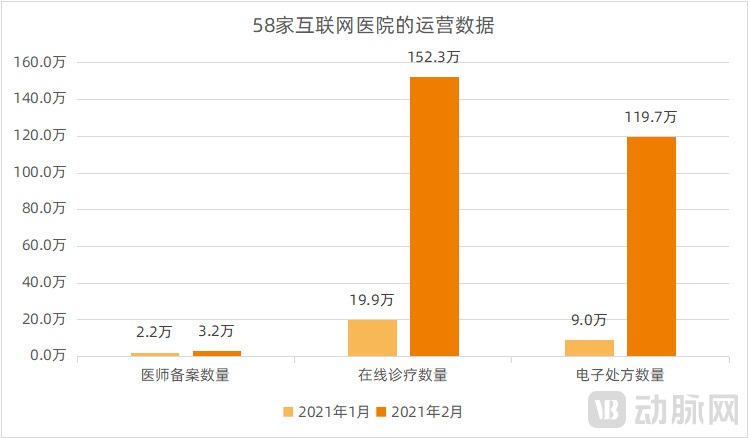 Operational Status of 58 Internet Hospitals from January to February; Data Source: Official Website of the Hainan Provincial Health Commission
As shown in the figure above, data across key dimensions of internet hospitals are on the rise, with a significant surge in consultation and prescription volumes particularly observed in February. Based on February’s operational data, each internet hospital employed an average of 552 physicians, delivered approximately 26,000 consultations, and issued 20,000 electronic prescriptions on average. However, in reality, the majority of these consultation services were provided by only a small number of internet hospitals. If January and February data are taken as reference, overall operations exhibit a polarized pattern.
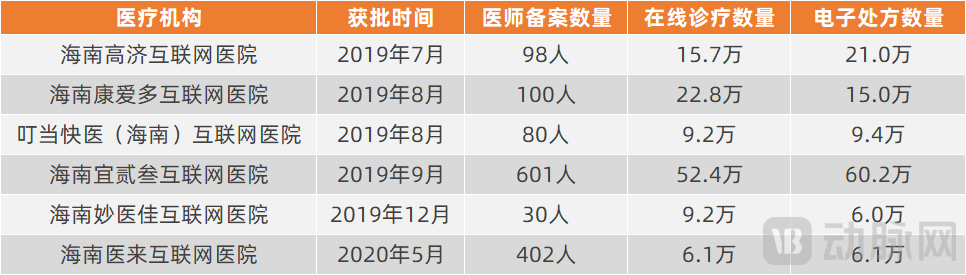
Internet Hospitals with High Operational Data in February, Source: Official Website of the Hainan Provincial Health Commission
Data shows that Hainan Gaoji Internet Hospital, Hainan Kangaiduo Internet Hospital, and Hainan Dingdang Kuaiyi Internet Hospital have relatively high service volumes. It is evident that most of the internet hospitals with higher service volumes were approved in 2019, having been operational for over a year, thus allowing for a longer period of business development. Furthermore, the top three internet hospitals in terms of consultation and prescription volumes all have backgrounds in pharmaceutical retail, indicating a relatively homogeneous background type.
In stark contrast to the service volumes of the aforementioned internet hospitals, many others still need to break through their “zero performance” status.
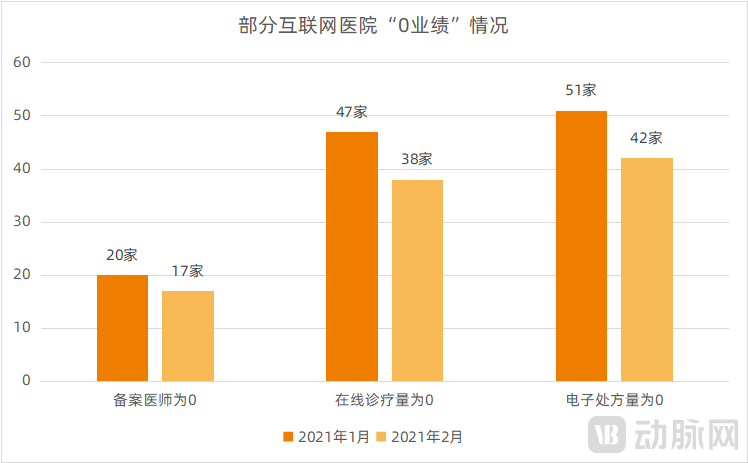 Some Internet Hospitals Report “Zero Performance”; Data Source: Official Website of the Hainan Provincial Health Commission
As shown in the figure, from January to February, although the number of internet hospitals with “zero performance” was decreasing, more than half of them still failed to provide medical consultation services or issue prescriptions. On one hand, among the 58 internet hospitals, more than 20 were approved in the second half of 2020 or in 2021; due to their short operational history, they have not yet stabilized their operations. On the other hand, factors such as service positioning, physician resources, and patient acquisition channels significantly influence what services internet hospitals offer and how they deliver them. If companies fail to establish clear strategic planning in the early stages, it may adversely affect subsequent operations, leading to a prolonged exploratory phase.
It is reported that most independently established internet hospitals in Hainan Province are based in the Hainan Eco-Software Park. From March 15 to May 2021, the Administration Bureau of Hainan Eco-Software Park publicized the registration details of 16 batches of physicians from 13 internet hospitals, covering a total of 849 registered physicians. With the continuous addition of physician resources, the service capabilities of these internet hospitals will be more strongly supported, and their overall operational performance is expected to improve.
As internet hospitals expand in scale, with increasing corporate participation and growing service volumes, Hainan has implemented measures covering pre-emptive regulation, verification and public disclosure, and electronic prescription authentication to standardize hospital practice and operations.
Issuing Pre-Regulatory Guidelines
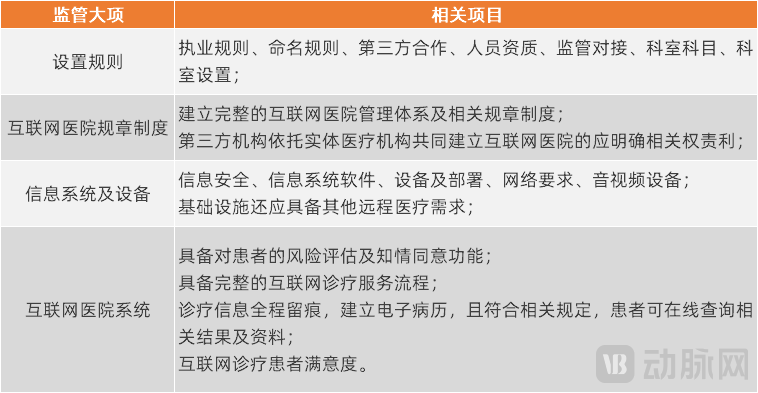 “Key Regulatory Items of the Hainan Province Internet Hospital Medical Service Pre-regulation Guidelines (First Edition),” Source: Official Website of the Hainan Provincial Health Commission
In May 2020, the “Guidelines for Pre-service Supervision of Medical Services Provided by Internet Hospitals in Hainan Province (First Edition)” was released, providing detailed provisions on establishment rules, regulations and policies, information systems and equipment, and internet hospital systems. Among these, the provisions regarding internet hospital systems require that internet hospitals implement a real-name registration system for patient consultations.
Previously, administrative measures for internet hospitals across various regions primarily emphasized real-name authentication for physicians, with most failing to stress real-name registration for patients. Subsequently, the Yinchuan Internet Diagnosis and Treatment Service Standards (Trial), issued in August 2020, proposed “implementing real-name patient consultations,” while the Sichuan Province Internet Diagnosis and Treatment Management Standards (Trial), released in December 2020, mandated that “patients must complete real-name online registration.”
Real-name registration for online patients is one of the measures to ensure medical safety. Judging from the practices in Hainan and other regions, it also represents a regulatory trend for internet hospitals.
Requirements for Hospital Affairs Disclosure and Annual Verification
In March 2020, the Health Commission of Hainan Province issued the “Notice on Carrying Out Hospital Affairs Disclosure Work for Internet Hospitals,” requiring all internet hospitals to establish a hospital affairs disclosure section on the homepage of their official websites and mobile applications (APPs) to publicly disclose the main content of hospital affairs to society.
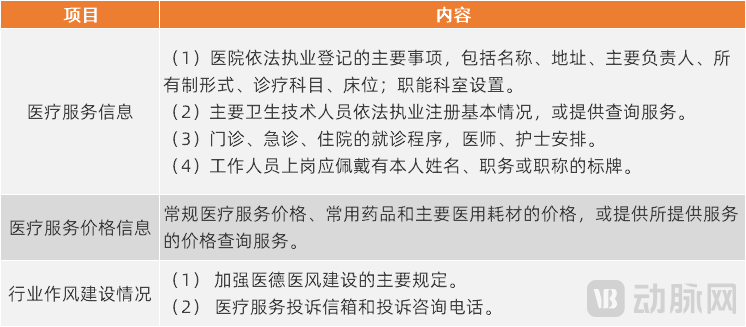
Key Contents of Hospital Affairs Disclosed to the Public, Source: The Central People's Government of the People's Republic of China Website
VCBeat examined the patient-facing interfaces of 58 internet hospitals and found that most have established sections for institutional transparency, with the majority releasing such information in March. However, the content disclosed varies significantly across institutions: some provide basic hospital profiles, others display relevant licenses and certifications, while others share operational data. Overall, the quality of these disclosures requires further improvement.
In March 2021, the Hainan Provincial Health Commission also issued the "Notice on Matters Concerning the Verification of Telemedicine Centers and Internet Hospitals." According to the regulations, the verification period for Internet hospitals established independently based on telemedicine centers is one year. Based on the approval dates of the 58 Internet hospitals, most have reached the time for their initial verification.
The verification notice states that, in accordance with the Regulations on the Administration of Medical Institutions, a medical institution that suspends operations for more than one year for reasons other than reconstruction, expansion, or relocation shall be deemed to have ceased business. It must apply to the original registration authority for deregistration; upon approval by the registration authority, its Medical Institution Practice License shall be revoked. For telemedicine centers whose Medical Institution Practice Licenses are revoked, their affiliated internet hospitals shall be simultaneously deregistered.
Therefore, internet hospitals cannot rest easy simply by obtaining a license; their subsequent practice may still affect the validity of the license.
Establish Standards for Electronic Prescription Circulation
In April 2021, draft versions for public comment of the “Hainan Province Specifications for Electronic Prescription Circulation (Trial)” and the “Hainan Province Data Interface Specifications for Electronic Prescriptions (Trial)” were released. The documents indicate that Hainan’s “Integrated Network for the Coordination of Medical Care, Health Insurance, and Pharmaceutical Services” will incorporate electronic prescriptions from internet hospitals within the province, as well as those from physical medical institutions that require online circulation. Through this platform, authenticated electronic prescriptions will be transmitted to pharmaceutical retail terminals. The documents also establish standards for issuing new prescriptions via internet hospitals and sharing historical prescription records.
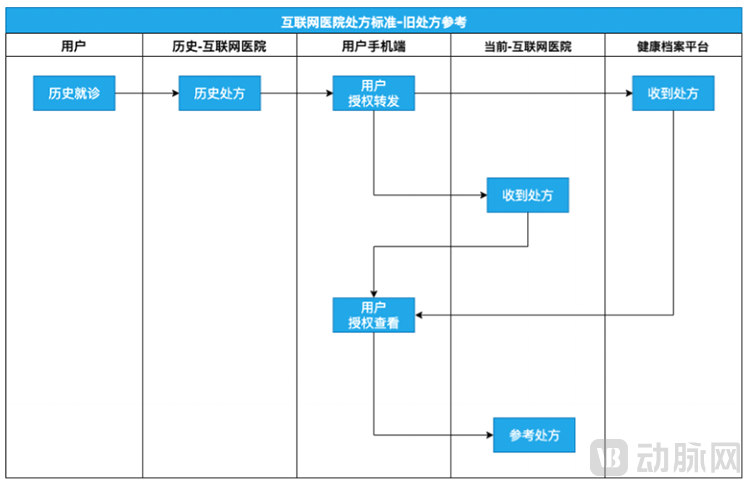
Standard Process for Internet Hospital Prescriptions (Referencing Previous Prescriptions), Image Source: Draft for Comments of the “Hainan Province Electronic Prescription Circulation Specification (Trial)”
Taking the historical prescription sharing standard as an example, patients can access their historical prescriptions from other internet hospitals through authorization. As shown in the figure above, when a patient consults at the current internet hospital and needs to refer to previous medical records or prescriptions, they can log in to the previously visited internet hospital, select the relevant historical prescriptions, and authorize their forwarding to the current internet hospital or health record platform. Through backend interface transmission, the current internet hospital receives the historical prescriptions to provide reference for diagnosis.
It is understood that Hainan’s “Integrated Network for the Three Medical Sectors” is an informatization project whose construction was initiated in early 2021. The regulations governing its integration with electronic prescriptions are designed to ensure that the source of electronic prescriptions circulated online is authentic and reliable. According to the bid award announcement published on the China Government Procurement Network, the “Integrated Network for the Three Medical Sectors” project is scheduled to complete acceptance by the end of February 2022. This implies that, following the completion of public consultation and the official release of regulations on electronic prescription circulation, starting from February 2022, electronic prescriptions from internet hospitals are expected to be allowed for external circulation only after being authenticated through the “Integrated Network for the Three Medical Sectors” platform.
Overall, after a period of rapid development since 2019, Hainan’s internet hospitals are now entering an exploratory phase of operational management. With the infrastructure in place, it is worth deeply exploring how to establish a reasonable superstructure that leverages corporate strengths while ensuring compliance.