

Jia County's Digital Health Community Model Recognized Nationally with WeDoctor's Empowerment
Digital Empowerment of County-Level Health Community Construction Draws National Attention. On June 5, the 2021 National Summary and Exchange Conference on the Construction of Close-Knit County-Level Medical Communities was held in Pingdingshan, Henan Province. Officials from the National Health Commission, members of the National Expert Group on Medical Community Construction, as well as industry experts and scholars from multiple provinces and cities across China, gathered in Yingcheng (Pingdingshan) to jointly discuss experiences in building close-knit county-level medical communities. At the conference, Jia County was recognized as a national typical case for its innovative practices in constructing county-level health communities.
County-level regions serve as the primary stronghold for safeguarding the health of grassroots populations. Innovative models such as county-level medical consortia and county-level health consortia are powerful instruments for enhancing grassroots service capabilities in the new era, as well as important vehicles for advancing the construction of a tiered diagnosis and treatment system. In recent years, Pingdingshan has continuously deepened its healthcare reforms. As early as 2017, it took the lead in partnering with WeDoctor, China’s largest digital healthcare service platform, to promote “Internet + Healthcare” initiatives. Starting in 2019, the city began exploring the establishment of the “Pingdingshan Health Consortium,” focusing not only on strengthening medical treatment but also emphasizing disease prevention and health promotion. These efforts aim to reduce the incidence of illness and delay its onset among residents, thereby facilitating a shift from a “disease-centered” approach to a “health-centered” one. This model was first piloted in Jia County, where it achieved remarkable results.
As a pilot county for China’s close-knit county-level medical consortia, Jia County has consistently been at the forefront of innovation. It proposed the reform concept of establishing a Health Community, formed one Medical Health Group across the county, and, under the guidance of specially appointed chief expert Professor Shi Songhe from the School of Public Health at Zhengzhou University, created the “3221” Health Community model based on Jia County’s family doctor contracted services. This initiative ensures the scientific, standardized, and sustainable management of the Medical Health Group.
Particularly in the area of family doctor contract services, Jia County has adhered to the principle of integrating medical care with disease prevention. It has established 91 family doctor contract service teams spanning county, township, and village levels, comprising professional medical personnel specializing in disease prevention, maternal and child health, traditional Chinese medicine, and mental health. The county has set up 14 family doctor studios and 377 health stations, providing residents with “one-stop” services that include basic medical care, basic public health services, and health management. This approach promotes the integrated development of prevention, treatment, and management, thereby continuously enhancing the capacity to safeguard residents’ health.
To strengthen the support system, Jia County has increased its investment in science and technology, implemented a digitalization project for the Medical Community, and promoted the interconnectivity of medical insurance, medical services, and pharmaceuticals across the county, township, and village levels. On one hand, in collaboration with WeDoctor, it has established an intelligent tiered diagnosis and treatment system with vertical integration. The intelligent tiered diagnosis and treatment platform built across the county connects upward with provincial and municipal hospitals and downward with rural medical institutions. Jia County was the first in China to deploy 12 “Cloud Clinic Vehicles,” capable of performing 7 major categories comprising 49 specific tests and examinations. By adopting a new mobile hospital model combining “vehicles, kits, and stations,” it facilitates family doctor contract service teams in providing health services to residents. Test results are proactively pushed to the “Internet + Healthcare” big data platform, enabling “consultations at the village level and diagnoses in the cloud,” thereby truly achieving the goal of “letting data do the running so that people have to run less.”
On the other hand, six major centers have been established at the county level, including teleconsultation, remote ECG diagnosis, remote imaging diagnosis, clinical laboratory testing, sterile supply, and pre-hospital emergency care. This has enabled primary-level examinations, county-level diagnoses, and mutual recognition of results. Furthermore, the region took the lead in the province in implementing electronic resident health cards, achieving a “one-card” system for visits to public hospitals within the county.
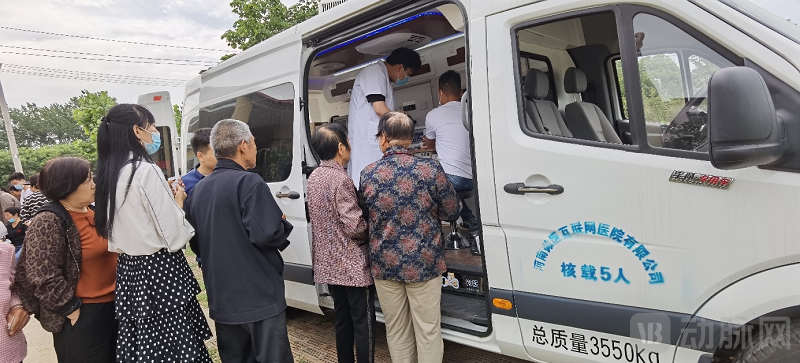
In Mawan New Village, Jia County, digitalization and technological support have infused this resettlement community with renewed vitality for health.Ten years ago, due to the requirements of the South-to-North Water Diversion Project, 1,672 residents from 388 households were relocated from the Danjiangkou Reservoir area in Xichuan County to Jiaxian County.CountyMawan New Immigrant Village. To safeguard villagers' health, the Mawan New Village Clinic was constructed in accordance with the countywide unified standards for standardized village clinics, and is equipped with devices such as remote ECG and remote consultation systems, while strengthening the management of the village clinicProfessional skills training for two village doctors to continuously improve service quality.
Currently, medical staff at the Mawan New Village Clinic are delivering services such as family doctor contracting and basic public health programs with the assistance of new tools including cloud-based mobile consultation vehicles, cloud-based portable consultation kits, and an intelligent tiered diagnosis and treatment platform. Villagers can view service outcomes via a mobile app and, when clinically indicated, access remote consultations, remote electrocardiogram (ECG) monitoring, and online referral services. Furthermore, by integrating traditional Chinese medicine (TCM) and maternal and child health into the construction of the Healthcare Community, the village clinic has gradually begun offering TCM diagnosis and treatment as well as maternal and child healthcare services. To date, 1,613 residents in Mawan Village have signed service agreements, representing a coverage rate of 92%, among whom 164 patients with chronic diseases are under standardized management.
At the meeting, Wang Jingyu, County Mayor of Jia County People’s Government, highlighted Jia County’s experience by noting that the implementation of the Health Community model has promoted flat, grid-based, and refined management of the county’s Medical and Health Group, effectively improving operational efficiency. The reform has initially achieved the “Three Increases and Three Decreases” outcomes, significantly enhanced the level of comprehensive medical services within the county, and woven a broad “safety net” for health management and protection for the 650,000 residents of Jia County.
“The First Increase” refers to the continuous improvement in the operational efficiency of public hospitals. In 2020, the proportion of medical service revenue reached 39.52%, a year-on-year increase of 0.46 percentage points. All public hospitals in the county achieved a balance between revenue and expenditure, and the asset-liability ratio decreased by 19.06% year-on-year. “The Second Increase” denotes the enhancement of medical service capacity within the county. In 2020, the proportion of Level III and IV surgeries at the County People’s Hospital (General Hospital Group) reached 33.42%, a year-on-year increase of 7.46 percentage points, while the rate of primary care visits within the county stood at 65.17%, up by 0.95 percentage points year-on-year. “The Third Increase” reflects the improvement in population health management. In 2020, the number of health management services provided across the county increased by 13.5% year-on-year, and the standardized management rates for patients with chronic diseases such as hypertension and diabetes rose by 3.85% and 0.82%, respectively.
Meanwhile, the annual hospitalization rate among insured individuals, the number of referrals to hospitals outside the county, and the proportion of medical insurance fund expenditures incurred outside the county all declined. In 2020, the annual hospitalization rate for insured persons was 15.82%, representing a year-on-year decrease of 2.25%; the number of referrals to hospitals outside the county decreased by 2,467 person-visits compared with the previous year, and the proportion of medical insurance fund expenditures incurred outside the county stood at 31.52%, a year-on-year decline of 1.37%.
Leveraging its innovative experience in county-level health communities and “Internet + Healthcare,” Jia County has been featured in briefings by the State Council’s Office of Healthcare Reform and the State Council Leading Group Office of Poverty Alleviation and Development. It has been awarded more than 10 national honors, including “National Health Promotion County,” “National Comprehensive Demonstration County for Health Emergency Response,” and “National Comprehensive Prevention and Control Demonstration Zone for Chronic Diseases.” The county won the Second Prize at the 3rd National Primary Healthcare Informatics Application Innovation Competition in 2019. In May this year, it also received a RMB 5 million incentive from the State Council as part of the supervisory rewards for localities that demonstrated genuine commitment and remarkable effectiveness in implementing major policy measures in 2020.
Wang Jingyu stated that, in the next step, Jia County will focus on shifting from a “disease-treatment-centered” approach to a “people’s health-centered” model. The county will continue to consolidate and expand its achievements, boldly explore, innovate, and implement new practices, thereby facilitating the deepening of healthcare and pharmaceutical system reforms. These efforts aim to enable the public to benefit more fully from the outcomes of reform and development, continuously enhancing their sense of gain and well-being.