

Lepu Biopharma Submits IND for MRG004A, China's First TF-Targeting ADC, to CDE
On June 7, the Investigational New Drug (IND) application for MRG004A, an antibody-drug conjugate (ADC) targeting tissue factor (TF), submitted by Shanghai Meiyake, a wholly-owned subsidiary of Lepu Biopharma, was accepted by the Center for Drug Evaluation (CDE). MRG004A is one of the few TF-targeting ADCs globally to have entered clinical development. Its IND application in the United States was approved by the FDA in February this year, and a Phase I study is currently underway for patients with TF-positive advanced or metastatic solid tumors. It is also the first TF-targeting ADC to file for clinical trials in China.

Tissue factor is a transmembrane protein involved in blood coagulation; however, abnormally high expression of TF has been observed in various types of tumors. Aberrant TF expression is commonly associated with tumor growth, angiogenesis, metastasis, and poor clinical prognosis, making it an attractive therapeutic target for cancer treatment with the potential to address unmet clinical needs in multiple solid tumors.
A series of studies have reported immunohistochemical staining results demonstrating positive expression of tissue factor (TF) in various solid tumors, with positivity rates of 100% in cervical cancer, 34%–88% in non-small cell lung cancer, 14%–100% in endometrial cancer, 47%–75% in prostate cancer, 75%–100% in ovarian cancer, 43%–91% in esophageal cancer, and 78% in bladder cancer [1].
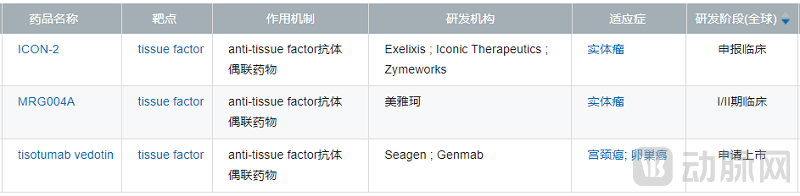
Globally, there are relatively few investigational new drug programs targeting tissue factor (TF), with only three TF-directed antibody-drug conjugates (ADCs) currently in development. In China, Lepu Biopharma/Miyake is the only company that has publicly disclosed its development of a TF-targeted ADC. To date, no TF-targeted therapy has been approved for marketing worldwide. The most advanced candidate is tisotumab vedotin, an ADC co-developed by Genmab and Seagen.
Global TF ADC Drugs in Development
Source: NextPharma Database
Unlike the traditional conjugation technology employed by tisotumab vedotin, which utilizes interchain thiol groups, MRG004A is an innovative antibody-drug conjugate (ADC) developed by Lepu Biopharma and MediMab Biosciences based on the GlycoConnect™ site-specific conjugation technology and HydraSpace™ polar spacer technology licensed from Synaffix.
This technology enables precise control over the conjugation sites, thereby reducing the risk of drug detachment during systemic circulation and minimizing toxicity, which results in a wider therapeutic window.
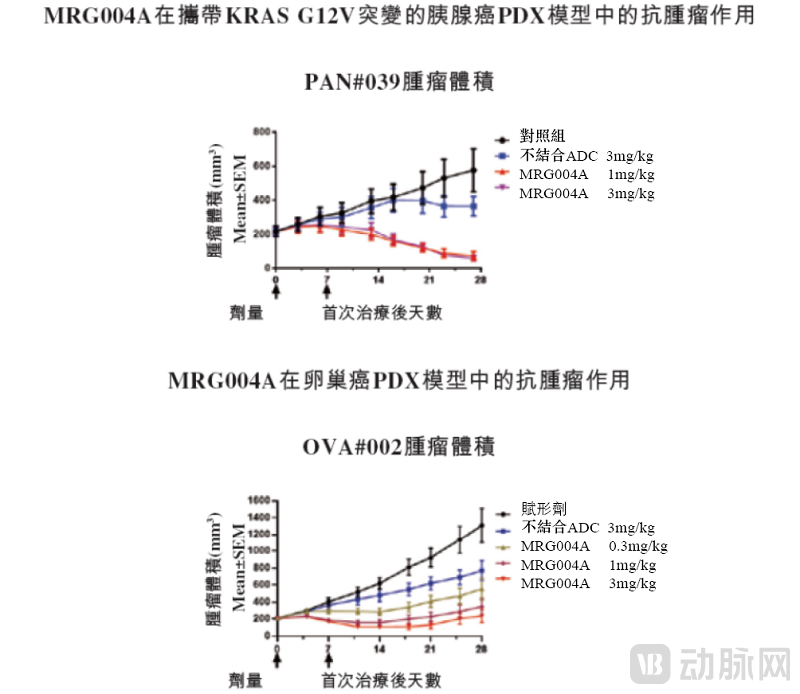
In preclinical studies, MRG004A has demonstrated significant antitumor activity in multiple animal models, including pancreatic and ovarian cancers harboring the KRAS G12V mutation, indicating substantial potential for clinical application.
Source: Lepu Biopharma Prospectus
Tisotumab vedotin, the tissue factor (TF)-targeting antibody-drug conjugate (ADC) with the most advanced development progress, has cervical cancer as its first indication. The U.S. marketing application for this drug was accepted by the FDA in April of this year and is indicated for patients with recurrent or metastatic cervical cancer during or after chemotherapy. This application has been granted Priority Review by the FDA, with a regulatory decision expected on October 10, 2021. Key results from the Phase II innovaTV 204 study presented at the ESMO 2020 Congress demonstrated that tisotumab vedotin monotherapy provided clinically meaningful and durable objective responses in patients with metastatic or recurrent cervical cancer, achieving an objective response rate (ORR) of 24% and a median duration of response (DOR) of 8.3 months.
Given the favorable safety profile and therapeutic potential demonstrated by MRG004A in preclinical studies, there is high anticipation that TF ADC drugs developed by Chinese companies will yield outstanding data in subsequent clinical development.
References
[1]Johann S de Bono , Nicole Concin , David S Hong,et al. Tisotumab vedotin in patients with advanced or metastatic solid tumours (InnovaTV 201): a first-in-human, multicentre, phase 1-2 trial. Lancet Oncol. 2019 Mar;20(3):383-393.