

JD Health and Ji'ai Medical Announce Strategic Partnership to Pioneer 'Physician Group + Internet' Healthcare Model
In recent years, with the rapid development of the internet and growing public attention to health, internet healthcare has expanded significantly, with more than 1,100 internet hospitals established in China. How to improve diagnostic and treatment efficiency while building internet hospitals, further enhance the accessibility of medical resources, and effectively leverage the unique advantages of internet hospitals to serve public health has become a key concern for the industry.
On June 6, the Internet Healthcare Innovation and Development Forum, along with the Strategic Cooperation Launch Event between JD Health and Ji’ai Medical, was held in Shanghai. Against the backdrop of rapid development in internet healthcare, this forum aimed to enhance public health and well-being through internet healthcare. It focused on significant innovative achievements and existing challenges in the field, explored future areas for innovation, and implemented the “Healthy China 2030” initiative.
In recent years, against the backdrop of frequent government incentives and rising public health awareness, internet healthcare has developed rapidly. However, an overview of the current state of internet healthcare in China reveals a dichotomy: on one hand, it has provided the public with an efficient and convenient new model for seeking medical care, enhancing the accessibility of medical resources and the efficiency of healthcare services; on the other hand, many “open-for-business” internet hospitals are struggling with scant patient traffic, raising serious concerns about their overall operational viability.
In his address, Wu Hong, Director of the Medical Administration and Hospital Management Division of the Shanghai Municipal Health Commission, pointed out that national attention to public health has reached an unprecedented level, evolving from the call to improve people’s health standards in the Report to the 18th National Congress of the Communist Party of China, to the promotion of Healthy China construction at the Fifth Plenary Session of the 18th Central Committee, and further to the implementation of the Healthy China strategy proposed at the 19th National Congress. Recently, provinces and municipalities across China have been advancing digital transformation, with digital transformation in the healthcare sector being a critical component. The integrated development of the internet and healthcare facilitates innovation in medical scenarios and processes through internet technologies, thereby enhancing the public’s sense of gain, happiness, and security when accessing medical services.
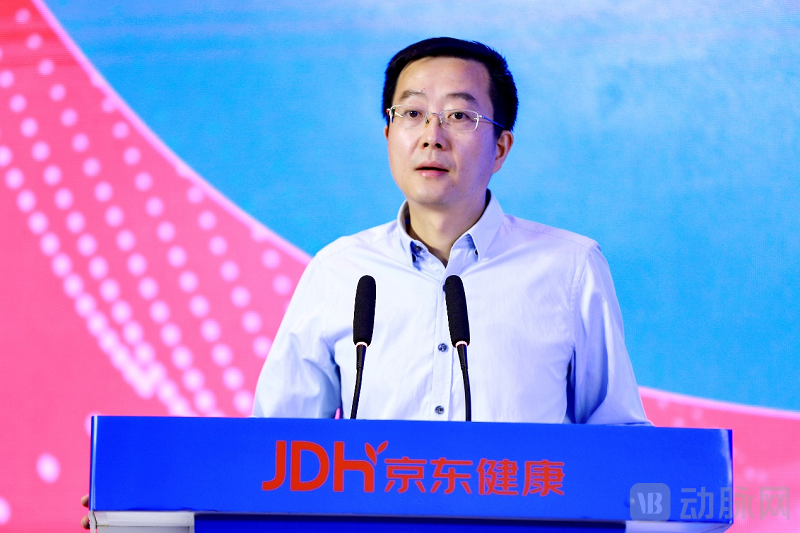
Wu Hong, Director of the Medical Administration and Hospital Management Division, Shanghai Municipal Health Commission
Chen Zhenguang, Vice President of the East Branch of the First Affiliated Hospital of Sun Yat-sen University, stated in his speech that the policy environment is highly favorable for internet healthcare. Against the backdrop of the Healthy China Initiative, the 2021 Two Sessions explicitly called for promoting the standardized development of “Internet + Healthcare,” thereby charting a clear course for the sector’s growth. Meanwhile, during the 2020 pandemic, many hospitals launched online consultation services, with the volume of online visits far exceeding that of 2019, significantly accelerating the development of internet healthcare.
Internet hospitals represent one of the most significant areas of achievement in internet-based healthcare. According to the Bureau of Medical Administration and Hospital Management under the National Health Commission, more than 1,100 internet hospitals had been approved and established in China by the end of April 2021. Although the number of internet hospitals is considerable, their operational performance has been less than satisfactory. Data from the “2021 Report on the Development of Internet Hospitals in China,” recently released, shows that in 2020, the average daily number of consultations per internet hospital was nearly 55. Among the 32 independently established internet hospitals, the average daily consultation volume was only 402. Characterized by large numbers but small scale, these platforms are predominantly focused on convenient services such as medical consultations and appointment registration, payment, and report retrieval (“gua-jiao-cha”), while lacking in-depth development and business operations in core medical services, such as online follow-up visits and electronic prescriptions. Compared with the tens of thousands of outpatient visits handled offline by traditional hospitals, the operational capacity of internet hospitals remains significantly inadequate.
Addressing the challenges and considerations faced by offline hospitals in building internet hospitals, Xin Lijun, Senior Vice President of JD.com and CEO of JD Health, stated in his speech that as a representative enterprise in China’s internet healthcare sector, JD Health has fully leveraged digital technologies such as AI, big data, and the Internet of Things in recent years. The company has continuously driven the evolution of internet hospital functions—from consultation, appointment scheduling, payment, and medication purchase toward online diagnosis and health management—to meet the multi-level and diverse needs of users and patients. JD Health has partnered with Ji’ai Medical to establish the JD Health Ji’ai Internet Medical Center, aiming to explore innovative development pathways for internet healthcare and provide integrated online-and-offline health medical services to a broad user base, particularly patients with critical illnesses.
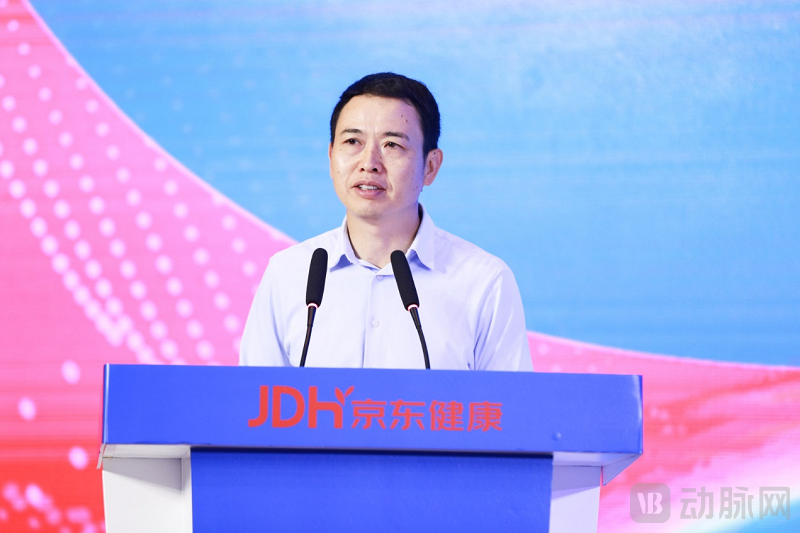
Xin Lijun, Senior Vice President of JD.com and CEO of JD Health
During the Dean’s Forum on Innovative Development of Internet Healthcare held at the conference, multiple industry experts gathered to discuss topics such as achieving the integrated development of internet technologies and healthcare, and further improving the accessibility and effectiveness of medical services. Regarding how to address the current challenges of low efficiency and operational difficulties faced by internet hospitals, the participating experts generally agreed that building an integrated online-offline internet healthcare model is an effective approach to enhancing the operational performance of internet hospitals.

Forum on Innovative Development of Internet Healthcare
The efficient operation of internet hospitals relies heavily on high-caliber professionals in digital healthcare. Kong Xianming, Vice President of Shanghai University of Medicine and Health Sciences, believes that talent development models require exploration and innovation. He suggests that future collaborations with leading enterprises, particularly internet companies, will better align student training with the practical needs of medical institutions and patients.
Mu Shan, Deputy Secretary of the Party Committee of Renji Hospital Affiliated to Shanghai Jiao Tong University School of Medicine, pointed out that patients with chronic diseases require long-term follow-up, as well as comprehensive management encompassing diagnosis, treatment, medication, and tracking. This places high demands on both clinicians and hospital administrators. Leveraging internet platforms for interface integration, Renji Hospital has established a “1+X” internet-based model with itself as the core entity. However, how to more effectively address chronic disease management through information sharing and professional connectivity, thereby enhancing patient care experiences and increasing physician acceptance, remains an area requiring continuous exploration and development. Ma Yanbin, Vice President of the Ninth People’s Hospital Affiliated to Shanghai Jiao Tong University School of Medicine, shares this view. He stated that one of the current focal points at the Ninth People’s Hospital is how to leverage internet hospitals to minimize the need for patients to make multiple visits (“run fewer errands”) while improving physicians’ diagnostic and treatment efficiency.
Xiao Jianbo, General Manager of Internet Healthcare at JD Health, pointed out that to provide users with high-quality integrated online and offline medical services, JD Health’s solution is to build an internet hospital under the “1+1” model. This involves helping hospitals establish two internet hospitals: one proprietary internet hospital owned by the hospital itself, and another hosted on the JD Health platform. Through this model, not only can a regional health portal be created for hospitals to meet the convenient and diversified medical service needs of residents surrounding regional centers, but also, leveraging JD’s internet technology and supply chain capabilities, the internet hospital will integrate the entire medical cycle—including pre-diagnosis, during-diagnosis, post-diagnosis, inpatient management, and general healthcare. This achieves comprehensive coverage for patients, doctors, nurses, and administrators, extending the hospital’s professional medical services across China and realizing integrated online and offline services. Furthermore, intelligent medical services and Healthy City projects built upon the internet hospital ecosystem will also serve public health by enhancing medical efficiency and service capacity.

Xiao Jianbo, General Manager of JD Health Internet Medical
Experts at the conference believe that internet hospitals operate under various models, among which the “Physician Group + Internet” model represents a viable and promising direction for development. This model aims to leverage the influence of relatively well-known medical experts within the healthcare industry to establish an academic consortium, thereby delivering patient services through internet-based platforms.
Based on the “Physician Group + Internet” model, JD Health has entered into a strategic partnership with Ji’ai Medical. In response to users’ multi-level and diverse needs, both parties will leverage their respective resource advantages to provide integrated online and offline medical and health services to users and patients. This will be achieved through initiatives such as establishing the “JD Health–Ji’ai Internet Medical Center,” launching specialized disease and specialty centers, and offering multidisciplinary team (MDT) consultation services.

Sun Zhaocheng, CEO of Shanghai Ji'ai Medical Consulting Co., Ltd.
Sun Zhaocheng, CEO of Shanghai Ji’ai Medical Consulting Co., Ltd., stated in his address that the strategic partnership between JD Health and Ji’ai Medical represents an exploration of new models, scenarios, and applications in internet healthcare. Both parties will leverage the JD Health–Ji’ai Internet Medical Center to further integrate physician resources and medical services. By building a digital healthcare service platform for major diseases, they aim to provide patients with integrated online and offline medical services, enabling the general public to access high-quality medical resources without leaving their homes. Meanwhile, through collaboration in physician education, technological research and development, and patient management, the partnership seeks to enhance the capabilities of primary-care physicians, accelerate industrial translation of research findings, and improve patients’ health management outcomes.
JD Health has currently assembled a medical team comprising more than 110,000 full-time and externally collaborating physicians, with the average daily number of online consultations exceeding 100,000 in 2020. Founded in 2017, Ji Ai Medical brings together nearly 10,000 specialists from Grade IIIA hospitals across Beijing, Shanghai, Guangzhou, and other regions nationwide. It enables comprehensive, precise, and rapid medical connectivity with numerous Grade IIIA hospitals throughout China, demonstrating distinct advantages in facilitating the downward distribution of high-quality medical resources and delivering premium, efficient healthcare and health management services.
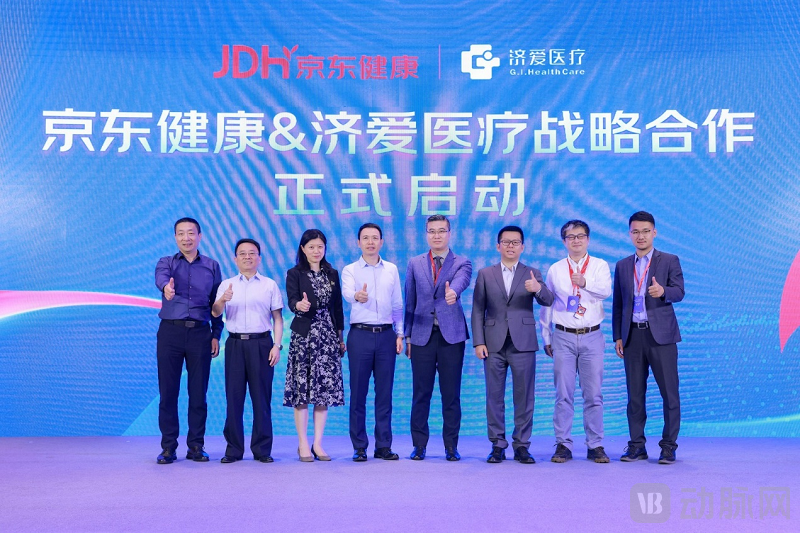
JD Health & Ji'ai Medical Strategic Partnership Officially Launched
It is reported that JD Health and Ji'ai Medical will leverage their respective technological and medical resource advantages to jointly build a high-quality internet healthcare platform. This initiative aims to create a convenient, efficient, high-quality, trustworthy, and secure interconnected platform for medical practice, education, and research for physicians, while providing patients with more reliable healthcare services. By forging a distinctive path for the development of internet hospitals, the partnership seeks to contribute to the health and well-being of the entire population.