

Postpartum Rehabilitation Sector Poised to Capture Policy Tailwinds from China’s Three-Child Initiative Amid 15-Billion-Yuan Market Surge
On May 31, the 20th day after the release of data from the Seventh National Population Census, China’s population policy underwent a significant shift. The “three-child” policy came as a “surprise” to many adults who were immersed in Children’s Day celebrations, sparking heated online discussion. While the relaxation of the “three-child” policy grants citizens greater reproductive freedom, many people can only respond with humor to alleviate the heavy burden posed by the high costs of child-rearing and the reproductive sacrifices faced by women in real life.
In addition to the pressures of housing prices and education costs, another “unspoken concern” that affects women’s willingness to have children is often overlooked: a series of postpartum health issues encountered after childbirth. These include stress urinary incontinence, known as the “social cancer”; diastasis recti abdominis, which leads to abdominal flabbiness and lower back pain; as well as urge urinary incontinence, pelvic organ prolapse, and chronic pelvic floor pain. In response to these postpartum health challenges, an industry is poised for explosive growth: the postpartum rehabilitation industry.
From an industry perspective, as a sector closely tied to the most critical participants in the childbirth process—postpartum women—what changes will the postpartum rehabilitation industry undergo under the influence of policy? What are the future development trends? Where do the strategic opportunities lie? To answer these questions, VCBeat interviewed several industry stakeholders. Starting from the opportunities brought by the “three-child” policy, we examined the current characteristics and development directions of the postpartum rehabilitation industry, and have drawn the following insights for our readers.
1. The postpartum rehabilitation industry is set to reap a dual "qualitative change" dividend from the convergence of post-90s mothers and mothers having their third child;
2. The industry will undergo reshuffling and upgrading, with postpartum rehabilitation medical institutions replacing “three-non” institutions to become the primary service providers in the sector;
3. Medical expertise and expansion capabilities are core competitive factors in the industry, with pelvic floor rehabilitation therapy best demonstrating differentiation;
4. The shortage of specialized professionals remains a current pain point in the industry, and high-quality postpartum rehabilitation medical institutions are still scarce.
Ten months of pregnancy culminate in childbirth. The maternal and infant industry has garnered significant attention from both commercial and capital perspectives. However, within this sector, the spotlight typically falls on obstetric hospitals, non-invasive prenatal screening, assisted reproductive technologies, and maternal and infant products, with numerous companies in these fields going public. Yet, the psychological and physical health needs of mothers postpartum are often overlooked. In response to these postnatal health demands, an industry is poised for explosive growth: the “She Economy” following childbirth—the postpartum rehabilitation sector.
The process of pregnancy and childbirth is a prolonged cycle that exerts significant physiological and psychological impacts on the mother. Particularly after 20 weeks of gestation, the combined weight of the uterus, fetus, and amniotic fluid—approaching 10 kilograms—places substantial pressure on the pelvic floor muscles, causing considerable damage. Vaginal delivery, especially with perineal tears or episiotomy, further injures the levator ani muscle group, leading to a series of pelvic floor dysfunctions, including postpartum stress urinary incontinence (SUI), urge urinary incontinence (UUI), pelvic organ prolapse (POP), and chronic pelvic pain (CPP). Additionally, the uterine volume expands by 1,000-fold during pregnancy, resulting in separation of the abdominal muscles and linea alba (commonly known as diastasis recti abdominis). This condition causes laxity of the abdominal muscles and, in severe cases, leads to compensatory strain of the lower back muscles. Furthermore, issues such as striae gravidarum (stretch marks) often distress women who are concerned about their appearance.
Furthermore, from a psychological perspective, postpartum women often experience distress due to issues such as infant care, family disputes over trivial matters, and feelings of neglect, which can lead to severe postpartum depression. These conditions require professional psychological intervention as part of postpartum rehabilitation. The postpartum period represents a critical transitional phase for the mother, infant, and family across physiological, psychological, and social dimensions. Systematic and proactive rehabilitative measures during this period hold significant positive implications for the mother’s current and future physical health.
Postpartum rehabilitation is a significant category within rehabilitation medicine, belonging to an interdisciplinary field that encompasses obstetrics and gynecology, rehabilitation medicine, surgery, dermatology, traditional Chinese medicine, psychology, and other medical disciplines. Common postpartum issues primarily include pelvic floor muscle injury, diastasis recti abdominis, mammary duct obstruction and infection, changes in physical constitution, skin concerns (such as striae gravidarum), body shape alterations, and psychological issues. Scientific postpartum rehabilitation differs from the traditional practice of “zuoyuezi” (postpartum confinement); it involves professional medical rehabilitation techniques, safe maternal and infant care measures, and quantifiable quality standards.
Generally speaking, women who have undergone childbirth place greater emphasis on postpartum recovery to mitigate reproductive risks. Furthermore, the two-child and three-child policies have encouraged some women over the age of 35 to have additional children. As advanced maternal age is associated with a higher incidence of adverse postpartum symptoms compared to optimal childbearing age, this demographic demonstrates a stronger initiative in participating in postpartum recovery programs. The heightened awareness of postpartum recovery among both primiparous and multiparous women has stimulated demand for postpartum recovery services.
In simple terms, the impetus for the three-child policy does not stem from an increase in the number of births, but rather from the greater need for recovery from physical symptoms compared to those after the first or second childbirth. Dean Shi of Meiqijia Postpartum Medical Group stated,Objective physical symptoms and subjective psychological needs are the fundamental reasons behind women's rigid demand for postpartum rehabilitation after childbirth.
According to the research in LeadLeo Research Institute’s “2019 Overview of China’s Postpartum Rehabilitation Equipment Industry,” the market size for postpartum rehabilitation rapidly grew from RMB 920 million in 2014 to RMB 3.95 billion in 2018, with a compound annual growth rate (CAGR) of 43.9%, and is projected to reach RMB 14.48 billion by 2023.
Policy serves as a barometer for the market. From the perspective of the policy environment, the introduction of the three-child policy is a positive signal for the postpartum rehabilitation industry. Its benefit lies in the fact that policy liberalization can reduce burdens for families wishing to have a third child. However, the impact of this policy on demographic structure remains debatable, given that few families are actually inclined to have three children.
Currently, the medical community generally considers 24–30 years to be the optimal childbearing age for women. However, taking into account the legal marriage age for women and the growing trend of late marriage and delayed childbirth, we have also included women aged 20–35 in the population of reproductive age. Meanwhile, women born in the late 1980s and 1990s are currently regarded as the primary demographic expected to drive fertility rates.
Data also corroborate this point. According to the 2020 White Paper on Childbearing Practices of Chinese Families, released by Babytree in 2021, new mothers in China are predominantly those born after 1985 and 1990, collectively accounting for 70.8% of the total. Among them, the proportion of mothers born after 1995 has been increasing at an annual rate of approximately 4%, approaching 20%.
Born under the one-child policy and reaching childbearing age during the era of the two- and three-child policies, the post-80s and post-90s generations are truly two cohorts whose lives have paralleled China’s evolving fertility policies. Moreover, individuals born after 1985 and in the 1990s tend to be highly educated, possess strong health awareness, and place greater emphasis on personal value and self-care. They are increasingly able to recognize and overcome traditional misconceptions about childbirth, pursuing more scientific and systematic postpartum rehabilitation. As stated by Director Shi of Meiqijia Postpartum Medical Group,Rising incomes, heightened health awareness, and the widespread dissemination of knowledge are also key drivers behind the sustained growth in demand for postpartum rehabilitation.
From the perspective of end-user institutions, the postpartum rehabilitation sector features diverse business models with multiple attributes spanning beauty, rehabilitation, and medical care, demonstrating strong industrial extensibility. However, due to weak regulatory oversight and low entry barriers, a surge of competitors has flooded the market, plunging the industry into chaos.
Currently, the postpartum rehabilitation industry primarily comprises three types of medical-grade entities—postpartum rehabilitation centers affiliated with public hospitals, those attached to specialized obstetrics and gynecology hospitals, and professional chain postpartum rehabilitation medical institutions—as well as non-professional medical service providers such as confinement centers and small-scale, informal postpartum rehabilitation workshops.
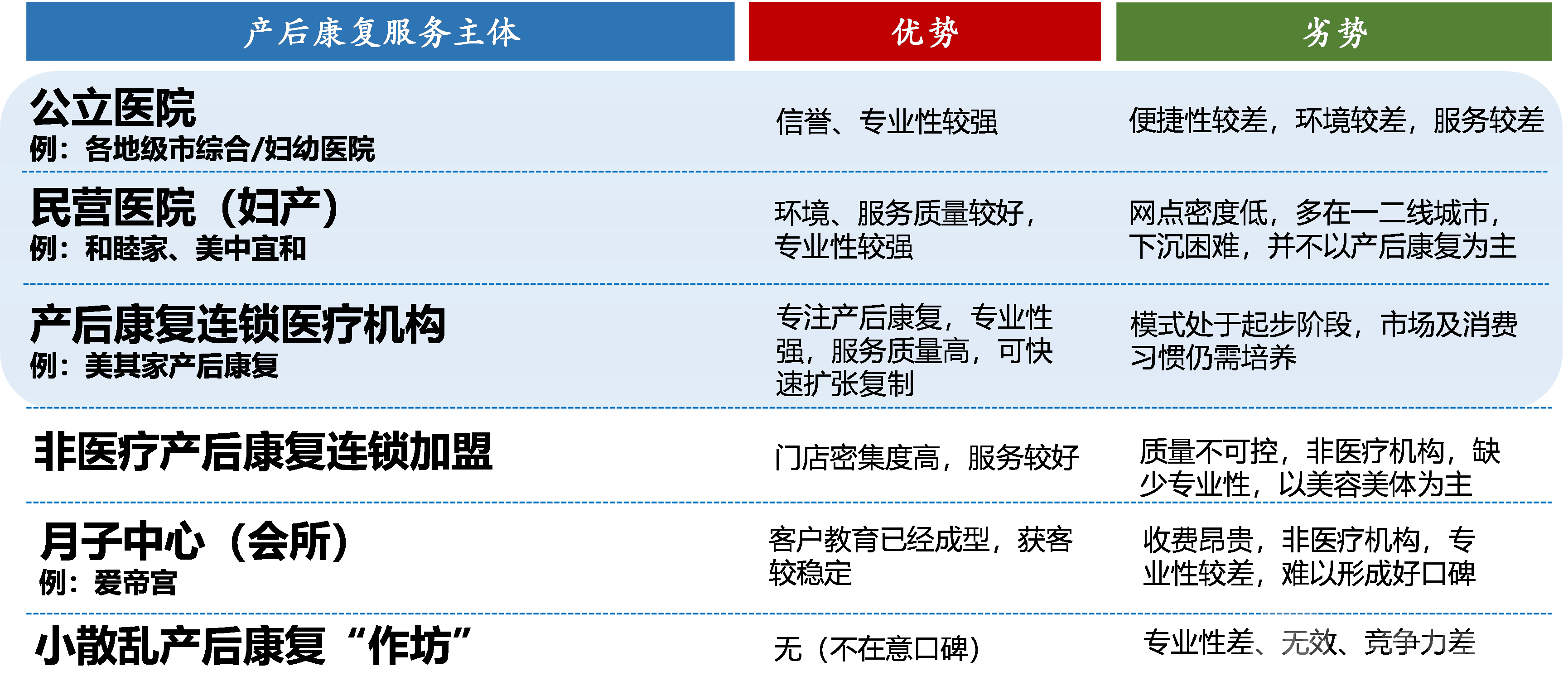
Public Hospitals:
Trusted by postpartum women for its high credibility and strong professionalism, the sector nonetheless suffers from a lack of unified market standards, leading to a pronounced “consumer-oriented” nature and relatively low prioritization by public hospitals. Postpartum rehabilitation is a comprehensive medical service involving nine disciplines, including obstetrics and gynecology, urology, proctology, orthopedics, dermatology, and rehabilitation medicine. Conditions such as postpartum urinary incontinence, diastasis recti abdominis, pelvic tilt, and striae gravidarum require assessments and tailored rehabilitation plans from specialists across different departments. This multidisciplinary complexity makes internal coordination within public hospitals particularly challenging. Furthermore, the public-welfare orientation of public hospitals limits their ability to attract mid- to high-end postpartum women through superior service and environment.
Postpartum Rehabilitation Center Affiliated with the Maternity Hospital:
Postpartum rehabilitation centers affiliated with private obstetrics and gynecology hospitals are predominantly concentrated in first- and second-tier cities. These centers are capable of establishing their own medical and nursing teams, face fewer challenges in delivering multidisciplinary and personalized solutions, and generally offer superior environments and service quality.
On April 24, 2019, United Family Healthcare (UFH) established its first Postpartum Rehabilitation Center in Beijing, and subsequently opened additional centers in Shanghai, Qingdao, Guangzhou, Tianjin, and other cities. UFH’s model leverages ten multidisciplinary teams to deliver professional solutions, including obstetricians/gynecologists, midwives, and rehabilitation physicians. With a focus on clinical improvement, the program is committed to fundamentally addressing conditions such as diastasis recti abdominis, symphysis pubis dysfunction, pelvic floor muscle dysfunction, and postpartum pain. Furthermore, it provides comprehensive support spanning obstetrics and gynecology, rehabilitation, psychology, and nutrition for other common postpartum issues, including postpartum depression, blocked milk ducts (mastitis), fat accumulation, and postpartum scarring.
Professional Chain Medical Institution for Postpartum Rehabilitation:
Beijing Meiqijia Postpartum Rehabilitation Medical Group is a leading interdisciplinary, directly-operated chain of postpartum rehabilitation medical institutions in China. Its core expert team hails from Peking Union Medical College Hospital, the PLA General Hospital (301 Hospital), and medical investment firms, possessing many years of clinical and operational experience in postpartum and pelvic floor rehabilitation within Grade IIIA hospitals. The group also assumes the critical responsibility of training postpartum rehabilitation departments at Grade IIIA maternal and child health hospitals.
Meiqijia Postpartum Medical Care provides women with a one-stop, systematic suite of prenatal and postpartum services. As a comprehensive healthcare institution integrating nine specialized disciplines—including obstetrics and gynecology, urology, proctology, breast surgery, rehabilitation medicine, and dermatology—it offers professionalized health management solutions. This model transforms the traditional postpartum rehabilitation paradigm, which has predominantly focused on obstetrics and addressed only the female middle pelvic compartment, thereby failing to comprehensively resolve the multifaceted issues arising from childbirth (affecting the anterior, middle, and posterior pelvic compartments, as well as the breasts).In 2019, Meiqijia opened its first directly operated off-site postpartum rehabilitation center in Shandong, a province with a high birth rate. Within the following year and a half, it successively expanded into cities such as Zibo, Weifang, and Yantai, emerging as a leader among chained professional postpartum rehabilitation medical institutions. Furthermore, Meiqijia has provided professional training to tertiary-level maternal and child health hospitals in 13 cities across Shandong. To date, it has trained over 3,000 medical personnel through online and offline channels, continuously supplying professionally skilled postpartum rehabilitation talent. Serving as a medical pilot program for targeted graduate cultivation at institutions such as Weifang Medical University, Binzhou Medical University, and Qilu Medical University, Meiqijia has made significant contributions to the standardized and professional development of the postpartum rehabilitation industry.
Postpartum Care Center:
Domestic postpartum care centers primarily operate on a residential basis, offering bundled packages that include a series of nursing services and products tailored for new mothers and newborns. As these centers are not classified as medical institutions, they are prohibited from providing therapeutic services or utilizing large-scale medical equipment, and they cannot engage in medical-grade postpartum rehabilitation. The quality of service, management standards, and profitability vary significantly across the industry, creating certain uncertainties for future development. However, postpartum care centers can provide recommendations based on specific postpartum symptoms experienced by mothers. Additionally, some centers have begun collaborating with medical institutions to implement early warning and preventive measures for postpartum conditions.
Home-Based Postpartum Caregiver:
Postpartum doulas have a short development history in China. The industry as a whole is in its growth stage, lacking unified training standards and certification norms. The quality of postpartum doulas varies significantly, resulting in a relatively chaotic market landscape.
President Shi of Meiqijia Postpartum Medical Group stated that medical institutions possess inherent advantages in providing postpartum rehabilitation services. This is due to the collaborative support of specialized teams, including obstetricians and gynecologists, pediatricians, rehabilitation therapists, and nurses, as well as strict operational protocols and comprehensive medical facilities. These safeguards ensure better care for both mothers and newborns. As the number of pregnancies increases, postpartum symptoms become more pronounced, necessitating adjunctive treatment provided by professional medical institutions and healthcare personnel.Service quality and therapeutic efficacy will become the criteria for maternal selection. Postpartum services provided by non-medical institutions fail to meet the requisite standards of quality and effectiveness, and will be eliminated in future competition.
Postpartum rehabilitation encompasses a wide range of programs, primarily focusing on three aspects: diet, psychology, and exercise. The exercise component specifically addresses issues related to three key areas: the reproductive system, the mammary glands, and body shape.
Among various rehabilitation programs, pelvic floor rehabilitation within the reproductive system is particularly crucial. The female pelvic floor muscles are closely connected to many vital organs; thus, even a minor issue can have systemic implications. Injuries caused by pregnancy and childbirth lead to reduced elasticity of the pelvic floor muscles in postpartum women, which can result in consequences such as pelvic organ prolapse and urinary incontinence, adversely affecting both their physical and mental health.
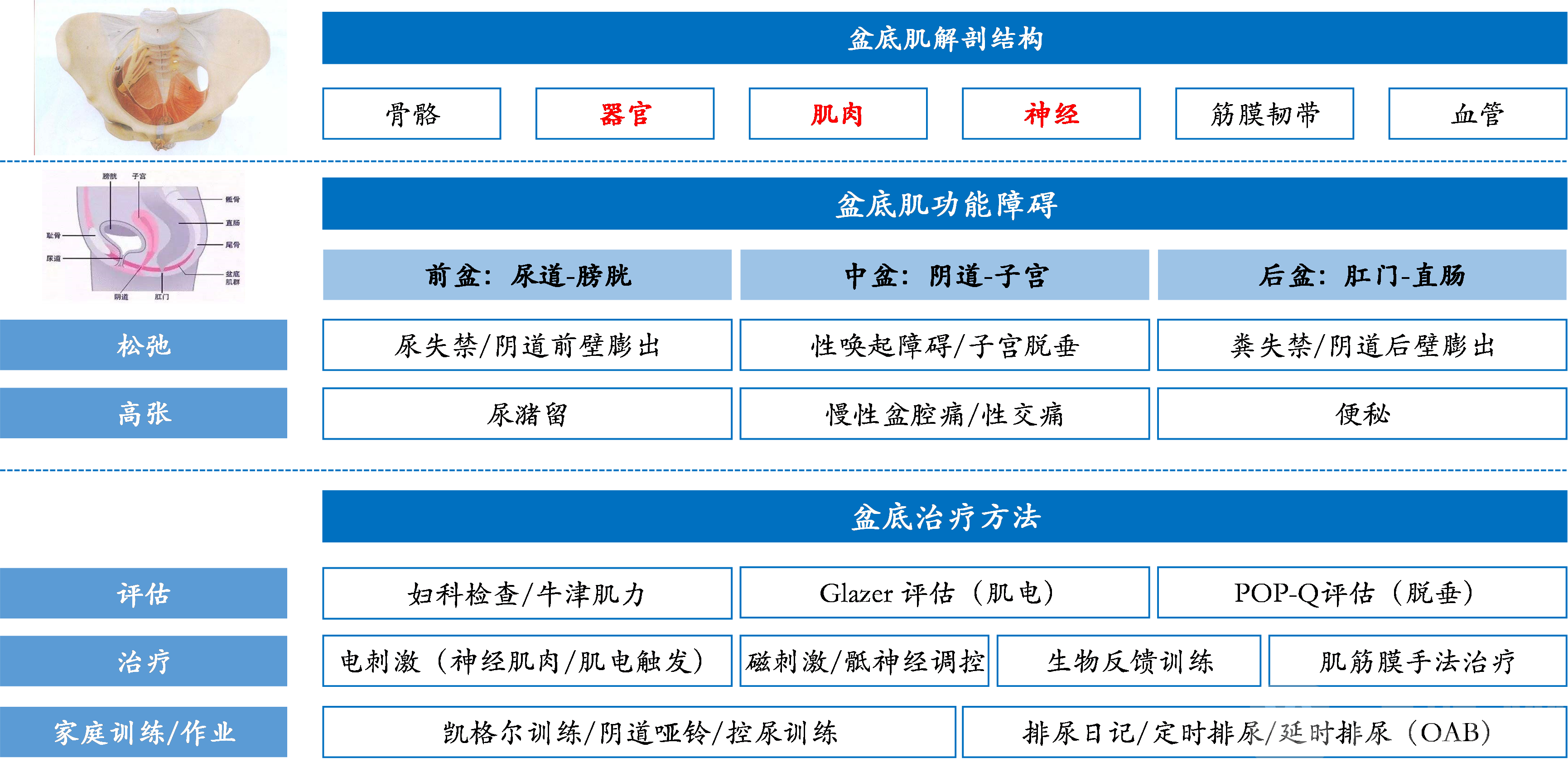
Figure: Pelvic Floor Rehabilitation Medicine System, Source: Meiqijia Postpartum Rehabilitation Medical Institution
In 1998, the first International Consultation on Incontinence (ICI) held in the United Kingdom designated behavioral therapy and pelvic floor rehabilitation as the preferred initial treatment modalities. Pelvic floor rehabilitation serves a dual role in the clinical management and prevention of pelvic floor disorders. As the cornerstone of pelvic floor rehabilitation, pelvic floor muscle training is widely endorsed by the global obstetrics and gynecology community due to its minimal adverse effects. Its therapeutic value in managing pelvic floor dysfunction is increasingly recognized.
Postpartum rehabilitation equipment is an important tool designed to help postpartum women address post-delivery issues. It is specialized medical equipment dedicated to the screening and treatment of postpartum conditions, as well as postpartum body contouring and recovery. Primarily utilizing physical therapy modalities such as bio-stimulation and electrical stimulation, it targets local neuromuscular structures to activate cellular tissues, thereby restoring muscle elasticity and tone within the course of treatment. This equipment is widely used in healthcare institutions.
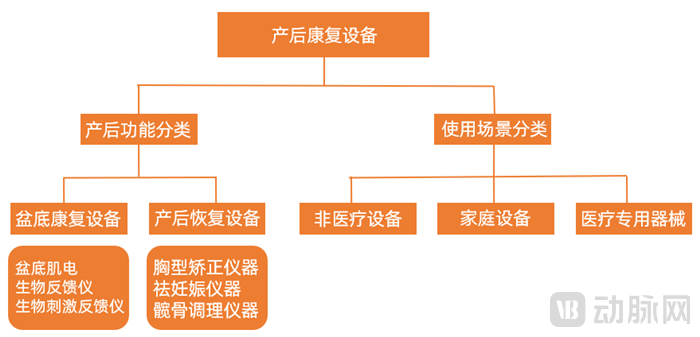
Pelvic floor rehabilitation devices are essential tools for pelvic floor muscle training. As medical devices, pelvic floor rehabilitation equipment must comply with various medical device standards, resulting in high barriers to market entry and technical requirements. Consequently, only a few medical technology companies compete in the market for medically dedicated rehabilitation devices, whereas the non-medical postpartum rehabilitation device market is fragmented among numerous small and medium-sized enterprises.
From the perspective of the postpartum rehabilitation equipment industry chain, upstream participants are primarily engaged in the production of raw materials and components such as chips, sensors, and hardware parts; midstream participants consist of brand owners and contract manufacturers responsible for product research, development, and assembly; downstream participants include medical institutions, rehabilitation centers, and household users.
According to research data from NewSight, China's postpartum rehabilitation equipment industry has entered a phase of rapid development. In 2020 alone, the market size for pelvic floor muscle postpartum rehabilitation electrical stimulation medical devices reached RMB 760 million, representing a year-on-year increase of 31.5%.
According to data from the "Overview of China's Postpartum Rehabilitation Equipment Industry in 2019," the research, development, and production of medical-specific devices require enterprises to obtain medical device certifications, accounting for approximately 45% of the postpartum rehabilitation equipment market. As the performance parameters of postpartum rehabilitation equipment continue to improve, the time required for devices to assist users in diagnostic screening and treatment is constantly decreasing, and lightweight, compact, and portable home-use products are entering the postpartum rehabilitation equipment market.
VCBeat has compiled a list of medical companies whose core business or product offerings include postpartum rehabilitation equipment, such as pelvic floor rehabilitation devices:
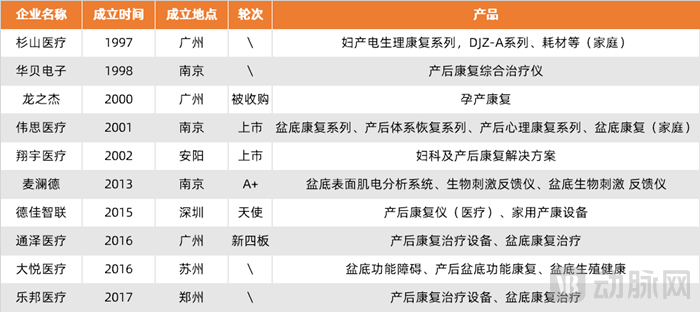
According to the "2019 Overview of China's Postpartum Rehabilitation Equipment Industry" report, the market concentration of China's postpartum rehabilitation equipment industry has shown a year-on-year increasing trend, with the combined market share of the two leading enterprises, Vishee Medical and Mailande, exceeding 40%.
Vishee Medical:
Vishee Medical is a leading enterprise in the postpartum rehabilitation equipment industry, with business operations spanning three major product lines: postpartum rehabilitation, psychiatric rehabilitation, and neurological rehabilitation. In its postpartum rehabilitation segment, the company has developed various categories of rehabilitation medical devices and products, including electrical stimulation, magnetic stimulation, and electrophysiology solutions, thereby establishing a comprehensive portfolio of rehabilitation products and integrated solutions. Vishee Medical was listed on the STAR Market in 2020.
Vishee Medical’s products cover both the healthcare institution and home user markets, forming a product portfolio that includes pelvic floor rehabilitation, postpartum body contouring recovery, postpartum psychological rehabilitation, and home-based pelvic floor rehabilitation.
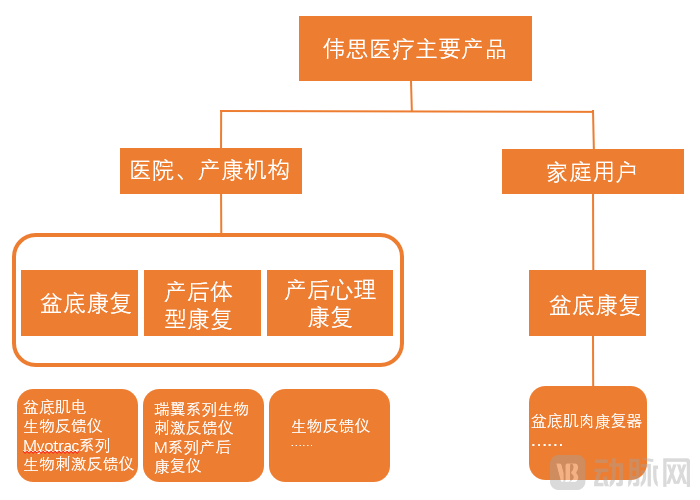
Vishee Medical has deployed distinct product portfolios targeting the mid-to-high-end pelvic floor medical market and rehabilitation market, as well as the mid-to-low-end pelvic floor medical market and out-of-hospital market. Furthermore, the company is engaged in the research and development of next-generation products, including magnetic stimulators and rehabilitation robots. Through years of accumulation, Vishee Medical has mastered core technologies with independent intellectual property rights across its technological platforms in electrical stimulation, magnetic stimulation, and electrophysiology.
Meland:
Mailande is primarily engaged in the research and development, production, and sales of pelvic floor rehabilitation equipment and clinical solutions. The company continuously innovates in the fields of pelvic floor rehabilitation, postpartum recovery, home-based rehabilitation, and medical information services. Its main products include pelvic floor surface electromyography (sEMG) analysis systems, bio-stimulation feedback devices, and pelvic floor bio-stimulation feedback devices. Mailande provides services to nearly 10,000 medical institutions and out-of-hospital care facilities.
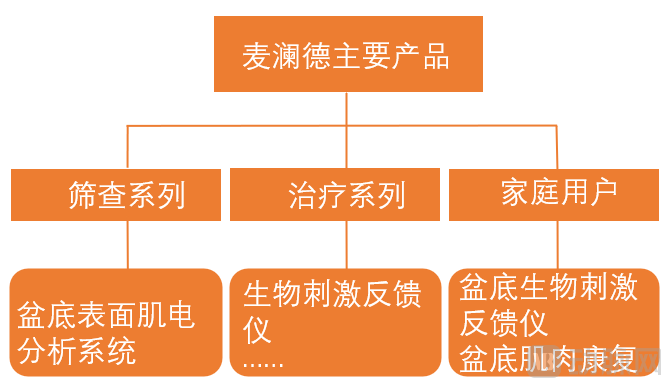
Furthermore, Mailande is actively expanding into medical cloud services and developing information software for the tiered diagnosis and treatment of pelvic floor disorders. In alignment with national healthcare reform directions and requirements, the company is establishing medical consortia among hospitals to create a nationwide network for pelvic floor diagnosis and treatment covering medical institutions at all levels. This initiative aims to ultimately build a big data platform for pelvic floor health, facilitating multi-disciplinary, multi-center, and multi-dimensional research collaboration among clinicians within the medical consortia, enabling two-way referrals, optimizing the allocation of medical resources, and improving diagnostic and therapeutic efficiency.
Mamakang:
Mamakang focuses on the field of intelligent postpartum rehabilitation, particularly on the research and development of smart home-based postpartum rehabilitation products and related services. Between 2017 and 2019, Mamakang launched multiple products covering various postpartum care scenarios, including homes, rehabilitation centers, community primary healthcare facilities, maternal and child health hospitals, and physician clinics. For five consecutive years, it ranked first in sales within its specific consumer product category, serving over 400,000 Chinese mothers.
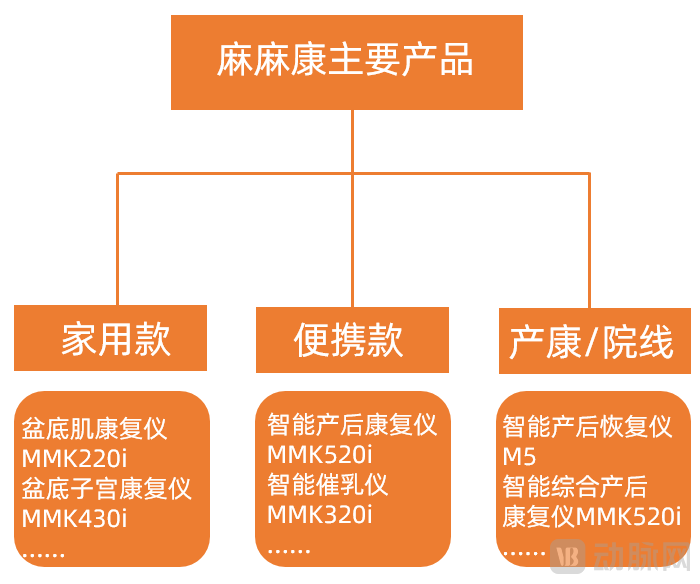
In 2017, the Mamakang APP was launched, providing users with real-time dynamic muscle strength data analysis to enable intelligent health management. By incorporating engaging animated voiceovers and multimedia game-based training scenarios, it enhanced therapeutic outcomes. Mamakang also initiated the “Mother’s Fulcrum” Maternal Health Care Program, aiming to empower the industry through four key pillars: salons, public welfare initiatives, summits, and clubs.
Currently, less than 20% of postpartum women in China complete postpartum screening and full rehabilitation courses. This is due to scarce medical resources, insufficient professional talent, and the inconvenience for new mothers to travel with their infants. The contradiction between the growing rehabilitation needs of postpartum women and the unbalanced development of the social postpartum rehabilitation industry is becoming increasingly acute.Rehabilitation and nursing care differ in focus between institutional and home settings. For postpartum women, postnatal care should be a continuous process rather than a single follow-up visit at six weeks..” Fu Bowen, founder of Mamakang, stated that it is possible to build a closed-loop system covering all application scenarios both within and outside postpartum rehabilitation centers or stores, thereby improving the rehabilitation outcomes for postpartum women.
Misunderstandings abound due to a lack of awareness. Misconceptions such as “postpartum rehabilitation seems unnecessary for daily life,” “it is too expensive,” and “there is not enough time” remain prevalent. Furthermore, the fragmented and chaotic market conditions have also shaped postpartum women’s perceptions of the postpartum rehabilitation sector.
In addition to the lack of scientific postpartum education for new mothers, the shortage of professional postpartum rehabilitation talent is also a major challenge facing the development of China’s postpartum rehabilitation industry. On one hand, as an emerging sector in China, the industry lacks well-established standards and entry barriers; most “therapists” receive only brief training from institutions, and some can even obtain “certifications” simply by paying fees. On the other hand, first-tier cities and large hospitals exert a strong “siphon effect” on postpartum rehabilitation professionals, leaving practitioners in third- and fourth-tier cities with limited access to specialized training and continuous on-the-job education, thereby hindering their ability to align with advanced international therapeutic concepts.
Currently, China has not yet enacted specific laws and regulations targeting the field of medical-grade postpartum rehabilitation. However, since 2018, development plans and operational standards for medical-grade postpartum rehabilitation have been gradually introduced. In the *Maternal and Infant Safety Action Plan (2018–2020)*, the National Health Commission emphasized the development of specialized maternal and child health disciplines to promote advances in postpartum care. The China Health Care Association and United Family Healthcare published quality control and operational standards for medical institutions providing postpartum rehabilitation services in the *2018 White Paper on Postpartum Rehabilitation Services in China*. Chen Zhihuan, Vice President of Mamakang, further pointed out that the postpartum rehabilitation industry suffers from insufficient specialization, inadequate staffing, and a lack of authoritative talent certification standards and training institutions. He called for stronger collaboration between industry associations and enterprises to accelerate the introduction of relevant standards and supportive policies.
“Continuously improving the quality and standards of medical services, implementing business models aligned with the founding team’s core DNA, establishing a stable and sustainable customer acquisition system, strengthening market education, and building a robust talent development framework are key factors for the sustainable growth of the medical postpartum care industry,” said Dean Shi.
Overall, the gradual relaxation of restrictions on having a third child provides an additional option for individuals of appropriate childbearing age, rather than imposing a mandatory requirement. The decision to have children or not, and whether to have more or fewer, should be based on individual circumstances. There is currently no scientific evidence to suggest a necessary correlation between the number of children and the quality of parenting. The key to successful child-rearing lies primarily in parental responsibility and the willingness to make the necessary efforts.
We extend our gratitude to the following guests for accepting our interview requests and providing relevant information (listed in no particular order): Director Shi of Meiqijia Postpartum Medical Group; Fu Bowen, Founder of Mamakang; Chen Zhihuan, Vice President of Mamakang; and other contributors who preferred to remain anonymous.
Reference Link:
Vishee Medical Prospectus
Overview of China's Postpartum Rehabilitation Equipment Industry in 2019
New Frontier in Postpartum Recovery: From Traditional Confinement to Medical-Grade Postpartum Care