

Rapid Medical, Developer of the World’s First Adjustable and Fully Radiopaque Thrombectomy Stent, Attracts Strategic Investment from MicroPort NeuroTech

Rapid Medical
Neurovascular Interventional Device Developer
“By empowering physicians to remotely adjust devices based on anatomical structures, we have revolutionized the field of vascular interventional devices,” said Ronen Eckhouse, Co-Founder and CEO of Rapid Medical.
Rapid Medical is a medical device company founded in 2008 and headquartered in Israel, dedicated to developing safe and effective neurovascular interventional devices. The company independently developed the world’s first adjustable, fully radiopaque thrombectomy stent, improving treatment outcomes for patients with ischemic stroke.
Targeting the demand for vascular disease treatment in the medical market, Rapid Medical focuses on developing controllable and visualizable neurovascular interventional devices.
The company has developed the world’s first controllable thrombectomy stent, which can be used to treat ischemic stroke. This device leverages biological principles to adsorb impurities from arterial vessels and remove them from the body without causing rejection, thereby achieving revascularization.
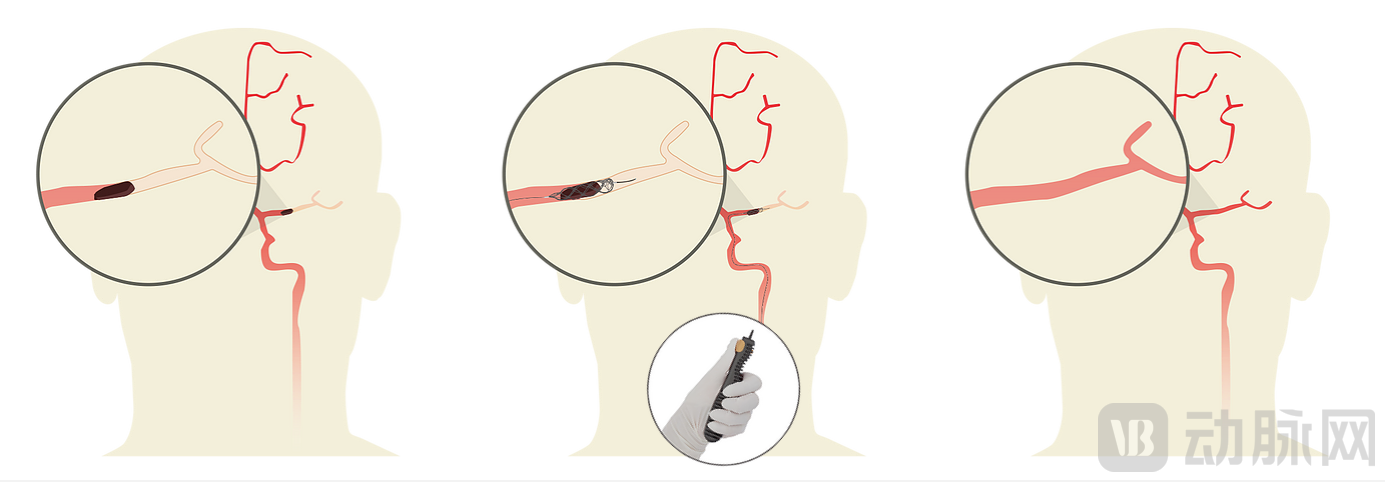 Mechanism of Action of Tigertriever Source: Rapid Medical Official Website
The core of this thrombectomy device is aControl Guidewire, it is located inside the device, with its distal end connected to the tip of the stent and its proximal end linked to the slider on the control handle. Medical personnel can release and adjust the outer diameter of the stent by manipulating the slider, thereby better accommodating the vessel dimensions in patients with acute ischemic stroke. Furthermore, during the withdrawal of the device from the vessel after embolus capture, physicians can moderately reduce the stent size via the control handle to minimize the risk of vascular injury.
Tigertriever employs a unique 3D braiding technology,Each braided filament is radiopaque., with full visualization throughout the procedure. The physician can monitor the stent status in real time and assess the relationship between the stent and the thrombus based on the stent’s morphology.
Vascular anatomy in patients with acute ischemic stroke is complex. Typically, multiple adjustments of the deployed thrombectomy stent are required to accommodate stenotic vessels. However, as stent retriever thrombectomy is highly time-sensitive, achieving optimal therapeutic outcomes within a narrow time window is critical. The visibility and controllability of Tigertriever play a significant role in this regard. Physicians can adjust the stent configuration in real time based on the patient’s vascular anatomy, substantially enhancing the safety and efficacy of the thrombectomy procedure.
Meanwhile, the braided filaments of the Tigertriever stent can slide freely, significantly enhancing its clot-engagement capability under the large-pore design specifications. During clot engagement, the braided filaments maintain stability, thereby increasing the likelihood of successful recanalization. Furthermore, this stent exhibits high vascular compliance; its “J”-shaped soft tip and retractable configuration substantially reduce the risk of vascular injury during interventional procedures.
Rapid Medical conducted the multicenter TIGER study in the United States, in which 160 patients across 17 centers underwent treatment with the Tigertriever between May 2018 and March 2020. According to the study results released this March, the Tigertriever device is highly effective and safe for thrombus removal in patients with large vessel occlusion stroke who are eligible for mechanical thrombectomy, compared with Stryker’s Trevo and Medtronic’s Solitaire stent retrievers.
Furthermore, to accommodate the vascular anatomy of a broader range of patients with ischemic stroke and to remove more challenging thrombi, Rapid Medical has developed thrombectomy stents in various models.
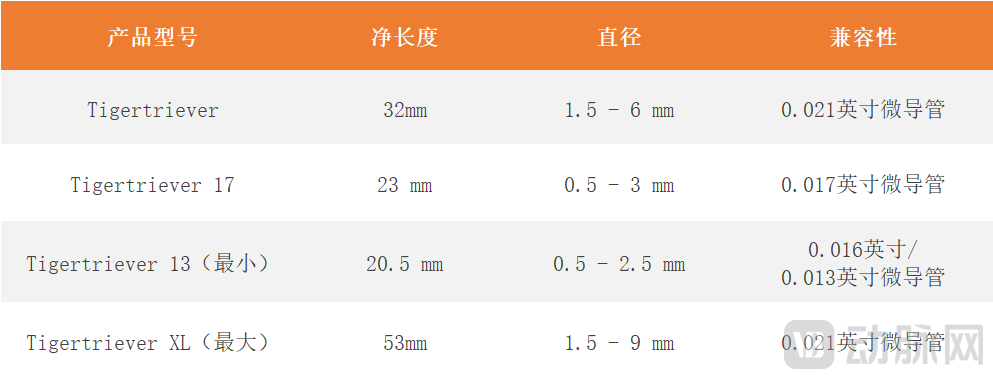
Tigertriever 13 is an upgraded version of Tigertriever, with optimizations built upon the original Tigertriever.Remote Control Function. It is the smallest product in the Tigertriever series and the only one in the world that can be used forClearing Thrombi in Deep Cerebral Regionsthrombectomy stent.
In contrast, the Tigertriever XL is the largest device in the Tigertriever product series. With a net length of 53 mm and an adjustable diameter ranging from 1.5 mm to 9 mm, it can accommodate vessels up to 53 mm in length and 9 mm in diameter. Although the Tigertriever XL is currently the largest and longest thrombectomy stent available, it can be delivered through a microcatheter with an inner diameter of 0.021 inches.
Rapid Medical’s Tigertriever product series has obtained CE marking in its entirety; furthermore, the Tigertriever 17 and Tigertriever have received FDA clearance.Tigertriever passed the NMPA’s special review application for innovative medical devices in May 2020, entering the “green channel” for special review.。
Anchored in the neurointerventional device market, Rapid Medical not only focuses on patients with ischemic stroke but also aids in the treatment of patients with intracranial aneurysms, committed to improving the success rate of coil embolization procedures.
Comaneci is an independently developed aneurysm embolization assist device designed for the treatment of intracranial wide-necked, tiny, and fusiform aneurysms. As the first controllable and fully visualized coil embolization assist device, it provides temporary protection to the parent artery during coil embolization, preventing coil prolapse while maintaining blood flow, thereby reducing the risk of parent vessel occlusion.
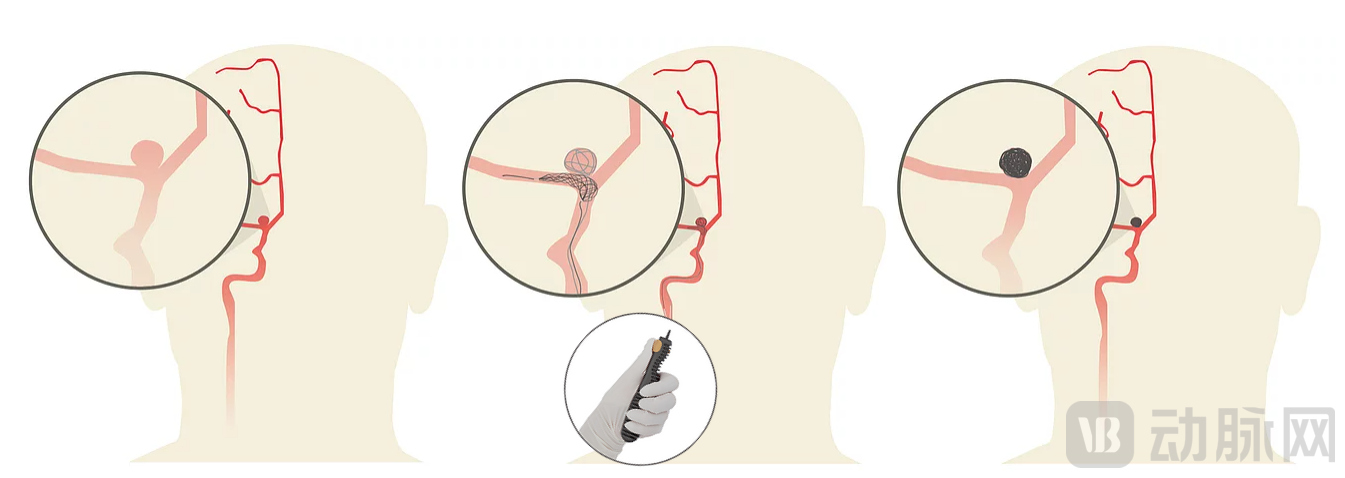
Comaneci Mechanism of Action Source: Rapid Medical Official Website
Moreover, the Comaneci device serves only as a temporary adjunct and is not left in the body, thereby avoiding the risk of thrombosis associated with long-term stent implantation and eliminating the need for prolonged antiplatelet therapy. As stated in Rapid Medical’s slogan, “LEAVE NOTHING BEHIND,” the Comaneci device enhances procedural success and safety while leaving no implant behind, thus reducing the risks associated with coil embolization.
Furthermore, Rapid Medical’s independently developed Columbus is the world’s first steerable neurovascular guidewire. Previously, physicians were unable to directly control the distal tip of the guidewire, necessitating multiple withdrawals to reshape it before positioning it at the target site. In contrast, medical professionals can now manipulate the Columbus while it remains within the vessel, adjusting its trajectory and configuration on demand to precisely navigate the neurovasculature and surrounding vessels.
In 2008, Dr. Shimon Eckhouse and his son Ronen Eckhouse co-founded this neurovascular interventional device company. By empowering physicians to remotely adjust devices based on anatomical structures, they revolutionized the field of neurointerventional devices.
Currently, Dr. Shimon Eckhouse serves as the Chairman of the Board of Rapid Medical. He holds over 63 registered patents and has amassed extensive industry knowledge and entrepreneurial experience. He isFounder and CEO of Syneron Medical, the company is a globally leading publicly traded aesthetic equipment manufacturer. Furthermore, he is the founder of ESC Medical, which was once the world’s largest manufacturer of intense pulsed light (IPL) devices. It later merged with Coherent Medical Lasers to establish Lumenis, the world’s largest company specializing in light-based and medical laser technologies.
Like father, like son: Ronen Eckhouse, the current CEO of Rapid Medical, brings over a decade of experience in managing R&D and operational activities.
Dr. Walid Haddad joined the company in June 2017 as Chief Clinical Officer, overseeing all clinical activities. He is a multidisciplinary clinical science executive with over 15 years of experience in clinical research within the biopharmaceutical industry. Prior to joining Rapid Medical, he led various research initiatives, including multicenter clinical trials across Europe and the United States, spanning diverse therapeutic areas such as cardiothoracic surgery, obesity, diabetes, and interventional cardiology.
Through the concerted efforts of the father-and-son team and the expertise and experience of professionals across various fields, Rapid Medical has gradually gotten on track. Currently, the company has multiple products that have obtained CE certification and FDA approval, and it has launched a global strategic layout in the neurointerventional industry.
To date, Rapid Medical has completed four rounds of financing.
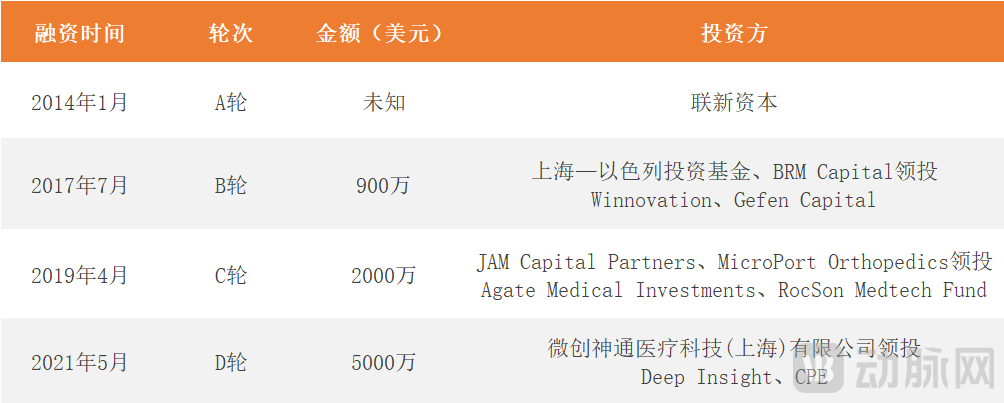
In May 2021, Rapid Medical completed its Series D financing round, led by MicroPort NeuroTech (Shanghai) Co., Ltd., a subsidiary of MicroPort Scientific Corporation, with a total amount of $50 million.Following this round of financing, MicroPort NeuroTech has become the largest shareholder of Rapid Medical.。
In fact, as early as 2019, MicroPort NeuroTech had already invested in Rapid Medical, becoming one of its shareholders, and secured exclusive rights to handle the registration and market launch promotion of Rapid Medical’s three flagship products—Tigertriever, Comaneci, and Tigertriever13—in the Greater China region.
MicroVention is dedicated to addressing hemorrhagic and ischemic cerebrovascular diseases, boasting a comprehensive portfolio of interventional stroke treatment products that are highly complementary to Rapid Medical’s offerings. Through this further collaboration, both parties will fully integrate domestic and international market resources to provide physicians and patients worldwide with complete stroke treatment solutions.
Stroke, also known as cerebrovascular accident, is characterized by high incidence, high disability rate, high mortality, and high recurrence rate. The "China Stroke Prevention and Treatment Report 2018" points out that stroke is the leading cause of death and disability among adults in China. Over the past 30 years, the incidence of stroke in China has risen sharply, with an estimated 1.96 million patients dying from stroke annually nationwide.
Stroke can be further classified into ischemic stroke and hemorrhagic stroke, with ischemic stroke accounting for 60% to 70% of all stroke cases.
For the treatment of patients with acute ischemic stroke, intravenous thrombolysis is the first-line therapy. According to the "Chinese Guidelines for Diagnosis and Treatment of Acute Ischemic Stroke 2018," intravenous thrombolysis is currently the primary measure for restoring blood flow. For some patients with contraindications to intravenous thrombolysis, mechanical thrombectomy may be used. Endovascular mechanical thrombectomy represents the most significant advance in the management of acute ischemic stroke in recent years and can significantly improve outcomes in patients with acute ischemic stroke caused by large artery occlusion.
Stent retrievers are the most commonly used devices in mechanical thrombectomy. Companies worldwide are striving for technological breakthroughs to improve recanalization rates, procedural time, and safety. Based on product updates both domestically and internationally, stent retrievers are evolving toward greater length and enhanced radiopacity. In this regard, the Tigertriever stent retriever demonstrates superior operability, representing a significant advancement in technological innovation that substantially reduces procedural difficulty and improves the efficacy of vascular recanalization.
From a market perspective, Stryker’s Trevo ProVue thrombectomy device, Medtronic’s Solitaire, and Johnson & Johnson’s Revive SE stent system hold significant global market shares. Solitaire was the first stent-based thrombectomy device introduced into clinical practice, while Trevo was the first fully visible thrombectomy stent available on the market, representing breakthroughs in terms of timing and technology, respectively.
Due to the high incidence of ischemic stroke in China, there is significant demand for the thrombectomy stent market. China’s thrombectomy stent industry started relatively late, with few companies entering the field, butBetween 2018 and 2021, a total of four products were approved by the NMPA for market launch.。
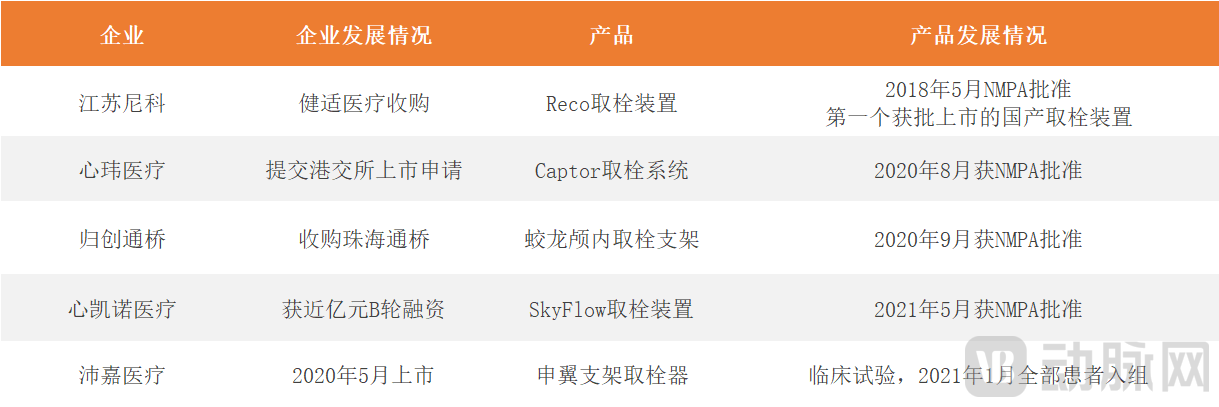
Among them, Jiangsu Niko’s RecoReco cerebral thrombus retrieval device, the first thrombectomy stent to be marketed in China, was approved in 2018; Captor Thrombectomy System by Xinwei Medical, the first domestically developed thrombectomy stent with multi-point radiopacity, was approved in 2020. Given this trend, domestically produced thrombectomy stents may have promising development prospects.