

China's Domestic Artificial Heart Duopoly: CoreHeart Medical and Reliant Medical in IPO Race Amid Intense Rivalry

Core Medical
Artificial Heart Series Product Developer

BrioHealth Solutions
Ventricular Assist Device Developer and Manufacturer
This spring, two leading companies in China's artificial heart sector, BrioHealth Solutions and Shenzhen Core Medical Technology Co., Ltd, have each been releasing positive news about their own developments.
In February, Core Medical provided a set of data in response to an inquiry from the Shanghai Stock Exchange: the company's domestic share of artificial heart implants reached 45.90% in 2024, and climbed to 52.86% from January to May 2025, firmly securing the top position in the industry.
By early March, another leading company in the industry, BrioHealth Solutions, announced that its U.S. wholly-owned subsidiary, BrioHealth Solutions, had successfully completed the 100th implantation surgery in the INNOVATE clinical trial for its next-generation artificial heart, the BrioVAD system, which is being conducted across the United States. This artificial heart, made in China, is gradually gaining recognition in the world's top medical markets.
At the end of last year, the two companies successively made a push for the capital market. On November 6, 2025, Core Medical submitted its prospectus, officially launching the IPO process on the STAR Market; just over a month later, BrioHealth Solutions' IPO application was also accepted by the Shanghai Stock Exchange, closely following in the race to become "China's first domestically produced artificial heart stock."
One company is rooted in Suzhou, and the other has risen in Shenzhen. HoweverIn terms of technology roadmap selection, market share competition, R&D progress, IPO process, and more, the two companies have long exhibited a "quantum entanglement"-like synchronicity.
Direct Competition
Artificial heart, a term that sounds like it's from a sci-fi movie, has actually long since become a reality in the medical field.
In the 1980s, the Hemopump invented by Dr. Richard Wampler of the United States was first used clinically, marking the beginning of the history of modern artificial hearts. Since then, artificial hearts, particularly left ventricular assist devices (LVAD), have played a crucial role in treating patients with advanced heart failure.
In the history of artificial hearts in China, BrioHealth Solutions is undoubtedly a pioneer.
In 2008, BrioHealth Solutions was founded in Suzhou when the field of artificial hearts in China was almost a blank slate. The company's founder, Chen Chen, armed with an academic background as a bachelor's degree holder from Tsinghua University and a doctorate from Sichuan University, as well as the international perspective gained as a visiting scholar at the University of Tokyo in Japan, dove headfirst into this "high-difficulty, high-investment, high-risk" sector.
After Chen Chen pioneered for 8 years, Dr. Yu Shunzhou also chose to enter the field by establishing Core Medical. A graduate of Harbin Institute of Technology who later pursued further studies at the University of California, Davis, and worked at Terumo Heart, a top artificial heart company in the U.S., this highly talented individual was deeply involved in the development of multiple artificial heart products overseas.
In 2021, five years after the establishment of Core Medical, BrioHealth Solutions reached a significant milestone: its self-developed product, CH-VAD, was approved for marketing. BrioHealth Solutions stated that this is China's first approved "fully magnetically levitated" artificial heart.
Compared with BrioHealth Solutions' 13 years of painstaking efforts, Core Medical's development pace is significantly faster.Established only 7 years ago, Yu Shunzhou's team launched the world's smallest and lightest implantable artificial heart, Corheart®6, which was successfully approved for marketing in June 2023.
Since then, an inevitable, overt and covert market competition has emerged between the two parties. The most intuitive feeling is in the market.
According to the prospectus disclosed by BrioHealth Solutions, as of the end of 2025, CH-VAD has completed more than 670 clinical implants in over 80 hospitals across China.
According to research by Professor Wang Xianqiang from Fuwai Hospital, Chinese Academy of Medical Sciences, from June 2017 to December 31, 2025, a total of 2,680 artificial heart implantation surgeries have been completed in 231 medical institutions across China.
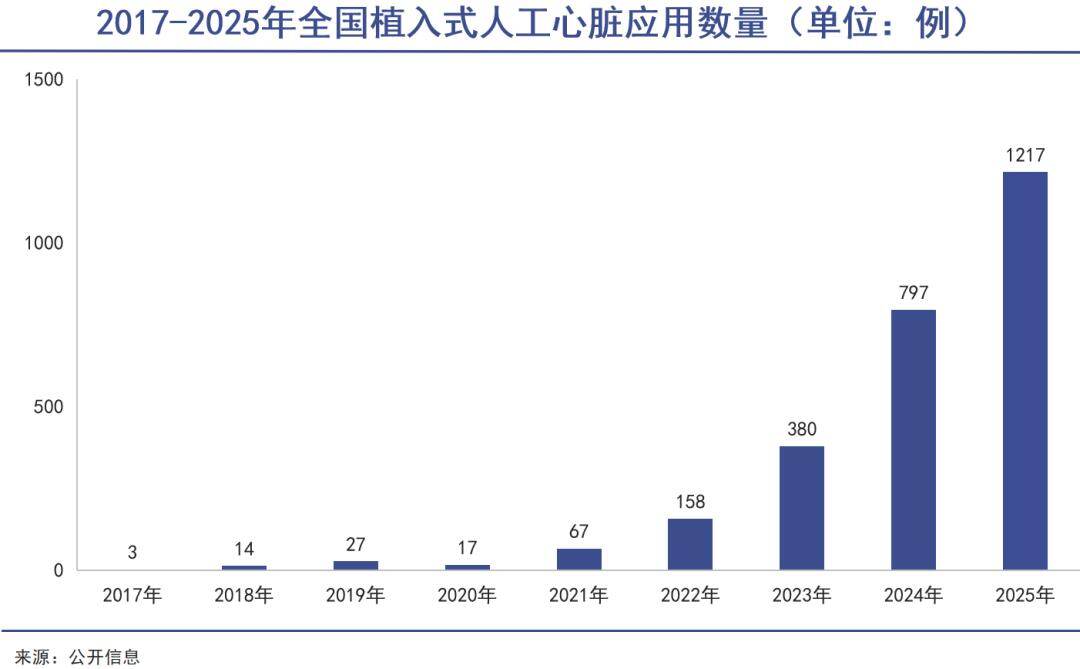
According to these data, the implantation volume of CH-VAD accounts for more than a quarter of the share.
However, after the launch of Corheart®6, with the core advantage of "miniaturization," its market penetration rate increased rapidly in just over two years. Data disclosed by Core Medical shows that the proportion of the company's artificial heart implants from January to May 2025 has already exceeded half of the market. This means that Core Medical's market share has surpassed all competitors, naturally including BrioHealth Solutions, which has been deeply involved in the field for many years.
Besides the competition on paper, some subtle confrontations also occur from time to time.
By the end of 2025, K.A.Dasse, an international authority on artificial hearts, published an article in the journal *Artificial Organs*, openly questioning whether Core Medical's Corheart®6 is truly a "fully magnetically levitated" artificial heart. He argued that a more accurate technical description would be "magnetic-assisted hydrodynamic bearing."
In response to the质疑, Core Medical swiftly responded, explicitly emphasizing that Corheart®6 has been authenticated by authoritative institutions in China as a "fully magnetically levitating centrifugal pump." It also directly pointed out that K.A. Dasse has long served as an advisory expert for BrioHealth Solutions.
In other words, Core Medical implied that there were competitors behind this质疑.
The IPO process initiated around the end of 2025 will further push this "entanglement" to its climax.
Common Dilemma
Of course, as companies, the reason both chose to push for an IPO is largely due to a shared, unavoidable reality: survival difficulties.
The prospectus shows that from 2022 to the first half of 2025, BrioHealth Solutions' operating revenue surged from 8.6115 million yuan to 72.0714 million yuan. However, its net profit attributable to parent company was -189 million yuan, -306 million yuan, -372 million yuan, and -193 million yuan respectively, with cumulative losses exceeding 1.06 billion yuan over three and a half years, and the scale of losses expanding year by year.
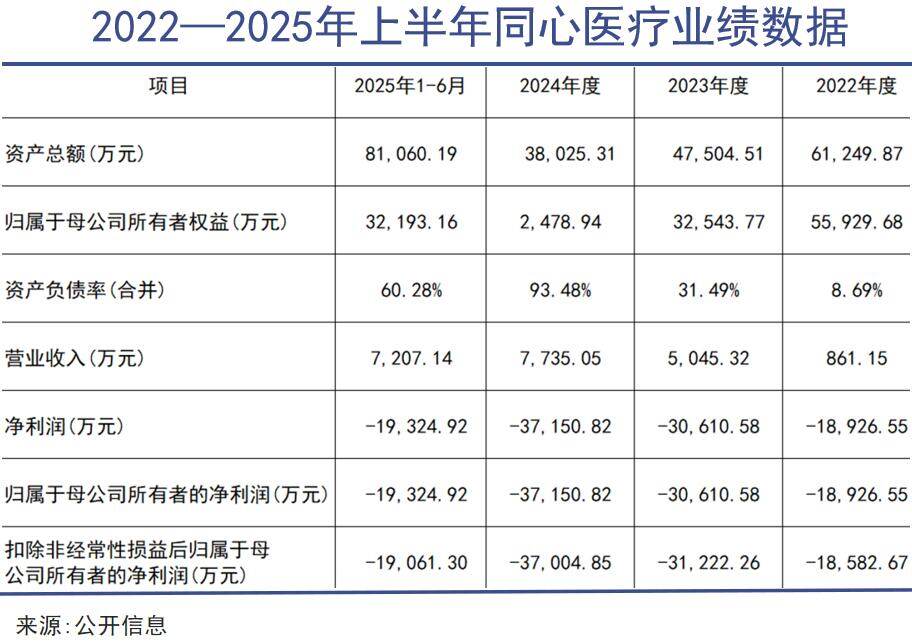
More worrying is that the company's debt repayment pressure once soared. By the end of 2024, BrioHealth Solutions' asset-liability ratio surged to 93.48%, nearing the brink of insolvency. Although in 2025, after completing a new round of financing, the asset-liability ratio dropped to 60.28%, the pressure to repay debts still persists. The ongoing "hemorrhaging" state has put the company's ability to continue operations under severe test.
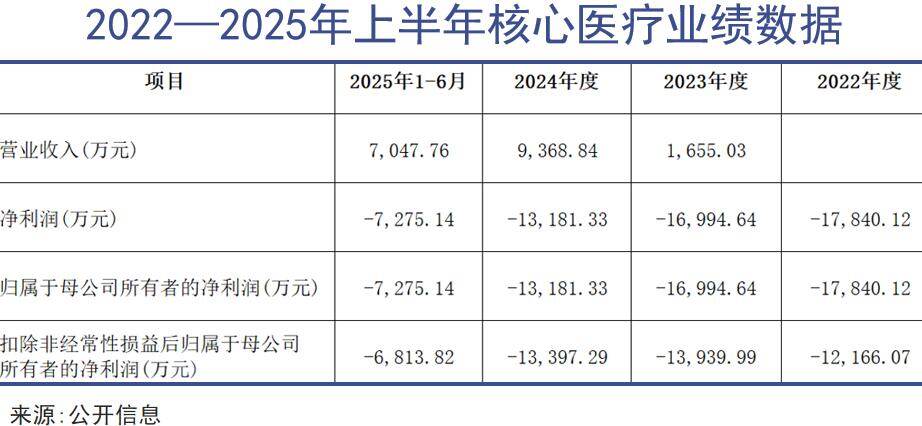
Core Medical's revenue growth has also been relatively rapid, but the losses are equally concerning. According to the prospectus, from 2022 to the first half of 2025, its attributable net profits were -178 million yuan, -170 million yuan, -132 million yuan, and -73 million yuan respectively, with cumulative losses amounting to approximately 553 million yuan.
Although the scale of losses has been narrowing year by year, external financing is still required to maintain daily operations and R&D investments.
Even the reasons why the two companies fell into survival difficulties are highly similar.
Internally, the singularity of product structure is a common weakness for these two companies.
Core Medical currently has two approved products, but its interventional CorVad® 4.0/6.0 series was just approved last December.Its revenue is entirely derived from the implantable product Corheart®6.
BrioHealth Solutions is in a relatively optimistic situation. Although only the CH-VAD product has been launched so far, its next-generation product, BrioVAD, has started contributing revenue in 2024. However, since it is still in the clinical trial stage, overall...Its stable performance can only be supported by CH-VAD.
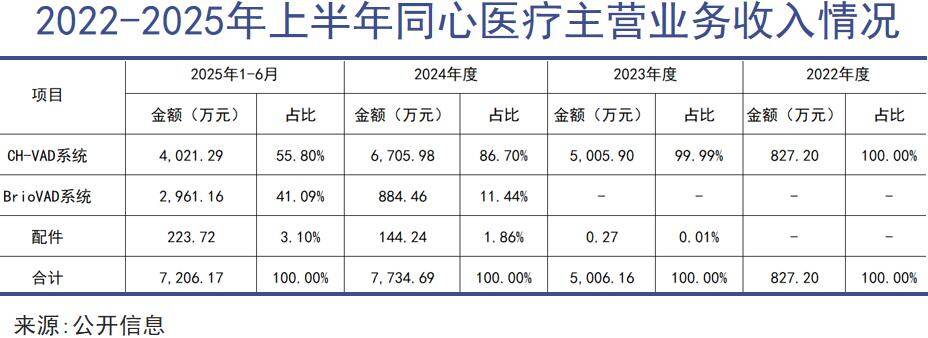
The singularity of product structure exposes both companies to the risk of "one misstep and the whole thing collapses" — if their core products encounter safety issues, a decline in market share, or face policy adjustments, the companies' operations will be directly impacted.
Secondly, the persistently high cost expenditure is the core reason for the continuous losses of the two companies. Artificial hearts are technology-intensive products that require substantial and ongoing investment in technology research and development, clinical trials, and product iterations. From 2022 to the first half of 2025, BrioHealth Solutions' R&D expenses were 93.8186 million yuan, 108 million yuan, 148 million yuan, and 93.1539 million yuan, respectively. Core Medical's R&D investment was also significant, with the proportion of R&D investment to operating income consistently exceeding 100%.
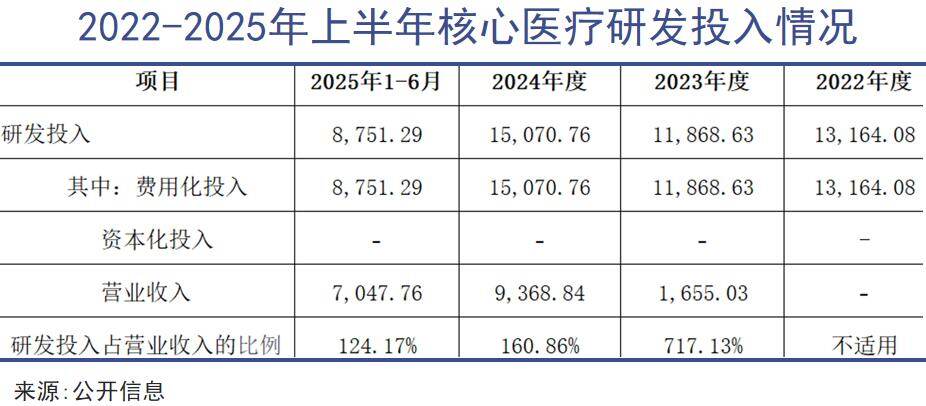
In addition to R&D investment, the continuously rising sales expenses have also become an important "cash-burning" aspect.
BrioHealth Solutions' sales expenses increased from 25.1909 million yuan in 2022 to 76.5604 million yuan in 2024, reaching 39.0286 million yuan in the first half of 2025; Core Medical's sales expenses also remained high, with cumulative sales expenses nearing 200 million yuan from 2022 to the first half of 2025.
High R&D and sales expenses, coupled with revenue from sales that has yet to achieve economies of scale, have led to the costs of the two companies consistently failing to cover expenditures. Even with revenue growth, it remains difficult to offset the losses.
It is precisely these common challenges that have led BrioHealth Solutions and Core Medical to simultaneously choose to push for an IPO by the end of 2025—going public and raising funds has become the optimal solution for them to escape the "hemorrhaging" dilemma and secure sustainable development capital.
But going public is just a new phase of their "entanglement," not the end.
Just the Beginning
It is foreseeable that the entangled path between BrioHealth Solutions and Core Medical will be long, determined by both the enormous demand and harsh reality of China's artificial heart market.
Heart failure, known as "the final battlefield of cardiovascular diseases," has a persistently high incidence rate and shows an increasing trend year by year.
According to a Frost & Sullivan report, by 2024, the number of end-stage heart failure patients in China has reached 1.566 million. Most of these patients cannot reverse their condition through medication and can only wait for a heart transplant. However, the reality is extremely harsh:In 2024, only 1,064 heart transplant surgeries were completed in China, with a supply-demand ratio as high as nearly 1,500:1. More than 99.9% of end-stage heart failure patients can only wait in despair for the end of their lives.
The emergence of artificial hearts has brought hope for life to these patients and also offered enterprises immense market potential. According to Frost & Sullivan's estimates, the market size of ventricular assist devices in China was 6 million yuan in 2021, grew to 260 million yuan in 2024, and is expected to reach 7.96 billion yuan by 2035.
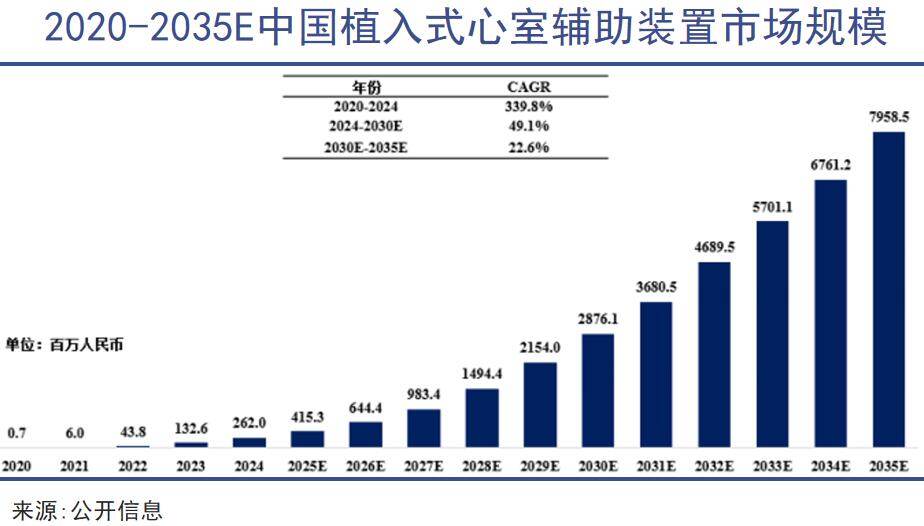
In the face of a huge market increase, BrioHealth Solutions and Core Medical, as leading companies in the industry, will not only share the dividends of industry growth but also continue to compete for the incremental market. This means that this "coexistence and competition" relationship will persist for a long time.
According to the prospectuses of both companies, the iterative version of BrioHealth Solutions' CH-VAD, named CH-VAD Plus, is expected to be approved for marketing in China by early 2026. At that time, it will directly compete with Core Medical's Corheart®6, creating a "two against one" situation.
But in the long term, Core Medical has laid out five implantable artificial heart products, effectively covering clinical needs from long-term to short-term support, left ventricular to biventricular support, and pediatric to adult support, seemingly having an edge in product thickness.
Moreover, Core Medical's invasive artificial heart has been approved for marketing, taking the lead in China. Additionally, a CNC invasive product is under development, giving them an edge in the invasive field.
Apart from the domestic market, both BrioHealth Solutions and Core Medical have set their sights on the broader overseas market, but with different focuses.
BrioHealth Solutions targets international mainstream markets such as Europe, the United States, and Japan.
In the U.S. market, BrioVAD, developed by BrioHealth Solutions, has received FDA approval to conduct a head-to-head randomized controlled clinical trial with the global leading product HeartMate 3. This makes it the first active implantable medical device from China to gain FDA approval for clinical trials.
In the European market, it has officially submitted the application for the pre-market clinical study BrioLife, which is expected to launch in the first half of this year.
In addition, the company is pushing for the expansion of BrioVAD indications to include late-stage heart failure in children, planning to conduct the Brio4Kids joint research in the United States and Japan, with an expected submission of a clinical trial application to the FDA in the first quarter of 2026.
Core Medical first set its sights on some less developed regions. Its Corheart® 6 successively obtained overseas marketing approval in Colombia in November 2024 and in Ukraine in March 2025, marking the "going global" milestone for a Chinese artificial heart enterprise to gain regulatory approval abroad.
Core Medical has not abandoned the developed markets such as Europe, the United States, and Japan. Corheart® 6 has submitted a CE registration application in the EU market and launched a multi-center clinical trial covering several top hospitals in the European cardiovascular field.
Therefore, despite the initial differences in strategy, as internationalization deepens, in the long term, the competition between BrioHealth Solutions and Core Medical is highly likely to extend to the international market.
For China's artificial heart industry, the competition between BrioHealth Solutions and Core Medical signifies progress. Through this ongoing "entanglement," China's artificial heart technology will continue to evolve, products will improve, and prices will become more affordable. Ultimately, this will bridge the significant gap between supply and demand in the current market and also help sever the tentacles of black markets worldwide.
This is precisely the true significance and value of technology for people.
This article is from the WeChat Official Account"Giant Tide WAVE", Author: Laoyuer, Editor: Yang Xuran, 36Kr authorized release.