

Ready, Set, Go: When Will the Gut Microbiome Industry Accelerate into the Lead?
“The six meridians are like rivers, and the stomach and intestines are like the sea.” — *Huangdi Neijing: Su Wen, Chapter 5: The Great Treatise on Yin-Yang and Its Corresponding Manifestations*
Ancient sayings drew analogies between natural phenomena and human tissues, embodying the Traditional Chinese Medicine (TCM) philosophy of the unity of heaven and humanity and harmonious coexistence. From the perspective of modern medicine, the symbiotic relationship between the human microecosystem and the host organism appears to corroborate this concept of harmonious balance from another angle.
As life science research advances, the relationship between the human microecosystem and health and disease is beginning to be revealed. A dynamic equilibrium exists between the two: balance corresponds to health, while imbalance leads to disease.
Gut Microbiota: The Knights and Barometers Safeguarding Human Health
In the human microecosystem, the gut microbiota is the largest and most complex component, with its bacteria classified into beneficial, harmful, and neutral species. In a state of good health, beneficial bacteria predominate, playing crucial physiological roles for the host.
A predominance of beneficial gut microbiota indicates a healthy intestinal environment. On one hand, beneficial bacteria facilitate the excretion and elimination of harmful substances, thereby supporting metabolic processes. On the other hand, they enhance immune function and inhibit pathogenic bacterial invasion. Furthermore, beneficial bacteria promote nutrient absorption and synthesize certain essential nutrients required by the human body.
Conversely, an imbalance in the structure of the gut microbiota will have adverse effects on human health. Numerous studies have demonstrated associations between the gut microbiota and various diseases, including gastrointestinal disorders, metabolic diseases, immune-mediated conditions, and psychiatric disorders. The currently identified associations are as follows.
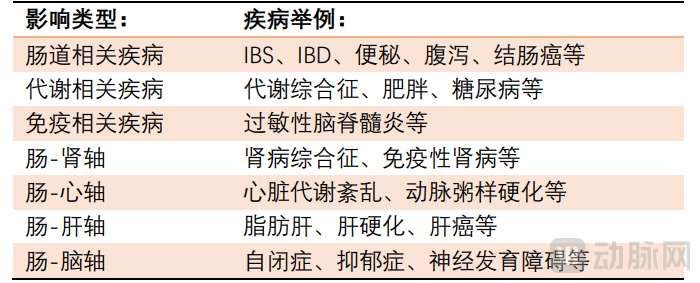
Source: Huoshi Chuangzao
It is precisely because of the close relationship between gut microbiota and diseases that gut microbiota testing has become an important approach to assessing human health status.
Thanks to advances in gene sequencing technology, research on the gut microbiome has become a hotspot in life sciences over the past few years. Earlier, Europe and the United States successively launched corresponding research initiatives. The United States initiated the Human Microbiome Project (HMP) in 2007, the European Union launched the Metagenomics of the Human Intestinal Tract project (MetaHIT) in 2008, and the United States again launched the National Microbiome Initiative (NMI) in 2016.
Research on the gut microecology has also gradually been incorporated into China’s national planning. In 2016, 17 institutions, including the Institute of Microbiology of the Chinese Academy of Sciences, jointly participated in the National Key R&D Program during the 13th Five-Year Plan period, under the project “Health Functions of Probiotics and Research on the Mechanisms of Food Nutrition and Metabolism Based on Gut Microbiomics.” In 2017, the Chinese Academy of Sciences launched its Microbiome Initiative. Subsequently, numerous studies related to gut microecology have been carried out one after another.
Advances in Gut Microbiome Research Are Set to Drive the Growth of the Gut Microbiota Industry. This article reviews the development status of companies in China’s gut microbiota sector to explore the industry’s growth within the broader health and wellness ecosystem.
Continuous Influx of Participants, with a Multi-Faceted Business Layout Gradually Maturing
Using “gut microbiota (gut microecology)” as the keyword, this article provides a comprehensive overview of 22 companies engaged in the gut microbiota business, summarized in the table below.
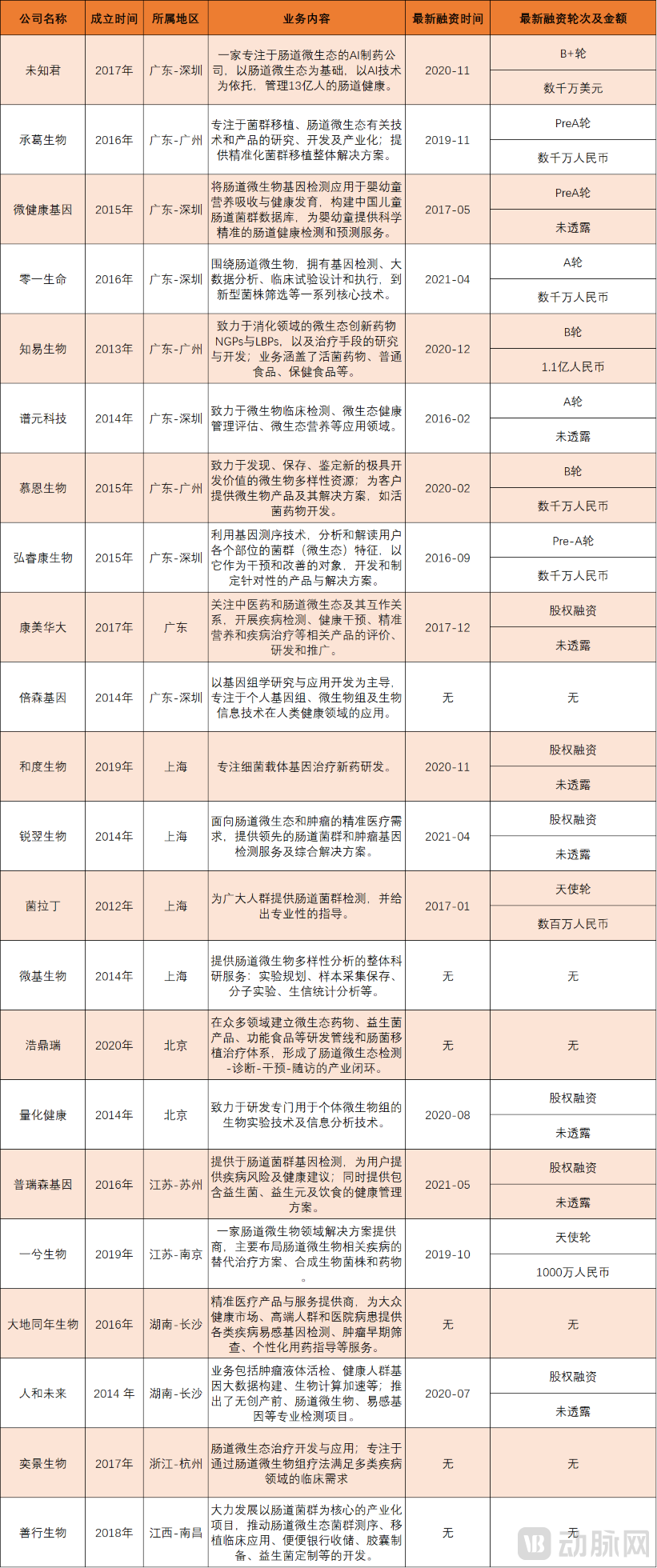
Source: Artery Orange, Tianyancha
Business initiatives centered on the gut microbiota, such as probiotics, have already been widely adopted in the food and nutrition markets; this article will not elaborate further on these applications. Instead, we focus primarily on two major areas: diagnostics and therapeutics.
In terms of testing, domestic companies mainly focus on gut microbiota testing and health management. In terms of treatment, there are services related to fecal microbiota transplantation (FMT) and innovative drug development.Below, we will explore the business layout characteristics of companies in the gut microbiota field by examining the operational features, geographic distribution, and financing status of these 22 enterprises.
As shown in the table above, these enterprises primarily fall into three categories: genetic testing companies, biopharmaceutical companies, and biotechnology firms that integrate genetic testing technologies with the development of therapeutic solutions. Based on the differences in products and services offered by these 22 companies, their business operations can be further classified into six categories: drug research and development, health management, food development, gut microbiota testing, fecal microbiota transplantation, and others (such as providing scientific and technical services). The distribution is illustrated in the figure below.
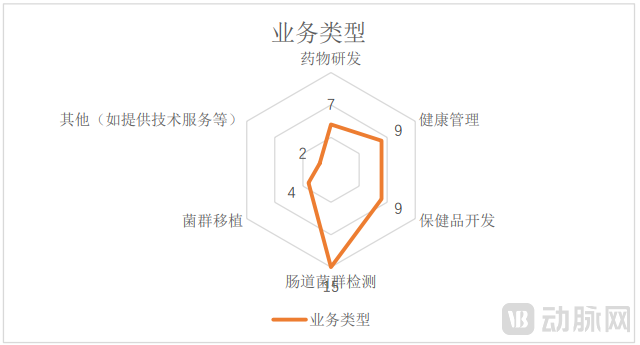
First, overall, the company’s business portfolio is relatively diversified, spanning pharmaceuticals, microbiota transplantation, and genetic testing, among other areas, but it remains focused on gut microbiota testing.As shown in the figure above, companies providing gut microbiota testing services are the most numerous, with 15 companies accounting for approximately 68%. This is followed by health management and food development, each offered by 9 companies. In descending order, the remaining categories are drug development, microbiota transplantation, and other service types.
Why Are There So Many Companies Offering Testing Services? On one hand, this is due to the maturation of gene sequencing technology. The technical barriers for gut microbiome testing are not excessively high, making it relatively easy for companies to enter the market.
On the other hand, compared with biopharmaceuticals and fecal microbiota transplantation (FMT), the costs and risks associated with testing services are more controllable. The development of live biotherapeutic products is time-consuming and capital-intensive; as a medical technique, FMT lacks unified standards, making it difficult to ensure consistent therapeutic efficacy. Furthermore, regulatory frameworks in China for live biotherapeutic products and FMT have not yet been fully clarified. Therefore, for enterprises, testing services represent a strategic option that offers both growth potential and risk mitigation.
Secondly, apart from some genetic testing companies and biopharmaceutical companies that focus on a single business, most companies provide composite and diversified services.More than half of the companies listed in the table offer integrated services. This is particularly evident among companies providing gut microbiota testing, which often concurrently offer health management services. These services include providing analytical recommendations and formulating corresponding health management plans based on test results, thereby helping users modulate their gut microbiota and maintain intestinal health.
For example, Prisyn Genes provides users with disease risk assessments and health recommendations by analyzing the composition of fecal microbiota through bioinformatics after gut microbiome genetic testing. It also offers health management solutions for individuals with hypertension, hyperglycemia, and hyperlipidemia, including probiotics, prebiotics, and dietary interventions.
Health management has become an important area of expansion beyond core business operations, thanks to the modifiable nature of the gut microbiota.Li Junhua, a researcher at the BGI Research Institute, stated in a public speech: “Compared to the genome, our gut microbiota possesses the characteristic of being intervenable, which grants it unique advantages in broad health applications.” Based on this, companies in the gut microbiota sector can expand their services and product lines around their core businesses by adopting a “testing + intervention” closed-loop business model, thereby identifying more opportunities for practical application.
Other enterprises hope to build an integrated service platform.Among them, Shanxing Biotechnology has developed industrialization projects centered on gut microbiota, including gut microecological sequencing, clinical applications of gut microecological transplantation, stool bank collection and storage, preparation of gut microecological capsules, and personalized probiotic customization.
Chengge Biotechnology leverages its Precision Microbiota Transplantation Therapy (PMTT) platform and the R&D of microbiome-based pharmaceuticals to build an integrated comprehensive service platform targeting gut microbiota. This platform encompasses disease prevention, diagnosis, therapeutic interventions, post-treatment outcome assessment, and nutritional guidance, providing holistic solutions for precision microbiota transplantation and enabling lifecycle health management.
In an article by Blue Rainbow on the gut microbiome industry, it was stated: “For human microbiome products to truly achieve industrialization, offering testing services alone is far from sufficient.” Companies must establish a closed-loop business model of “testing + intervention” to drive the organic development of the industry. In fact, in addition to the health management mentioned above, therapeutic treatment is also a crucial component of the intervention segment.
Based on the statistics of 22 companies in this article,New enterprises are continuously entering the gut microbiota industry.Among them, the four companies established between 2018 and 2020 are Shanxing Biotechnology, Yixi Biotechnology, Hedu Biotechnology, and Haodingrui. Their primary focus is on therapeutic applications, providing services such as drug development and fecal microbiota transplantation.
In the field of drug development,In addition to the aforementioned new corporate deployments, there are seven other companies, including Ejing Biotech, XBiome, Chengge Biotech, Zhiyi Biotech, and Moon Biotech. Among them, the drug development progress of some companies is as follows.
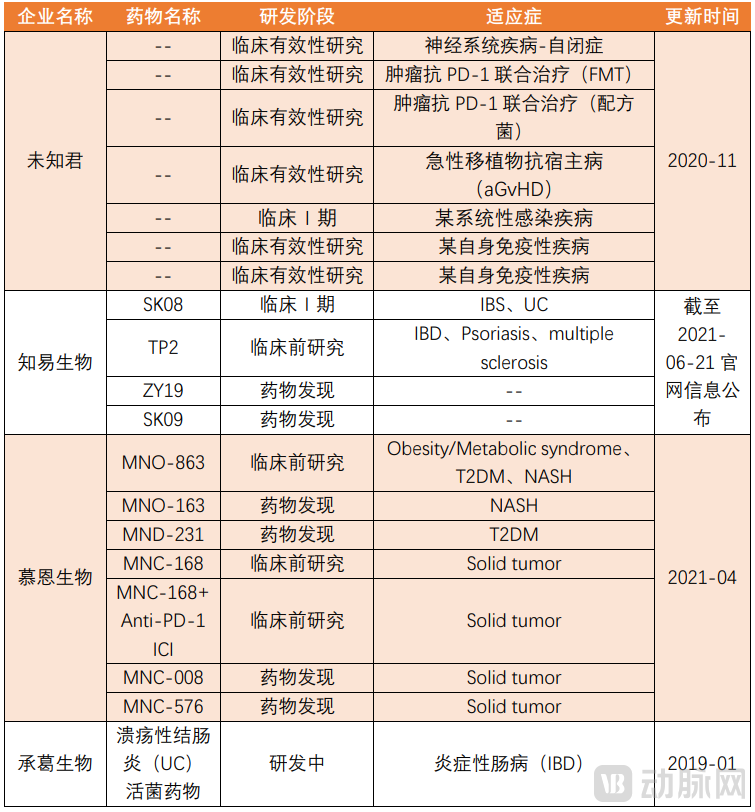
Source: Corporate official website, public information
In the field of fecal microbiota transplantation,Fecal microbiota transplantation (FMT) is primarily performed in hospitals as a medical procedure, while enterprises mainly provide services such as fecal microbiota banks and microbial strain matching. Among the companies surveyed in this article, four enterprises—Weijiankang Gene, Shanxing Biotechnology, Haodingrui, and Chengge Biotechnology—offer services related to microbiota transplantation.
Among them, Chengge Biotechnology has established a Precision Microbiota Transplantation Therapy (PMTT) platform, which comprises six components: donor screening, microbiota isolation and extraction, microbiota bank development, donor-recipient matching, microbiota transplantation methods (including bacterial suspensions and capsules), and maintenance of transplant efficacy.
Currently, Chengge Biotech has established the South China Microbiota Bank, the Strait Microbiota Bank, and the Suzhou Microbiota Bank. The company plans to build eight core regional microbiota banks in the future to support hospitals in implementing microbiota transplantation. In addition, the company offers products such as pre-treatment instruments and consumables for fecal analysis, customized microbiota and bacterial solutions, and microecological foods.
Wei Jiankang Gene primarily provides fecal microbiota transplantation (FMT) matching and assessment services for children. Shanxing Biotechnology offers fecal microbiota storage, standardized preparation of gut microbiota samples, and transplantation services. Haodingrui (Dongyuan Yikang) supplies intestinal microbiota liquid and intestinal microbiota capsule products. Intestinal microbiota capsules and liquids represent the final formulated forms of healthy gut microbiota required for FMT. The capsules enable microbiota transplantation via oral administration, whereas the liquid form is primarily administered through nasojejunal tubes, painless gastroscopy, or endoscopic intestinal intubation.
According to the statistical data in this article, enterprises are concentrated in the eastern region, primarily distributed in central cities such as Guangzhou, Shenzhen, and Shanghai.This is primarily attributable to the strong capital attraction, high degree of policy openness, and support from research and clinical resources, including universities and hospitals, in central cities of the eastern region.
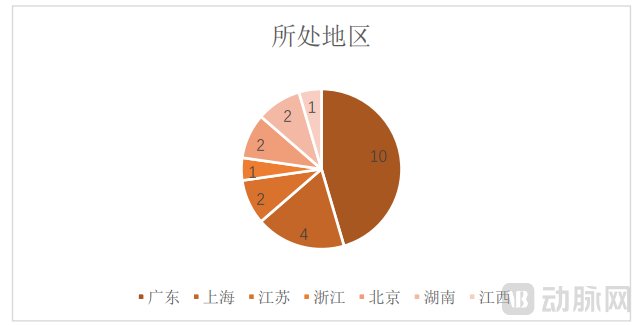
Taking Guangzhou as an example, in 2018, the Guangzhou Municipal Development and Reform Commission approved fecal microbiota transplantation (FMT), assigning it an official billing code. Shortly thereafter, FMT technology received approval from the Guangdong Provincial Healthcare Security Administration. Commenting on this development, the founder of Chengge Biotechnology stated, “This is a milestone event for China’s FMT industry, as it marks the formal recognition of FMT as a new medical technology, evidenced by the establishment of separate billing codes for both bacterial suspension preparation and the FMT procedure itself.”
Capital Attention: When Will the Gut Microbiota Industry Lead the Trend?
In August 2020, Seres Therapeutics announced the results of the Phase 3 clinical trial for its gut microbiome therapeutic, SER-109, demonstrating that SER-109 effectively reduces the risk of recurrent Clostridioides difficile infection. The company’s stock price surged nearly 400% on the day, exceeding $20 per share.
On the one hand, with the publication of an increasing number of research findings, capital has high expectations for microbiome-based therapies. On the other hand, thanks to national policy support for microbiome research and industrial development, as well as the advancement of science popularization, the gut microbiota has begun to enter public life. In the future, the industrialization of the gut microbiota field is bound to accelerate.
Capital does not represent everything, but it is a strong testament to market potential.Overall, capital has paid considerable attention to the development of the gut microbiota industry.In the statistics presented in this article, more than two-thirds of the companies secured financing.
From the perspective of financing rounds, the first-mover advantage is beginning to emerge.Companies that have secured Series A and subsequent rounds of financing were predominantly founded around 2014, with the latest established in 2017. Compared to their later-founded counterparts, these early movers not only already possess relatively mature products and services within their respective business scopes but are also continuing to expand, making them more favored by capital investors.
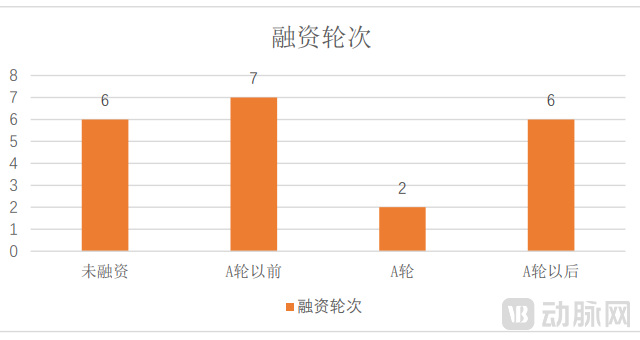
Based on the timing and amounts of recent financing rounds, investments in the gut microbiome field have been frequent and substantial over the past two years.Among the companies covered in this article, 11 secured financing over the two-year period from June 2019 to June 2021. Notably, several deals reached tens of millions or even hundreds of millions of yuan, with standout performers including Zhiyi Biotech, XBiome, Chengge Biotech, 01Life, Moon Biotech, and Yixi Biotech.
Although capital markets are optimistic, China’s gut microbiota industry remains in its early stages overall and requires further time for development.
For enterprises,Current products and services are relatively homogeneous, and business models require further development and refinement. For instance, when companies attempt to establish a closed-loop system of “testing plus intervention,” they often lack sufficient industrialization capabilities. Although most enterprises recognize the importance of a commercial closed loop, the majority offer limited intervention options, primarily focusing on probiotic products, with intervention effects difficult to observe in the short to medium term.
For the market,The gut microbiota industry faces a vast consumer market that has not yet fully awakened, requiring further market education.
Advances in human microbiome research have signaled the starting gun for the gut microbiota industry. While taking an early lead is certainly promising, this is a marathon that does not require haste.Performance on the track depends on the depth of one’s efforts.
References:
[1] Miao Xianfeng. Analysis of the Current Development Status of the Gut Microecology Industry. Huoshi Chuangzao. 2019-09.
[2] Dai Minghan. The gut microbiota industry is viewed favorably, with significant differences in domestic and international layouts. Blue Rainbow. 2018-12.
[3] Dai Minghan. Industrial Development Faces Headwinds, with Intervention Being Key. Blue Rainbow. 2019-03-29.
[4] Xiao Chuanxing: Opportunities, Regulation, and Prospects for the Industrialization of Fecal Microbiota Transplantation in China. Mr. Rechangchang. 2020-06-28.
[5] Jiao Yanli. Two Blockbuster Drugs Are About to Enter Clinical Trials: How Can Moon Biopharma Win the Global Arms Race in Microbial Therapy? VCBeat. 2021-04-07.
[6] Li Junhua: A 22-Minute Detailed Explanation of the “Poison·Medicine” Key to Unlocking the Gut Industry. Institute of GoodGut. 2020-09-28.
[7] Major Release: Top 10 Events in the Gut Industry from 2020 to 2021. Rean Institute. 2021-06-02.