

Chongqing Medical University Children's Hospital Builds Regional Pediatric Healthcare Hub Through Internet Hospitals and Resource Redistribution
“Difficulty in Accessing Medical Care” has long been an unavoidable issue in China’s healthcare system. On one hand, patients struggle to access high-quality medical resources; on the other, they often face cumbersome and inefficient diagnosis and treatment processes.
In recent years, to address this social challenge, relevant national authorities have begun to take action and issued in April 2018"Opinions on Promoting the Development of 'Internet + Healthcare'", it is essential to establish an integrated online-offline medical service model covering the pre-diagnosis, intra-diagnosis, and post-diagnosis stages, facilitate personalized services such as two-way referrals and telemedicine, and promote the development of an efficient and orderly tiered diagnosis and treatment system.
Driven by the ripple effects of national policies, local governments across China have embarked on exploratory initiatives for internet hospitals, rapidly conducting in-depth research and implementing extensive strategic layouts. They have successively issued multiple guidance documents to vigorously promote the deepened development of local internet hospitals. Relevant reports indicate thatAs of 2020, the number of internet hospitals in China had reached 577., representing a significant increase from the more than 100 companies in 2018, with overall development momentum being very robust.
AsChongqing’s First Public Internet Hospital, the Children's Hospital of Chongqing Medical University (hereinafter referred to as "Chongqing Medical University Children's Hospital") has fully considered the actual needs of all parties and comprehensively promoted the construction of its internet hospital with a spirit of exploration and service, achieving phased results in its development to date.According to the data, as of June 2021, the Internet Hospital of Children's Hospital of Chongqing Medical University had accumulated 700,000 registered users, 400,000 follow-up visits, 40,000 prescriptions issued, 3,000 online laboratory and imaging test orders, and 18,000 interpretations of laboratory reports.
In terms of building regional healthcare systems, the Children’s Hospital of Chongqing Medical University, as the National Pediatric Medical Center for Southwest China, has fully leveraged its demonstrative and leading role. By employing internet-based medical solutions such as remote multidisciplinary consultations, green channels for two-way referrals, and remote imaging services, it not only provides patients with more convenient and efficient healthcare services but also strengthens guidance for primary and remote medical institutions, thereby promoting the enhancement of their service capabilities.
I. From Superficial to In-Depth: The Boundaries of Internet-Based Medical Services Are Gradually Being Expanded
The Children’s Hospital of Chongqing Medical University is a national Grade A tertiary comprehensive children’s hospital integrating medical care, education, and research. It has successively received numerous honors, including “National Regional Medical Center for Children,” “National Clinical Research Center for Children’s Health and Diseases,” and “National First-Class Pediatric Specialty Construction Unit.” The hospital has ranked among the top three in specialized comprehensive rankings for 11 consecutive years and has been listed among China’s Top 100 Hospitals for nine consecutive years. It is a highly distinctive pediatric specialty hospital in Southwest China with prominent highlights.
Children’s Hospital of Chongqing Medical University was an early pioneer in building its internet healthcare system. In 2016, the hospital partnered with Tencent and Chongqing Kaiqiao Information Technology Co., Ltd. to launch China’s first WeChat Pay flagship hospital, providing patients with end-to-end “Internet+” medical services across multiple scenarios—including appointment registration, check-in, queue management for consultations, outpatient payment, report retrieval, admission procedures, and parking fee payment. This initiative effectively alleviated the longstanding “three longs and one short” problem faced by patients seeking medical care.
In 2018, the General Office of the State Council issued the “Opinions on Promoting the Development of ‘Internet + Healthcare’.” To implement the requirements set by the Party and the State for advancing the construction of “Internet + Healthcare,” the hospital promptly launched its internet hospital initiative and established a dedicated Internet Hospital Office, marking the hospital’s entry into“Internet Hospital 1.0 Era”. This period primarily focused on foundational online diagnosis and treatment services, including a series of functional modules aligned with current development needs, such as real-name health record establishment, health consultations, and medical report interpretation.
In January 2020, the hospital officially obtained the practice license for its internet hospital., as the first public internet hospital in Chongqing Municipality to be officially launched and operational, the hospital has successfully advanced into“The Era of Internet Hospital 2.0”, it has successively launched multiple services, including COVID-19 consultations, post-diagnosis follow-up visits, online prescriptions, medication delivery, online ordering of laboratory and imaging tests, interpretation of test reports, and medical insurance payment. While meeting patients’ actual healthcare needs, these services have also addressed challenges such as difficulties in accessing medical care and treatment interruptions during the COVID-19 pandemic, making significant contributions to the comprehensive fight against the epidemic.
After the COVID-19 pandemic stabilized, Children’s Hospital of Chongqing Medical University turned its focus to building a regional internet healthcare system and officially launched pilot programs for telemedicine in October 2020.“The Era of Internet Hospitals 3.0”Has officially arrived.
Children's Hospital of Chongqing Medical University with"Remote Joint Outpatient Clinics," "Two-Way Referrals," "Medical Consortium Laboratory and Imaging Services," "Remote Imaging"Focusing on four major service sectors, we actively promote the decentralization of high-quality medical resources within the hospital. This approach not only alleviates difficulties faced by pediatric patients and their families in registering, consulting, and securing hospital admission, but also rapidly enhances the diagnostic and treatment capabilities of primary healthcare institutions through online professional exchanges.
II. Decentralize Medical Resources to Enhance the Patient Care Experience
Specifically, how has the Children’s Hospital of Chongqing Medical University advanced the development of its internet hospital, and what benefits has this brought to the construction of the regional healthcare system? Looking ahead, how does the hospital plan its future deployment, and can it truly realize its vision of improving pediatric care standards within the region, promoting homogenization of pediatric medical services across regions, and providing patients with efficient and satisfactory healthcare services?
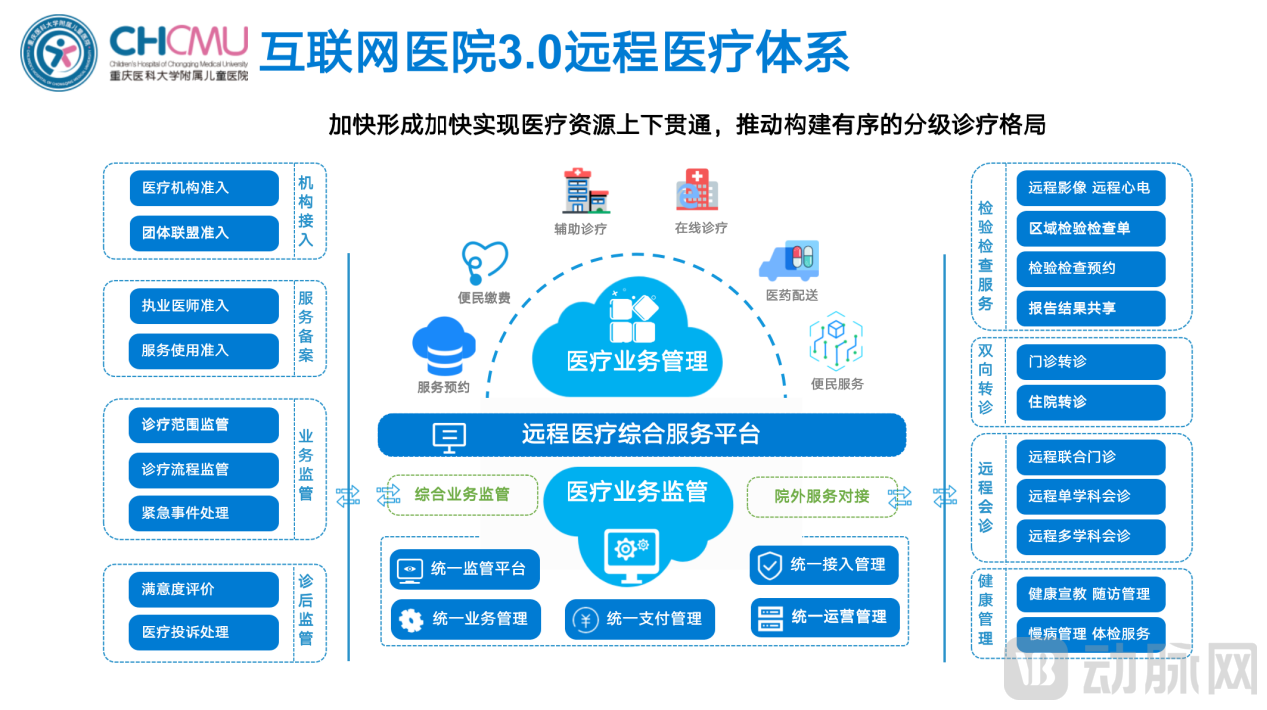
First, on the patient side.Through integration with"Remote Joint Consultation," "Two-Way Referral Green Channel"intelligent functional modules, to comprehensively build an integrated online-offline medical service model covering “pre-diagnosis, during diagnosis, and post-diagnosis” stages, enabling pediatric patients to access high-quality medical services at affiliated healthcare institutions and alleviating the difficulty patients face in seeking medical care.
Secondly, on the physician side.The Children's Hospital of Chongqing Medical University has consistently adhered to a collaborative model that combines “dispatching personnel downward” with “inviting experts upward.” Through various approaches—including staff deployment, advanced training and fellowship programs, protocol revision, introduction of new services and technologies, remote consultations, and discipline development—the hospital provides systematic guidance to personnel at affiliated medical institutions. This approach holds significant importance for enhancing the clinical diagnostic and therapeutic capabilities of physicians at these partner institutions.
Finally, on the hospital side.Persistent challenges such as low overall revenue and underutilization of medical equipment have long been core factors hindering the development of primary healthcare institutions. By leveraging the radiating influence of regional internet-based healthcare systems, these institutions can assume a substantial volume of pre-diagnostic testing and post-discharge rehabilitation services. This approach not only optimizes the allocation of overall medical resources but also significantly boosts the revenue of primary healthcare institutions, thereby further expanding the breadth and depth of internet hospital development.
III. Aggregating Multiple Advantages, Chongqing Medical University Children’s Hospital Builds a Regional Highland for Pediatric Healthcare
China, with its large population, records nearly 9 billion medical visits annually, averaging six consultations per person per year. In the specific area of pediatric healthcare, data from the Ministry of Health shows that the number of patients treated at children’s hospitals in China reached 60 million in 2018, an increase of nearly 1 million from the previous year, with this upward trend expected to continue in the future.
However, it must be recognized that China’s existing medical resources are insufficient to support the current massive volume of patient visits, thereby giving rise to the social problem of “difficulty in accessing medical care.” This issue is particularly acute for pediatric patients in remote areas, who have extremely limited access to medical resources. The vast majority of these children can only receive diagnosis and treatment at local small clinics, where the quality of care is not guaranteed, posing significant risks to their health.
With the advancement of the times, cutting-edge technologies such as AI, 5G, and cloud computing are gradually maturing and becoming widely integrated into the healthcare sector, reshaping the patient-centered healthcare security system. Taking internet hospitals as an example, the effective translation of these technological achievements into practical applications can integrate existing medical resources, thereby enhancing the overall operational efficiency of hospitals and bridging the “last mile” for patients seeking medical care.
However, building an internet hospital is no easy feat; it requires multi-faceted coordination. Therefore, for the Children’s Hospital of Chongqing Medical University to successfully navigate this development path, it must be underpinned by “substantive capabilities.”
First, it possesses the factors that drive the development of internet hospitals.As the first public internet hospital in Chongqing, Children's Hospital of Chongqing Medical University began advancing the development of its internet hospital system upon the initial release of relevant policies. To date, it has established a comprehensive operational framework and has started to generate value across various sectors.
Second, the user base is solid, resulting in low education costs.The introduction of any new technology inevitably undergoes a “growing pain” period, and the development of internet hospitals is no exception. However, Chongqing Medical University Children’s Hospital has been free from such “concerns.” Having started early, the hospital has already accumulated a large base of precise target users, thereby encountering relatively less resistance in promoting internet-based medical services and making it easier to demonstrate their value.
Third, remain true to the original aspiration and proceed from actual needs.To fully leverage the demonstrative and leading role of the National Children’s Medical Center (Southwest Region), Chongqing Medical University Children’s Hospital has closely aligned every step of its internet hospital development with national government policies. By genuinely addressing the practical needs of patients, physicians, and the hospital itself, the institution has comprehensively established a collaborative framework that shares development environments, policies, resources, and platforms with affiliated medical institutions. Through these concrete actions, it strives to enhance the sense of gain, well-being, and security for pediatric patients seeking medical care in the Southwest region.
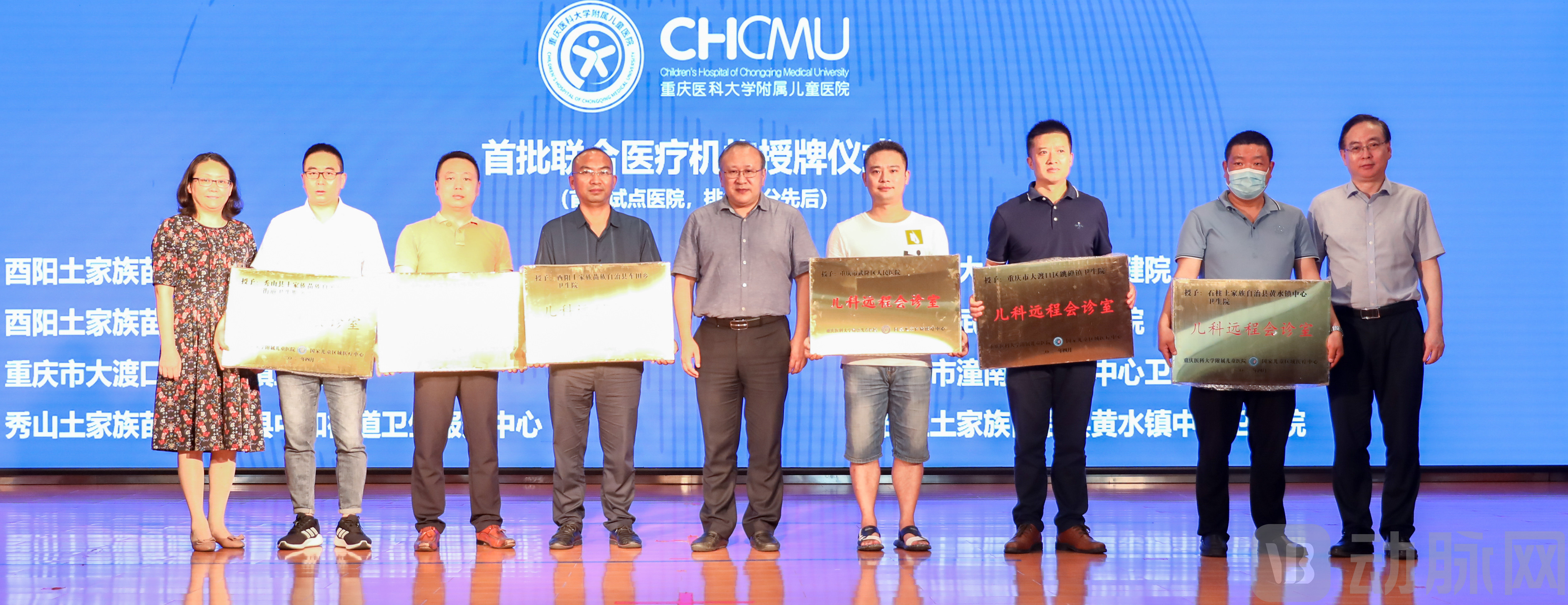
Looking ahead, the Children’s Hospital of Chongqing Medical University still has considerable room for strategic development in building its internet hospital. First, it will strengthen its sense of responsibility and mission, continue to fulfill its social responsibilities, and enhance the guidance provided to partner medical institutions in terms of intensity, scope, and depth. Second, it will deepen the development of its internet hospital platform, jointly exploring innovative applications of high-quality offline medical resources in online healthcare scenarios, thereby fully connecting hospitals, physicians, and patients to deliver more convenient and efficient healthcare services. Finally, it will onboard more medical institutions into its internet-based remote medical collaboration system, further expanding the service reach of its internet hospital, ensuring that internet technology effectively addresses real-world needs and demonstrates greater value to the healthcare industry.