

Inzen Therapeutics Unveils First-in-Class Therapeutic Platform Targeting Cell Turnover Metabolites in IPO Filing

Inzen Therapeutics
New Drug Developer
Inzen is leveraging a novel principle—the response of living cells to metabolites released during cellular turnover—to develop new drug targets aimed at addressing a range of medical challenges, including cancer, fibrosis, inflammation, and degenerative diseases. The company, originally established by Flagship Pioneering in 2017 as “Flagship L47,” was later renamed Inzen Therapeutics. In 2018, the company completed a $20 million Series A financing round led by Flagship Pioneering.
How Was This Global “First and Only” Therapy Discovered? What Is the Current State of Research? Let’s Explore the Past and Present of Inzen Therapeutics.
Excellent and Mature Entrepreneurial and Management Team
At its inception, Dr. Doug joined Flagship in 2001 as a Managing Partner. During his 20 years at Flagship, Dr. Doug co-founded companies such as Moderna and Syros Pharmaceuticals, and served on the boards of directors of multiple companies.
Jason Parker is the Chief Operating Officer of Inzen. Since joining Flagship in 2015, he has led a team of scientists in developing strategies for science, intellectual property, and commercialization. Prior to joining Flagship, he worked at a consulting firm in Boston, where his practice areas included R&D and portfolio strategy, biopharmaceuticals, and global health.
Volker Herrmann has succeeded founder and CEO Douglas as the new Chief Executive Officer of Inzen. Previously, Dr. Herrmann served as Chief Operating Officer and President at SQZ Biotechnologies, a cell therapy company, bringing over 20 years of extensive experience in management, marketing, sales, business development, and strategy. During his 17-year career at Pfizer, he held leadership roles across multiple therapeutic areas, including leading the global franchise for its top-selling analgesic portfolio and serving as Head of Global Strategy, Marketing, and Business Development for Pfizer’s Vaccine Division.
In terms of scientific research and development, Dr. Pete Gough, D.Phil., serves as the Chief Scientific Officer at Inzen. He previously worked at GlaxoSmithKline for over 17 years, accumulating extensive experience in areas such as drug discovery and development.
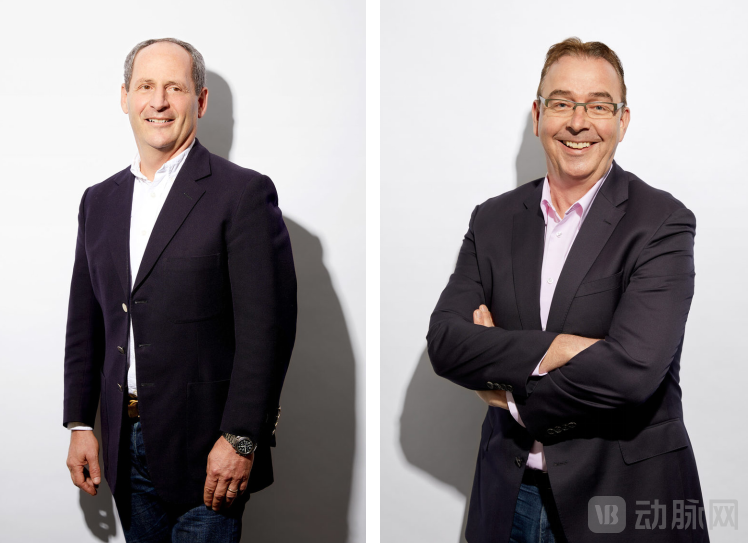
Left: Dr. Doug Cole; Right: Dr. Volker Herrmann
Do living cells interact with metabolites released by dead cells?
Inzen was founded on an exploration and question initiated by Dr. Doug Cole and Dr. Jason Parker: Do living cells interact with metabolites released by dying cells?
Humans are complex multicellular organisms, and our bodies represent a complex, continuous series of interactions among trillions of individual living cells. To proliferate and grow, cells must process inputs from neighboring cells and respond to environmental factors.
Reviewing the history of drug development, understanding how cells process and respond to information from their environment and other living cells has been a focal point of medical research, helping us develop many life-saving drugs. For example, research findings on how cells with abnormal paracrine function respond to signals from neighboring cells play a crucial role in the treatment of Alzheimer's disease, rheumatoid arthritis, inflammatory bowel disease, and cancer.
Little attention has been paid to exploring how living cells respond to signals released by dying cells. Yet evidence shows that these responses play important, yet undiscovered, roles in drug discovery and disease treatment.
It is precisely based on research in this overlooked biological field that Inzen has developed a proprietary product platform, Thanokines.TM, applying mass spectrometry and machine learning, novel probes, and unique detection, genetic, and chemical biology technologies to characterize Thanokine biology and create drug candidates.
Thanokines TMPlatform
Inzen Therapeutics Leverages ThanokinesTMplatform to develop novel drugs. First, proprietary libraries employing chemical and genetic approaches are used to induce various forms of cellular rejuvenation; second, advanced mass spectrometry techniques and machine learning methods are leveraged to analyze ThanokinesTMclassify and decode; finally, leverage unique biological detection methods to translate the decoded information into novel drug targets.
These three key components generate PhenoMaps.TMthe key, PhenoMaps TMis a high-throughput method for studying how living cells respond to thanokinesTMsignals and rapidly identify therapeutic targets.
In addition, Inzen has established a library of over 10,000 ThanokinesTMproprietary biological database that provides previously inaccessible insights into key cellular responses in health and disease, enabling a more precise understanding of therapeutic targets.
Preliminary Findings on Thanokines™
Most cancer therapies focus either on killing tumor cells or on modulating the tumor microenvironment.
Inzen’s research indicates that immune cells are highly sensitive to the diverse transformation mechanisms of specific tumor cells. Their approach not only eliminates tumor cells but also remodels the tumor microenvironment to induce an anti-tumor immune response, thereby achieving a curative effect. This therapeutic strategy has not yet been implemented in clinical practice and remains one of the most formidable challenges in cancer treatment.
Inzen has demonstrated that novel, specific Thanokines™ can amplify the activation of stimulator of interferon genes (STING) through an unprecedented mechanism. Given that STING plays a crucial role in innate immunity, this suggests that Thanokines released during cellular turnover and metabolism under certain specific conditionsTMThe signal itself represents a candidate drug or target.
Inzen Discovers Regenerative Thanokines in Hepatocytes from Petri DishesTMSignals can act as therapeutic agents to drive liver regeneration in vivo. Moreover, pro-fibrotic Thanokines™ derived from liver or lung cells represent a potential new target for preventing fibrosis in the liver or lungs.
Inzen Therapeutics’ Future Development Direction in the New Blue Ocean
“Interfering with cellular processes and responses in their environment has been one of the most fruitful areas of drug discovery for decades,” said Doug. “Over the past four years, Inzen’s pioneering and comprehensive R&D efforts have significantly expanded our understanding of the nature of information released during cell renewal and how living cells respond to it, unveiling a fundamental yet previously overlooked area of biology. Inzen is leveraging its platform to discover and develop treatments for a wide range of diseases.”
The efforts that Inzen has been striving to advance over the past few years have also been strongly validated. In 2020, researchers around the world began publishing similar findings in prestigious journals, highlighting products of cellular turnover as a significant source of signals input into living cells.
Inzen plans to develop curative cancer drugs in the future that can drive immune responses within the tumor microenvironment and eradicate tumors. In addition, Inzen is focusing on Thanokines.TMand their related pathways, to develop drugs that can halt or even resolve fibrosis or pathological inflammation, as well as novel therapies that leverage the body’s natural mechanisms for tissue regeneration.
Dr. Noubar Afeyan stated that these findings represent a new research frontier in fundamental aspects of human biology and provide the foundation for breakthrough approaches to the development of treatments for many serious diseases.
We look forward to Inzen Therapeutics providing us with richer and more transformative therapies and research outcomes in this vast new field.