

Gushengtang Holdings Files for Hong Kong IPO, Pioneering China's Largest OMO-Integrated Traditional Chinese Medicine Platform with Revenue Nearing RMB 1 Billion
According to the disclosure by the Hong Kong Stock Exchange on June 10, the chain group of traditional Chinese medicine outpatient servicesGushengtangFormally filed an IPO application with the Main Board of the Hong Kong Stock Exchange, with Bank of America and Haitong International serving as joint sponsors.
Founded in 2010, Gushengtang is a technology-enabled “OMO” (Online-Merge-Offline) New Traditional Chinese Medicine (TCM) platform that focuses on primary care and integrates New TCM with modern medical approaches. It offers customers an integrated service model combining offline operations with online presence, providing comprehensive health management across the entire life cycle and all scenarios.
As of May 31, 2021, the Company owned and operated 41 medical institutions across 11 cities in China, covering the South China, North China, and East China regions. All of the Company’s medical institutions are private for-profit entities operating under the brand name “Gushengtang.” To date, the Company also operates multiple online channels, including official websites, mobile applications, WeChat official accounts, and mini-programs under the names “Gushengtang” and “Bailu.”
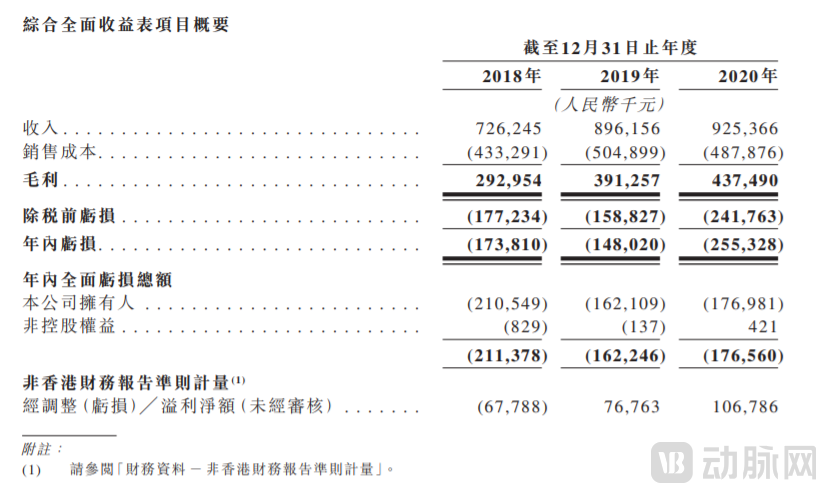
In terms of revenue, Gushengtang has achieved substantial growth over the past three years. According to the prospectus, for the years ended December 31, 2018, 2019, and 2020, its revenue amounted to approximately RMB 726 million, RMB 896 million, and RMB 925 million, respectively, representing a compound annual growth rate (CAGR) of nearly 13%.
After 11 Years in Business and on the Verge of an IPO, How Did Gushengtang Stand Out in the High-Barrier TCM Health and Wellness Market?
I. “Era 1.0”: Focusing on Offline Services to Build China’s Leading Brand in New Traditional Chinese Medicine Services
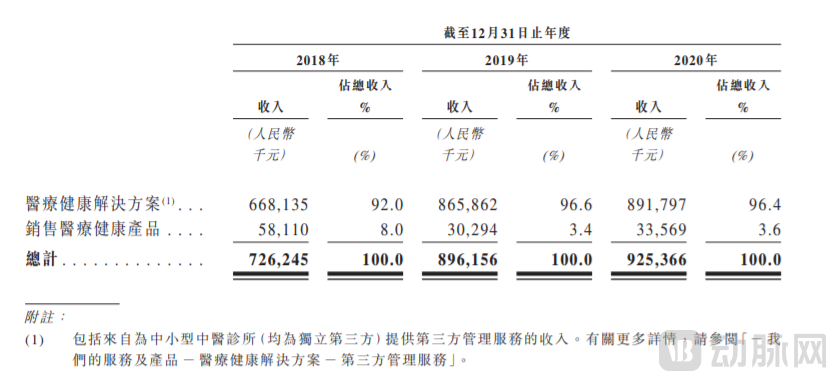
According to the prospectus, Gushengtang’s revenue is derived from two major business segments: the provision of healthcare solutions and the sale of healthcare products, with the provision of healthcare solutions being the primary source of revenue.Accounting for over 90% of total revenue.
Since its establishment, Gushengtang has been committed to acquiring offline TCM medical and health resources, striving to build the leading brand as a provider of new offline TCM medical and health solutions. It primarily delivers closed-loop TCM medical and health solutions to customers through offline medical institutions, meeting their diverse pharmaceutical and health needs in a one-stop manner.
Gushengtang positions its institutions as"TCM Agent", established “partner” relationships with renowned TCM practitioners by inviting senior TCM doctors from Grade A tertiary hospitals who are nearing retirement or already retired, as well as descendants of hereditary famous physicians, to set up “Renowned Physician Studios.” Under a single-store model, physicians hold equity stakes, with Gushengtang retaining a 70% share and physicians holding 30%. Gushengtang is responsible for operational management, providing one-stop services including clinic layout planning, hard and soft decoration, IT system development, and pharmaceutical supply chain support, while physicians are responsible for clinical consultations.
To enable physicians to focus more on clinical outcomes and professional reputation, Gushengtang has removed obstacles for doctors across multiple operational areas. In terms of income distribution, physicians are compensated based on the number of consultations, receiving 80% of the registration fee per visit—a rate significantly higher than that of public tertiary hospitals. Additionally, doctors benefit from revenue sharing from their exclusive studios, profit-sharing from experiential prescription products, as well as preferential equity and free stock option plans offered by the group. It is reported that Gushengtang has established special safeguards for affiliated physicians: regardless of the clinic’s profitability, doctors are guaranteed a minimum return upon exit at any time; furthermore, their equity holdings can be liquidated at any time, with dividends distributed proportionally based on the clinic’s turnover.
To effectively mitigate the professional liability risks faced by physicians, Gushengtang has established a “safety” net for multi-site practice through medical insurance. In October 2016, Gushengtang partnered with Ping An Insurance to purchase medical malpractice liability insurance for practicing physicians nationwide. This initiative is precisely based on a mutually beneficial model between Gushengtang and renowned physicians,As of December 31, 2020, Gushengtang’s leading physician team was led by four National Masters of Traditional Chinese Medicine and comprised more than 16,000 physicians across China. Its services covered a wide range of specialties, including TCM internal medicine, gynecology, dermatology, hepatology, otolaryngology, and spleen and stomach disorders.
In addition to providing healthcare solutions, within Gushengtang’s business model,Sales of medicinal herbs also constitute a significant revenue stream, accounting for nearly 10%.However, given the vast variety and complex system of traditional Chinese medicinal (TCM) materials, along with the high standards required for their authenticity, Gushengtang ensures centralized supply of medicinal materials across all its clinics. The company has established a rigorous quality control system to safeguard material quality, conducting regular on-site inspections of pharmaceutical manufacturers and warehouses, and employing licensed pharmacists with extensive experience in TCM material quality identification to oversee the entire process.
In Beijing’s Daxing District, Gushengtang partners with the largest supplier of medicinal materials. Every stage—from Good Agricultural Practice (GAP) for designated cultivation of medicinal herbs, through Good Manufacturing Practice (GMP) for standardized pharmaceutical production, to Good Supply Practice (GSP) for regulated distribution—is strictly conducted under the supervision and guidance of the National Medical Products Administration to ensure superior product quality.
In 2015, Gushengtang launched a quality assurance system for Traditional Chinese Medicine (TCM) decoction pieces, participated in the establishment of Good Manufacturing Practice (GMP)-compliant medicinal herb processing facilities, and took equity stakes in large-scale Good Agricultural Practice (GAP) cultivation bases for major TCM varieties. This enabled the company to provide one-stop services spanning herb cultivation, processing, sales, and home delivery, thereby forming a complete TCM ecological chain.
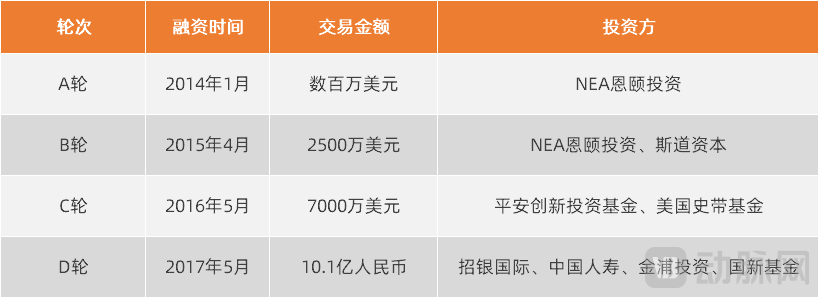
Benefiting from its multi-tier expansion strategy and highly scalable business model, Gushengtang has garnered widespread attention from the capital markets,Over the three-year period from 2014 to 2017, a total of four rounds of financing were completed, with the total amount reaching RMB 1.7 billion. Each round set a new record for the largest single financing transaction in China’s traditional Chinese medicine (TCM) sector at the time.
“Era 1.0”: Driven by the core philosophy of “chain operation, group-based management, scale expansion, and brand building,” Gushengtang established a network of offline medical institutions covering numerous first- and second-tier cities across South, North, and East China. Through its “partner” mechanism, it accumulated a substantial pool of experienced physicians. Additionally, it developed and deployed an integrated cloud Hospital Information System (HIS) and built a vertically integrated supply chain featuring a centralized procurement management system that spans from upstream procurement to downstream distribution.
II. “Era 2.0”: Strengthening Online Presence to Build China’s Leading New TCM “OMO” Platform
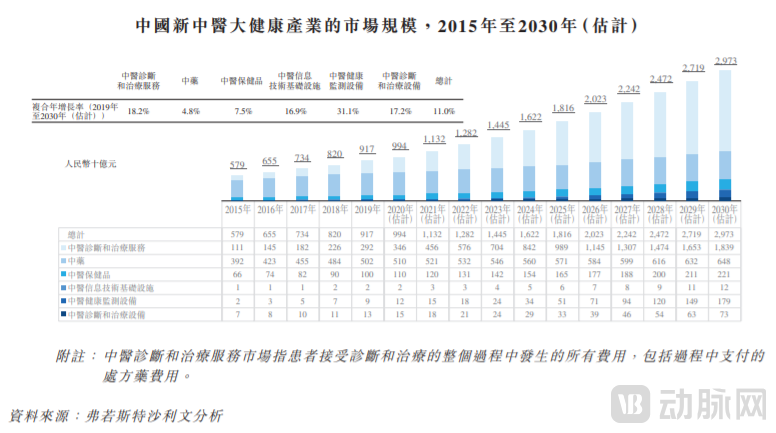
In recent years, driven by the proactive guidance of national policies and accelerated by the COVID-19 pandemic, China’s traditional Chinese medicine (TCM) big health industry has expanded significantly. According to Frost & Sullivan analysis,The market size of China's traditional Chinese medicine (TCM) big health industry is projected to grow at a compound annual growth rate (CAGR) of 11% from 2019 to 2030. The market size is expected to officially surpass the RMB 1 trillion mark in 2021, and reach approximately RMB 3 trillion by 2030.
Opportunities always coexist with challenges; although the overall market size continues to expand, pressing issues remain that are hindering the industry’s rapid development.
On the one hand, there is a severe shortage of TCM practitioners.In 2019, the number of TCM practitioners in China was approximately 624,000, accounting for only 16.1% of the total number of physicians. Each TCM practitioner handled an average of 13.1 outpatient visits per day, which was 45.6% higher than the daily average for all physicians, indicating a severe shortage of TCM practitioners.On the other hand, regional expansion is challenging., the expansion of traditional Chinese medicine (TCM) healthcare networks generally requires extensive experience and a deep understanding of the TCM health industry, as well as familiarity with local policies and regulations, making it difficult for new entrants to replicate the business model and expand their geographic reach in the short term.
It is evident that the widening gap between the growing demand for healthcare services and the shortage of physicians, coupled with the significant challenges of regional expansion, highlights unmet market needs within the current TCM (Traditional Chinese Medicine) health industry. Meanwhile, this situation presents an opportunity to further enhance operational efficiency and unlock market potential through the “Internet+” model, giving rise to the new OMO (Online-Merge-Offline) TCM medical service model.
The New TCM Medical Model refers to a framework in which Traditional Chinese Medicine (TCM) providers, built upon an innovative “OMO” (Online-Merge-Offline) foundation, leverage internet technologies to integrate offline and online TCM resources. This approach delivers digitalized and standardized TCM medical services to patients, breaking the temporal and spatial constraints inherent in traditional TCM diagnosis and treatment models. Furthermore, the New TCM Medical Model incorporates modern therapeutic methods and integrates them with traditional TCM diagnostic and treatment practices. By leveraging the synergies between offline and online operations and combining modern therapies, it aims to efficiently provide patients with comprehensive medical management services that cover the entire TCM care cycle and all health management scenarios.
As a pioneer in extending offline healthcare services to the online space and developing digital solutions,Gushengtang is actively exploring the "Internet + TCM" service model, integrating offline medical institutions across China to build a new TCM "OMO" platform, maximizing the synergistic benefits of online and offline operations, and creating a closed-loop TCM medical service ecosystem.
In terms of customer outreach, Gushengtang launched its WeChat Official Account and Mini Program to provide online appointment booking, consultation, diagnosis, and prescription services. Leveraging its extensive network of physicians, rich operational experience, and proprietary information technology infrastructure, Gushengtang serves a larger, cross-regional customer base through its own and third-party online platforms. Furthermore, by virtue of its proprietary platform, Gushengtang stores customers’ electronic medical records in a cloud-based Hospital Information System (HIS) and builds comprehensive customer profiles to facilitate follow-up services and long-term healthcare management.
In terms of drug quality monitoring, the “OMO” model has also demonstrated significant effectiveness. Leveraging a broad supplier network and diversified inventory coverage empowered by the Hospital Information System (HIS), Gushengtang has integrated its supply chain to achieve standardization and centralization, thoroughly resolving the challenges associated with the selection and inspection of traditional Chinese medicinal materials and prepared slices.
Specifically, at the upstream level, we select commonly used herbal medicines according to strict standards during procurement and have established strategic partnerships with leading TCM pharmaceutical companies to ensure the supply of high-quality products based on demand. On the quality control front, we employ a comprehensive quality control methodology overseen by external professional consultants, which assists the company in conducting blind testing of samples during supplier selection and performing random quality inspections on medications delivered to our clients. Downstream, the company centrally manages procurement requirements from headquarters and negotiates terms with selected suppliers to secure consistent, high-quality supplies at lower costs. Meanwhile, we control and manage product distribution at the group level to optimize operational efficiency and reduce customer complaints related to potential logistics issues.
So, specifically, what makes Gushengtang’s new “OMO” platform for Traditional Chinese Medicine different?
First is the brand-new diagnosis and treatment model.Gushengtang has reshaped the traditional diagnostic and treatment model of primary care by integrating Traditional Chinese Medicine (TCM) with modern medical approaches, thereby creating a new TCM model. Under this model, the company focuses on daily primary care for clients, aiming to achieve long-term follow-up and full-lifecycle health management.
Secondly, it was the first to adopt the “OMO” business model.Benefiting from favorable government policies that encourage the development of online healthcare services, Gushengtang has gained a first-mover advantage among new TCM healthcare providers in China in building an online medical platform, and has achieved synergies by leveraging its extensive network of offline medical institutions. On one hand, the development of the company’s online healthcare services enables more efficient utilization of medical resources and expands customer reach; on the other hand, the company can strategically select cities for expanding its offline coverage based on metrics of online physician and customer engagement.
Finally, standardization, digitization, and intelligentization.Gushengtang has established a standardized and scalable operating model for its offline business, which has demonstrated a strong track record. Meanwhile, the Company is a pioneer in the development and application of an integrated cloud Hospital Information System (HIS) within the Traditional Chinese Medicine (TCM) industry, committed to achieving digitalization of the entire supply chain management from upstream procurement to downstream distribution. Leveraging its cloud HIS, the Company has enhanced its operational capabilities and quality control.
Furthermore, Gushengtang has established an intelligent triage system to enable its customers to quickly locate and consult relevant experts and physicians. Leveraging its customer service system, the Company facilitates real-time communication with customers, thereby enhancing customer experience and satisfaction. The Company also plans to participate in the development of smart medical devices, such as smart bracelets and four-diagnostic instruments, in the future, further advancing the intelligence of its healthcare solutions.
It is precisely thanks to the continuous deepening of the “OMO” concept that Gushengtang’s business has developed very rapidly,From 2018 to 2020, the compound annual growth rate (CAGR) reached 13%, with business revenue growing to RMB 925 million in 2020, indicating that the breakthrough of the RMB 1 billion revenue threshold is imminent.。
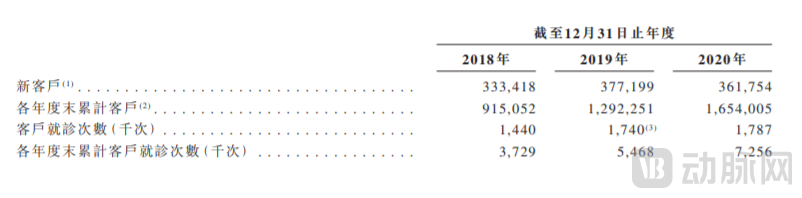
Meanwhile, Gushengtang has also accumulated a large customer base with strong stickiness and high loyalty. According to data from Frost & Sullivan,Gushengtang ranks first among all private TCM healthcare providers in China in terms of cumulative patient visits, which exceeded 7 million as of December 31, 2020. With continuously improving customer loyalty and retention rates, the company achieved a customer return rate of 62% in 2020.
III. “Era 3.0”: Building China’s Largest New Traditional Chinese Medicine Ecosystem by Advancing Toward Intelligence, Productization, and Platformization
Currently, Gushengtang is in the “2.0” era. To achieve the leap to the “3.0” era, Gushengtang will continue to upgrade its business model and services, aiming to build China’s largest new TCM (Traditional Chinese Medicine) healthcare ecosystem and further strengthen OMO (Online-Merge-Offline) integration to cover the entire patient journey and all customer scenarios.
First, further expand the coverage of medical resources, deepen “OMO” integration, and increase market penetration.First, Gushengtang will develop family doctor services and chronic disease management services through its membership program to meet diverse customer needs, provide health management across the entire life cycle, and further strengthen long-term relationships with customers and affiliated physicians. Second, it will strengthen and further expand its offline business by focusing on tier-1 and tier-2 cities with concentrated medical resources, increasing market penetration, and reinforcing its leading market position in these cities, while implementing a steady expansion strategy to enter new cities annually. Finally, it will consolidate its online healthcare business, enhance the synergies between offline and online operations, and focus on integrating its online platforms to deliver high-quality medical services to customers in lower-tier cities.
Second, accelerate the advancement of intelligence, productization, and platformization.“Intelligentization” refers to leveraging advanced technologies to enhance the digital and intelligent capabilities of services, covering all customer health management scenarios; “Productization” refers to further transforming healthcare solutions into standardized, modular service offerings tailored to specific diseases or health needs; “Platformization” refers to empowering small and medium-sized TCM clinics through a proprietary cloud system, providing them with standardized operational expertise and an integrated supply chain management system. In addition,
Strengthen the company’s supply chain capabilities, including establishing and upgrading herbal decoction centers, building our own GMP-certified manufacturing facilities in the medium to long term, enhancing collaboration with pharmaceutical suppliers, managing the supply and screening of key traditional Chinese medicinal materials, improving quality control, and establishing industry standards.
Third, continue to invest in research and development to achieve better new specialized TCM nursing care.Gushengtang plans to continuously develop more TCM healthcare products, diversify its product portfolio, and develop in-house hospital preparations with the assistance of CROs, while allocating more resources to research and develop new TCM solutions for the treatment of chronic diseases. In addition, Gushengtang will fully leverage its technology platform, continue to invest significant efforts, and collaborate with leading national universities of Chinese medicine to develop smart medical devices such as smart bracelets and four-diagnostic instruments.
IV. Final Remarks
In recent years, numerous traditional Chinese medicine (TCM) enterprises have embarked on the path to initial public offerings (IPOs), primarily comprising innovative TCM pharmaceutical companies.Su Xuantang, Chinese Nutritional Food and Ganoderma Lucidum ProducerXingfu Biotech, Chinese Pharmaceutical and Chemical Product ManufacturersQilian International, Manufacturer of Traditional Chinese Medicine-Derived ProductsNature Pharmaceuticalas well as the chain of TCM outpatient clinics poised for an IPOGushengtang, the trend of traditional Chinese medicine enterprises “racing to outpace one another” in the IPO market has become increasingly pronounced.
However, unlike other enterprises centered on the manufacturing of traditional Chinese medicine (TCM) products, Gushengtang has primarily focused on the TCM service sector. By leveraging the “Online-Merge-Offline” (OMO) model, it has established a novel TCM medical service system, offering a strategic framework for the chain-based, large-scale, group-oriented, branded, and international development of TCM.
Gushengtang is not an “exception.” We have reason to believe that, driven by the broader macroeconomic environment and the deepening integration of internet technologies, many new enterprises dedicated to traditional Chinese medicine (TCM) services will emerge in the IPO market in the future.
Reference: Gushengtang Prospectus