

Unlocking the Billion-Dollar Potential of China's Rare Disease Industry: Dispelling Misconceptions Is the First Step
Recently, Boston Consulting Group (BCG) published three consecutive articles on its official WeChat account, reflecting on the current status and future of China’s rare disease industry. The articles particularly highlighted the substantial industrial value of rare diseases, emphasizing their leveraged impact—achieving significant results with relatively modest inputs—in terms of medical, technological, and commercial value. In particular, regarding commercial value, BCG estimates that China’s rare disease market will reach an output value of RMB 60–90 billion by 2030. From today’s RMB 5 billion market, how can it evolve into a hundred-billion-yuan market in ten years? What challenges does China still face, and how can they be addressed one by one? To discuss these questions and envision the future, BCG and the Chinese Alliance for Rare Diseases organized a multi-stakeholder expert symposium in Shanghai on June 11.
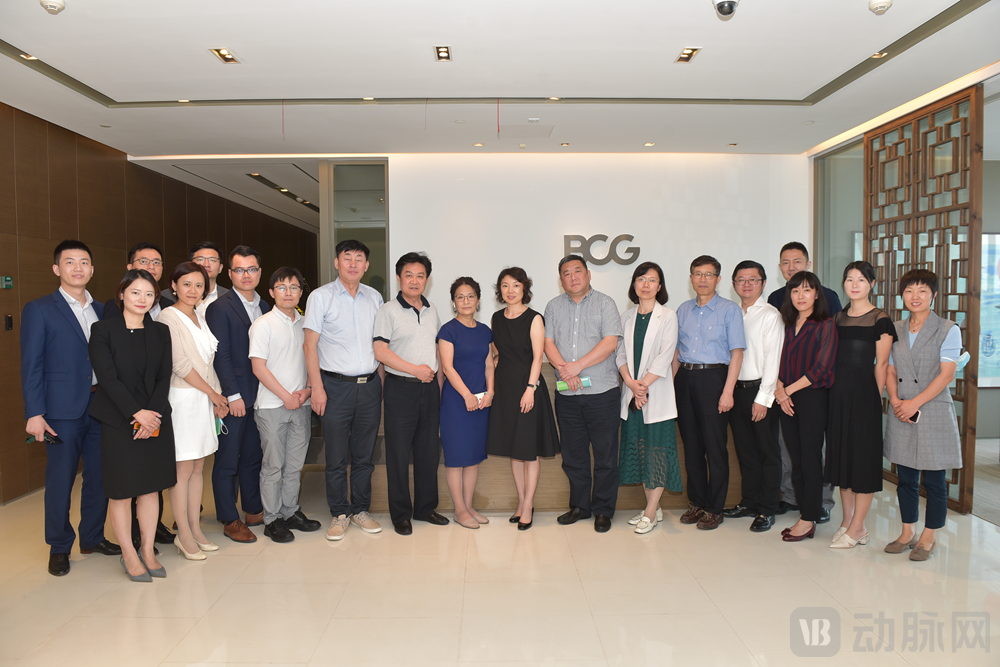
Group Photo of Attendees
Wu Chun, Managing Director and Global Partner of BCG ChinaDuring the opening remarks, BCG confidently shared its forecast for China’s rare disease market over the next decade: “Benchmarking against the current share of China’s oncology immunotherapy market in the global market, if we assume that in ten years China’s rare disease drug market will account for a similar proportion of the global market—specifically 5% to 7%—then the total size of China’s rare disease drug market is projected to reach RMB 60–90 billion. We are highly confident in this estimate of a market approaching RMB 100 billion, as it aligns with the relative positioning of China versus the global market observed in other therapeutic areas.”
However, we must confront the fact that China’s rare disease industry is still in its infancy. There remains considerable skepticism at the societal level regarding the development of rare diseases as an industry, particularly about its potential to reach a scale of hundreds of billions of yuan. In summary, three prevalent myths are frequently debated: First, given the small patient population and short treatment duration for rare diseases, how can an industry with economies of scale be sustained? Second, due to weak diagnostic and therapeutic capabilities in China, even with a large potential patient pool, it is difficult to promptly identify patients who can be diagnosed and treated. Third, most rare disease drugs are prohibitively expensive; China’s payment system cannot bear the cost, patients cannot afford them, and thus the industry’s development cannot be sustained. During the on-site discussion, BCG’s consulting team presented detailed data and materials to systematically refute these three myths. Experts participating in the seminar also spoke repeatedly, sharing their observations and reflections on these misconceptions.
First, many rare diseases are not actually “rare” in China.The 121 rare diseases included in the “First Batch of Rare Diseases Catalog” are estimated to affect more than 3.5 million patients. If a broader definition of rare diseases is applied, the number of rare disease patients in China could exceed 15 million, indicating that this is by no means a small population. In public perception, attention tends to focus on ultra-rare diseases, with fewer than 10,000 patients per condition. However, there are also many relatively “common” rare diseases, each affecting more than 100,000 individuals. A striking comparison is that the number of patients with many rare diseases in China exceeds that of many well-known cancers. Nevertheless, global R&D efforts exhibit a significant imbalance: while there are 150 pipeline products in development worldwide for triple-negative breast cancer, which affects only 200,000 people in China, rare diseases with comparable patient populations have merely 10 to 30 pipeline products in global development. Furthermore, most rare diseases onset at a young age, with genetic disorders predominantly affecting children. When treatments are available, they typically require long-term management, akin to the needs associated with chronic diseases.
Providing patients with a medication would significantly improve their quality of life.Professor Gu XuefanHe stated frankly, “It is not that there are no patients; rather, we need to actively identify them. In this regard, we are pioneers, and patients will soon converge. For hyperphenylalaninemia alone, we process several thousand specimens annually, and there is now a substantial clinical patient population. Starting with newborn screening at Shanghai Xinhua Hospital, this practice has since become national policy, with nationwide promotion of newborn screening and the establishment of administrative guidelines for newborn screening by the National Health Commission. Building on this platform, we have continuously advanced our capabilities, later leading the country in adopting tandem mass spectrometry for newborn screening. This method enables the detection of dozens of diseases from a single drop of blood. These conditions are often disabling or fatal; however, early screening allows for timely diagnosis and treatment. I believe these efforts greatly benefit both the nation and its people. Therefore, given China’s large population base, I believe there is still a significant number of patients to be identified.”
Second, China’s capacity for the diagnosis and treatment of rare diseases is not weak.On the contrary, driven by government initiatives and broader societal efforts in recent years, significant progress has already been made. In certain single-disease fields that saw earlier development, China is arguably on par with Europe and the United States, with some treatment centers and clinical experts achieving globally leading standards in diagnosis and treatment. With the establishment of the National Health Commission’s Expert Committee on Rare Disease Diagnosis, Treatment, and Assurance, the founding of the Chinese Alliance for Rare Diseases, the launch of the Chinese National Rare Disease Registry System, and the implementation of the Chinese Rare Disease Diagnosis and Treatment Collaboration Network, the enhancement of rare disease care capabilities in China has entered a fast-track phase. From top-tier national hospitals to provincial lead hospitals, and further to more than 200 hospitals within the collaboration network, the diagnosis and treatment of rare diseases have permeated down to the “capillary” level. In specific areas such as hepatolenticular degeneration (Wilson’s disease) and transthyretin amyloidosis (ATTR), Chinese treatment centers have even accumulated patient volumes several times higher than those seen overseas, placing them at the forefront in terms of diagnostic and therapeutic capabilities and standards.
Prof. Gu XuefanHe stated, “Currently, various training programs are being held across different regions under the Rare Disease Alliance to promote the diagnosis and treatment of 121 rare diseases. Our patient registry system effectively mobilizes hospitals within the collaborative networks, enabling us to determine the exact number of patients affected by these 121 conditions. By leveraging the advantages of specialized hospitals and outpatient clinics, supported by favorable policies, academic innovations, and special funds from initiatives such as those of the Ministry of Science and Technology, we have significantly advanced the development of rare disease diagnosis, treatment, and research in our country. Remarkable progress has been made, with Director Li playing a pivotal role in driving these efforts forward.”
Finally, the self-renewal capacity of China’s payment system is no longer a bottleneck constraining the development of the rare disease industry.Data show that among the 68 rare-disease drugs already marketed in China (as defined by the First Batch of Rare Diseases Catalog), 46 have been included in the National Reimbursement Drug List, meaning that two-thirds of rare-disease drugs are now covered by national medical insurance. Of the remaining one-third, many have also been incorporated into local supplementary medical insurance schemes, including some high-cost drugs with annual expenses reaching millions of yuan that have attracted considerable public attention.Hu Dayang, President of the Jiangsu Provincial Healthcare Security Association; Zhao Kun, Deputy Director of the National Health Commission’s Center for Comprehensive Evaluation of Drugs and Health Technologies; and Liu Junshuai, Vice President of the Beijing Society for Rare Disease Diagnosis, Treatment, and AssuranceAll parties pointed out that “payment for rare disease treatments is not a matter of funding.” Liu Junshuai noted, “The alliance completed the calculation of overall drug expenditures for rare diseases last year. The projected total healthcare insurance spending over the next decade is not an astronomical figure, so it is indeed not a matter of funding.”
From a policy-making perspective, discussions on reimbursement for special medications, such as those for rare diseases, have a long history. Under the dynamic adjustment mechanism of the National Reimbursement Drug List (NRDL), most rare disease drugs have already been included in the national medical insurance coverage through national price negotiations, while a small number of high-cost drugs are still under further policy deliberation. On one hand, the central government attaches great importance to the reimbursement issues concerning these few high-cost and life-saving medications.Director Zhao KunIt was pointed out that “the price of a single product, RMB 500,000, is not a threshold; we even discussed that RMB 1 million would not be an obstacle. Reimbursement decisions under the national medical insurance scheme are comprehensive, with overall budget impact being a key consideration.” On one hand, at the local level, many economically developed provinces and municipalities have already incorporated high-cost drugs into their multi-tiered coverage systems. Zhao Kun stated, “The ‘1+N’ multi-tiered coverage model is the key to addressing payment challenges for high-cost drugs targeting rare diseases affecting small patient populations. Many local models we have observed are moving in this direction and have resolved numerous issues.”President Hu DayangIt was also mentioned that “inclusive commercial insurance has played a positive role in the coverage of rare diseases in Jiangsu Province. The government explicitly requires inclusive insurance to provide coverage for rare diseases and other special conditions.”
In China, the rare disease sector has achieved progress far outpacing that of overseas markets in disease awareness, diagnosis and treatment improvements, and drug accessibility, driven by the government, policy experts, clinical institutions and physicians, and patient organizations after more than a decade of exploration. From an industry development perspective, it is on the eve of a new wave of growth.
Dr. Xiang Yu, CEO of Langyu GroupHe shared, “As a Chinese enterprise, we harbor the aspiration that one day Chinese pharmaceutical companies will lead the global wave of innovation, particularly in the field of rare diseases, given China’s large patient population. Recently, China has achieved numerous breakthroughs and demonstrated significant speed advantages in both clinical trials and regulatory innovation. Therefore, it is entirely possible for China to achieve remarkable progress in new drug innovation, especially in rare diseases, at what we call ‘China speed.’ Furthermore, many leading overseas Chinese scientists are eagerly returning to China to conduct R&D, which I believe is a very positive signal. If China is to resolve critical technological bottlenecks, the field of new drug innovation for rare diseases is certainly an area where significant highlights can be achieved. Langyu is part of this trend, and we have also observed many other domestic pharmaceutical companies achieving outstanding results, from whom we have much to learn.”Mao Ningying, Deputy Dean of the School of Business at China Pharmaceutical University, also specifically pointed out, “Finally, I believe it is highly encouraging to see so many excellent enterprises engaged in R&D and commercialization. However, one cautionary note is worth mentioning: we should avoid the clustered innovation seen in oncology drugs. While such clustering may have benefits—intensified competition can drive down prices and provide patients with more treatment options—it may also impact the value of participating enterprises and their future competitiveness. Therefore, policy guidance should be effectively implemented to ensure that the enthusiasm for innovation among these enterprises is not undermined.”
Chairman Li LinkangAt the conclusion of the symposium, a special appeal was issued: “Our Alliance is committed to collaborating with all stakeholders, leveraging expert-recommended strategies and maximizing our strengths across the value chain. We aim to galvanize collective enthusiasm to advance the cause of rare diseases in China, ensure patients have access to a broader range of medications, equip healthcare professionals with effective therapeutic tools, and stimulate industry engagement to foster a virtuous cycle.”