

Zhizhen Bio Completes Tens of Millions of RMB Series A+ Financing Led by Qiming Venture Partners to Accelerate Domestic Substitution in Flow Cytometric Bead Array Technology
Recently, Zhizhen Biology announced the completion of its tens-of-millions-of-yuan Series A+ financing round, with Qiming Venture Partners as the sole investor and Probe Capital serving as the exclusive financial advisor for this round. The funds raised will be used to accelerate the company's market expansion, development of new technologies and products, and other initiatives.
Zhenzhi Biologics is dedicated to providing clinical users with superior hematology diagnostic products and solutions, positioning itself as an early pioneer in China’s flow fluorescence platforms and multi-analyte combined testing. Centering on magnetic fluorescent encoded microspheres, flow fluorescence detection, and multi-analyte reagent reaction systems, the company has established a flow fluorescence immunoassay product line and a combined blood cell and infection testing product line. It has launched a series of multi-parameter flow cytometers, integrated hematology and immunoassay analyzers, and multiplex reagent kits for cytokines, multiple sex hormones, and various tumor markers, which have been progressively implemented and applied in numerous tertiary hospitals.
It is reported that Zhizhen Bio has previously completed its angel and Series A financing rounds, with institutional shareholders including HLC Capital, Shengyu Investment, Mifang Capital, and Yizhuang State-owned Capital Investment.
Flow cytometry-based fluorescence detection technology is a new-generation high-throughput multiplex diagnostic platform that has become a prominent emerging sector in the field of in vitro diagnostics (IVD). At its core lies liquid bead array technology, also known as microsphere suspension chip technology. Its application in immunoassay overcomes the limitation of chemiluminescence technology, which is restricted to single-analyte detection. This technology offers advantages such as high throughput, high sensitivity, multiplexing capability, and low testing costs. Fully aligned with the development trends of medical laboratory testing in China, it meets the growing demand for clinical diagnostics and is poised to occupy a significant position in the IVD and immunodiagnostic markets.
Since Luminex developed flow cytometry-based fluorescence technology in the late 1990s, flow fluorescence assays have been widely applied in fields such as tumor marker detection, genetic analysis, HPV genotyping, and drug development. Data show that by the end of 2014, more than 20,000 flow fluorescence platforms had been deployed in major authoritative laboratories, clinical diagnostic departments, leading diagnostic reagent and biotechnology companies, and pharmaceutical enterprises worldwide. The market for flow fluorescence testing in China started relatively late; the technology was introduced in 2009 for panel testing of tumor markers and HPV detection. After a period of development, colored microspheres and compatible detection systems are now commercially available domestically, indicating an increasingly mature commercialization landscape.
Meanwhile, the technical threshold for flow fluorescence detection is exceptionally high. Taking fluorescent microspheres, a key raw material, as an example, they impose stringent requirements on product performance and quality. It is necessary not only to strictly control the microsphere material, particle size, size distribution, and mechanical strength, but also to regulate surface structure, specific surface area, and magnetic intensity. Consequently, developing high-end magnetic fluorescent microspheres is no easy task. Due to these substantial technical barriers, China’s flow fluorescence detection market has long been dominated by foreign companies such as Luminex, BD, and Bio-Rad.
As a pioneer in China’s flow fluorescence platforms and multi-analyte testing, Zhizhen Biology has developed a comprehensive flow fluorescence multiplexing solution, encompassing magnetic fluorescent encoded microsphere systems, detection platforms, and multiplex assay reagents. The company has established a product pipeline for clinical diagnostics, featuring flow cytometry and flow-based serum immunoassay products. Notably, its magnetically encoded microspheres and reaction systems, refined over the past two years, offer short reaction times and utilize magnetic separation, laying the foundation for automated, high-throughput operations. Furthermore, the seamless integration of Zhizhen Biology’s microsphere system with flow fluorescence detection performance will provide fully quantitative, highly sensitive, and wide-linear-range premium products for clinical serum immunoassays, offering a new methodological option for clinical diagnostics.
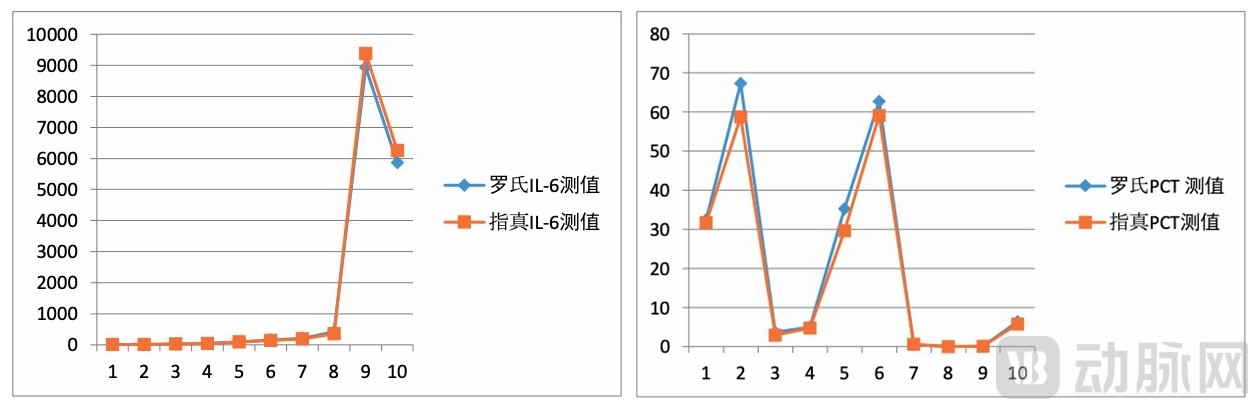
Comparison of Zhenliu Flow Fluorescence and Roche Electrochemiluminescence for the Two Infection Markers
The core team of Zhizhen Bio hails from industry-leading enterprises such as Mindray, Kemai, CapitalBio, and Leadman. Ma Yongbo, Chairman and CEO, brings 13 years of experience in the industrialization of in vitro diagnostic (IVD) instruments, including flow cytometry, hematology, biochemistry, and chemiluminescence systems. Dr. Xu Bing, CTO, possesses over 17 years of expertise in the industrialization of IVD reagents for hematology and immunodiagnostics. Leveraging the team’s profound technical accumulation and deep insights into the IVD market, Zhizhen Bio focuses on two product lines—flow fluorescence and hemato-immunology—to continuously launch diagnostic solutions tailored to the needs of healthcare institutions at all levels, addressing clinical applications in “immune assessment,” “infectious disease diagnosis,” and “reproductive health testing.”
After several years of research, development, and production, Zhizhen Bio’s two product lines have evolved into a comprehensive portfolio serving everything from primary care facilities to tertiary hospitals. In the first half of 2021, the company launched two mid-to-high-end integrated hematology and immunoassay analyzers, specifically designed to address high-volume clinical laboratory screening for infections, which received strong market acclaim. In the second half of the year, the company will introduce a series of mid-to-high-end flow cytometry immune analyzers to meet the immunological assessment needs of higher-tier hospitals in areas such as oncology, infectious diseases, and emergency care. All of the company’s products are key categories recommended for domestic substitution. It is believed that against the backdrop of tiered diagnosis and treatment systems and healthcare cost containment under medical insurance, the pace of import substitution will accelerate, positioning the company for explosive growth.
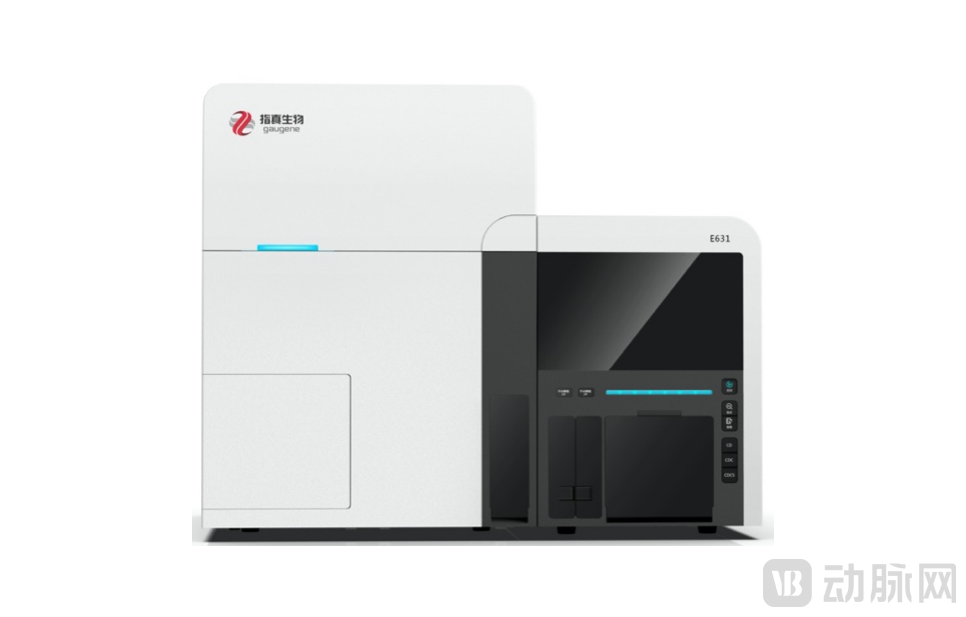
All-in-One Analyzer for Fluorescent Five-Part Differential and Infection Markers
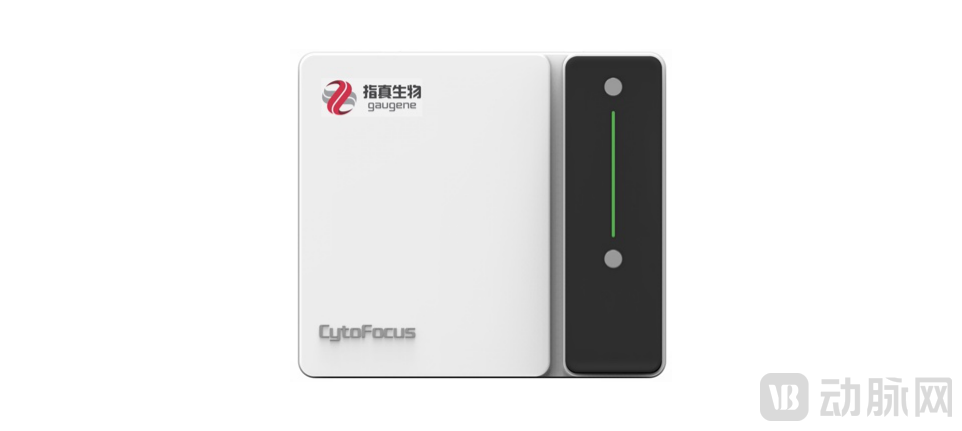
CytoFocus Automated Flow Cytometry Fluorescence Analyzer
Regarding future plans, Ma Yongbo, Chairman of Zhizhen Biology, stated: “Moving forward, Zhizhen Biology will continue to center on clinical needs, leverage the advantages of multi-analyte combined testing, and continuously enrich and iterate our two major product lines—flow fluorescence and hematology-immunity. We aim to develop more automated, multi-analyte diagnostic products to meet the high-performance and intelligent demands of clinical laboratory testing, thereby facilitating the deployment of high-quality medical products and resources to primary healthcare institutions. Furthermore, we have observed that single-cell sequencing technology has been widely applied in basic scientific research and clinical studies, demonstrating significant potential in drug development and clinical diagnosis. Cell separation technology is key to ensuring the integrity, authenticity, and reproducibility of single-cell sequencing results. Flow cytometry cell sorting systems have long been essential tools in cell separation research. The Zhizhen team has previously established expertise in flow cytometry cell sorting technology and will provide product support for clinical single-cell research in the future.”
Regarding this round of investment, Liang Yingyu, Managing Partner at Qiming Venture Partners, stated, “We are delighted to invest in Zhizhen Bio. Flow fluorescence technology is a highly promising platform-based diagnostic technology. The team at Zhizhen Bio boasts strong independent R&D capabilities and extensive experience in industrialization, addressing a series of clinical needs for automated flow processing, rapid response, and quantitative detection. We believe that Zhizhen Bio will rapidly grow into a prominent emerging force in China’s in vitro diagnostics industry.”
About Qiming Venture Partners
Qiming Venture Partners was established in 2006 and has successively set up offices in Shanghai, Beijing, Suzhou, Shenzhen, Hong Kong, Seattle, Boston, and the San Francisco Bay Area. Currently, Qiming Venture Partners manages nine US dollar funds and six RMB funds, with total assets under management reaching $5.9 billion. Since its inception, the firm has focused on investing in outstanding early-stage and growth-stage companies in industries such as TMT and Healthcare. To date, Qiming Venture Partners has invested in more than 380 high-growth innovative enterprises, among which over 130 have exited through listings on exchanges including the New York Stock Exchange (NYSE), NASDAQ, Hong Kong Stock Exchange (HKEX), Taipei Exchange (TPEx), Shanghai Stock Exchange (SSE), and Shenzhen Stock Exchange (SZSE), as well as through mergers and acquisitions. More than 40 of these portfolio companies have become industry-recognized unicorns and super unicorns.