

Sinomede Launches Open-architecture Laboratory Automation Line Compatible with Global Instrument Brands, Aiming to Break Import Monopoly
With the rapid development of China’s medical laboratory sector, clinical laboratory instruments have evolved from semi-automated to fully automated analysis, and laboratory operational models have progressed from single-instrument automation to total laboratory automation (TLA). Laboratory automation tracks reduce labor costs, minimize the risk of biological exposure, and enhance work efficiency and management standards. The transition from standalone instrument operations to comprehensive TLA solutions has become a prominent focus in the field of medical laboratory science.
According to statistics, the number of laboratory automation lines in China has grown rapidly since 2012, with a compound annual growth rate exceeding 100%. By the end of 2016, the installed base reached 1,500 lines. However, the Chinese market for laboratory automation lines has long been dominated by foreign companies such as Roche, Siemens, Beckman Coulter, Abbott, and Ortho Clinical Diagnostics. Driven by these manufacturers’ “brand protection” strategies, the available automated solutions are structured around proprietary brand ecosystems rather than being designed to address the specific needs and pain points of hospitals.Open production lines are automated solutions centered on customer needs. Closed production lines are automated solutions centered on brands as the core of products.The automated assembly lines installed in major hospitals are all designed with a closed architecture, making them incompatible with instruments from different brands. This severely limits hospitals' ability to expand their testing menus and control costs.
Since no single manufacturer can meet all testing requirements, hospitals in China often procure instruments from multiple brands. Taking chemiluminescence immunoassay analyzers as an example, nearly every hospital at the Grade II Class A level or above uses instruments from three or more brands to ensure testing accuracy and control costs. Therefore, there is an urgent need in hospitals for open laboratory automation lines compatible with instruments from different brands. In countries such as Japan and the United States, open automation lines have been widely adopted, and they are also poised to become the trend in clinical laboratory medicine in China.
Sunostik is one of the few domestic companies dedicated to the research and development of open laboratory automation solutions. Its technical team has many years of experience in industrial automation, along with strong engineering capabilities in micro-component machining, pneumatic and electric systems, hybrid robotics, and control technologies. With nearly two decades of practical experience in visible-light analytical instruments and indoor automation solutions, the company possesses proficient design capabilities across a wide range of domains, including automated instruments, algorithms, control systems, optical measurement, mechanical and hydraulic systems, and error analysis systems.
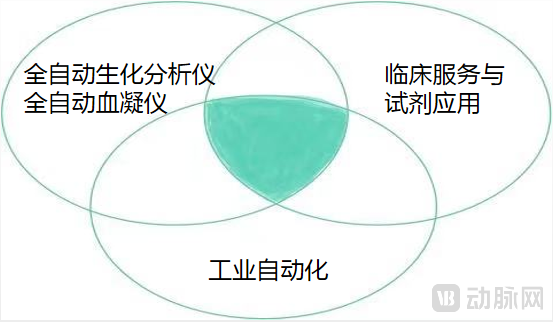
Leveraging its team’s expertise and advantages in laboratory automation lines, Sunostik has launched an open laboratory automation line solution that is compatible with instruments from different brands and of various types. This solution effectively enhances testing efficiency, reduces biosafety risks, and improves cost control capabilities.
Currently, the company’s automated laboratory assembly lines have been installed and put into use at multiple hospitals and third-party medical laboratories, including Shandong Provincial Hospital, the Second Affiliated Hospital of Chongqing Medical University, and KingMed Diagnostics.Meanwhile, the company has established collaborations with numerous renowned manufacturers of diagnostic instruments both domestically and internationally.
Founded in 1992, Sunostik has always been market-driven throughout its nearly 30-year development history, continuously developing a wide range of medical devices. In 1994, the company developed several rehabilitation devices, including pulse oximeters and microwave multi-functional therapeutic instruments. In 1997, Sunostik entered the biochemical analysis market, successively launching various fully automated biochemical analyzers and reagent products. Its products are successfully sold across China and to more than 60 countries overseas.
Sun Chengxin stated, “In the IVD industry, entrepreneurs must identify new growth drivers every 5 to 10 years."In 2010, after the company's biochemical analyzer products had gained a firm foothold in the market, it began to consider its next strategic direction."
After conducting research, we have focused our attention on the laboratory automation pipeline sector. He stated, “Laboratory automation pipelines have high technical barriers, requiring teams to have a deep understanding of automation. Meanwhile, with the rapid growth of the IVD market, the increasing number of test items, and the rising sample volumes, customers’ reliance on automation will gradually deepen. Moreover, those who pay attention to health economics know that when per capita income reaches $2,000, it marks the tipping point for human-machine substitution.” Sun Chengxin believes thatChina is expected to reach the inflection point for human-machine substitution around 2025, ushering in an explosive growth of automation solutions.Therefore, in 2010, Sunostik began to develop laboratory automation pipeline technology and modules.
Sunostik’s laboratory automation track solution encompasses biochemistry, immunology, coagulation, and urinalysis modules. It achieves full-process automation from sample loading, separation, sorting, and decapping to testing and retesting. This system reduces sample turnaround time, minimizes biological hazards in the laboratory, improves staff utilization and operational efficiency, and lowers error rates.Data shows that this solution can reduce labor costs by 30%-75% and reagent costs by 30%-45%.
It is worth noting that,The automated workflow system developed by Sunostik features a fully open architecture with extensive interfaces, enabling connectivity with instruments from mainstream manufacturers both domestically and internationally. It allows for the customized integration of testing equipment according to customer requirements, while ensuring the normal operation of clients' existing devices, reagents, and facilities.Flexibly combine various functional modules to rapidly implement automated solutions.
Sunostik's laboratory automation pipeline has obtained multiple patents, and in 2018, the company's pipeline was approved for sale.It has been installed in multiple Grade 3A hospitals and third-party medical laboratories both domestically and internationally, with over 50 units installed.Going forward, as the company successively enters into collaborations with multiple internationally renowned brands, its installed base will rapidly expand, while automation for molecular biology testing and liquid chromatography-mass spectrometry (LC-MS) testing is currently under development.
Driven by favorable policies, China’s IVD market will continue to maintain rapid growth, with a substantial increase in both the number of test items and sample volumes. Standalone analyzers are no longer able to meet the demand for high-throughput testing. Furthermore, as the tiered diagnosis and treatment system advances, laboratory automation lines will no longer be exclusive to large tertiary hospitals.In the future, China's demand for laboratory automation assembly lines will continue to grow, with the total number of installations expected to exceed 3,000.Meanwhile, under the impact of centralized procurement policies, reagent prices continue to decline.Open workflows with higher efficiency and better cost-effectiveness will inevitably become the mainstream.
Currently, there are approximately 1,200 modular laboratory automation lines installed in China, indicating that market penetration remains low and presenting opportunities for domestic enterprises. Sun Chengxin stated, “With the continuous improvement in the technical standards of domestically produced laboratory automation lines, and the introduction of multiple policies favoring Chinese-made equipment, I believeWithin the next 5–10 years, China will be able to completely break the import monopoly on IVD laboratory automation assembly lines and achieve exports.”
Sun Chengxin believes that, in the coming period,China's laboratory automation pipelines will rapidly enter the post-automation era, with robotics technology becoming more deeply integrated into laboratory automation solutions.Meanwhile, laboratory automation solutions will feature more comprehensive information system capabilities, incorporating intelligent functions such as emergency testing, calibration, quality control, and automated report verification. As one of the first companies in China to deploy open laboratory total testing processes (TTL), Sunostik has secured a first-mover advantage.The company is integrating intelligent robotics technology to develop a new generation of assembly lines, aiming to further overcome laboratory site and space constraints, enhance flexibility, and reduce costs.“The company’s next-generation assembly line is expected to be deployed in hospitals within two to three years.” Meanwhile, it is developing miniaturized automation solutions for application in central laboratories and specialized hospitals.