

Angelalign Soars 173% on HKEX Debut, Crowned 'China's First Orthodontic Stock'
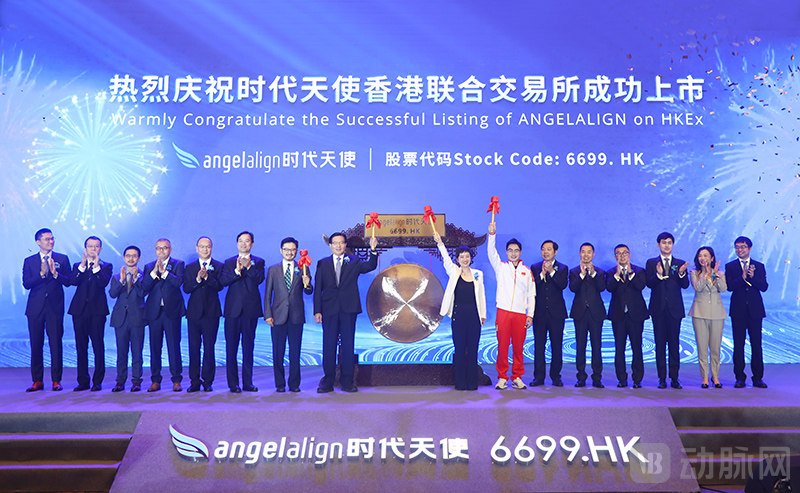
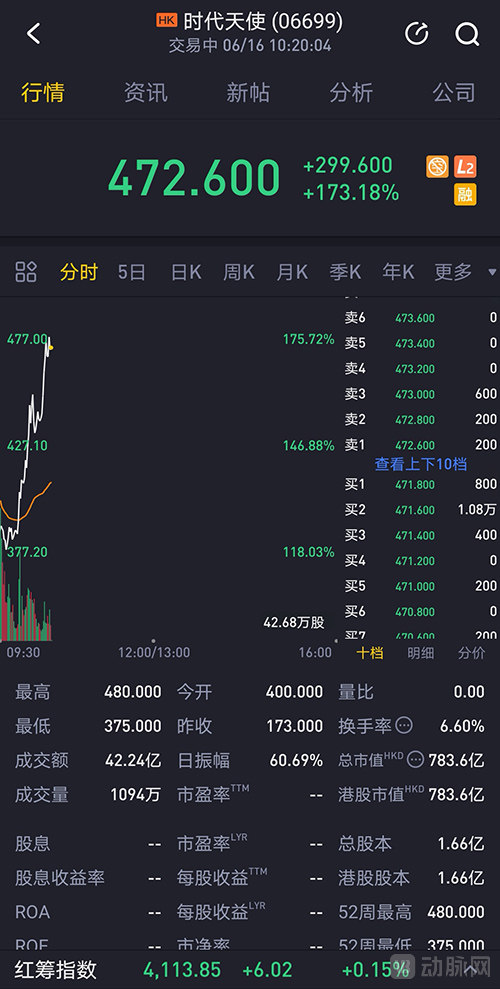
Today, Angelalign officially listed on the Hong Kong Stock Exchange, becoming the first Chinese company to go public in the clear aligner orthodontics sector. Its opening price was HK$400, representing a 131.21% increase over the issue price. As of 10:20 a.m., Angelalign’s share price stood at HK$472.6, up 173.18%, with a market capitalization of HK$78.36 billion.
Since filing its prospectus, Angelalign has remained in the spotlight of the capital markets. Its public offering was oversubscribed 2,079 times, making it the second-most oversubscribed new stock this year after Nuohui Health.
According to the prospectus, Angelalign generated revenues of RMB 488 million, RMB 646 million, and RMB 817 million in 2018, 2019, and 2020, respectively, with gross profit margins of 63.8%, 64.6%, and 70.4%, demonstrating stable revenue-generating and profitability capabilities.
Benefiting from 18 years of continuous innovation and a diversified product portfolio comprising four offerings—Angelalign Standard, Angelalign Pro, Angelalign Kids, and COMFOS—Angelalign has secured a significant market share. Based on the number of completed cases in 2020, the combined market share of the top two players in China’s clear aligner market totaled 82.4%, with Angelalign accounting for 41%.
Angelalign, founded in 2003, is the first company in China to provide clear aligner solutions. Over the past 18 years, Angelalign has secured a first-mover advantage in China’s clear aligner market by repeatedly pioneering industry “firsts.”
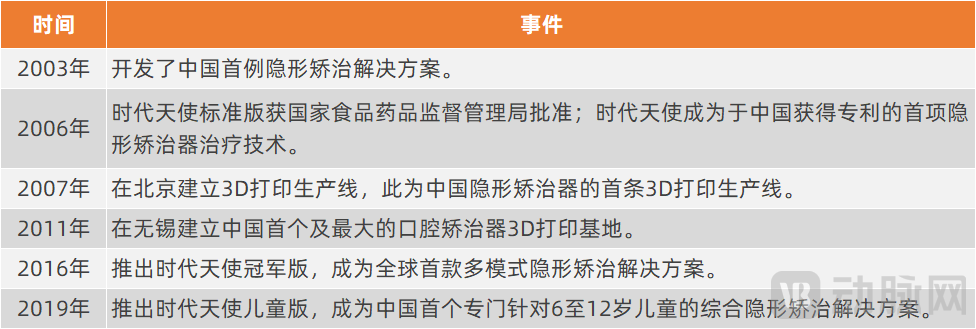
Angelalign’s Many “Firsts”; Source: Angelalign Prospectus
In terms of products, in 2006, the clear aligners developed by Angelalign officially obtained the Class II medical device registration certificate approved by the CFDA. In the same year, its clear aligner technology became the first patented clear aligner treatment technology in China. During the process of expanding its product line, Angelalign launched the world’s first multi-modal clear aligner treatment solution, pioneering China’s first comprehensive clear aligner treatment solution specifically designed for children aged 6 to 12.
In terms of production, Angelalign built China’s first 3D printing production line for clear aligners in Beijing in 2007; in 2011, it established a dental 3D printing base in Wuxi, integrating 3D printing technology into standardized production processes, and set up an automated production line at this facility in 2017. Currently, Angelalign has begun deploying its fourth-generation 3D printers, achieving production speeds approximately 25% to 50% faster than the industry average.
VCBeat’s query of the National Medical Products Administration’s medical device database reveals that, from the perspective of clear aligner approvals (including both current and historical registration data for domestically produced and imported products), China’s clear aligner sector entered a phase of rapid development starting in 2010, with a substantial increase in the overall number of approvals since 2016 compared to previous years. The number of approvals peaked in 2019.
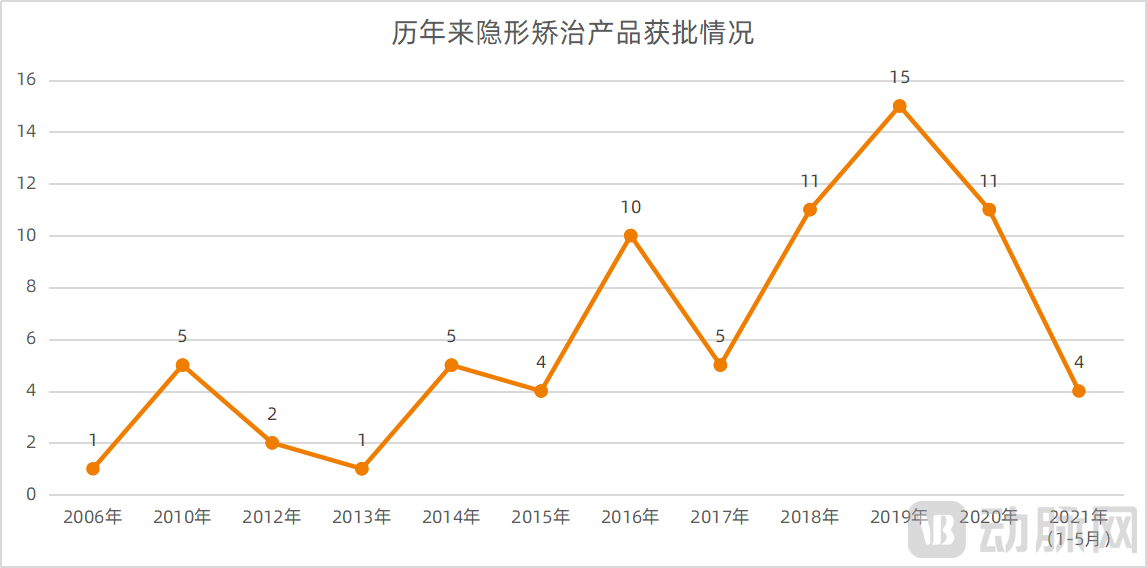 Historical Overview of Domestic Clear Aligner Approvals in China, Source: National Medical Products Administration (NMPA) Medical Device Database
In this process, Angelalign’s first-mover advantage became evident.
First, Angelalign was among the earliest companies in China to launch and commercialize clear aligner products, accumulating a substantial number of patient cases. According to its prospectus, Angelalign completed 137,600 cases in 2020. Over the past 18 years, this wealth of data has provided a critical foundation for ongoing case studies and the continuous iteration and optimization of its clear aligner treatment solutions.
Secondly, during the initial phase of approval or commercialization of a large number of clear aligners, Angelalign has already achieved scaled customized production, balancing improvements in quality and efficiency with cost reduction. As the most core physical product in the clear aligner treatment process, each set of aligners for every patient must be customized according to the treatment plan. This requires that the aligner production process not only ensure precise customization to guarantee the final treatment outcome but also reduce costs through scaled production. By leveraging its automated 3D printing production base, Angelalign minimizes human error in the customized production process, better controls the quality of clear aligners, and further reduces production costs.
The prospectus shows that Angelalign’s gross profit margin has continued to grow over the past three years. The main reasons include: reduced production costs, with lower unit leasing costs for 3D printers; optimization of cost structure, especially relative savings in raw materials, consumables, and employee costs related to manufacturing compared to the output growth brought by economies of scale and automated production lines.
Finally, Angelalign has established strong brand recognition and influence among both dentists and patients, a competitive advantage that most new entrants will find difficult to surpass in the short term.
However, Angelalign’s growth path was far from smooth. In 2008, the company had not yet achieved scaled revenue or profitability and was at a critical stage of commercialization. At that time, Angelalign faced tight cash flow and even encountered a liquidation crisis. During its most difficult period, the company still had over 1,000 ordered aligners pending delivery to doctors. To complete these aligners and fulfill its commitments to partner institutions, doctors, and patients, founder Li Huamin exhausted all possible means to keep the company operational and address the funding issues.
At a critical juncture, OrbiMed invested in Angelalign, alleviating its urgent financial pressures. This move reflected not only confidence in the sector but also admiration for the perseverance demonstrated by Angelalign’s founder and CEO, Li Huamin, and her team amidst adversity. Leveraging this capital and subsequent investments, Angelalign accelerated its commercialization efforts, gradually establishing a virtuous cycle encompassing R&D, production, and market expansion.
It is evident that, bolstered by multiple first-mover advantages and unwavering commitment to customer value during challenging times, Angelalign’s emergence as the first domestic enterprise to complete an initial public offering (IPO) was a natural outcome.
Currently, Angelalign offers four types of clear aligners: Angelalign Standard, Angelalign Champion, Angelalign Kids, and COMFOS.
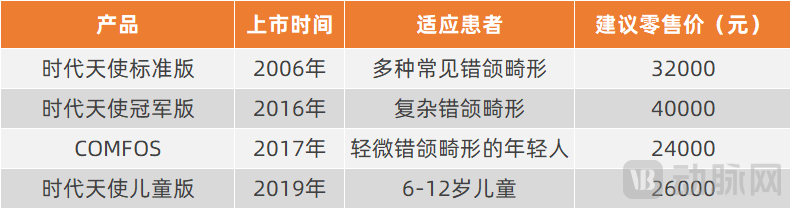
Positioning of Angelalign’s Four Product Lines, Source: Prospectus
Among them, Angelalign Standard Edition (upgraded to the Classic Edition in 2021), first launched in 2006, has become the company’s flagship product. It is indicated for a variety of malocclusions, including dental crowding, excessive interdental spacing, open bite, deep overbite, crossbite, and protruding teeth. Its pricing is positioned at the mid-range level among the four types of aligners.
Angelalign Champion Edition is designed to manage more complex cases that are not easily treated, achieving distinct tooth movement progressions at different stages through two pairs of aligners with complementary mechanical properties. The first pair, made from a softer material, is typically worn for one week to rapidly initiate tooth movement; the second pair, crafted from a harder material, is usually worn for three days to provide more precise control over tooth positioning. Angelalign Champion Edition better ensures the precision, efficacy, and comfort of orthodontic treatment, while reducing the overall treatment duration by approximately 30% without compromising accuracy. Its price is correspondingly higher.
COMFOS is generally suitable for common malocclusion cases, particularly among young people who prioritize speed, comfort, and affordability. Based on this group’s willingness to pay and purchasing power, COMFOS is priced relatively low.
Angelalign Kids Edition is a comprehensive clear aligner treatment solution designed for children aged 6 to 12, including clear aligners, lip and cheek shields, and a set of myofunctional exercises.
From the perspective of patient needs, clear aligner therapy has historically targeted a broad patient population, meaning individuals with varying degrees of malocclusion may not have been able to select the most suitable treatment plan. When a single protocol is applied to diverse patients, complex cases may fail to achieve ideal outcomes, while simple cases incur unnecessarily higher economic costs.
From the perspective of market competition, after some domestic clear aligner products entered the market in recent years, companies adopted low-price strategies to rapidly increase sales volume. In the short term, these products have had a limited impact on leading companies; however, in the long run, it is necessary for leading companies to optimize their product portfolios based on functional and pricing positioning.
Therefore, VCBeat believes that Angelalign’s existing product line structure is designed not only to better meet the actual needs of different patient groups but also to make forward-looking strategic arrangements in response to changes in the market landscape.
Based on data from the prospectus, the sales volumes of Angelalign’s four product lines have been shifting over the past three years.
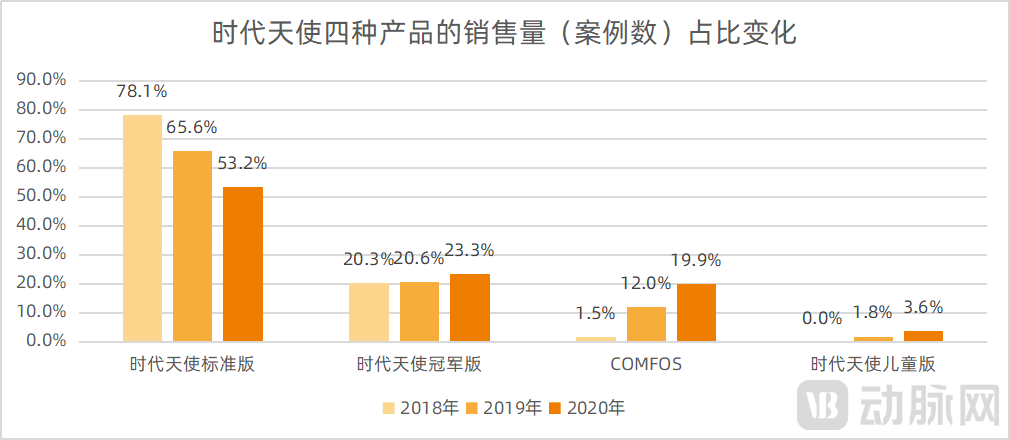
Changes in the Sales Volume Share of Angelalign’s Four Product Lines, Source: Calculated based on prospectus data
As shown in the figure above, the annual sales proportions of the Champion Edition, COMFOS, and the Pediatric Edition are gradually increasing, while that of the Standard Edition is steadily declining. This demonstrates that a diversified product portfolio enables patients across various segments to select the most suitable solutions for their needs.
Meanwhile, under its segmented product strategy, Angelalign’s overall sales volume demonstrated rapid growth, increasing from 77,700 units in 2018 to 137,600 units in 2020. In terms of completed cases, Angelalign accounted for 41% of the clear aligner market share in 2020.
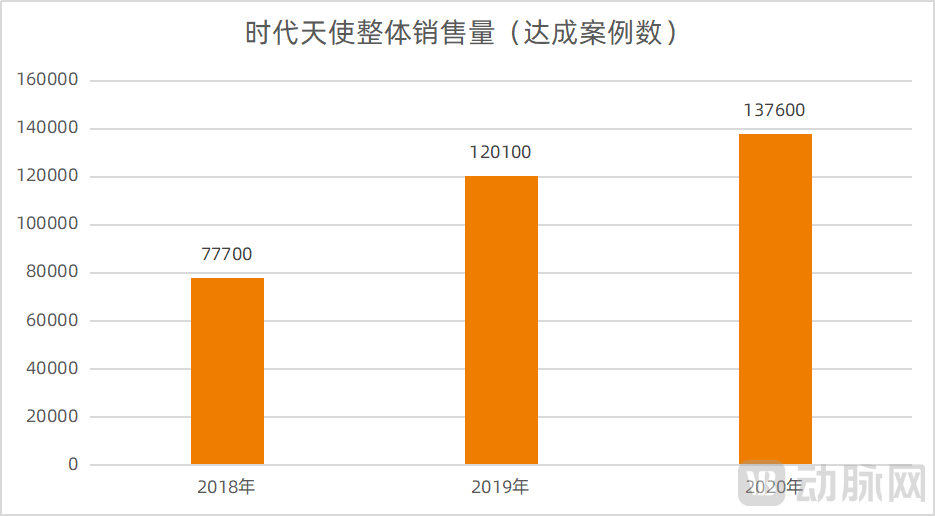
Angelalign’s Cumulative Case Count; Source: Prospectus
Clear aligner therapy is an interdisciplinary field encompassing clinical dentistry, biomechanics, materials science, computer science, and intelligent manufacturing technologies. It features high entry barriers and demands continuous scientific research, technological breakthroughs, and innovation. Robust R&D capabilities and the ability to translate research findings into practical applications are fundamental for enterprises to establish and consolidate their market position.
Since its inception, Angelalign has been committed to continuous scientific research. Taking papers indexed by China National Knowledge Infrastructure (CNKI) as an example, a search for publications listing Angelalign as the affiliated institution yields more than 20 articles. These papers were primarily published in journals such as the Chinese Journal of Orthodontics, the Chinese Journal of Stomatology, and Medical Biomechanics, with publication dates ranging from 2004 to 2019, demonstrating a consistent frequency of scholarly output.
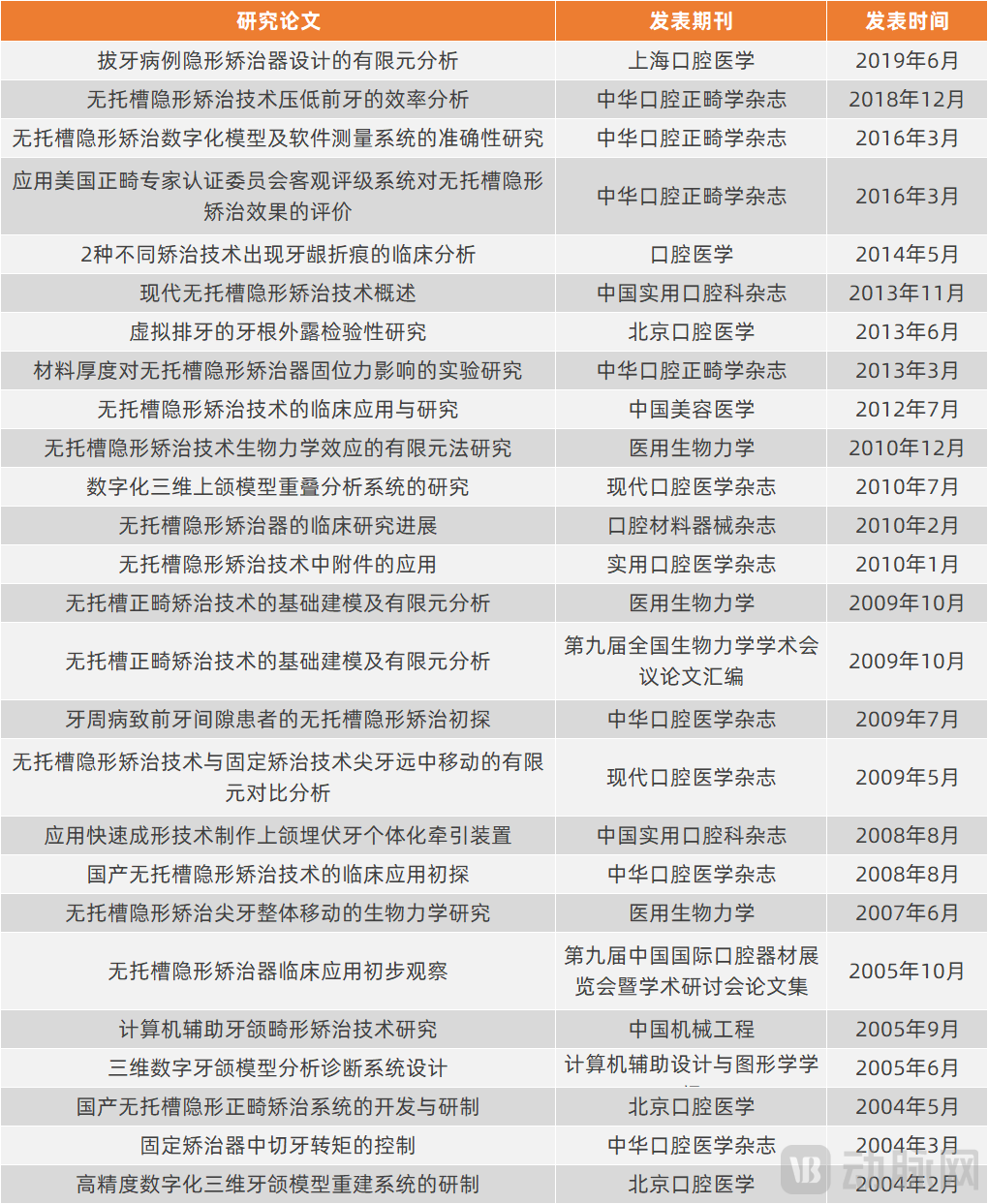 Papers involving Angelalign, Source: CNKI
These papers were primarily completed in collaboration with Capital Medical University, Tsinghua University, Beijing Stomatological Hospital, and other institutions, focusing on key aspects of clear aligner therapy, including biomechanical effects and digital modeling.
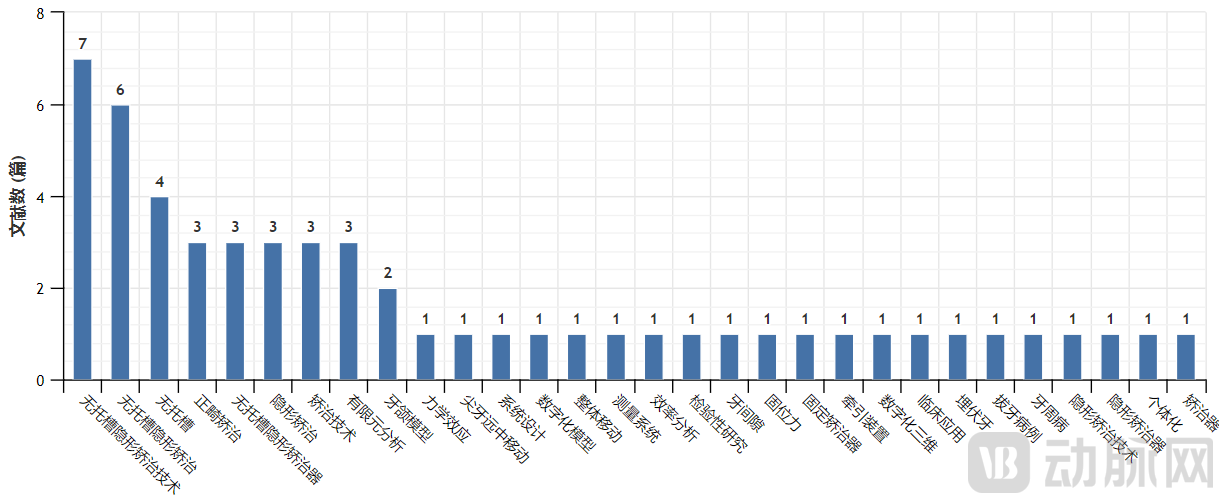 Distribution of Major Themes in Papers Co-authored by Angelalign, Source: CNKI
Since 2015, Angelalign has launched the A+ Plan to further intensify its innovation and research efforts. Through this initiative, Angelalign collaborates with China’s most prestigious higher education institutions, dental hospitals, medical schools, and other research organizations to conduct R&D activities in five key areas: clinical dentistry, biomechanics, materials science, intelligent manufacturing technology, and computer science.
For example, in December 2020, Angelalign and Zhejiang University established the Zhejiang University–Angelalign Joint Research Center for Smart Healthcare to expand the application of digital orthodontics and artificial intelligence technologies in dentistry and stomatology.
In October 2020, Angelalign partnered with the Jiangsu Industrial Technology Research Institute to establish a Joint Innovation Center, focusing on innovations in manufacturing technology and materials science.
In September 2020, Angelalign collaborated with Shanghai Ninth People’s Hospital, Shanghai Jiao Tong University School of Medicine, to establish a research platform for translational medicine in oral biomechanics and artificial intelligence, aiming to leverage big data and AI technologies to further investigate the fundamental mechanisms of biomechanics in tooth movement.
In addition, Angelalign has partnered with the West China Hospital of Stomatology at Sichuan University to establish the Digital Orthodontic Treatment and Training Center, and with Nanjing Stomatological Hospital to establish the Digital Orthodontics Experimental Center.
Meanwhile, Angelalign has been increasing its R&D investment year by year to support continuous research and innovation. According to the prospectus, Angelalign’s R&D expenditure rose from RMB 50.2 million in 2018 to RMB 93.5 million in 2020, with its proportion of total revenue increasing from 10.3% to 11.4%. In 2018, 2019, and 2020, Angelalign had 11, 10, and 21 research projects, respectively.
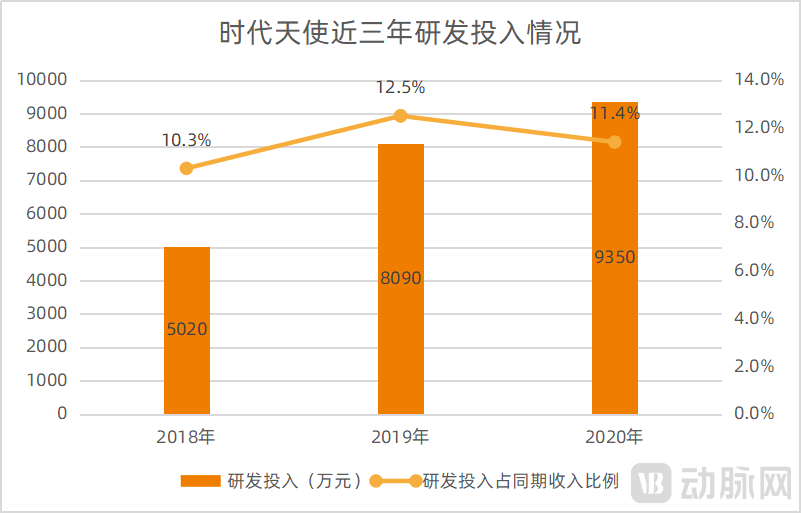 Angelalign’s R&D Investment Over the Past Three Years, Data Source: Prospectus
As of now, Angelalign holds 93 registered patents and 16 software copyrights in China. Its interdisciplinary research initiatives, multi-dimensional collaborative partnerships, and sustained R&D investment have driven the generation of innovative outcomes, which are subsequently translated into tangible products and services.
In the field of clinical dentistry, Angelalign has assembled a medical design team comprising over 400 members to establish rules and systems for orthodontic treatment plans tailored to Asian malocclusions. Medical designers utilize treatment data to create three-dimensional (3D) digital models of patients' teeth and develop customized, computer-simulated 3D treatment plans. These plans leverage an intelligent treatment planning and optimization system to simulate appropriate tooth movement throughout the course of treatment.
From a biomechanical perspective, Angelalign conducts research based on its independently developed masterForce system. This system enables comprehensive element simulation and biomechanical calculations through various methods, such as: visualizing orthodontic forces and tooth movement in all directions, accurately predicting deviations in treatment design, precisely calculating compensation for treatment plans, and designing optimized treatment solutions that best conform to orthodontic biomechanics. Leveraging the masterForce system, Angelalign has incorporated innovative force-enhancement features into its aligners, such as the angelButton traction product.
Furthermore, based on biomechanical research, Angelalign has developed the A6 solution for patients with mandibular retrusion, the A7 solution for cases requiring premolar extraction, and the A8 solution for molar distalization.
In the field of materials science, Angelalign has launched masterControl S, a new generation of high-end polymer developed for clear aligners, based on extensive biomechanical research and reverse engineering results derived from the oral health profile of the Chinese population. Currently, the masterControl S material has been incorporated into both the Angelalign Standard and Angelalign Pro versions.
In the field of computer science, Angelalign continuously optimizes and upgrades its intelligent systems, enhances computational analysis of treatment data, reduces the time required for case diagnosis, and improves the work efficiency of medical designers.
In the realm of intelligent manufacturing technologies, Angelalign employs 3D printing and production automation to enhance production efficiency and quality stability. To improve the precision of dental models and clear aligners, Angelalign has also developed a method for evaluating the printing accuracy of 3D-printed dental models and pioneered high-precision cutting technology for clear aligners based on six-axis robots.
Overall, Angelalign’s continuous research and breakthroughs in the five key areas of clear aligner therapy, along with its efforts to translate research findings into practical applications, have significantly strengthened its competitive moat.
Following its IPO, Angelalign will implement a multi-faceted development strategy.
First, strengthen R&D capabilities and continue to innovate orthodontic solutions, seeking technological breakthroughs through the most advanced theories. For example, collaborate with experts from other dental specialties to explore multidisciplinary combined orthodontic treatment solutions, thereby enhancing the ability to manage highly complex malocclusion cases.
Second, enhance the intelligence and digitalization of the operational system, covering order placement, data transmission, treatment plan design, user interaction, procurement and production processes, quality control, and product delivery.
Third, optimize medical services to enhance user experience. For example, leverage artificial intelligence and big data analytics to further improve the efficacy of the Angelalign clear aligner system, thereby expanding its user base.
Fourth, increase production capacity and improve production efficiency. Currently, Angelalign is constructing the Chuangmei Base in Wuxi, which includes new production facilities and an R&D center. Upon completion, both the Chuangmei Base and existing production facilities will be equipped with intelligent manufacturing technologies, including state-of-the-art 3D printers and production automation technologies such as robotics. Once the Chuangmei Base is fully operational, the annual designed production capacity is expected to reach approximately 100 million clear aligners by 2026.
Large-scale intelligent manufacturing will further enable Angelalign to reduce costs, better control the quality of clear aligners, and more promptly meet customer requirements and orders, thereby achieving economies of scale. Meanwhile, Angelalign’s long-term plan is to explore and expand into the global clear orthodontics market.
The upstream sector of the orthodontics industry comprises manufacturers of materials, equipment, and consumables; the midstream consists of providers of orthodontic treatment solutions; and the downstream includes medical institutions. In clear aligner therapy, digitalization must be integrated throughout the entire workflow, connecting all stakeholders across the upstream, midstream, and downstream sectors. Therefore, the development of clear aligner therapy also represents a process of coordinated digital transformation across the entire orthodontics industry value chain.
In 2015, Angelalign’s years of investment in research and development, coupled with its continuously accumulated medical design services, had already established a strong reputation and a competitive moat for the company within the industry. Under the leadership of Li Huamin and the core management team, Angelalign turned profitable that year and became a star enterprise in the dental sector, attracting intense interest from investors. On one hand, Angelalign had begun to generate profits and boasted substantial cash flow. Founder and CEO Li Huamin, along with her core management team, expressed full confidence in the industry’s development and reaffirmed their commitment to the long-term operation of the Angelalign team—built through years of hard work—and this Chinese brand, which enjoyed an excellent market reputation. The core executive team of Angelalign made it clear that they would only partner with stakeholders who focused on long-term value.
This aligned with the philosophy of Feng Dai and Huang Kun, who had just departed from Warburg Pincus. The parties quickly reached an agreement, sharing a strong optimism about the orthodontics sector in China. Feng Dai explicitly stated that he fully respected and trusted Li Huamin and the core management team, pledging not to interfere with the team’s strategic decisions or operational management. Ultimately, in 2015, Shuangbai Investment Group acquired equity stakes from the existing shareholders of Angelalign, becoming its controlling shareholder.
Furthermore, according to a report by Frost & Sullivan, measured by retail sales revenue, the market share of clear aligners in China’s overall orthodontic market increased from 6.9% in 2015 to 19.0% in 2020, and is projected to reach 40.3% by 2030, equivalent to USD 11.9 billion, while the global clear aligner market is expected to reach USD 46.2 billion by 2030.
Angelalign’s successful IPO signifies that its digitalization and intelligence strategies have secured stronger financial backing, thereby bolstering industry confidence among stakeholders. In the future, whether through an increase in the number of companies in the clear aligner sector or deeper integration of digital technologies into products or services by individual enterprises, the digital transformation of the orthodontics industry will accelerate, further driving the penetration of clear aligners within the overall orthodontic market.