

U.S. Innovation and Competition Act Passes Senate, Spotlighting Synthetic Biology Sector
Recently, after extensive deliberation and revision, the U.S. Senate passed the United States Innovation and Competition Act of 2021 (USICA) by a vote of 68 in favor and 32 against, serving as a substitute amendment to the Endless Frontier Act. The bill will now proceed to the U.S. House of Representatives for consideration; upon passage there, it will be signed into law by the President.
“U.S. Innovation and Competition Act of 2021”The bill authorizes a $250 billion investment in the technology sector and development over the next five years, including measures to address technological competition with countries such as China. It places particular emphasis on basic research, technological innovation, and the industrial application of technology transfer.
In the realm of basic research and technological innovation, the U.S. Congress will enhance bipartisan recognition of the importance of authorizing and funding innovation, including research conducted by the National Science Foundation (NSF) and the Department of Energy (DOE). Meanwhile, an interagency working group led by the Office of Science and Technology Policy (OSTP), and comprising the NSF, DOE, Department of Commerce, and other agencies, will be established to coordinate legislatively mandated activities with existing initiatives.
The Act mandates the National Science Foundation and the Department of Energy, in coordination with an interagency working group, to annually review and, as necessary, update ten key technology focus areas to guide research and technology development activities. The initially identified ten key technology focus areas are:
1. Artificial Intelligence, Machine Learning, Automation, and Related Advanced Technologies
2. High-Performance Computing, Semiconductors, and Advanced Computer Hardware
3. Quantum Information Science and Technology
4. Robotics, Automation, and Advanced Manufacturing
5. Prevention or Mitigation of Natural and Man-made Disasters
6. Advanced Communication and Immersive Technologies
7. Biotechnology, Medical Technology, Genomics, andSynthetic Biology
8. Data Storage, Data Management, Distributed Ledger Technology, and Cybersecurity
9. Advanced Energy and Industrial Efficiency Technologies
10. Advanced Materials Science
In terms of technology transfer and industrial application, a Regional Technology Center project will be authorized by the U.S. Department of Commerce (DOC), with a focus on building regional innovation capabilities.The plan is to authorize $10 billion in funding for fiscal years 2022–2026 to support the program.
A close reading of the legislative documents reveals that synthetic biology, as one of the ten key priority areas in critical technologies, plays a vital role in addressing strategic technological competition with China. The United States has made strategic deployments across multiple government agencies.
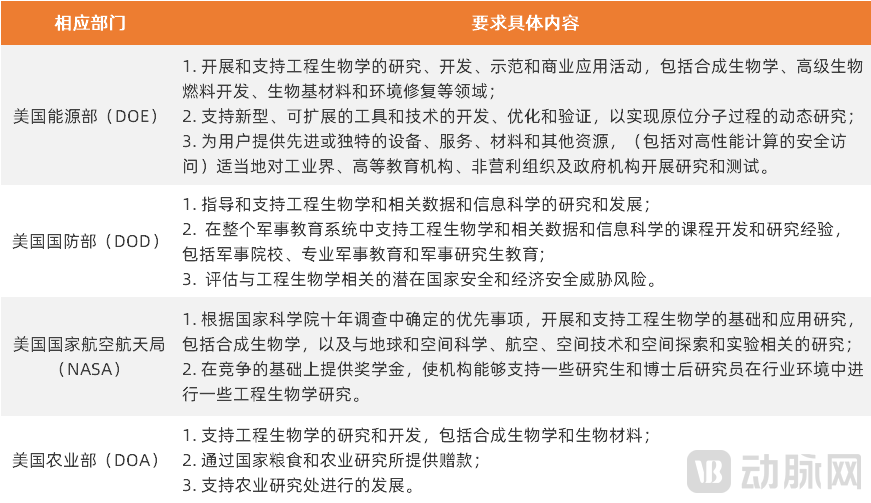
On January 15 this year, U.S. President Biden specifically emphasized that the United States must maintain its leading position in artificial intelligence and synthetic biology amid the technological competition with China. In recent years, synthetic biology has clearly become a strategically contested domain among the world’s major technological powers.
As an emerging discipline in the field of biology in the 21st century,Synthetic Biology is an interdisciplinary field that integrates molecular and cell biology, evolutionary systems biology, biochemistry, informatics, mathematics, computer science, and engineering. It reduces the reliance of industrial production on natural resources and environmental conditions, thereby enhancing economic output.To date, synthetic biology has achieved remarkable accomplishments in numerous fields, including agriculture, bioenergy, biomaterials, medical technology, and the exploration of fundamental life processes.
As early as 2004, MIT Technology Review listed synthetic biology as one of the ten emerging technologies likely to change the world. Owing to its immense potential for development, synthetic biology is regarded as the “third biotechnological revolution,” following the discovery of the DNA double helix structure and the completion of the Human Genome Project.
Building on the foundations of systems biology, synthetic biology integrates engineering principles and employs emerging technologies such as gene synthesis, editing, and network regulation to “write” new life forms or modify existing ones, thereby achieving a qualitative leap in humanity’s understanding of the essence of life. Synthetic biology has not only revitalized traditional disciplines like biology by shifting their focus from “understanding” to “creating,” but has also propelled the life sciences from interpreting life to programming it.
Thus, for the first time, humanity has gained a “God’s-eye view” to understand the evolutionary history and structural mechanisms of living organisms, gradually transitioning from an era of “acquiring knowledge through investigating things” to one of “gaining knowledge through creation.” Due to its extremely broad application prospects, synthetic biology has become a disruptive technological field that developed countries in Europe and the United States are striving to advance.
In recent years, major global technological powers have successively released strategic roadmaps to support the development of synthetic biology, with government agencies actively prioritizing and deploying resources in related fields.
European UnionIt was the first to drive the formulation of the synthetic biology roadmap, with its investment in synthetic biology accounting for one-third of its total R&D expenditure. In 2012,United KingdomThe publication of the “Synthetic Biology Roadmap” provided a comprehensive and systematic framework for synthetic biology. Building on this, the United Kingdom released the “UK Synthetic Biology Strategic Plan” in 2016. Guided by the roadmap and strategic plan, the UK government established the Synthetic Biology Leadership Council (SBLC) and has continued to increase investment and support for synthetic biology.
United StatesThe U.S. government actively supports basic research and technological development in synthetic biology primarily through federal agencies such as the National Science Foundation (NSF), the National Institutes of Health (NIH), the U.S. Department of Agriculture (USDA), and the Department of Defense (DOD). From 2008 to 2014, total U.S. investment in synthetic biology R&D amounted to $820 million.
Over the past two years, the U.S. Defense Advanced Research Projects Agency (DARPA) has maintained strong funding momentum in this field, launching several related initiatives such as the Advanced Plant Technologies (APT) program and the Insect Allies program. The U.S. Army, Navy, and Air Force have also established their own related projects. Furthermore, the current U.S. administration has taken measures such as appointing Eric Lander, a pioneer in genome sequencing, as Presidential Science Advisor and Director of the Office of Science and Technology Policy (OSTP), and naming Frances Arnold, a Nobel laureate and pioneer in synthetic biology, as a Special Advisor.
The recent passage of the U.S. Innovation and Competition Act of 2021 by the U.S. Senate further underscores, from a national strategic perspective, the U.S. government’s high regard and “ambitious aspirations” for the development of synthetic biology.
From the State Council to national ministries and commissions such as the Ministry of Science and Technology and the National Development and Reform Commission, and further to provincial and municipal governments,China also places great emphasis on the development and application prospects of synthetic bio-manufacturing, with continuous planning and deployment.From the perspective of scientific and technological development, there is the programmatic Outline of the National Medium- and Long-Term Plan for the Development of Science and Technology (2006–2020); from the perspective of industrial development, there is the Development Plan for Strategic Emerging Industries. In addition, the Ministry of Science and Technology and the National Development and Reform Commission have respectively issued more targeted documents, such as the Special Plan for Biotechnology Innovation during the 13th Five-Year Plan Period and the Development Plan for the Bioindustry during the 13th Five-Year Plan Period, thereby making corresponding plans and layouts for the field of synthetic biology in a comprehensive, multi-level, and multi-perspective manner.
On March 15, 2021, General Secretary Xi Jinping published an article titled “Striving to Become a Major Global Hub for Science and Innovation” in Qiushi Journal, pointing out that “withSynthetic Biology, gene editing, brain science, and regenerative medicine are fostering new transformations in the life sciences. In the Outline of the 14th Five-Year Plan for National Economic and Social Development and the Long-Range Objectives Through the Year 2035 released by the state, synthetic biology is explicitly listed as one of the frontier areas of scientific and technological development.
On May 28, 2021, in his speech at the Conference of Academicians of the Chinese Academy of Sciences and the Chinese Academy of Engineering, General Secretary Xi Jinping pointed out that basic and applied research in biological sciences has been developing rapidly in the field of life sciences. The precision of scientific and technological innovation has been significantly enhanced, and research on biomacromolecules and genes has entered a stage of precise regulation.From understanding and modifying life to synthesizing and designing life,While bringing benefits to humanity, it also poses challenges in bioethics.
Over the past decade, new enabling technologies and work methodologies have accelerated the design–build–test–learn cycle in synthetic biology.
Continuous advancements in DNA reading, writing, and editing technologies, along with the ongoing reduction in the time and cost of DNA sequencing, are driving the development of synthetic biology in multiple ways. The decreasing cost of key raw materials for gene synthesis—namely, oligonucleotides—has stimulated market demand for synthetic biology products. Meanwhile, biofoundries (platform-based manufacturing companies) are continually enhancing their technical capabilities in designing, constructing, and testing novel microorganisms. Coupled with the rapid development of infrastructure such as informatics and computational tools, these advances have significantly expanded the capacity to analyze and edit designed genes.
The deterioration of the global climate and resource environment has further driven a significant surge in market demand for synthetic biology products, leading to continuous expansion of the market size.In recent years, countries around the world have been formulating carbon neutrality strategic goals.At the United Nations General Assembly in September 2020, China announced its goal to strive for peaking carbon dioxide emissions before 2030 and achieving carbon neutrality before 2060. Subsequently, Japan, the European Union, the United States, and others also announced intensified emission reduction efforts or clarified their target timelines for carbon neutrality. During this year’s “Two Sessions,” “carbon peaking” and “carbon neutrality” were included in China’s Government Work Report for the first time, further becoming popular online terms and entering the public spotlight.
Achieving “carbon neutrality” requires disruptive transformations in the energy system and manufacturing sector, shifting from a fossil fuel-dominated model to one primarily based on renewable energy, and transitioning from non-renewable carbon resources to those predominantly derived from renewable carbon sources.In this context, low-carbon and sustainable biomanufacturing has become a primary focus of scientific and technological transformation for governments worldwide, as they strive to establish competitive advantages in the emerging industries resulting from this transition. Bioeconomy Capital predicts:By 2030, the majority of new chemical supplies will be provided by biotechnology; by 2040, biochemicals will surpass petrochemicals in multiple competitive sectors.
On April 7, 2021, Synbiobeta released its Q1 2021 market report on the synthetic biology sector.
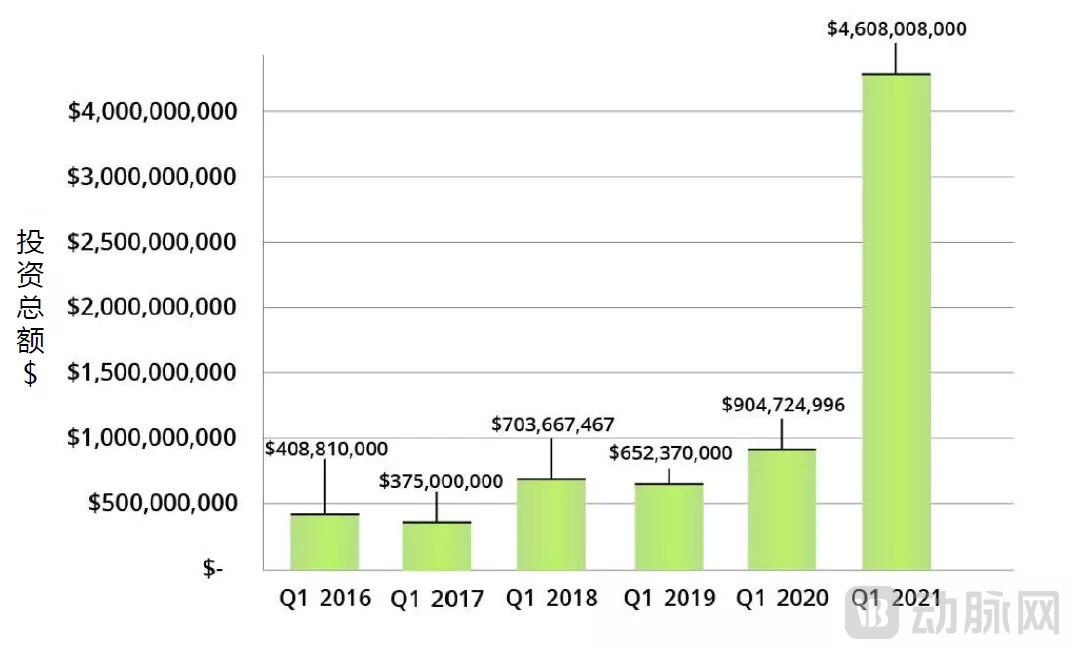
Total Investment in Synthetic Biology from 2016 to Q1 2021 (Source: Synbiobeta)
The report indicates that 2021 is poised to become a record-breaking year for synthetic biology investment, with projected investments reaching up to $36 billion. This figure represents more than a two-fold increase compared to the first quarter of 2020 and more than a ten-fold increase relative to the first quarter of 2017.
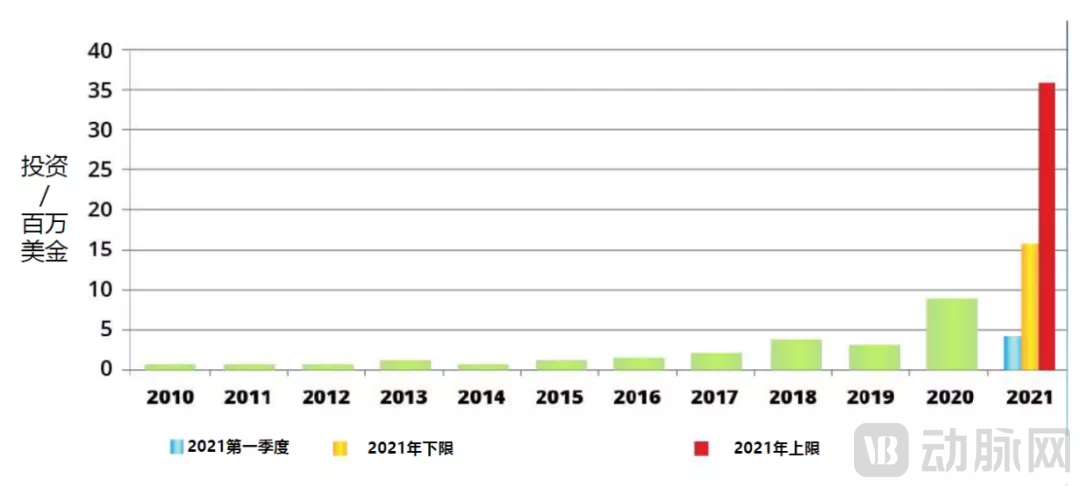
Investment Trends in Synthetic Biology in Recent Years and Market Investment Forecast for 2021 (Image Source: Synbiobeta)
In Q1 2021 alone, investment in the field of synthetic biology exceeded the total amount invested over the 11 years from 2009 to 2019, and was only slightly lower than the full-year investment in 2020. If investment continues at the same pace as in Q1, it implies that the annual investment in the synthetic biology industry will be at least $168 million (calculated by multiplying Q1 investment by 4).
If investment continues to maintain the quarterly growth rate seen in 2020, synthetic biology investments will reach $36 billion in 2021. The year 2021 may become an unprecedented milestone for the field of synthetic biology.
In the first half of 2021, four synthetic biology startups publicly disclosed financing information: Yikelai Biotechnology, Bluepha, Diying Biotechnology, and Yuguan Biotechnology. Additionally, Huaheng Biology listed on the STAR Market on April 22.
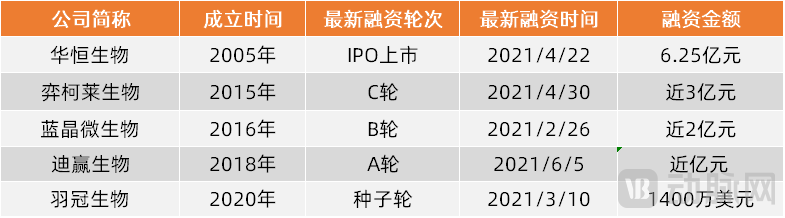
Major Financing Events in China's Synthetic Biology Sector in the First Half of 2021
Huaheng BiotechThe company is a manufacturer that leverages biomanufacturing to achieve large-scale production of niche amino acid products. It is primarily engaged in the research and development, production, and sales of amino acids and their derivatives, with its alanine series ranking among the largest globally. The enterprise has developed and implemented fermentation-based production processes centered on microbial cell factories, as well as enzymatic processes driven by enzyme catalysis. These innovative approaches have replaced the heavily polluting methods traditionally used in the chemical industry, thereby realizing a technological transformation in the production of fine chemicals through biotechnology.
It is reported that the company’s anaerobic fermentation technology for large-scale production of alanine has reached an internationally leading level, effectively reducing energy consumption in the alanine production process. Compared with enzymatic processes, each ton of L-alanine produced reduces carbon dioxide emissions by 0.5 tons. Huaheng Biology has established long-term and stable cooperative relationships with world-renowned chemical companies such as BASF and Nouryon, and its global market share for alanine products is nearly 50%.
Judging from the financing amounts of four other synthetic biology startups, Yikelai Biotech and Bluepha each secured nearly RMB 300 million and RMB 200 million in funding, respectively, setting new records for early-stage financing in China’s synthetic biology sector at the time. As emerging stars in China’s synthetic biology landscape, Diying Biotech and Yuguan Biotech each raised nearly RMB 100 million. This underscores domestic investors’ optimism about the future prospects of the synthetic biology field, while also indicating that China’s synthetic biology industry is garnering widespread attention and having its value potential increasingly tapped.
Yikelai BioIt is a biomanufacturing enterprise equipped with advanced synthetic biology technologies, primarily engaged in the research and development of synthetic biology methodologies and dedicated to their application in large-scale production. Currently, the company has established a leading-scale bioresource engineering library platform and has accumulated extensive experience in biosynthesis, the design and construction of high-performance cell factories, and the scaled-up production of products.
In the field of enzyme design and engineering, Yikolai Biotech has established an advanced enzyme library containing over 20,000 enzymes, along with a high-efficiency platform for enzyme design and engineering. Leveraging machine learning, the platform predicts and screens enzymes based on catalytic reaction requirements, and accelerates directed evolution through high-throughput screening and testing. In the construction of synthetic pathways and cell factories, the company has built a comprehensive chassis cell library comprising more than 20 model strains and a genetic element library with over 50,000 parts, thereby accumulating substantial high-quality bioengineering resources. This infrastructure enables the direct assembly of biosynthetic pathways within cells and facilitates the development of “smart cell factories” driven by genetic elements to synthesize target molecules.
It is reported that Yikelai Bio is currently in the pre-listing tutoring phase and plans to apply for a listing on the STAR Market, potentially joining the ranks of synthetic biology listed companies such as Cathay Biotech and Huaheng Biotechnology within the next two years.
As a startup leveraging synthetic biology technologies for molecular and material innovation,BluephaCommitted to the design, development, manufacturing, and sales of novel bio-based molecules and materials, including polyhydroxyalkanoates (PHA)—biomaterials capable of spontaneous and complete degradation in all natural environments—functional beverage ingredients that effectively alleviate anxiety, and novel functional probiotics that compensate for common human metabolic deficiencies. These innovations empower leading B2B clients across consumer goods, healthcare, agricultural environmental protection, and electronics and electrical industries to achieve differentiated competition within their respective sectors. Bluepha’s R&D platform encompasses all essential stages required for customized product development, including molecular structure design, microbial strain development, small-scale and pilot-scale production, and material modification and processing.
According to the company’s estimates, 70%–80% of its existing R&D platform and subsequent production facilities can be reused across different product pipelines, which will reduce the R&D costs and industrialization timelines for future product pipelines by an order of magnitude. Bluepha stated that it would start with the scaled-up production of PHA, continue to strengthen its efforts in bio-based molecules and materials, and steadily increase investment in R&D and innovation capabilities to ensure the launch of one new product to the market each year.
Diying BioFocusing on ultra-high-throughput next-generation DNA synthesis, a foundational technology in the field of synthetic biology, the company is one of the few domestic enterprises possessing ultra-high-throughput DNA synthesis capabilities. It owns independently developed intellectual property rights for its DYHOW1A, 2A, and 3A synthesis platforms. Leveraging these platforms, the company has expanded into four product lines: high-throughput oligonucleotide pool synthesis, high-throughput full-gene sequence synthesis, high-throughput NGS probe synthesis, and fully synthetic antibody libraries with antibody optimization, launching multiple high-quality, proprietary products.
Leveraging semiconductor industry processes, Diwin Biotech has independently developed 3D inkjet printing technology, breaking through key core technologies such as micron-level chip surface patterning, high-density picoliter droplet control, patented ink formulations and parallel maskless etching technology, second-generation synthesis chemistry optimization, and Flowcell control. The company has successfully developed a 3D inkjet printing ultra-high-throughput in situ DNA synthesis platform with independent intellectual property rights, achieving longer synthesis lengths, lower costs, and lower error rates. The synthesis length can reach 300 nt, the synthesis cost per base is more than three orders of magnitude lower than that of traditional synthesis, and the error rate is below 1/1000.
Delonix BioworksBy leveraging synthetic biology technologies, next-generation synthetic vaccines and live biotherapeutic products are being developed for infectious diseases and tumors. The company utilizes its synthetic biology and antigen discovery platforms to rationally design and reprogram pathogenic bacteria, thereby developing safer and more effective vaccines. Yuyuan Bio’s lead product pipeline is a synthetic vaccine project targeting drug-resistant bacteria. The newly secured funding will accelerate the construction of Yuyuan Bio’s synthetic biology vaccine platform and advance its synthetic vaccine projects into clinical trials.
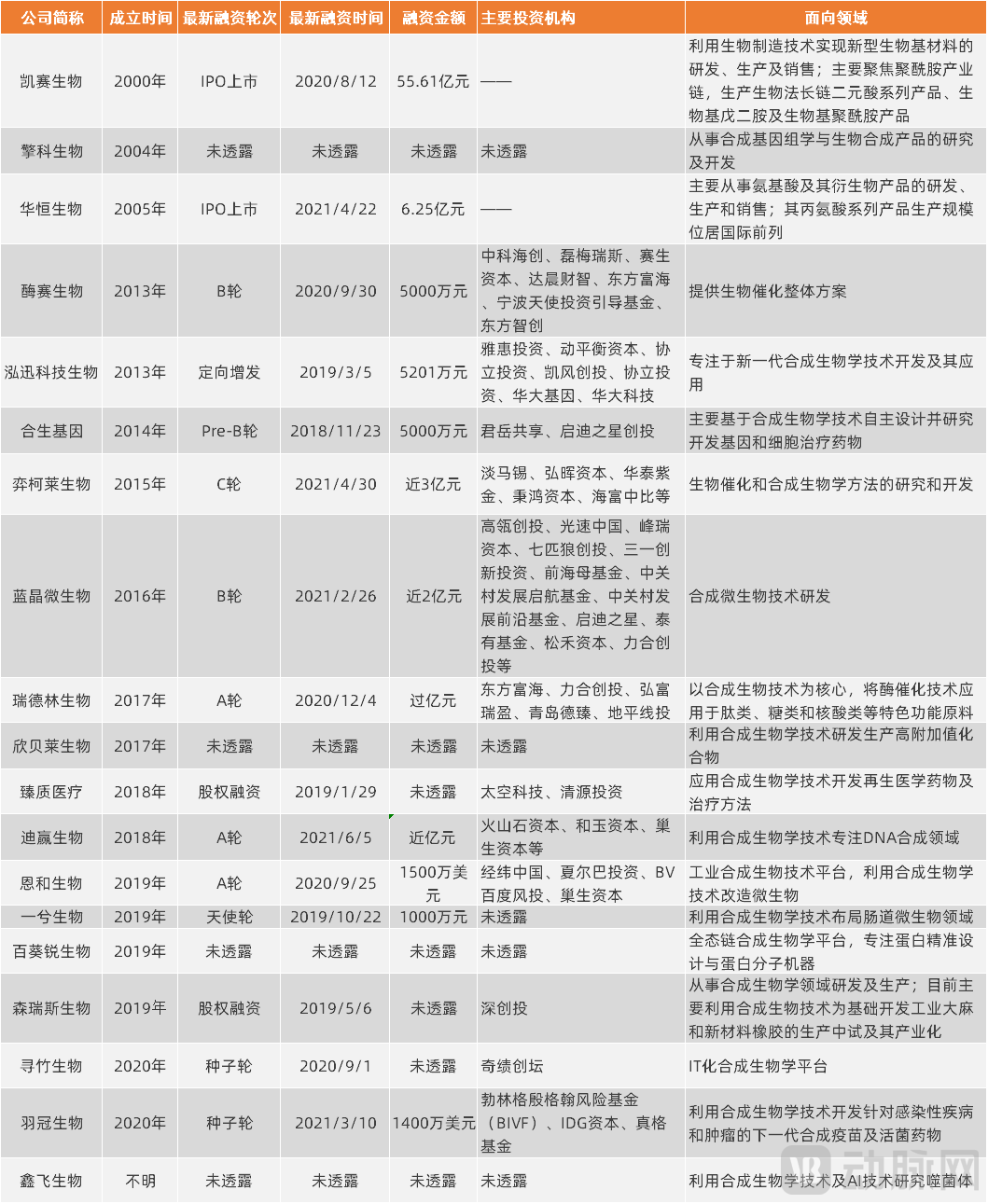
Major Domestic Startups in Synthetic Biology (Compiled by VCBeat)
(This table includes only companies that publicly identify as synthetic biology enterprises, excluding domestic companies in the mRNA and gene editing sectors.)
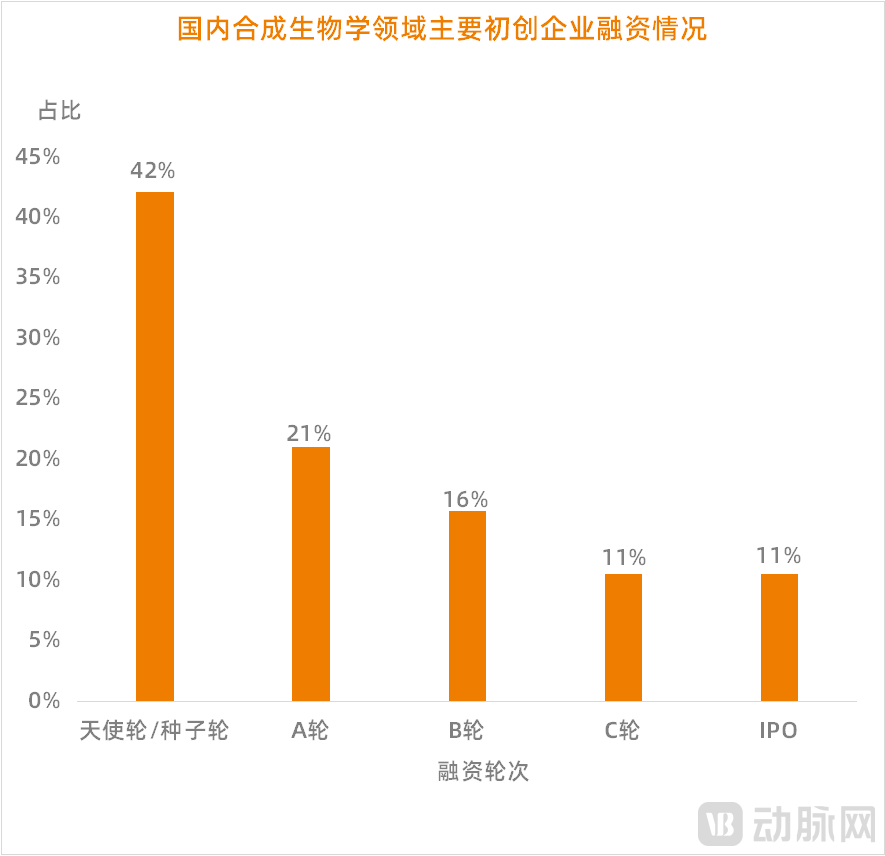
Overview of Financing Rounds for Major Domestic Synthetic Biology Startups (Chart by VCBeat)
In terms of financing rounds, most synthetic biology startups in China are in the early stages of funding: the largest proportion, 42%, are at the angel/seed stage; followed by Series A, accounting for 21%; companies at the Series B stage account for 16%; and those at Series C and beyond (including IPOs) collectively make up 22%.
The field of synthetic biology undoubtedly holds immense potential for development, but it is currently in a relatively early stage characterized by technological advancement and industrial trial-and-error. Foundational research, the construction of automation platforms, and the establishment of industry standards all require further development and refinement. On the industrial front, domestic companies that were among the first to enter the market face significant challenges, and catching up with international enterprises will take time.
Encouragingly, in recent years, the Chinese government has continuously provided robust support for the development of the synthetic biology industry, introducing a comprehensive package of incentive policies and actively collaborating with universities and research institutes to establish supporting infrastructure for synthetic biology, thereby promoting the vigorous growth of China’s synthetic biology sector.
From the 10 synthetic biology special projects under the Ministry of Science and Technology’s “973” Program and the major “Synthetic Biology” project launched under the “863” Program, to the “13th Five-Year Plan” for National Scientific and Technological Innovation and the “13th Five-Year Plan” for National Basic Research Special Projects, the Chinese government has deployed extensive research initiatives addressing strategic, forward-looking major scientific issues and cutting-edge key technologies, including those in synthetic biology.
Several universities and research institutes in China have successively established relevant research centers (laboratories), gradually building a number of interdisciplinary research platforms and teams, such as the Key Laboratory of Synthetic Biology founded by the Chinese Academy of Sciences, and the interdisciplinary centers established by Peking University, Tsinghua University, and other institutions.
Given the high complexity of synthetic life forms, extensive engineering-based trial-and-error experiments are required, necessitating the rapid, low-cost, and iterative completion of the “Design–Build–Test–Learn” cycle. However, the sheer volume of such engineering trials far exceeds the capabilities of traditional labor-intensive research paradigms. Advancing the intelligence of production equipment and assembly lines, by introducing various smart devices suited for manufacturing needs and establishing workshop-level intelligent production units based on cyber-physical systems, enhances precision and agile manufacturing capabilities. Automated facilities serve as accelerators for synthetic biology research.
To organically integrate biotechnology (BT) with information technology (IT), science and technology with industry, and scientific research with education, thereby accelerating breakthroughs in synthetic biology technologies and fostering the rapid growth of synthetic biology startups, governments at all levels in China have actively participated in the development of infrastructure and innovation platforms for synthetic biology. Notable examples include the “National Center for Technological Innovation in Synthetic Biology,” planned to be jointly established by the Tianjin Municipal People’s Government and the Chinese Academy of Sciences, and Shenzhen’s “Major Scientific and Technological Infrastructure for Synthetic Biology Research.”
National Center for Synthetic Biology Technology Innovation(National Innovation Center for Synthetic Biotechnology) is the third national technological innovation center approved for establishment by the Ministry of Science and Technology. Construction commenced in December 2019, with operations scheduled to begin by the end of 2021. The center aims to foster extensive collaboration, synergy, and networking in synthetic biology technology innovation, thereby building China’s strategic scientific and technological capabilities in the field of synthetic biology. Its facilities encompass areas dedicated to scientific research, technology development, innovation and entrepreneurship, integration of science and education, as well as comprehensive management and lifestyle services.
Major Scientific and Technological Infrastructure for Synthetic Biology ResearchAs one of the key projects prioritized for launch and deployment in the construction of Shenzhen Guangming Science City, the project involves a total equipment investment of nearly RMB 1 billion, making it the first large-scale infrastructure initiative globally to commence planning and construction in the field of synthetic biology. The project aims to help biotechnology companies cross the entrepreneurial “valley of death,” break down spatial barriers between research institutions and startups, effectively overcome bottlenecks caused by startups’ lack of facilities and technical platforms, shorten the time cycle from original innovation to industrial commercialization, and explore a new model for aligning science and technology with industry—the “Upstairs-Downstairs Innovation and Entrepreneurship Complex.” In January this year, the main building of the major scientific and technological infrastructure for synthetic biology research was officially topped out, with completion acceptance and delivery expected in early 2023.
These jointly established platform facilities will explore higher-level cooperation mechanisms, provide comprehensive services, and drive new breakthroughs in the discipline and industry of synthetic biology.
Overall, although China’s biomanufacturing industry started relatively late, it has developed rapidly in recent years. Leveraging advantages such as low cost and large-scale production, it has achieved market leadership in terms of output and scale for certain bulk products. The country has established a solid foundation in applied research, including the development of new pathways for the bioeconomy and the technological upgrading of traditional chemical industries. Furthermore, China is now at the forefront in terms of the maturity of biorefining technologies in several key industrial sectors.
In the field of the bio-fermentation industry, China is accelerating its transition from a major fermentation industrial power to a leading global force in fermentation. The industry has developed steadily, with product output reaching 29.616 million tons and total output value amounting to RMB 247.2 billion in 2018. The variety of novel fermentation products and derivative new products continues to expand. In the sector of bio-based material monomers and polymers, a bio-based material industrial chain has been established, focusing on the preparation of bio-material monomers from renewable resources, the synthesis and modification of bio-based resins, and the application of bio-based materials. Production lines with a combined capacity of approximately 20,000 tons per year for bio-based 1,3-propanediol and bio-based succinic acid have been built. The annual production capacity of polylactic acid (PLA) stands at 10,000 tons, ranking second worldwide. The total annual production capacity of polyhydroxyalkanoates (PHA) exceeds 20,000 tons, with product types and output leading internationally.
In the bioenergy sector, since the release of the “Implementation Plan for Expanding Biofuel Ethanol Production and Promoting the Use of Automotive Ethanol Gasoline” (hereinafter referred to as the “Implementation Plan”) in 2017, China’s fuel ethanol industry has expanded rapidly. As the world’s third-largest producer and consumer of bioethanol, after the United States and Brazil, China currently has an installed production capacity of 5 million tons, with an additional 3 million tons under construction.
Meanwhile, we must also confront our shortcomings: the core segments of the current biomanufacturing industry still suffer from weaknesses, characterized by insufficient reserves of key core and forward-looking technologies, lagging development of core equipment, low levels of commercialization, and inadequate competitiveness. Companies from the United States, Denmark, the Netherlands, Japan, and other countries hold technological monopolies in modern fermentation industries such as enzyme preparations. In China’s industrial sectors with scale advantages, particularly in bulk fermentation products (amino acids, organic acids, vitamins, etc.), there are widespread risks of intellectual property infringement related to industrial production catalysts. Major chemicals such as propylene glycol and nylon also face comprehensive patent blockades, having yet to break the monopolies held by large foreign chemical groups like DuPont. Compared with developed countries, China still lags in its scientific and technological strategic architecture, foundational core technologies, and key equipment, posing significant challenges to industrial development.
Yet challenges also present opportunities. China’s synthetic biology industry is currently in its early stages, offering substantial market potential. A surge of synthetic biology startups is emerging and gaining momentum across the country. Meanwhile, numerous prominent domestic investors have recognized the significant future prospects of synthetic biology and are heavily investing in this sector, as evidenced by several large-scale financing deals in the first half of 2021. The future development of the synthetic biology industry holds great promise. The whirlwind of the third biotechnology revolution has just begun to sweep across China.
References:
1. Liu Xiao, Zeng Yan, Wang Liwei, Zhou Guangming, Xiong Yan. Innovative Policy System to Safeguard the Scientific and Industrial Development of Synthetic Biology. Bulletin of Chinese Academy of Sciences, 2018, 33(11): 1260-1268
2. Tan TW, Chen BQ, Zhang HL, et al. Accelerating the development of green biomanufacturing to facilitate the achievement of “carbon neutrality” [J]. Chemical Industry and Engineering Progress, 2021, 40(3): 1137-1141.
3. Wu Xiaoyan, Ding Chenjun, Chen Fang, Zheng Ying, Song Qi. Patent Landscape Analysis of Synthetic Biology[J]. Science Focus, 2020, 15(1): 11-21 doi:10.15978/j.cnki.1673-5668.202001002