

LinkDoc Technology Files for Nasdaq IPO with $940M Revenue and Over $2B Raised in Six Years
LinkDoc
Provider of Artificial Intelligence and Medical Big Data Solutions
On June 14, Eastern Time, medical technology company LinkDoc officially filed its prospectus, planning to list on the Nasdaq. After six years of development, LinkDoc has finally decided to enter the next phase.
As one of the first startups to enter the medical big data sector, LinkDoc has completed six rounds of financing, raising over RMB 2 billion. Prior to its IPO, the latest round of funding came from AliHealth, a giant in internet healthcare. The two parties aim to jointly build a service platform covering the entire disease journey for cancer patients in China and actively explore innovative online service models for specialty oncology drugs.
As a result, Temasek holds an 11.7% stake in LinkDoc, making it the largest institutional investor; NEA, Broadband Capital, Ali Health, and MBK Partners hold stakes of 10.2%, 9.2%, 8.4%, and 6.3%, respectively.
LinkDoc’s six-year growth trajectory nearly mirrors the development of the medical big data industry. Starting with data standardization and cleaning in its early stages, progressing to data-driven auxiliary drug R&D and imaging diagnosis support in the mid-term, and expanding into comprehensive oncology care services across the entire patient journey in recent years, LinkDoc has gradually built three core business modules—LinkCare, LinkData, and LinkSolutions—with data at their heart. Its integrated business system spans from data acquisition to data application, and from B-end empowerment to C-end services.
LinkData, an AI-powered data governance system independently developed by LinkDoc, analyzes various types of medical data to enable more precise and personalized patient care on the LinkCare platform, while also helping life sciences companies improve the efficiency of drug R&D and commercialization through LinkSolutions. Serving as a data middle platform, LinkData connects the business operations of both LinkCare and LinkSolutions.
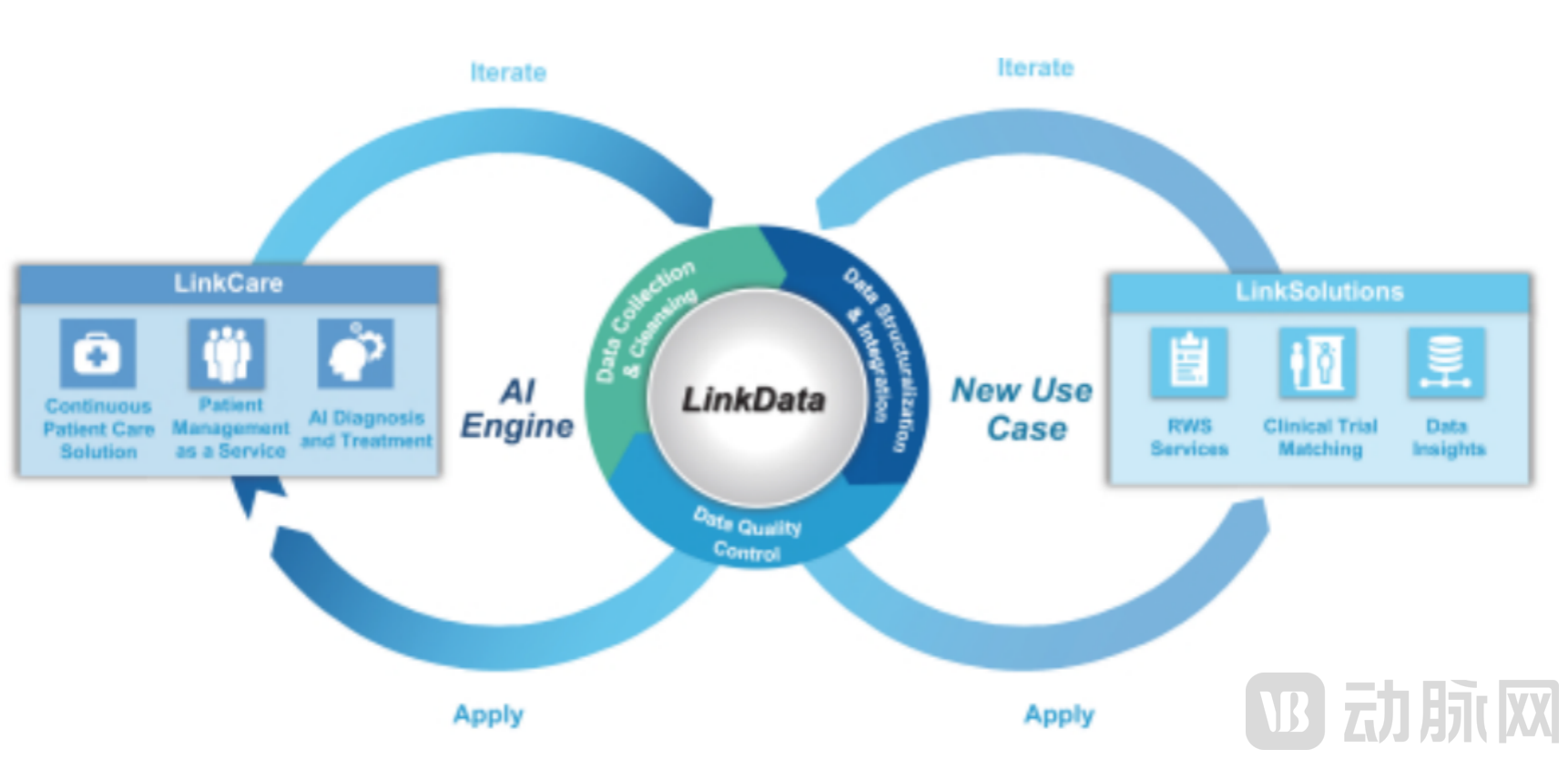
LinkDoc’s Business Structure
LinkDoc CEO Zhang Tianze once stated, “Healthcare and finance share significant similarities, as every decision revolves around data. In particular, since Western medicine adopted its specialized disciplinary approach, medical practice has become entirely data-driven.” Now, on the eve of its initial public offering, the submerged portion of the iceberg is coming into view. With financial backing, how far has LinkDoc’s healthcare big data come?
Reviewing the prospectus data, LinkDoc’s operating revenue in 2020 reached RMB 942 million, representing a year-on-year increase of 88.70% from RMB 499 million in 2019, nearly doubling. In line with this growth, the cost of revenue also rose; following business expansion, the cost of revenue increased to RMB 864 million in 2020, marking a 97.26% increase.
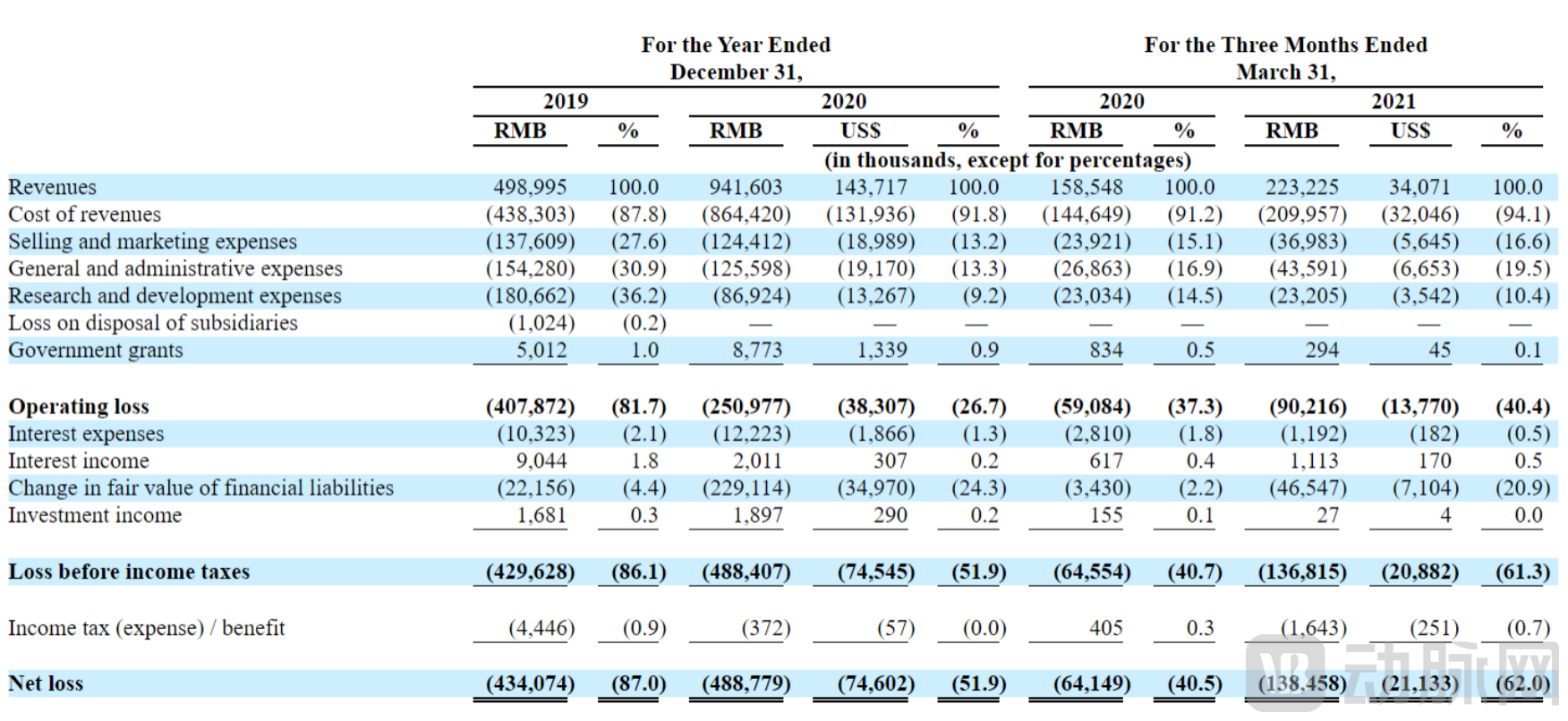
LinkDoc Financial Statements
Observing the revenue and cost data over two years, the trends of both are almost entirely consistent, with gross profit margin declining to some extent as revenue and costs increased. The core driver of this change is the “LinkCare” business. Revenue from this segment rose from RMB 376 million in 2019 to RMB 806 million in 2020, while costs also increased from RMB 357 million in 2019 to RMB 776 million in 2020.
Currently, LinkDoc’s operating profit and net profit remain negative. In 2019 and 2020, LinkDoc Technology reported net losses of RMB 434 million and RMB 489 million, respectively. Its adjusted net losses (excluding non-cash expenses such as employee share-based compensation, changes in the fair value of financial liabilities, and related non-cash interest) were RMB 389 million and RMB 233 million, respectively, accounting for 78% and 25% of its revenue. The loss ratio has narrowed significantly.
In the first quarter of 2021 and the same period in 2020, the net losses were RMB 138 million and RMB 64 million, respectively. The adjusted net losses (excluding non-cash expenses such as employee share-based compensation, changes in the fair value of financial liabilities, and their non-cash interest) were RMB 80 million and RMB 56 million, respectively, accounting for 35% and 36% of revenue, with the loss ratios remaining largely stable.
This to some extent demonstrates the feasibility of LinkDoc’s business model during its large-scale expansion. If this momentum can be sustained to further scale up its operations, LinkDoc has the opportunity to turn a profit by mid-2021.
Further analysis reveals that the surge in revenue is driven by the expansion of LinkDoc’s market share. Data shows that the number of paying patients on the LinkCare platform increased from approximately 37,300 in 2019 to about 54,900 in 2020. In the first quarter of 2021, this figure rose from 14,200 in the same period of 2020 to 20,100.
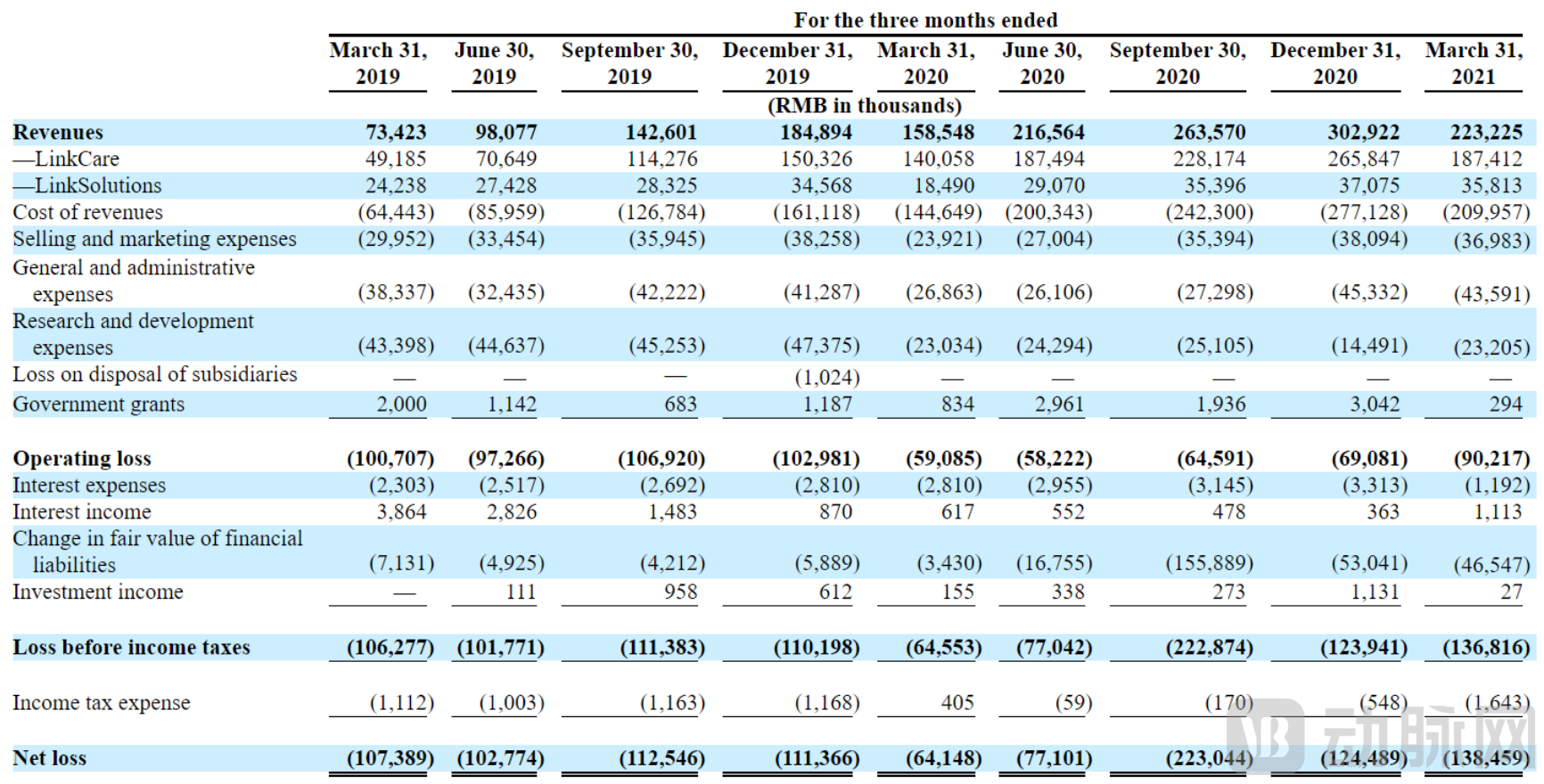
LinkDoc’s Business Performance
LinkCare Services for Patients
“LinkCare” is a patient-benefit-centered, digital full-lifecycle care platform. Its services cover the entire closed loop of disease diagnosis and treatment, spanning from lesion detection, in-hospital diagnosis/consultation, and treatment, to out-of-hospital consultations, medication purchase/prescription renewal, drug infusion/delivery, patient management/education, follow-up visits, and even medical insurance/commercial insurance payments. By integrating various online and offline resources, LinkCare provides patients with precise and personalized diagnostic and therapeutic services. Unlike traditional chronic disease management services, LinkDoc’s solution is not merely aimed at improving medication adherence or ensuring medication volume; rather, it empowers patients to actively participate in their own care, helping them control disease symptoms, slow disease progression, and improve quality of life.
The improvement in patient survival benefits brought by LinkCare is supported by clinical evidence. In May 2021, the long-term follow-up results of the first domestic multicenter, observational study with a large sample size of 10,000 postoperative patients with stage I–IIIA non-small cell lung cancer (NSCLC), led by Professor Sun Daqiang from the Department of Thoracic Surgery at Tianjin Chest Hospital and Professor Chen Pingyan from the Hainan Real-World Data Research Institute and the Department of Biostatistics at Southern Medical University, showed that active participation in follow-up after surgery increased the survival rate of stage I–IIIA NSCLC patients by 81.8%, which was not only higher than the 74.2% observed in passive follow-up but also demonstrated more significant survival benefits for stage IIIA patients.
The active follow-up design in this study is based on LinkDoc’s patient service logic for digital therapeutics, which covers patient re-examinations, medication use, management of adverse reactions, and psychological support and care. Leveraging the empowerment of an oncology big data platform and artificial intelligence, the design continuously accumulates evidence and clinical research findings, thereby translating them into the latest clinical evidence.
LinkSolutions: Solutions for Pharmaceutical Companies
LinkDoc’s other key business segment, LinkSolutions, offers services including real-world study (RWS) solutions, clinical trial patient recruitment, and data insights, with the aim of accelerating drug market entry and post-launch commercial promotion. According to Frost & Sullivan, LinkDoc held a 10% share of the Chinese market in 2020, ranking first among domestic companies (the second-ranked company held a 6.5% share), and served 176 active life sciences company clients that year.
As of March 31, 2021, LinkDoc had provided services to 85% of the global top 20 life sciences companies, 48% of Hong Kong-listed life science technology companies, and 9 of China’s top 10 pharmaceutical enterprises; it had supported over 310 principal investigators, covering 57% of all new oncology indications for which clinical trials were applied in China between 2017 and March 31, 2021.
LinkSolutions’ revenue was RMB 115 million and RMB 120 million in 2019 and 2020, respectively, representing a modest 4% increase due to the impact of the pandemic. In the first quarter of 2021, LinkSolutions’ revenue rose to RMB 35.81 million from RMB 18.49 million in the same period of 2020, a year-on-year increase of 94%.
Judging solely by financial report data, LinkDoc demonstrated outstanding performance in its server-side business in 2020, with significant improvements in areas such as chronic disease management and DTP (Direct-to-Patient) pharmacies. This growth was reflected not only in market expansion and user base increases but also in the depth of its oncology management services. Compared to competitors, LinkDoc’s LinkCare solution spans the entire continuum of cancer care—including screening, diagnosis, treatment, follow-up, and medication procurement—thereby providing patients with full-cycle oncology management services. However, given the large number of players in the chronic disease management sector, while LinkDoc’s performance is commendable relative to the overall market, there remains room for further improvement.
In contrast, technology-driven services such as AI- and big data-based assisted diagnosis and clinical drug-related services may appear somewhat sluggish, but have in fact achieved commendable results.
A simple calculation based on the prospectus data shows that LinkDoc’s technology-related service revenue totaled approximately RMB 130 million in 2020. Currently, AI and big-data healthcare companies with annual revenues exceeding RMB 100 million are rare, and LinkDoc’s hundred-million-level revenue places it among the leaders in this sector.
Three factors have constrained the development of the AI and big data sectors, thereby suppressing the revenue of LinkDoc’s related businesses: First, the AI and big data industries remain in an innovative phase, with the overall market not yet fully mature; second, major buyers such as hospitals and pharmaceutical companies have not fully adopted these innovative technologies; third, standardized data and the review and approval processes for innovative technologies still require improvement, while the value associated with Real-World Evidence (RWE) remains to be fully explored.
Thus, as the application of AI and big data continues to mature and market acceptance of these technologies steadily increases, LinkDoc’s revenue from AI and big data services may have room for growth.
On one hand, as LinkDoc processes more real-world data through LinkData, its underlying AI engine enhances itself through iterative upgrades, becoming increasingly intelligent over time, thereby driving the continuous improvement of the LinkCare platform and the future development of novel digital therapeutics.
On the other hand, as real-world data enables the creation of more patient cohorts through LinkData, LinkDoc can develop additional new use cases for LinkSolutions; meanwhile, as an increasing number of life sciences clients adopt LinkSolutions for clinical research and commercial applications, LinkDoc can enhance LinkData with more robust data management capabilities and extend its services to a broader base of patients and physicians via the LinkCare platform.
Based on the above analysis, let us plan the next steps. Between prioritizing technology and prioritizing services, which is the better choice for LinkDoc? Perhaps both are.
In terms of service orientation, LinkDoc has built the LinkDoc Patient Care Center (PCC) model on the basis of DTP logic. By integrating the functions of offline clinics, pharmacies, and infusion centers, PCC has established a comprehensive nationwide drug delivery network, providing diversified services such as pharmaceutical care, special drug infusion, cold-chain distribution, expert outpatient services, patient care, and drug donation programs, to meet patients' comprehensive out-of-hospital needs.
On one hand, in the context of scarce medical resources, hospitals typically prioritize cancer treatment while neglecting follow-up care and support for postoperative patients. The intervention of Patient-Centered Care (PCC) addresses this gap in the public healthcare system, enabling patients to quickly access information, consult on abnormal conditions, and purchase medications in a timely manner, which will effectively improve cure rates for cancer patients. On the other hand, by establishing such a service system, LinkDoc can build a stable pharmaceutical network and provide professional pharmaceutical services and drug delivery services to patients, thereby identifying a viable commercialization path for chronic disease management services.
As of March 31, 2021, LinkDoc operates 34 patient care centers across 28 provinces in China. While providing patients with innovative treatment solutions and pharmaceutical services, these centers also collect comprehensive patient data and outcomes—with informed consent—thereby contributing to the LinkCare and LinkData databases. LinkData, an AI-driven data governance system independently developed by LinkDoc, analyzes diverse medical datasets to enable more precise and personalized patient care on the LinkCare platform, while also helping life sciences companies enhance the efficiency of drug development and commercialization through its LinkSolutions offerings.
Based on this logic, if LinkDoc can continue to expand its LinkCare business, accelerate coverage of full-cycle cancer management, and pursue cost control while maintaining a high market share, it will capture a significant portion of China’s $29.8 billion oncology drug market.
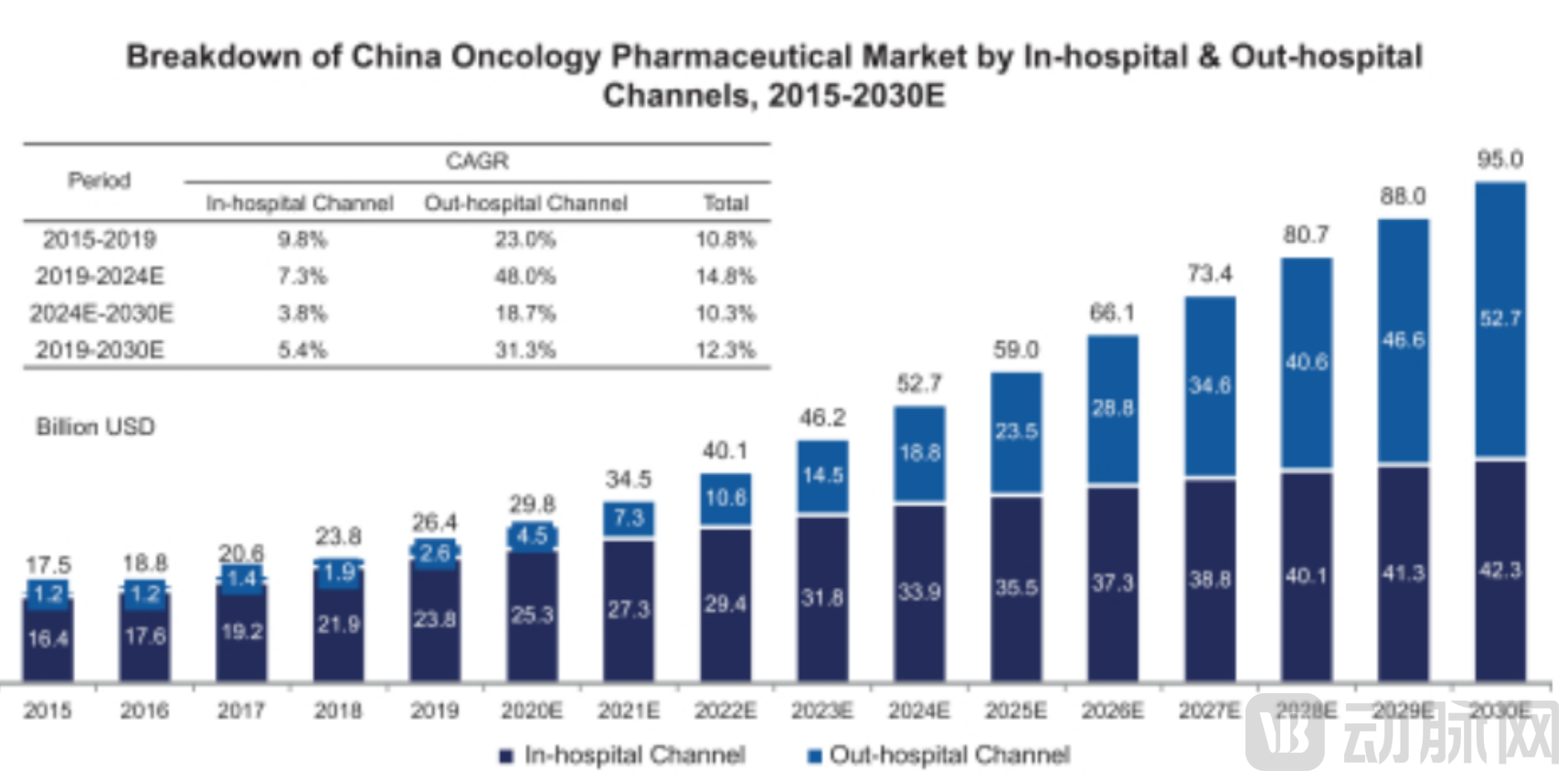
Market Size of China's Oncology Drug Market
Medical big data is also experiencing rapid development. The Five-Year Development Plan (2017–2021) for National Clinical Medical Research Centers and the Notice of the State Council on Issuing the Outline for Promoting Big Data Development have provided direction for the growth of big data from the perspectives of overall development and industry planning, respectively. During the COVID-19 pandemic, China announced that it would invest approximately RMB 300 billion in the healthcare industry over the next five years under the “New Infrastructure” strategy, with around RMB 20 billion allocated to big data-driven solutions.
Real-world evidence (RWE) studies and risk control for commercial health insurance are both concrete applications of medical big data. The former can effectively accelerate drug launches in today’s increasingly competitive pharmaceutical R&D landscape, while the latter helps alleviate the current pressure on basic medical insurance. According to Frost & Sullivan, the market size for real-world evidence studies was $500 million in 2020, with a penetration rate of 3.4%; the market size for commercial health insurance risk control was $3.1 billion, with a penetration rate of 6.8%. Over time, the penetration rate of new technologies will continue to rise. Under this trend, both markets faced by LinkDoc hold substantial commercial potential.
Another critical factor that cannot be overlooked is the oncology sector targeted by LinkDoc. As a technology enterprise vertically focused on oncology, LinkDoc operates in a vast market characterized by significant unmet needs. According to data from the China Health Statistics Yearbook, there were 4.4 million new cancer cases in China in 2019, representing a year-on-year increase of 2.6%. Not only is the number of cancer patients continuously rising, but there is also a substantial gap in the supply of oncology medical services in China.
Cancer patients bear a substantial burden, with oncology accounting for six of the top ten diseases by average inpatient costs. Behind these rapidly rising figures lies a significant market opportunity in cancer treatment, driving China’s oncology healthcare services and pharmaceutical market into a period of rapid growth. The market potential for innovative oncology drugs, healthcare services, and novel therapeutic technologies is immense.
A more imaginative yet readily achievable direction for exploration lies in the horizontal replication within the oncology sector. Simply put, if LinkDoc can evolve its LinkCare platform toward comprehensive, full-cycle general practice management and expand its LinkSolutions portfolio into areas such as cardiovascular, cerebrovascular, and diabetic care, it will be well-positioned to unlock greater potential.
It is worth noting that, due to the impact of the pandemic and improved R&D efficiency driven by infrastructure investments, LinkDoc’s R&D expenses decreased in 2020, dropping from RMB 181 million to RMB 87 million. Having secured its market position, LinkDoc now plans to reinvest in R&D, reflecting an increasingly clear internet-style strategic mindset. In both the first quarter of 2021 and the same period in 2020, R&D expenditures remained stable at approximately RMB 23 million.
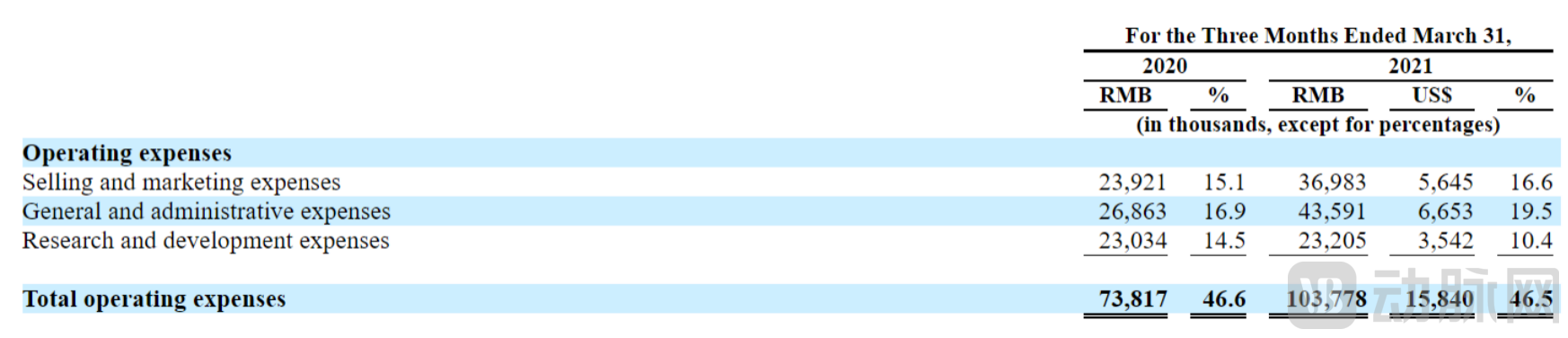
LinkDoc’s Operating Costs
Currently, LinkDoc has partnered with over 330 hospitals (including 191 Grade A tertiary hospitals), cumulatively providing care to 3.5 million patients. More than 200 medical institutions have joined its Real-World Study (RWS) program, covering all of the top 30 cancer types by incidence.
Furthermore, LinkDoc has independently developed a globally advanced medical big data platform; established China’s largest oncology patient data cohort, covering hospitals and healthcare systems nationwide; and created a closed-loop service ecosystem spanning the entire disease lifecycle by effectively identifying each cancer patient to deliver unique, personalized solutions and precision management. This demonstrates the company’s R&D and commercialization capabilities.
However, the widespread low-revenue status of medtech companies is not attributable to a single issue, such as R&D or commercialization. Only by identifying the right application scenarios and delivering solutions with genuine value, coupled with policy support and sustained effort over time, can these companies secure a foothold in the healthcare sector.