

Kallyope Files IPO Prospectus: Pioneering Gut-Brain Axis Therapeutics with Over $240M Raised

Kallyope
Developer of New Drugs Targeting the Gut-Brain Axis Mechanism
The gut is the gateway to the inner world of the human body.
The gut contains millions of neurons and highly specialized cells that communicate with the brain, regulating critical aspects of human physiology and behavior. Research has shown that various diseases are associated with defects in gut-brain communication, including obesity and related metabolic disorders, psychiatric conditions such as autism spectrum disorder, and irritable bowel syndrome along with other functional gastrointestinal disorders.
In recent years, the surge in microbiome research has been undeniable. The gut-brain axis, one of the hotspots in this field, has garnered significant attention and emphasis from both academia and industry.
Among them, Kallyope is a startup focused on developing novel drugs based on the gut-brain axis mechanism.It posits that the bidirectional information superhighway between the gut and the brain offers an unprecedented opportunity to study and influence the brain’s central hub.
Team: Top Award Winners and a Professional Talent Pool
In 2015, Drs. Tom Maniatis, Charles Zuker, and Richard Axel from Columbia University founded Kallyope in New York.
In terms of the external environment, Kallyope benefits from a relatively superior geographic location, in close proximity to world-leading clinical and research institutions in New York City.
Kallyope is headquartered at the Alexandria Center for Life Science in New York, a collaborative life science campus located in the heart of Manhattan. Although New York has far fewer high-profile biotech startups than Boston and San Francisco, it possesses its own unique advantages.
First, a stable workforce can be established in New York, with less concern about employees frequently jumping ship to neighboring biotechnology companies. Second, the New York City government strongly supports the development of the biotechnology industry, having committed over $1 billion since late 2016 to stimulate the sector and attract more startups.
In terms of internal team composition, Kallyope has assembled an industry-leading team that integrates cutting-edge science with drug discovery.
From the perspective of its founders, all three are leading scholars in their respective fields and have received numerous honors.Among them, Tom Maniatis is Professor and Chair of the Department of Biochemistry and Molecular Biophysics at Columbia University Medical Center, renowned for advancing the application of gene cloning technology in basic research and biotechnology.

Source: Kallyope Official Website
Dr. Charles Zuker and Dr. Richard Axel are both professors at Columbia University Medical Center and investigators at the Howard Hughes Medical Institute. Dr. Charles Zuker is distinguished in the field of sensory neuroscience; Dr. Richard Axel developed gene transfer techniques and provided fundamental insights into how genes shape our perception of the environment.
Apart from the founders, Kallyope’s management and scientific teams remain highly impressive., including experts in core technology areas and individuals with deep knowledge of drug discovery and product translation capabilities. For instance, this June, Kallyope appointed Patrick Flanigan as Chief Financial Officer, an accomplished investor relations leader in the biotechnology industry and former Wall Street analyst.
Kallyope stated that his appointment would prepare the company for a critical phase of growth and development, further strengthen its long-term financial strategy, and deepen its connections with the broader investment community.
In addition, Kallyope has established a Strategic Advisory Board and a Scientific Advisory Board to safeguard its development.Among them, the five members of the Scientific Advisory Committee have achieved outstanding accomplishments in their respective fields, including two Nobel laureates in Physiology or Medicine and two recipients of the Lasker Award for Basic Medical Research.
In summary, Kallyope’s interdisciplinary team comprises top-tier scientific and analytical talent from institutions such as Columbia University and Google. By integrating cutting-edge technologies—including sequencing, computational biology, neuroimaging, cellular and analytical biology, and human genetics—the company advances its understanding of gut–brain axis biology to develop transformative therapies that improve human health.
R&D: Integrated Technology Platform Completed, Advancing Toward Clinical Application
Before introducing Kallyope’s technology platform, let us first understand the gut–brain axis. The gut–brain axis refers to the bidirectional communication between the gastrointestinal tract and the brain, whereby gut microbiota influence the central nervous system through endocrine and neural pathways, thereby affecting systemic metabolism and behavior; conversely, the central nervous system can also modulate gut function.
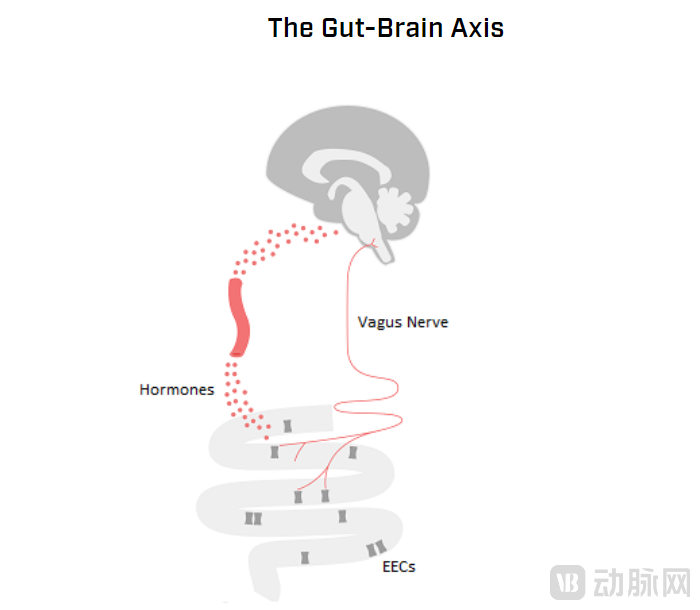
According to Kallyope’s official website, the key components of the gut–brain axis include hormone-secreting enteroendocrine cells (EECs), the autonomic nervous system (vagus nerve and enteric nervous system), and the central nervous system. These systems work in close coordination to regulate human physiology and behavior.
Source: Kallyope Official Website
Kallyope’s initial research focus was on metabolic and central nervous system (CNS) diseases; however, as the relevance of its drug discovery platform to disease areas associated with the gut or the gut–brain axis has deepened, the company plans to expand into all disease areas involving the gut and the gut–brain axis in later stages.
Currently,Kallyope is adopting a systems biology approach, leveraging its highly integrated technology platform to create a comprehensive “gut-brain circuit map.”By identifying the components related to physiology and disease, this approach leverages the gut-brain axis for therapeutic intervention. It represents a novel treatment paradigm that may even replace existing therapies directly targeting the central nervous system, which often have limited efficacy.
Kallyope's technology platform includes single-cell sequencing, computational biology, and circuit mapping technologies.Among these, single-cell sequencing and computational biology are closely intertwined. Since each cell type has unique functions and the gut-brain axis is composed of many different cell types, Kallyope uses single-cell sequencing to regularly profile thousands of individual cells and identify the RNA transcripts within each cell.
By integrating computational biology with emerging methodologies such as next-generation sequencing, network biology, proteomics, and artificial intelligence, it is possible to gain a comprehensive understanding of the diverse cell types comprising the gut-brain axis and their transcriptional profiles. To date, Kallyope has identified several novel cell types and molecular targets with the potential to modulate physiology, behavior, and disease.
Regarding circuit mapping, thanks to technological advancements in neuroscience over the past decade, research equipment can now track specific cellular responses throughout the body and determine which neurons are interconnected, among other capabilities. Kallyope leverages these advances in neuroscience to link the activation of components within the gut-brain axis to neural circuits involved in processes ranging from metabolic regulation to behavioral control.
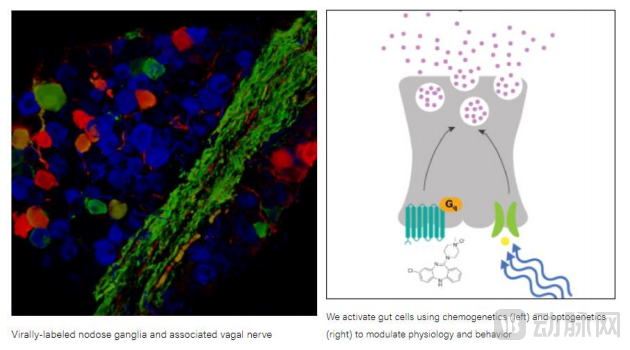
ThisThe platform also employs optogenetics and chemogenetics to elucidate the connections between the gut-brain axis and physiology or disease.It can leverage technological tools to stimulate a unique cell type within the gut-brain circuit and observe its physiological responses. This approach enables systematic engagement with each gut-brain circuit to determine its function and assess its therapeutic potential for disease treatment.
Source: Kallyope Official Website
Kallyope’s technology platform has been established, and multiple drug discovery programs spanning metabolic, central nervous system, and gastrointestinal diseases have been launched.To support these initiatives, Kallyope has established industry-leading capabilities in oral small-molecule drugs targeting the gut, but has not publicly disclosed detailed information about its drug development programs.
Following its Series C financing in 2020, Kallyope disclosed two major initiatives poised to enter the clinical stage: the first is the development of a weight-loss therapeutic that promotes satiety; the second is a program targeting gut barrier function, which may be relevant to inflammatory bowel disease and several other conditions.
CEO Nancy Thornberry stated that the company is proceeding with preclinical studies as planned. Although the COVID-19 pandemic may delay clinical plans, Kallyope is developing contingency measures. Furthermore, Kallyope will continue to advance a broad portfolio of programs targeting gastrointestinal, central nervous system, and inflammatory diseases.
Capital: Four rounds of financing, totaling over $240 million
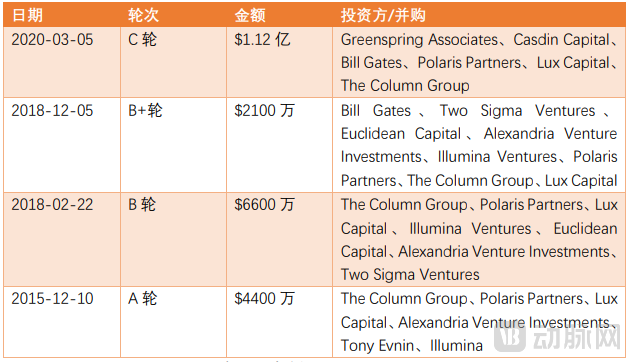
Kallyope has been in operation for over five years. As of March 5, 2020, its post-money valuation ranged from $500 million to $1 billion. During this period, it completed four rounds of financing, raising a total of $243 million, as detailed in the table below.
Source: VCBeat, Crunchbase
Judging from its financing data, Kallyope has attracted sustained and significant attention from investors, demonstrating the immense potential of both the company and the microbiome-based pharmaceutical sector in which it operates.Data shows that Kallyope secured $44 million in Series A financing shortly after its establishment in 2015.
Its latest funding round was a Series C in March 2020, raising $112 million. Kallyope stated that it would use the proceeds to advance its drug pipeline and initiate its first clinical trials.
In the field of the gut-brain axis, other biotechnology companies are also leveraging this mechanism to treat diseases. One example is Axial Biotherapeutics, headquartered in Massachusetts. The company has completed over five rounds of financing, with its most recent being a $100 million Series B round in June 2019. It is utilizing its expertise in the gut-brain axis and its drug development platform to advance novel therapies that have the potential to transform the treatment paradigm for neurodegenerative diseases.
There is also Kintai Therapeutics, founded in 2017, a company dedicated to exploring the gastrointestinal nervous system. In 2020, with investment from Flagship Pioneering, Kintai merged with three other companies to form Senda Biosciences. The company has since created the first molecular map of the human digestive tract, aiming to uncover key insights into the connections between our gut and the rest of the body.
Currently, research on the gut-brain axis has achieved continuous breakthroughs, yet significant gaps remain. In China, numerous teams are actively engaged in this field, including the teams led by Liu Jianmin and Gu Yanyun at Ruijin Hospital, Shanghai Jiao Tong University School of Medicine, as well as the team led by Li Shengtian at Shanghai Jiao Tong University; the teams led by Kang Yuming and Li Hongbao at the School of Basic Medical Sciences, Xi’an Jiaotong University; and the team led by Zhao Fangqing at the Beijing Institute of Genomics, Chinese Academy of Sciences.