

TransMedics Extends Organ Transplant Window by Reviving 'Dead' Hearts with Proprietary OCS Platform

TransMedics
Portable Warm Blood Perfusion System Developer
For patients with end-stage organ failure, organ transplantation is the optimal treatment modality. Every step—from organ retrieval to ex vivo preservation and subsequent implantation into the recipient—must be executed without error.
Timeliness is of paramount importance in organ transplantation. Different organs have varying tolerances for cold ischemia time; for instance, the upper limit for kidneys is approximately 24 hours, while for hearts it is around 8 hours. Prolonged exposure to cold ischemia can lead to permanent damage, ultimately rendering the organ unsuitable for successful implantation. Therefore, throughout the entire organ transplantation process, both medical professionals and patients are engaged in a race against time.
To prevent organ damage during transportation, clinical practice typically employs the "static cold storage" method for organ preservation. After retrieval from the human body, a preservation solution is infused into the organ, which is then placed in a refrigerated container. The low temperature is utilized to slow down the organ's metabolic processes, thereby minimizing organ injury.
However, with the development of organ transplantation, cold storage has revealed a series of problems, such as impaired organ function after prolonged cold preservation and the inability of medical personnel to monitor the functional status of organs. Therefore, using mechanical perfusion to replicate the human internal environment ex vivo and maintain normal organ function represents a new direction in current organ preservation.
TransMedics Group (hereinafter referred to as “TransMedics”) has independently developed the portable Organ Care System (OCS),Simulating human metabolic conditions by perfusing organs with warm, oxygenated, nutrient-rich blood to reduce ischemia time and maintain organ viability.。
Organ transplantation has long faced a global supply-demand imbalance, with many patients waiting years or even over a decade for a suitable donor. Under these circumstances, some “precious” organs are not being fully utilized. Due to limitations in cryopreservation technology, tissue damage can occur in some donors after prolonged low-temperature storage, rendering the organs unsuitable for transplantation.
To address the growing clinical demand in the field of organ transplantation, Waleed Hassanein founded TransMedics in 1998, leveraging his extensive experience in organ transplantation and clinical research with the aim of revolutionizing organ transplant therapy. In the same year, his research on ex vivo heart perfusion for transplantation was recognized by the American Association for Thoracic Surgery.
Since 2000, he has served as President and Chief Executive Officer of TransMedics, leading the company through2018 Restructuring、Launched in 2019. During this period, TransMedics has been continuously recruiting talent in the fields of organ transplantation, clinical research, and medical devices.
Tamer Khayal joined TransMedics in 2001 and currently serves as Chief Commercial Officer. From 2007 to 2018, he served as the company’s Chief Medical Officer, leading TransMedics’ global efforts to conduct clinical studies and facilitate the commercial adoption of the Organ Care System (OCS) worldwide. Prior to joining TransMedics, Dr. Khayal served as Director of Medical Affairs for Zentiva in the Middle East.
OCS is the first portable system capable of preserving multiple organs. Currently,TransMedics, Inc. uses the OCS system to preserve lungs, hearts, and livers, corresponding to the OCS Lung, OCS Heart, and OCS Liver platforms, respectively., improving the survival rate of patients with end-stage organ failure.
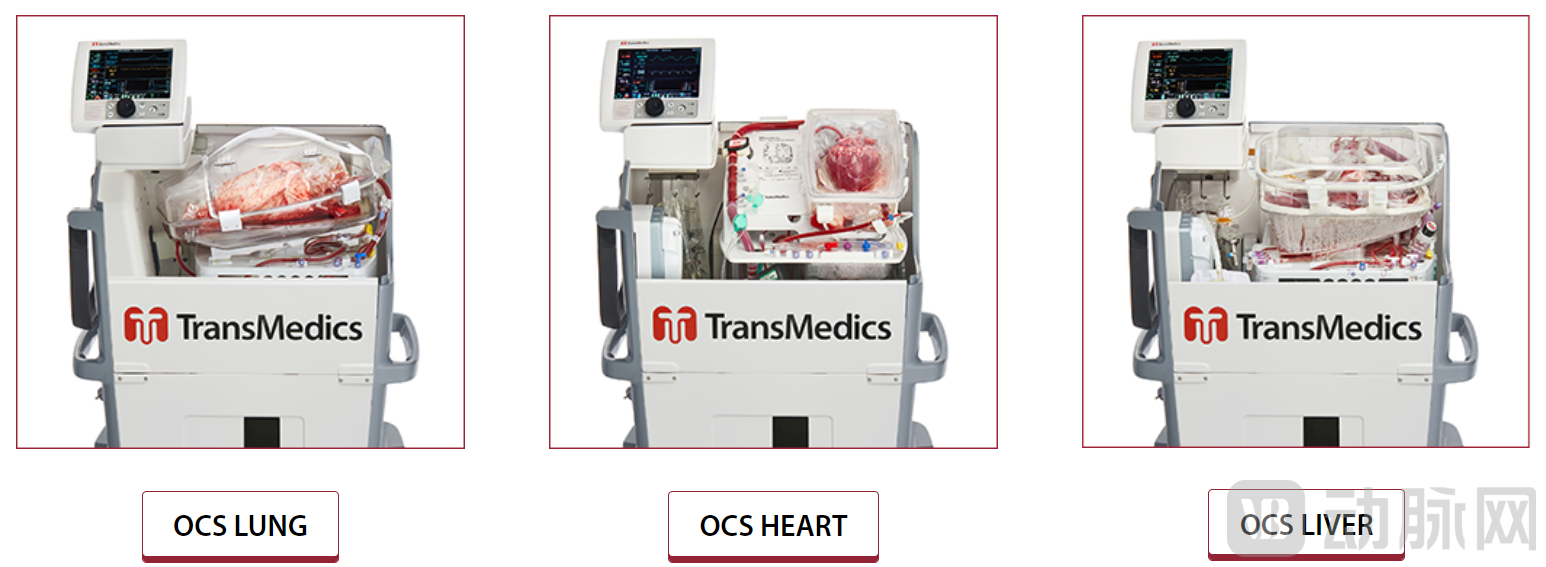 Source: TransMedics Official Website
Unlike the mechanism of action of static cold storage, the OCS system achievesParadigm Shift, transforming static preservation into dynamic maintenance. It does not aim to slow down the organ’s metabolic processes, but rather to maintain normal metabolism, enablingPulmonary Respiration、Heartbeat、The liver continues to produce bile.. The core of this technology lies in replicating the natural physiological environment and functional state of organs within the human body in an ex vivo setting.
Dr. Hassanein, the company’s CEO, stated, “We perfuse organs with warm, oxygenated blood, making them believe they are still inside the body and have never left it.”
Specifically, the OCS system offers the following advantages:
By creating a warm, oxygenated, and nutrient-rich environment, the system ensures normal organ function and reduces ischemia time. Moreover, the OCS system can utilize a greater number of donor organs compared to traditional cold storage.Some organs that cannot be preserved using static cold storage can be preserved using the OCS system.The OCS Lung system can increase the overall utilization rate of donated lungs to 87%, while the OCS Heart has pioneered the use of DCD (donation after circulatory death) hearts for transplantation.
Through the OCS system, physicians can monitor organ function and viability in real time to assess transplant suitability. Previously, once an organ was placed in a cold storage container, its condition could no longer be evaluated.
During transportation, doctors canSupplemental Oxygen and Nutritionto optimize organ performance for better transplant outcomes.
In a transplant case from Hawaii to North Carolina, the OCS Lung preserved the donor lung for over 20 hours.
In addition to protecting, monitoring, and optimizing organs, the OCS system can also improve patient outcomes,Reducing Primary Graft Dysfunction (PGD)Primary graft dysfunction is the most common complication in organ transplant recipients and the leading cause of death within 30 days postoperatively.
Between 2014 and 2016, TransMedics conducted a clinical trial related to the OCS Lung. According to results published in The Lancet, 35 out of 79 patients developed Grade 3 Primary Graft Dysfunction (PGD) within 72 hours after lung transplantation, and 78 patients survived within 30 days post-transplantation.
Currently,OCS Lung, OCS Heart, and OCS Liver have all received EU CE certification.Among them, the OCS Heart and OCS Liver devices have been put into use in Europe and Australia. In the United States, the OCS Heart and OCS Liver are classified as investigational devices, and U.S. federal law stipulates that they may only be used for research purposes.
OCS Lung received FDA Pre-Market Approval (PMA) in March 2018 for use in standard double-lung transplantation. Subsequently, in June 2019, OCS Lung obtained additional FDA PMA, expanding the system’s clinical indications. In addition to preserving and ex vivo assessment of lungs from standard donors, it can now be used for a broader range of donor lungs, including those deemed unsuitable for transplantation under static cold storage. Meanwhile,OCS Lung can be used for donor lungs from DBD (donation after brain death) and DCD (donation after circulatory death).
To date, the OCS Lung is the only FDA-approved device for lung transplantation using both standard and extended-criteria donor lungs. According to historical data, among the extended-criteria donor lungs treated with the OCS Lung, 39% were from older donors (aged ≥55 years), 33% were from donation after circulatory death (DCD) donors, 32% had anticipated ischemic times exceeding 6 hours, and 25% had a PaO2/FiO2 ratio (oxygenation index) ≤300 mmHg.
Meanwhile, the OCS Heart is the only device reviewed by the FDA for preserving both standard and expanded-criteria donor hearts, and it isThe World’s Only System for DCD Heart TransplantationPreviously, due to limitations in refrigeration technology, heart transplant donors were primarily patients who had been declared brain dead but whose hearts were still beating. However, with the warm perfusion capability of the OCS Heart system, non-beating hearts can be reanimated and made viable for transplantation.
Amid the global shortage of heart transplant donors, incorporating donation after circulatory death (DCD) hearts into the donor pool will undoubtedly benefit more patients.
Since its inception, TransMedics has completed 14 rounds of financing.
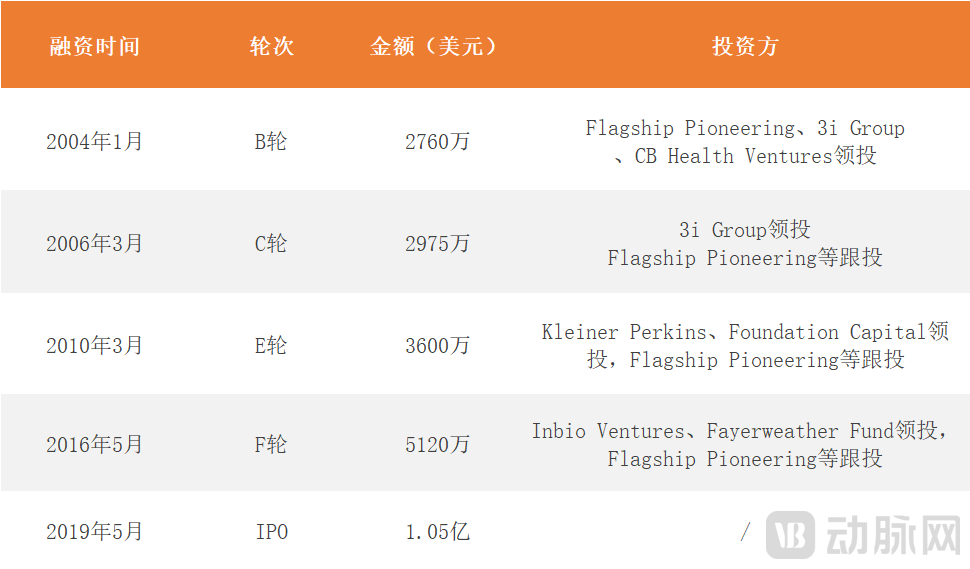 Incomplete Statistics
According to Sina Finance data, as of December 31, 2019, TransMedics’ net profit was -RMB 33.547 million; as of December 31, 2020, the company’s net profit was -RMB 28.748 million. Amid high R&D investment and limited market penetration, TransMedics remains in a loss-making position.
Currently, China ranks first in Asia and second worldwide in the number of organ donations and transplants.As of June 10, 2021, China had completed a total of 34,746 organ donation cases, with 102,961 organs donated.However, compared with countries in Europe and the United States, organ transplantation in China remains at a relatively low level.
To advance the field of organ transplantation, China has made considerable efforts.
In terms of regulatory policies, the "Regulations on Human Organ Transplantation" were issued in 2007, stipulating that "no organization or individual may buy or sell human organs in any form." Since 2015, voluntary donation by citizens has become the sole legal source for organ transplantation. This June, the revision of the "Regulations on Human Organ Transplantation" was included in the 2021 legislative plan. However, China has not yet enacted legislation on brain death; clinically, death is still determined by the cessation of respiration and heartbeat, making donation after circulatory death (DCD) donors the primary source for organ transplantation.
Technically, in August 2017,World’s First “Ischemia-Free” Human Liver TransplantationCompleted at the First Affiliated Hospital of Sun Yat-sen University. Using the hospital’s independently developed “Multi-Organ Function Repair System,” physicians can establish an extracorporeal perfusion mechanism for organs, thereby reducing ischemia time and lowering the risk associated with organ transport.
Wuhan Union Hospital has developed a specialized transport box that effectively prevents donor organs from becoming too cold or too hot, extending the cooling time for donor hearts to 6–8 hours. Furthermore,Wuhan Union Hospital and Suzhou HeartCare Medical Technology Co., Ltd. are collaborating to develop warm blood transport devices, establishing extracorporeal circulation for the donor heart to enable it to beat outside the human body. Furthermore, this normothermic transport device can perfuse the organ, achieving a certain degree of repair.
Data from Tianyancha shows that few Chinese companies are involved in the field of organ transplantation, and those that are tend to be small in scale. Most enterprises are currently focused on developing technologies and products related to static cold storage, such as storage containers and organ preservation solutions. Hospitals have always been at the forefront of advancing organ preservation techniques. However, the collaboration between Peking Union Medical College Hospital and MedHeart may offer a strategic direction for Chinese companies: partnering with hospitals to leverage valuable clinical experience and expertise from the front lines.
About Flagship Pioneering
Flagship is a venture capital firm founded in 2000, with investment focuses primarily in biotechnology, healthcare, and information technology. Since its inception in 2000, the firm has launched and nurtured more than 100 science-based companies. To date, it has secured over $3 billion in total committed capital.