

Valo Health to Go Public via SPAC Merger, Leveraging AI Platform Opal to Transform Drug Discovery

Valo
Developer of Artificial Intelligence Drug Discovery Platforms
Recently, the AI drug discovery platform Valo Health (“Valo”) announced that it has reached a merger agreement to go public via a special purpose acquisition company (SPAC) sponsored by the prominent Silicon Valley venture capital firm Khosla Ventures, namely Khosla Ventures Acquisition Co. (KVAC; stock ticker: KVSA). Just two years after its founding, Valo has embarked on its journey to become a publicly listed company.
In fact, the model of going public through a merger with a SPAC has existed in the U.S. stock market for many years, but it remained lukewarm for a long time until a turnaround occurred in recent years.
VCBeat’s brief review reveals that since 2021, nearly 30 SPACs have announced mergers with innovative healthcare projects, secured shareholder approval, or even completed transactions. These include high-profile names such as Ginkgo, Babylon, 23andMe, and Talkspace.
Overall, healthcare companies poised to go public via SPACs are largely those focused on cutting-edge technological innovations—such as cell therapy, gene therapy, and AI-driven drug discovery—as well as those pioneering digital business model innovations, including digital therapeutics and digitized clinical trials. Valo, which is merging with KVAC, is precisely such an innovation-driven company centered on AI-powered drug discovery.
AI-Assisted Drug Development
According to relevant data, the cost of drug development was $2.2 billion in 2018, up from $1 billion in 2010, while the return on investment (ROI) for biopharmaceutical R&D declined from 10.1% in 2010 to 1.9% in 2018. With the emergence of digital health and artificial intelligence, the field of drug development is undergoing significant transformation.
Typically, the drug discovery phase in new drug development primarily involves disease selection, target identification, and compound synthesis, whereas the preclinical phase focuses on compound screening, crystal form prediction, and compound validation, including structure-activity relationship (SAR) analysis, stability analysis, safety evaluation, and ADMET analysis.
Drug development incurs increasingly higher costs in later stages, and many drug properties can only be experimentally studied at relatively late phases. Consequently, traditional drug development processes often involve substantial investments of time, manpower, and financial resources to advance projects to later stages before discovering suboptimal efficacy, leading directly to waste of resources and time.
Leveraging its powerful capabilities in relationship discovery and cognitive computing, AI can rapidly identify links between drugs, diseases, and genes, and perform virtual screening of candidate compounds to more quickly isolate those with high activity, thereby laying the groundwork for subsequent clinical trials.
Riding the wave of AI-driven drug discovery, Valo has continued to attract attention from the capital markets. In March this year, Valo announced the final closing of its $300 million Series B financing round. To date, Valo Health has secured a total of $400 million in funding.
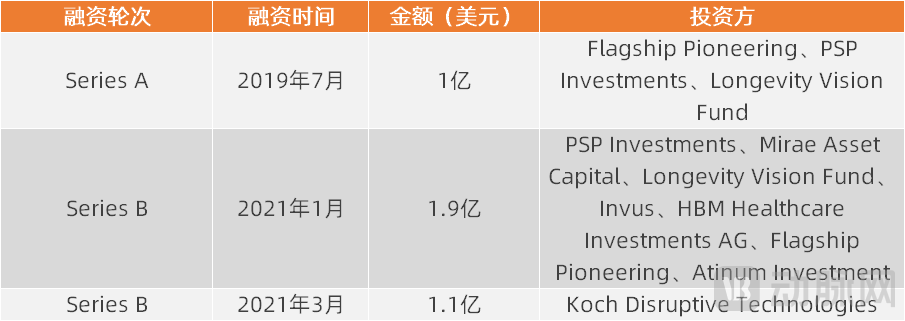
Valo’s Funding History
Backed by Flagship Pioneering, Focusing on the Full Process of Small-Molecule Drug Development
Public records indicate that Valo was established in 2019 and was officially unveiled by Flagship Pioneering (“FP”) in September 2020, consistent with FP’s customary practice of operating its projects in stealth mode.
According to reports, David Berry, Founder and CEO of Valo, holds an M.D. from Harvard Medical School and a Ph.D. in Bioengineering from the Massachusetts Institute of Technology. Since 2005, David Berry has served as a Partner at Flagship Pioneering (FP). A serial entrepreneur, he has founded more than 25 companies, including publicly traded firms such as Seres Therapeutics, Evelo Biosciences, and Axcella Health. In recognition of his continuous breakthroughs, David Berry was named a “TR35 Innovator of the Year” by MIT Technology Review.
In fact, Valo is not the first AI-driven drug discovery platform launched by Flagship Pioneering (FP). Just two weeks prior to Valo’s launch, FP introduced Generate, a novel protein development company co-founded by FP partners Avak Kahvejian and Geoffrey von Maltzahn. Generate’s Generative Biology platform (hereinafter referred to as “Biology”) leverages known protein information to decipher the genetic code that determines protein structure and function, thereby enabling the creation of novel protein sequences with therapeutic potential.
Another AI-driven drug discovery company launched by FP, Cellarity, aims to enhance the success rate and speed of drug discovery. It focuses on leveraging single-cell technologies and machine learning to elucidate specific cellular states, thereby discovering and developing drugs through the study and modulation of cell behavior.
Unlike the two companies mentioned above, Valo is a fully integrated small-molecule drug discovery and development company, encompassing target identification, molecular discovery, and clinical development. Its core product, the Opal Computational Platform (Opal), leverages longitudinal datasets from thousands of sources to not only predict molecules that can serve as new drugs but also forecast how these drugs will affect patients’ bodies.
Two Acquisitions to Expand Data Assets
For AI-driven drug discovery platforms, business operations are inherently dependent on the accumulation of underlying data. Between 2019 and 2020, Valo acquired the AI pharmaceutical company Numerate and the biopharmaceutical company FORMA Therapeutics, thereby securing assets such as two early-stage discovery laboratories and R&D libraries. Notably, Numerate’s platform comprised over 30,000 models, 70 trillion molecules, and more than 25 drug development programs. These assets have further strengthened Valo’s Opal platform.
To further strengthen data accumulation, in December 2020, Valo announced a collaboration with the genomics company G3 Therapeutics. Through this partnership, Valo gained access to G3 Therapeutics’ aerobic metabolism database, which also facilitates Valo’s discovery of disease-related biomarkers and targets, thereby accelerating the drug development process.
To ensure the efficiency of drug discovery, Valo’s Opal computational platform leverages human data rather than the mouse cell data frequently used in the industry in the past. This approach accelerates and enhances the efficiency of drug development while reducing costs. The application of human data is not only central to Valo’s strategy but also constitutes its competitive advantage.
Furthermore, the end-to-end design of the Opal computing platform has significantly accelerated the pace of drug development. By employing a unified integrated architecture for data management, it enables the sharing of data and information throughout the entire drug R&D process, thereby offering new approaches to the development of disease treatments. Compared with traditional methods, the Opal computing platform can perform computational and empirical screening of trillions of molecules within weeks, thereby identifying novel target areas for development.
Leveraging large-scale, high-quality longitudinal datasets, Valo currently has two projects that have completed clinical trial applications and 15 projects in the preclinical stage, primarily focusing on three therapeutic areas: oncology, cardiovascular health, and neurodegeneration. By harnessing its computational platform, Valo is not only capable of developing superior drugs and therapies for diseases but also mitigating certain drug-related side effects.
Taking Valo’s ongoing research on NAMPT (nicotinamide phosphoribosyltransferase) as an example, NAMPT serves as a potential target for adjuvant anticancer therapy in clinical practice. Currently, Valo is developing a NAMPT-targeted therapeutic approach designed to mitigate retinal toxic side effects, which are commonly observed with other NAMPT-targeting treatments.
Final Thoughts
The emergence of AI has opened up new possibilities for the development of the entire healthcare industry, from AI-assisted medical imaging diagnosis to aiding drug R&D, and AI is gradually gaining recognition among more people. In the recent past, the successive entry of internet giants such as Tencent and Baidu has further sustained the strong momentum of AI-driven drug discovery in China.
According to statistics from VCBeat, as of October 16, 2020, a total of 56 AI-driven new drug development companies worldwide had secured financing, with the cumulative funding amounting to $4.581 billion. Among them, 37 foreign companies raised a total of $3.165 billion, while 19 domestic companies in China raised a total of $1.416 billion.
Despite the growing enthusiasm surrounding the integration of AI and biomedicine, the pharmaceutical industry still faces critical challenges in areas such as data acquisition and the shortage of interdisciplinary talent. Addressing these issues is pivotal to determining whether AI can truly revolutionize drug R&D in the future, making them a top priority for every player in this sector.