

Yueqing No.2 People's Hospital Medical Consortium Gains CCTV 'News Broadcast' Recognition for Innovative Integrated Healthcare Model
In late May, CCTV’s “Xinwen Lianbo” gave special recognition to the medical consortium construction at Yueqing Second People’s Hospital.
Yueqing, a county-level city in Wenzhou, Zhejiang Province, where the Medical Community is located, had a permanent population of over 1.4 million in 2020. Yueqing ranked 9th on the “2021 Top 100 Chinese Counties with the Greatest Development Potential” list. Its large population and robust economic growth have imposed new demands on the development of its healthcare sector.
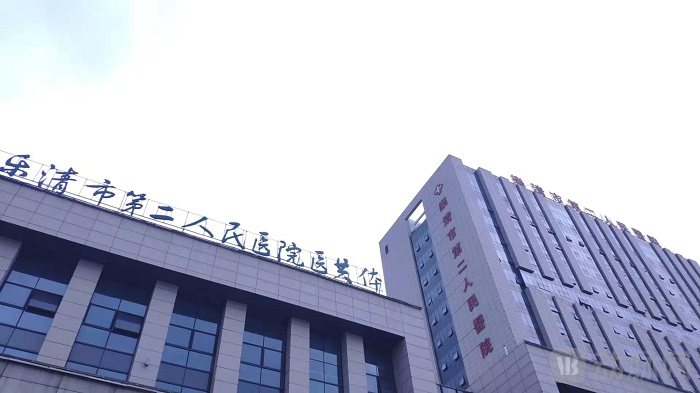
Yueqing Second People’s Hospital (hereinafter referred to as “Yueqing Second Hospital”) serves as the lead hospital of the medical consortium bearing its name, providing healthcare services to nearly 400,000 residents in the eastern part of Yueqing City. As a Grade II Class A general hospital, it employs over 800 staff members and operates 500 beds, 16 inpatient wards, and 33 clinical departments. The hospital is equipped with more than 160 advanced diagnostic and surgical medical devices, including a 16-slice 32-layer spiral CT scanner, a 1.5T superconducting magnetic resonance imaging (MRI) system, a digital subtraction angiography (DSA) system, ultrasound diagnostic equipment, digital mammography X-ray machines, high-definition laparoscopic systems, holmium lasers, and hyperbaric oxygen chambers.
On our first day in Yueqing, we personally experienced the convenient services provided by the Second People’s Hospital of Yueqing. After undergoing offline nucleic acid testing, we were able to check our results in real time via the official WeChat account of the Yueqing Second People’s Hospital Medical Community. This is one of the achievements realized through the construction of the Medical Community at Yueqing Second People’s Hospital.
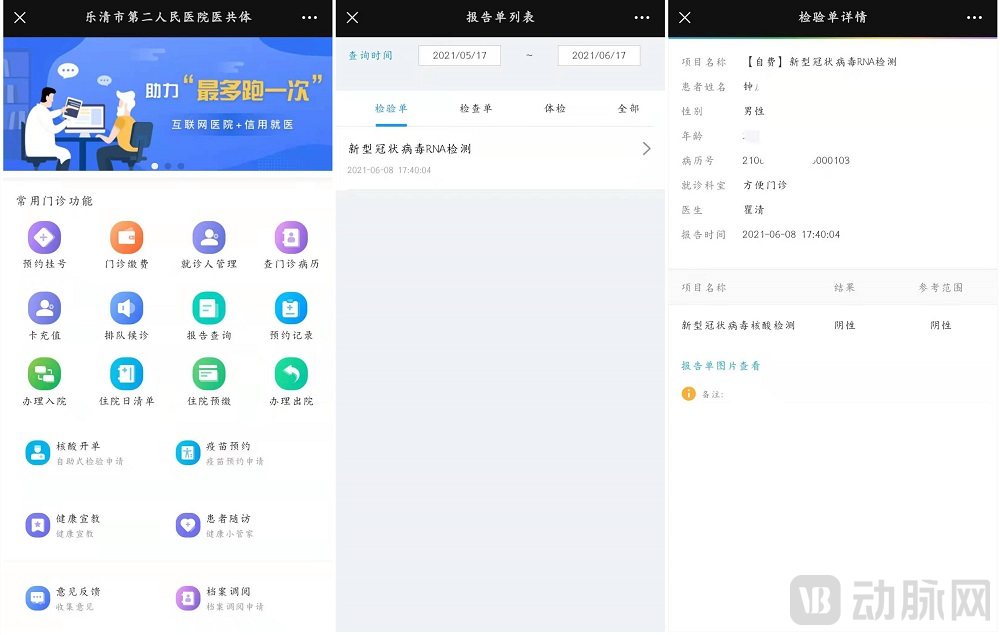
Why did Yueqing Second People’s Hospital establish a medical consortium? What achievements have been made so far? What obstacles were encountered during the process? What are their next steps for the consortium? VCBeat conducted on-site field research.
“Strengthening Primary Care” Reform and the Development of Medical Consortia
“Medical Community,” short for Medical Consortium, refers to a healthcare system led by county-level hospitals that integrates medical and health resources at the county, township, and village levels. The construction plan of the Yueqing Second People’s Hospital Medical Community includes 10 township health centers, 19 community health service stations, and 72 village clinics.
The promotion of medical community construction by Yueqing Second People's Hospital is closely related to the national healthcare reform context.
China has a total of 930,000 primary healthcare institutions, accounting for as high as 95% of the country’s overall healthcare system. While these institutions are closely accessible to the grassroots population, their medical service capabilities are often inadequate. With the deepening of healthcare reform, strengthening primary care has become a core focus. The reform aims to address the difficulties and high costs of accessing medical care by implementing a tiered diagnosis and treatment system characterized by “initial consultation at primary care facilities, two-way referral, separate management of acute and chronic conditions, and coordination between upper- and lower-level hospitals.”
Following the issuance of guiding opinions on advancing medical consortia in 2017, the National Health Commission emphasized in 2018 the development of county-level medical communities by prioritizing funding for key specialties within counties, implementing provincial hospital trusteeship of county hospitals, strengthening telemedicine infrastructure, enhancing quality control, and promoting standardized management. These measures facilitated the nationwide implementation and development of county-level medical communities.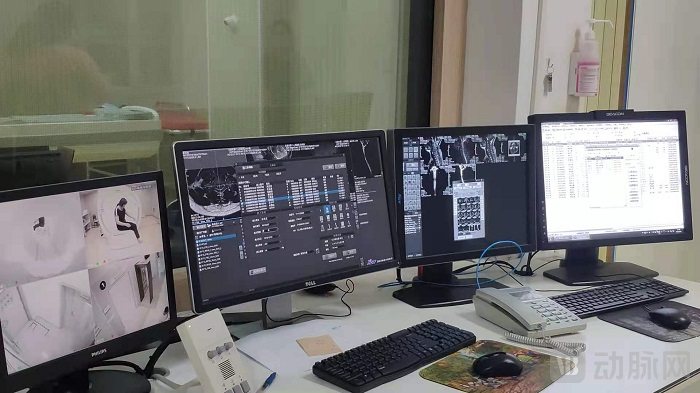
CT Imaging Station of the Yueqing Second People's Hospital Medical Consortium: CT images from community health centers can be centrally interpreted at Yueqing Second People's Hospital. Community health centers lacking necessary equipment can refer patients to Yueqing Second People's Hospital for examinations.
The establishment of the Yueqing Second People’s Hospital Medical Consortium is linked to Yueqing City’s comprehensive launch of medical consortium construction in 2019, which involved the introduction of relevant policies and the formation of three medical consortium entities. Yueqing City aims to advance supply-side structural reform in county-level healthcare services, establish a new order for tiered diagnosis and treatment, appropriate care, and orderly medical seeking, promote the sharing of healthcare resources, enhance the service capacity of primary healthcare institutions, and better meet the public’s health and medical needs.
In addition to policy-related factors, Yueqing Second People’s Hospital has more immediate objectives: it aims to leverage the development of the medical consortium to further enhance its own growth and provide patients with more convenient services.
“Visit at Most Once”: Building an Efficient and Integrated Healthcare Service System
Perhaps, for those of us in the 21st century, online internet healthcare seems a matter of course. Yet, looking back, we may truly realize just how convenient our world has become: in the past, there were no online appointment bookings or digital access to test reports; everything had to be handled in person.
The isolation between healthcare systems has also forced patients to undergo redundant medical tests, resulting in significant waste of resources... Today, change is quietly underway. Online internet-based healthcare, prescription sharing and medication delivery services, health record management, and unified payment are no longer out of reach.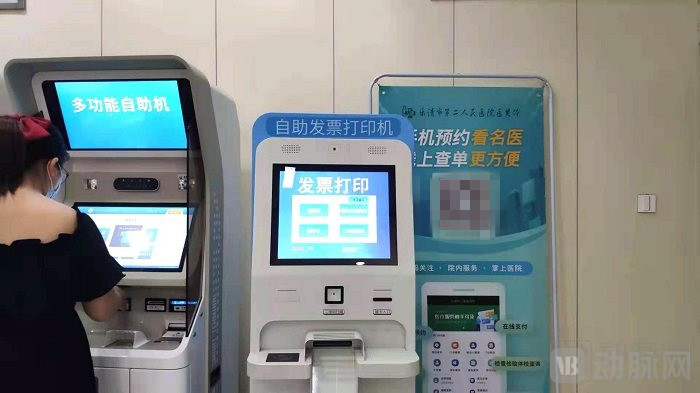
Yueqing Second People's Hospital Multi-Functional Self-Service Kiosk
The changes are multifaceted, beginning with the sharing of medical resources, such as medical equipment and physicians, within the Medical Community. In the member units affiliated with the Yueqing Second People’s Hospital Medical Community, when a patient undergoes an electrocardiogram (ECG) diagnosis, physicians at the lead hospital, Yueqing Second People’s Hospital, can access the patient’s diagnostic data in real time, issue a diagnostic report, and transmit the results back to the patient’s attending physician. Within the member units of the Medical Community, patients can receive standardized services with “at most one visit.”
Furthermore, previously, personnel responsible for receiving laboratory specimens only accepted blood samples drawn before 10:00 AM on the same day, with test results available no earlier than 10:00 AM the following day; samples collected after 10:00 AM would not yield results until the morning of the third day. Following the establishment of the Clinical Laboratory Center within the Medical Consortium, even blood samples collected at 11:00 AM can have their test reports available by 2:00 PM the same day, representing a significant improvement in patients’ healthcare experience. This initiative has not only reduced equipment investment but also increased equipment utilization rates and optimized medical resource allocation. Meanwhile, the mutual recognition of laboratory test reports within the Medical Consortium has alleviated the financial burden on patients.
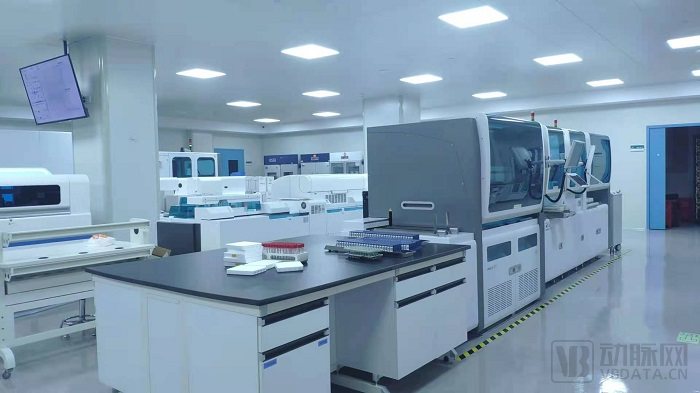
Clinical Laboratory Center of Yueqing Second People's Hospital Medical Community
It is important to note that the ability to share medical equipment and physician resources is closely tied to the development of a foundational cloud platform for Medical Community support. By implementing the “1-1-6” informatization project for the regional Medical Community, Yueqing Second People’s Hospital has broken down the “information silos” and “operational barriers” between the lead hospital and its member institutions. This has achieved interconnectivity of regional population health information, resource sharing, and flattened, homogeneous management of the Medical Community.
Zhao Xiaohai, President of Yueqing Second People’s Hospital, pointed out, “Based on last year’s data, outpatient visits declined across all medical institutions within the Medical Consortium, including both Yueqing Second People’s Hospital and its affiliated branch hospitals. However, the rate of decline at Yueqing Second People’s Hospital was significantly greater than that at the branch health centers; relatively speaking, the health centers demonstrated a higher growth rate compared to Yueqing Second People’s Hospital. This trend indicates the gradual implementation of tiered diagnosis and treatment.”
In 2020, the Yueqing Second People’s Hospital Medical Community Main Campus saw a significant increase in online appointment registrations. The printing of electronic invoices within the medical community basically achieved paperless operations. The number of patients under chronic disease management and the number of chronic disease follow-ups steadily increased. Preliminary results were also achieved in the hospital’s initiatives to provide convenient, accessible, and beneficial health services to the public.
New Explorations in Hospital-Enterprise Collaboration Models
During the development of its medical consortium, Yueqing Second People’s Hospital did encounter challenges. Ultimately, rather than working in isolation, the hospital chose to partner with Zhuojian Technology, a company with years of experience in internet healthcare, to explore digital transformation for the medical consortium.
Yueqing Second People’s Hospital had earlier begun assembling a team to independently develop its Hospital Information System (HIS). After more than a year of effort, its internal inpatient system was the first to go live. However, due to the substantial subsequent workload, insufficient staffing, and limited experience, Yueqing Second People’s Hospital opted to partner with Zhuojian Technology to upgrade and enhance its HIS, while also building an integrated online-offline Medical Community Cloud Platform. This move further broke down the data “silos” between Yueqing Second People’s Hospital and other healthcare institutions within the medical community.
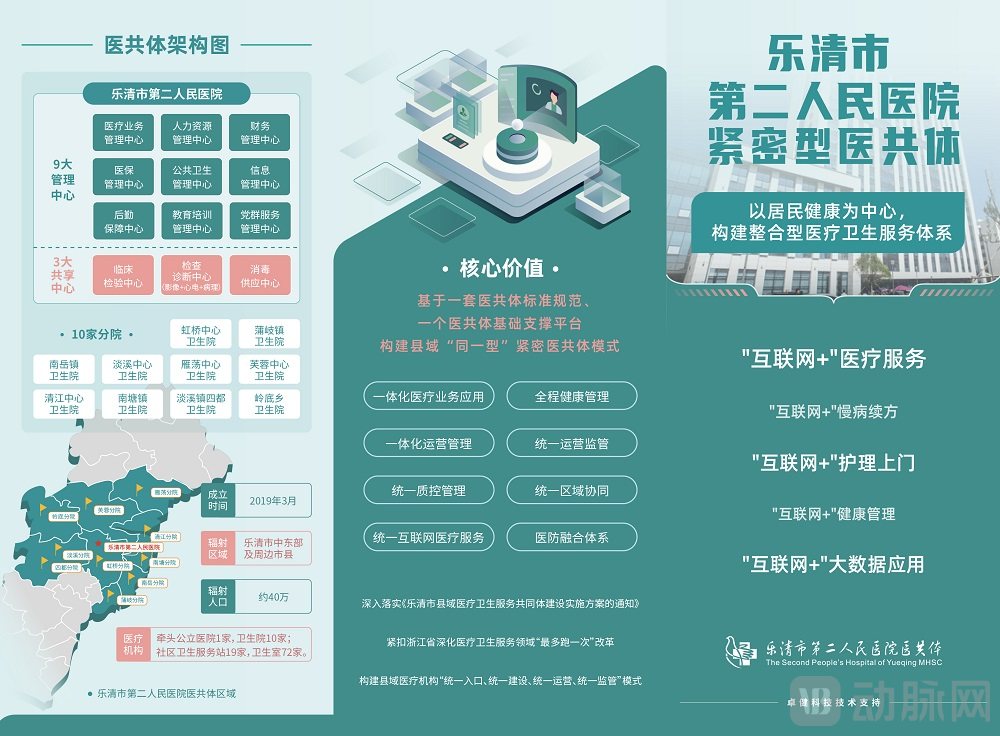
Currently, the Medical Community Cloud Platform of Yueqing Second People's Hospital covers all 10 of its branch hospitals. The leading institution, Yueqing Second People's Hospital, and its branches share a single business system and a centralized data center. Business data from different medical institutions are differentiated by campus codes. The platform uniformly collects and stores healthcare service and management data, providing services such as real-time interaction, information sharing, operational collaboration, and comprehensive supervision. By building an integrated healthcare delivery system, it offers convenient medical services to residents and patients.
In fact, the collaboration between Yueqing Second People’s Hospital and Zhuojian Technology also underwent an initial period of adjustment. Establishing an effective communication mechanism became their primary concern. As Zhuojian Technology is based in Hangzhou while Yueqing Second People’s Hospital is located in Wenzhou, early communications between the two parties faced numerous obstacles. Currently, Zhuojian has established a dedicated team of more than 10 members within its Product and R&D Center to work closely with the hospital’s Information Department, ensuring rapid implementation of the hospital’s requirements. The hospital’s emphasis on issues such as continuous system operation and fund security has also driven Zhuojian Technology to continuously refine its products and accelerate iterations.
Yang Jie, Assistant President of Zhuojian Technology, pointed out, “Currently, the basic functional requirements of medical consortia have been met, but there is still room for improvement. Moving forward, we will leverage our interconnected data infrastructure to conduct data analysis and enable practical data applications, such as predicting disease trends. In addition, we are developing an intelligent follow-up model for medical consortia, aiming to better benefit patients by providing hospitals with enhanced follow-up technical services.”
The development and construction of medical consortia involve multiple factors, including “personnel,” “finance,” and “informatization.” Wei Suzhen, Director of the Information Department at Yueqing Second People’s Hospital, pointed out that the current construction of the medical consortium at Yueqing Second People’s Hospital still needs to achieve comprehensive integration of personnel, finances, and materials, thereby enabling a higher degree of resource allocation and sharing. This will also be the next direction for exploration in hospital-enterprise cooperation.
What Challenges Remain in the Development of Medical Consortia?
President Zhao Xiaohai pointed out that there are currently two models for the development of medical consortiums: one involves a close connection between the lead hospital of the medical consortium and its affiliated branch hospitals, enabling data sharing, which is then integrated with the Health Bureau for management purposes. The other model involves each branch hospital within the medical consortium connecting separately with the Health Bureau to share data, after which the Health Bureau facilitates data exchange and integration among all healthcare institutions within the respective medical consortiums. Under these two models, the former—characterized by tightly integrated medical consortiums—can better achieve operational synergy. Nevertheless, full integration of human resources, financial resources, and materials has not yet been fully realized. Future efforts should be directed toward achieving this goal.
Furthermore, due to unclear policy factors, it is difficult to see a clear return on investment in the construction of medical information systems, and some medical community constructions have fallen into development difficulties. However, President Zhao Xiaohai believes that the construction of medical information systems is necessary, as it will serve as the underlying technical support. Once policies become clearer, the subsequent value of investments in informatization will also be demonstrated.
He pointed out that whether providing online or offline medical services, the ultimate focus remains on service. The internet is merely a tool, and online services are simply an extension of offline offerings. With the continued integration of health centers, nursing homes, and other institutions, he prefers to view the currently developed Medical Community Cloud Platform as a new generation of information-based service systems. Ultimately, the goal of building this system is to better achieve the management and promotion of population health. On this path, there is still much for “us” to accomplish.