

Yuankangjian's Strategy to Overcome the Offline Dilemma in Pharmaceutical Retail: Empowering the Sector through Internet Hospital Development
The Dilemma of the Pharmaceutical Retail Industry Has Emerged. The impact of the COVID-19 pandemic, changes in the economic landscape, and the evolution of consumer market concepts have delivered a significant shock to the pharmaceutical retail sector.
On one hand, growth has slowed. In 2020, drug sales across the three major terminals (public hospital terminal, public primary healthcare terminal, and retail pharmacy terminal) reached RMB 1.6437 trillion, representing a year-on-year decline of 8.5%. The public hospital terminal, which holds the largest market share, recorded its first-ever negative growth of 12% in 2020. Retail pharmacies are also facing bottlenecks in sales and profit growth, along with declining customer traffic. On the other hand, influenced by factors such as volume-based procurement and the outflow of prescriptions from hospitals, the industry’s overall gross profit margin has continued to decline. As early as 2019, the net profit margin had already dropped to 3.81%.
Behind the data lies the crisis facing the pharmaceutical retail industry, which urgently needs to identify new growth drivers. Also in 2020, the COVID-19 pandemic further accelerated the rapid development of internet healthcare. Both the number of users and the number of internet hospitals surged dramatically in 2020. According to statistics, by March this year, the number of internet hospitals had exceeded 1,100. Meanwhile, what has drawn even greater attention from the pharmaceutical retail sector is undoubtedly the nearly RMB 180 billion in transaction volume generated by B2C pharmaceutical e-commerce platforms within the internet healthcare space, representing an 81.4% year-on-year increase. Pharmaceutical e-commerce has emerged as a new terminal force, further fostering innovative product operation models.
How Can the Pharmaceutical Retail Industry Better Advance Its Exploration of New Internet Healthcare Channels? To address this, Guangzhou Yuankangjian Information Technology Co., Ltd. (hereinafter referred to as “Yuankangjian”), a leading expert in comprehensive solutions for internet hospital development in China, the exclusive operator of Huawei Cloud’s Level 3 Classified Protection Service Platform for Internet Hospitals, and a partner in the Smart Park Initiative for Internet Hospitals in Wenjiang District, Chengdu, recently organized and hosted the “Summit Forum on Internet Hospital Development and Practice” at the Changsha International Conference Center. Leveraging its robust technical capabilities, nationwide implementation experience in internet hospital construction, and significant industry influence demonstrated by successfully securing internet hospital qualifications for 116 healthcare institutions, Yuankangjian aimed to unite healthcare sector stakeholders, promote practical advancements in internet hospital development, empower the pharmaceutical retail industry, and break through current challenges.

To enhance awareness and understanding of internet hospitals among more clients in the pharmaceutical industry, Yuan Kangjian invited representatives from government bodies, industry sectors, associations, and enterprises to participate in this forum. The attendees delivered insightful perspectives and shared their explorations of new models such as “Internet + Pharmaceuticals” and “Internet Healthcare,” along with emerging opportunities and future directions.
Does the Pharmaceutical Retail Industry Need to Go "Online"?
How should the traditional pharmaceutical retail industry transform to break through its current predicament? Attendees unanimously highlighted one key term: digitalization. By embracing technology, digitalization, and intelligence, the industry seeks to uncover new blue-ocean growth opportunities online, thereby reversing the negative growth trend currently plaguing offline pharmaceutical retail. Among these new exploratory directions, the empowerment of pharmaceutical retail by internet hospitals is regarded as a key area of focus.
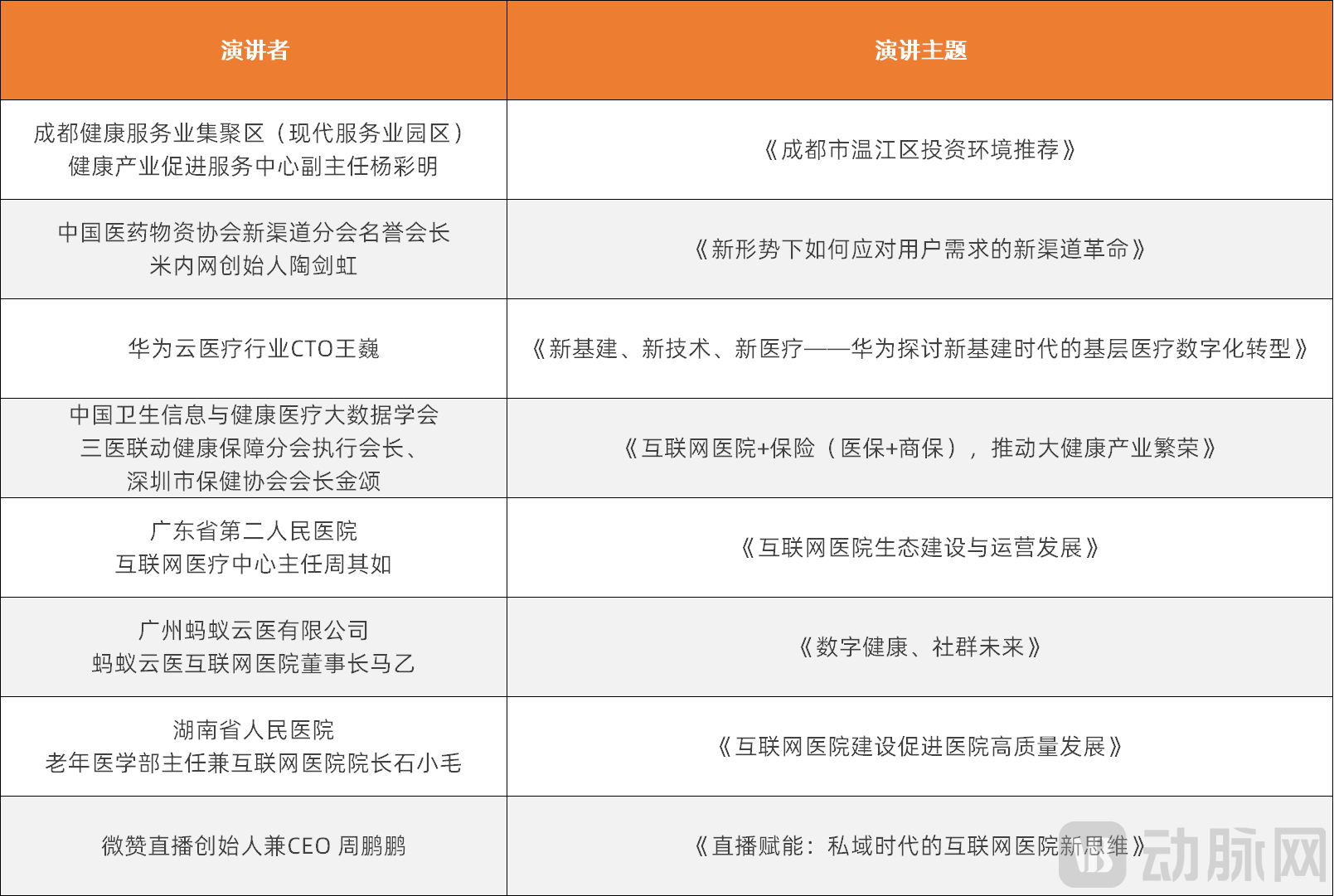
Lin Zhihua, President of the New Channel Branch of the China Medical Pharmaceutical Material Association and Chairman of Guangdong Huangtu Biotechnology Co., Ltd., stated at the conference that they would join forces with industry stakeholders to build an innovative value matrix encompassing new pharmaceutical industry, new distribution, new retail, new healthcare, new logistics, new information technology, new finance, and new operations.
Amid the proliferation of internet hospitals, how can the pharmaceutical retail industry establish its own competitive advantage? Tao Jianhong, Honorary President of the New Channel Branch of the China Pharmaceutical Material Association and founder of Menet, pointed out that it is essential to build core competitive barriers for internet hospitals themselves and accelerate market consolidation through multiple drivers. These include establishing brand barriers by attracting customers with brand strength, exploring barriers to prescription circulation aligned with the “Internet Plus” model, building talent barriers by equipping teams with professional physicians and multidisciplinary professionals who possess internet-centric thinking, and forming supply chain barriers through integration of the pharmaceutical industry chain.
How Is the Pharmaceutical Retail Industry Moving “Online”?
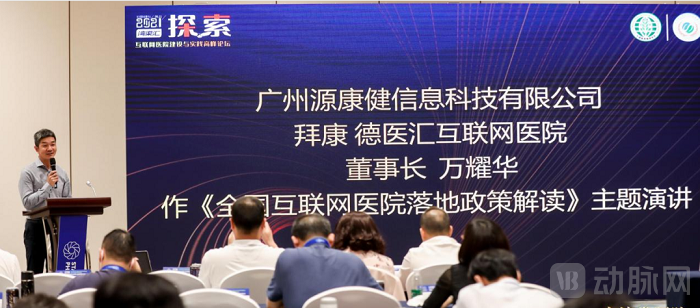
In practice, theoretical discussions on the development of internet hospitals must ultimately be implemented in real-world settings. How can internet hospitals be established quickly and efficiently? What challenges arise during their development? Wan Yaohua, Chairman of Yuankangjian, shared insights on the construction and practical implementation of internet hospitals. Drawing on Yuankangjian’s experience in helping over one hundred enterprises across China successfully obtain licenses for internet hospitals, he highlighted several critical issues that must be carefully addressed during the implementation process:
For instance, the establishment models and naming conventions of internet hospitals may impact branding. Due to varying regional policies—such as physical medical institutions independently establishing internet hospitals, collaborative ventures between medical institutions and third-party entities, or third-party entities independently setting up internet hospitals—there are differing regulations on naming. These naming requirements may have a detrimental effect on the brand itself.
In fact, the more critical issues may be the security and independence of funds in co-built internet hospitals. Yuan Kangjian applies to WeChat Pay for designated account collection for internet-based medical insurance payments through the co-built internet hospital license, thereby alleviating the concerns of third-party institutions and physical medical facilities. Yuan Kangjian provides one-stop services to help clients address a series of challenges encountered during the actual establishment of internet hospitals.
The first-diagnosis system, along with the disparities in internet hospital development across various provinces and municipalities, has also influenced the pace at which the pharmaceutical retail industry establishes its own internet hospitals. For pharmaceutical retailers seeking faster integration into the internet hospital ecosystem, partnering with enterprises specializing in internet hospital infrastructure offers a viable shortcut. At the forum, Wang Wei, CTO of Huawei Cloud’s Healthcare Sector, delivered a keynote speech titled “New Infrastructure, New Technologies, New Healthcare: Huawei’s Exploration of Digital Transformation in Primary Care During the Era of New Infrastructure,” showcasing Huawei Cloud’s robust technological capabilities. Currently, Huawei Cloud is collaborating with Yuan Kangjian to advance the development of internet hospitals.
How Should the Pharmaceutical Retail Industry Operate in the "Online" Space?
Zhou Qiru, Director of the Internet Medical Center at Guangdong Second Provincial General Hospital, proposed a vision for a 5G-enabled, full-scenario smart hospital characterized by “digitalization, intelligence, platform-based operations, 5G AI, and comprehensive scenario coverage.” He stated that the hospital is currently advancing in this direction, with most implemented features having gained user recognition.
In his speech, Ma Yi, Chairman of Guangzhou Ant Cloud Medical Co., Ltd. and Ant Cloud Medical Internet Hospital, outlined a roadmap for future internet hospitals to leverage community-based approaches, harness medical big data, and improve patient follow-up visit and repurchase rates.
In his speech, Shi Xiaomao, Director of the Department of Geriatrics at Hunan Provincial People's Hospital and Dean of its Internet Hospital, stated that the integration of online and offline services is an indispensable component of future internet hospitals, expressing strong confidence in their development prospects.
In his speech, Zhou Pengpeng, Founder and CEO of Weizan Live, proposed the view that “internet hospitals will be the future traffic gateway for healthcare,” and argued that live streaming, as a trending tool, will drive the development of internet hospitals. The more than 60 user-acquisition strategies associated with live streaming also provided inspiration to the audience.
Industry Opportunities Amid the Lifting of Bans on Online Sales of Prescription Drugs and the Integration of Medical Insurance Payments
For practitioners in the pharmaceutical retail industry who are struggling to break through offline bottlenecks, is online internet hospital truly a good option? What are the future trends? These are undoubtedly questions of great concern to industry professionals.
In November 2020, two landmark policies were successively introduced. First, the National Healthcare Security Administration issued the “Guiding Opinions on Actively Promoting Medical Insurance Payment for ‘Internet+’ Medical Services,” providing more specific measures and regulations for incorporating internet-based medical services into the medical insurance system. Subsequently, the General Office of the National Medical Products Administration publicly solicited comments on the “Administrative Measures for the Supervision of Online Drug Sales (Draft for Comment),” officially charting a course for the online sale of prescription drugs by permitting their online sale and the display of prescription drug information. These policies undoubtedly bode well for the industry’s development.
The roundtable discussion explored the industry opportunities arising from the lifting of the ban on online sales of prescription drugs and the integration of medical insurance payment systems. Participants pointed out that with the normalization of the pandemic and the rise of home-based elderly care, lifting the ban on online prescription drug sales will benefit the public to a greater extent. The development of internet healthcare and internet hospitals will further promote this convenient measure. As an inevitable trend, it will also become a new growth point for future internet hospitals. With the deregulation of online prescription drug sales, the scale of the online pharmaceutical market will continue to expand, leading to further convergence between online and offline drug markets, characterized by both competition and complementarity. Moreover, the circulation of hospital prescriptions is highly likely to create a new market space worth hundreds of billions of yuan.
Currently, regions across China are actively integrating health insurance payment systems, with internet healthcare now included in the reimbursement framework. As these payment channels become further streamlined, the market is poised for a tenfold or even greater expansion in the future. However, certain challenges remain. For instance, the inability to process payments without physical insurance cards or offline connectivity has constrained market growth. The implementation of card-free and offline-capable payment solutions will facilitate adoption in grassroots community settings and other scenarios, heralding a new surge in market development.
Jin Song, Executive President of the Three-Medical-Linkage Health Security Branch of the Chinese Society for Health Information and Big Data in Healthcare, and President of the Shenzhen Health Care Association, delivered a keynote speech that closely aligned with the views of Wan Yaohua, Chairman of Yuankangjian. Wan stated, “The act of using medical insurance for medical consultations is inherently low-frequency. In the future, integrating commercial insurance, health insurance, and health management will foster a virtuous cycle, thereby better promoting the development of internet healthcare. Internet hospitals, serving as the underlying infrastructure, will continuously extend and advance the overall development of the healthcare sector.” It is reported that both parties have expressed interest in collaborating to jointly promote the nationwide implementation of the “Internet Hospital + Medical Insurance and Commercial Insurance” model.
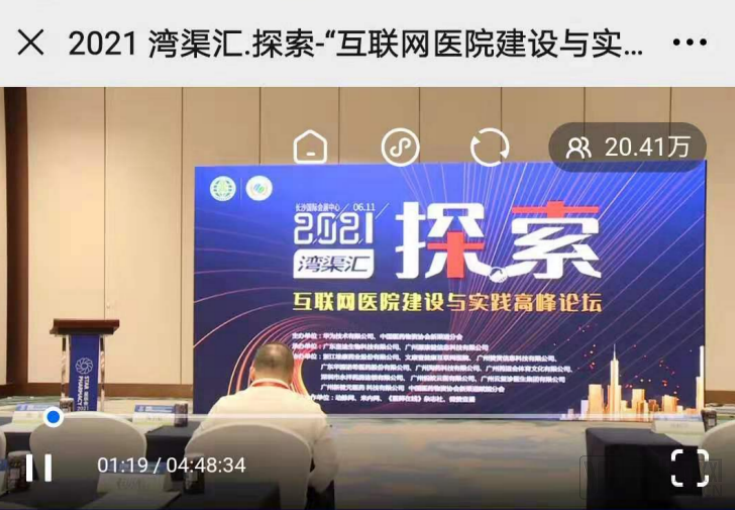
The forum live stream built by Weizan attracted nearly 204,000 viewers.
How to seize policy dividends is a question that practitioners in the pharmaceutical retail industry need to consider. On the other hand, it may be necessary to consider the relationship between internet hospitals operated by public hospitals and those established by third-party enterprises, such as those in the pharmaceutical retail sector. Participants at the conference unanimously expressed that both policy regulations for public tertiary Grade A hospitals and the practical demands of enterprises themselves are driving the construction and development of internet hospitals.
The operational goal of public internet hospitals is to identify precisely matched patients and provide external empowerment, while private institutions leverage internet hospitals to reach users and promote their brands. In the future, the two sectors may exhibit differentiated characteristics or even form alliances to further advance the implementation of tiered diagnosis and treatment. This also presents a timely opportunity for practitioners in the pharmaceutical retail industry to establish internet hospitals; as offline growth becomes increasingly constrained, shifting toward online channels and digital transformation is a prudent strategic choice.
“We are committed to making every effort to advance the development of internet hospitals,” stated Wan Yaohua, Chairman of Yuankangjian. “We look forward to welcoming more professionals from the healthcare industry to join us in exploring the construction and practical implementation of internet hospitals, thereby forging unique and successful paths tailored to their respective enterprises. Yuankangjian will continue to provide professional, efficient, and high-quality services to help pharmaceutical companies and pharmaceutical e-commerce platforms establish internet hospitals that align with their development needs, achieving dual breakthroughs in distribution channels and business performance. Together, we will promote interconnectivity and innovative growth in the field of internet healthcare.”