

Jinbaihui Biotech Launches Prospective Real-World Clinical Study for Colorectal Cancer Screening Using RNA-Based miR-92a Detection Technology
With the introduction of several favorable policy documents, including the “Outline of the ‘Healthy China 2030’ Planning” and “Domestic and International Status of Colorectal Cancer Screening Products and Clinical Evaluation Requirements,” China’s early cancer screening industry has been steadily maturing. Early cancer screening has emerged as a booming multi-billion-yuan market in China. Meanwhile, topics such as real-world studies, technological pathways, product strategies, and evaluation metrics for early cancer screening have garnered significant attention within the industry.
To further promote the standardized development of the cancer early screening industry, on June 19, 2021, colorectal cancer early screening companiesShenzhen Genebiohealth Hosts “Symposium on the Application of RNA-Based Biotechnology in Early Diagnosis and Screening of Tumors in the IVD Field, and Launch Ceremony of the Real-World Study Project on Ruichangtai® Fecal miRNA-92a Detection with Over 100,000 Cases”The conference invited numerous experts and scholars in the field of early screening for gastrointestinal cancers, including Academician Fan Daiming from the First Affiliated Hospital of Air Force Medical University of the Chinese People's Liberation Army, Professor Yu Jun, Assistant Dean of the Faculty of Medicine at The Chinese University of Hong Kong, Director Zou Duowu from Ruijin Hospital affiliated with Shanghai Jiao Tong University, Professor Zou Xiaoping, Deputy Secretary of the Party Committee of Nanjing Drum Tower Hospital affiliated with Nanjing University Medical School, Director Wang Bangmao from Tianjin Medical University General Hospital, and Director You Suning from the Chinese Medical Association.
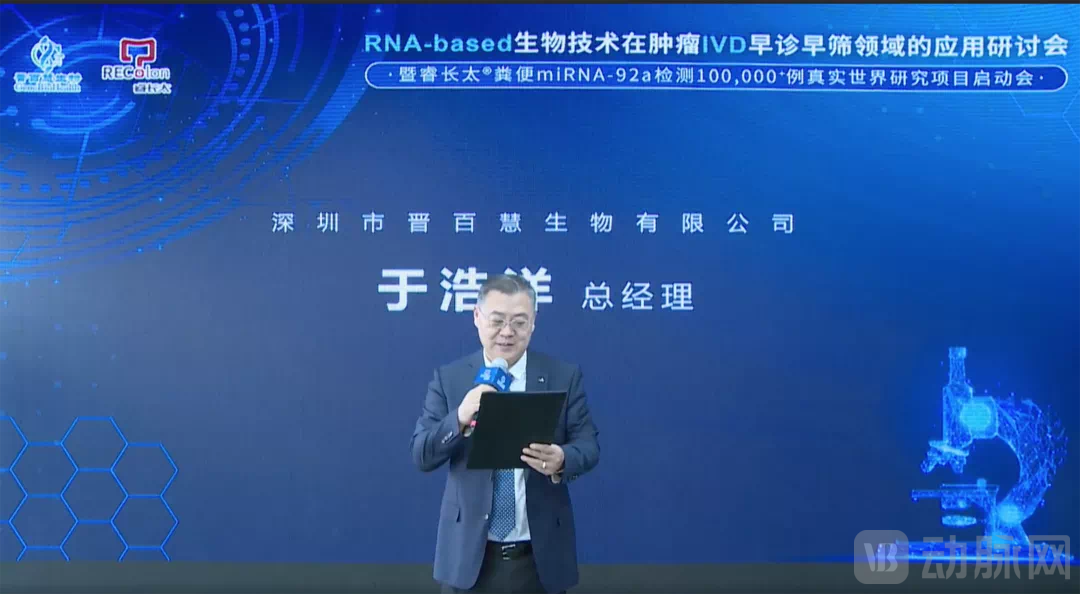
Dr. Yu Haoyang, Founder and General Manager of Genebiohealth
During the academic sharing session of the conference, attending experts discussed frontier technologies in early cancer screening, molecular biomarkers, and industry prospects.
Academician Fan Daiming from the First Affiliated Hospital of Air Force Medical University of Chinese People's Liberation Army, recipient of the highest honor in gastroenterology worldwide, delivered a presentation titled "Integration and Transition: From Medical Knowledge to Medical Epistemology." He analyzed how to integrate medical epistemology and methodology, conduct observational analysis based on disease manifestations, establish horizontal and vertical connections, and combine medical knowledge theories to transform them into holistic understanding and attention toward diseases. He emphasized thatModern medicine should integrate various cutting-edge technologies while focusing on protecting and enhancing the body’s innate healing capacity, thereby improving patients’ survival duration and quality of life.

Academician Fan Daiming, First Affiliated Hospital of Air Force Medical University of the Chinese People's Liberation Army
Professor Yu Jun, Assistant Dean of the Faculty of Medicine at The Chinese University of Hong Kong, introduced the exploration and research process of fecal miRNA-92a as an innovative molecular biomarker. Through analysis and study of the FDA-approved Cologuard test (a multi-target DNA mutation and methylation assay combined with FIT), it was found that this product is not suitable for widespread promotion in China due to its complex testing procedures, high rate of experimental failure, high cost, low detection rate for adenomas, and unsuitability for Asian populations (who have a low rate of KRAS mutations). To identify an early diagnostic molecular target for colorectal cancer that is easy to implement, highly stable, sensitive, and specific, and suitable for diverse ethnic groups including Asians, Professor Yu Jun comprehensively analyzed various detection targets such as gene methylation, mRNA, and microRNA, as well as different sample types including blood and stool, leveraging cutting-edge RNA-based biotechnological approaches. UltimatelymiRNA-92a and miRNA-135b have emerged as promising candidate targets due to their in vitro stability, high reproducibility, sensitive detection, and high specificity for colorectal cancer, offering superior performance compared to methylation assays, which are plagued by high false-positive rates and instability.
miRNA-92a is the first published microRNA-based molecular target for cancer.Has had a significant impact in academic circles both domestically and internationally. Subsequently,Professor Yu Jun’s team and the Genebiohealth team, led by Dr. Yu Haoyang, joined forces and collaborated closely to successfully develop the Ruichangtai® fecal miRNA-92a detection kit, benefiting people in China.Professor Yu Jun affirmed the achievements made by Shenzhen Genebiohealth Co., Ltd. and expressed his expectation for further in-depth collaboration between both parties in the future.
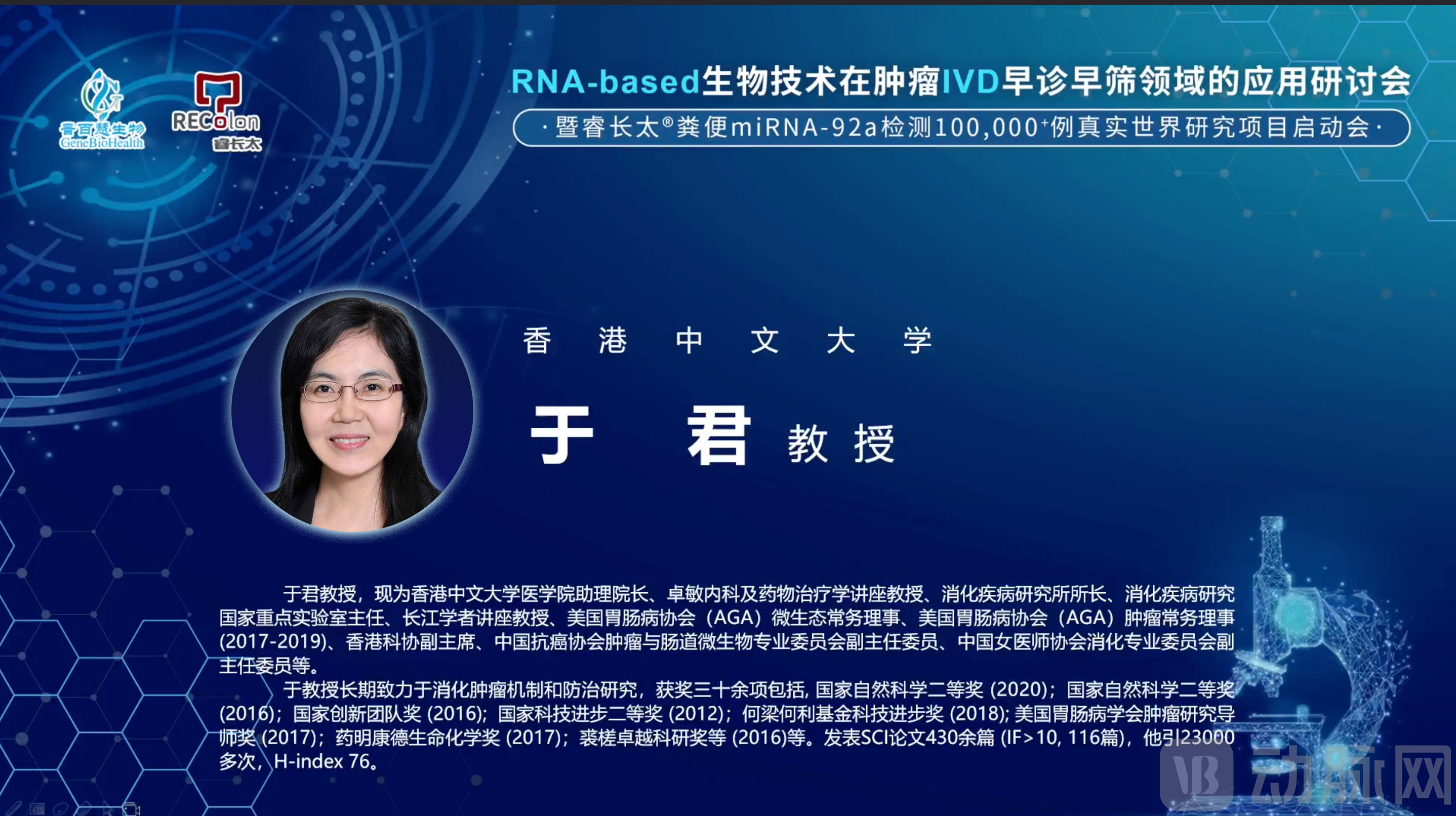
Professor Yu Jun, Assistant Dean of the Faculty of Medicine, The Chinese University of Hong Kong
Zou Duowu, Director at Ruijin Hospital, Shanghai Jiao Tong University School of Medicine, and Standing Committee Member of the Chinese Society of Gastroenterology, Chinese Medical Association, delivered a keynote report titled “Combined Application of Colonoscopy and microRNA Molecular Biomarkers in the Diagnosis and Treatment of Colorectal Cancer.” Director Zou emphasized that early screening for colorectal cancer should not rely solely on colonoscopy. By comparing various innovative molecular testing technologies, including DNA methylation detection and microRNA detection, he elucidated the clinical value of fecal miRNA-92a testing as a tumor biomarker to assist in the early screening and diagnosis of colorectal cancer.
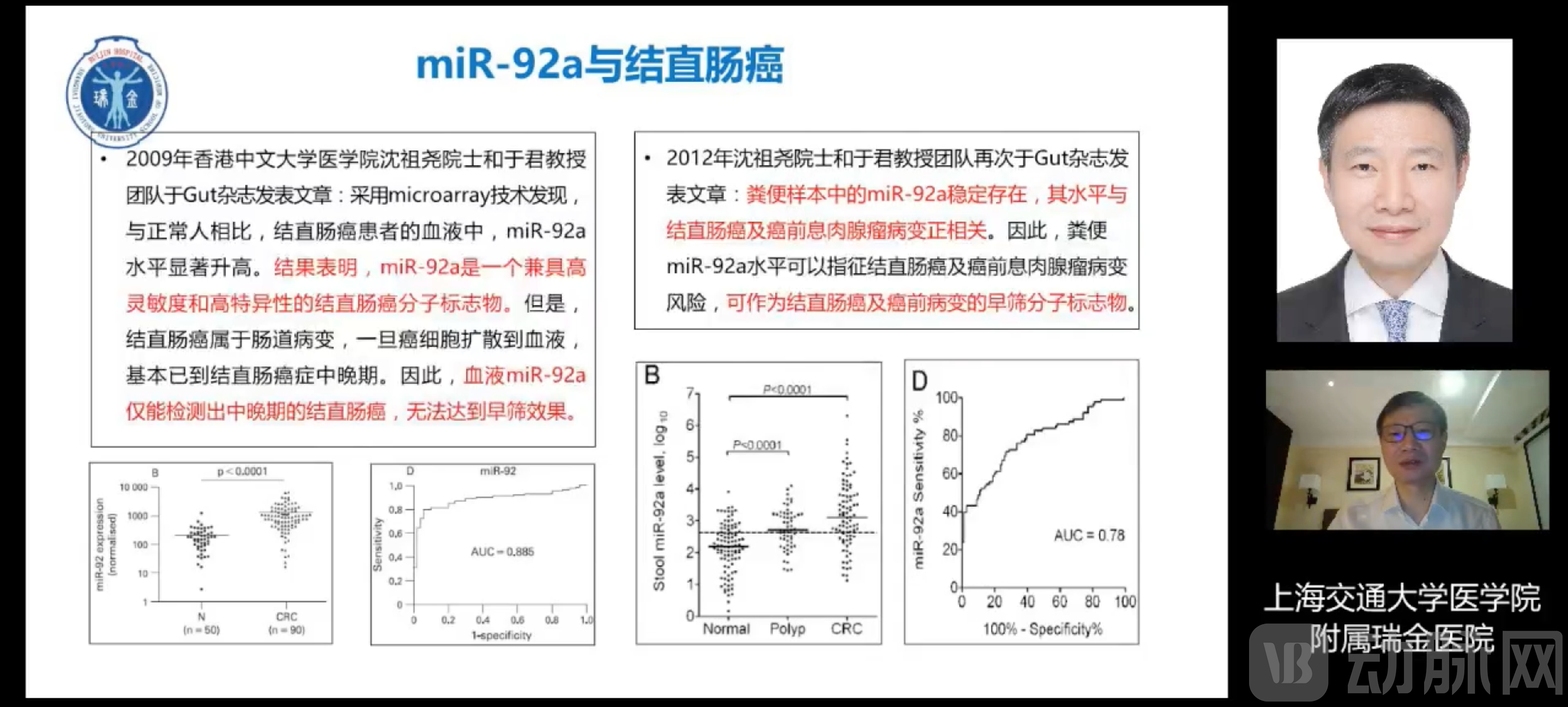
Director Zou Duowu of Ruijin Hospital, Shanghai Jiao Tong University School of Medicine, Affiliated Ruijin Hospital, Affirms the Application Value of Fecal miRNA-92a Testing in Early Screening for Colorectal Cancer
During the roundtable forum session, experts and scholars—including Professor Zou Xiaoping, Deputy Secretary of the Party Committee of Nanjing Drum Tower Hospital, Medical School of Nanjing University; Professor Wang Bangmao, Director of the Department of Internal Medicine/Gastroenterology at Tianjin Medical University General Hospital; Associate Editor You Suning of Acta Editologica; as well as Dr. Yu Haoyang and Dr. Liang Ning—engaged in broad-ranging, logically rigorous exchanges and intellectual discourse. From diverse perspectives spanning basic research, industrial translation, clinical application, and technological methodologies, they explored multiple dimensions of RNA-based and other innovative molecular technology products, including their innovative optimization for early cancer screening, implementation strategies within healthcare institutions, and the advancement of industrialization.
In March 2021, the Center for Medical Device Evaluation (CMDE) of the National Medical Products Administration published the article “Current Status of Colorectal Cancer Screening Products at Home and Abroad and Clinical Evaluation Requirements,” stating that clinical trials for disease screening products should involve prospective enrollment targeting the intended screening population.
As an early mover in China’s cancer early screening industry, Shenzhen Genebiohealth Co., Ltd. is actively conducting prospective research on its colorectal cancer early screening products. At this conference,Genebiohealth Announces the Launch of the “Ruichangtai® Fecal miRNA-92a Assay 100,000+ Case Real-World Study Project”
Dr. Liang Ning, Deputy General Manager of Shenzhen Genebiohealth Co., Ltd., introduced the planning and strategic framework for the “Rui Chang Tai® Fecal miRNA-92a Test Real-World Study Project with Over 100,000 Cases.” He stated that,This real-world study will enroll over 10,000 individuals from community-based average-risk populations for screening, include more than 20,000 participants in prospective clinical trials, cover over 30,000 cases of clinical application of the product, and involve more than 40,000 cases served by third-party medical laboratory services. The aim is to validate the screening value of Ruichangtai® fecal miRNA-92a testing for colorectal cancer in average-risk populations across broader geographic regions, larger populations, and a wider age range.
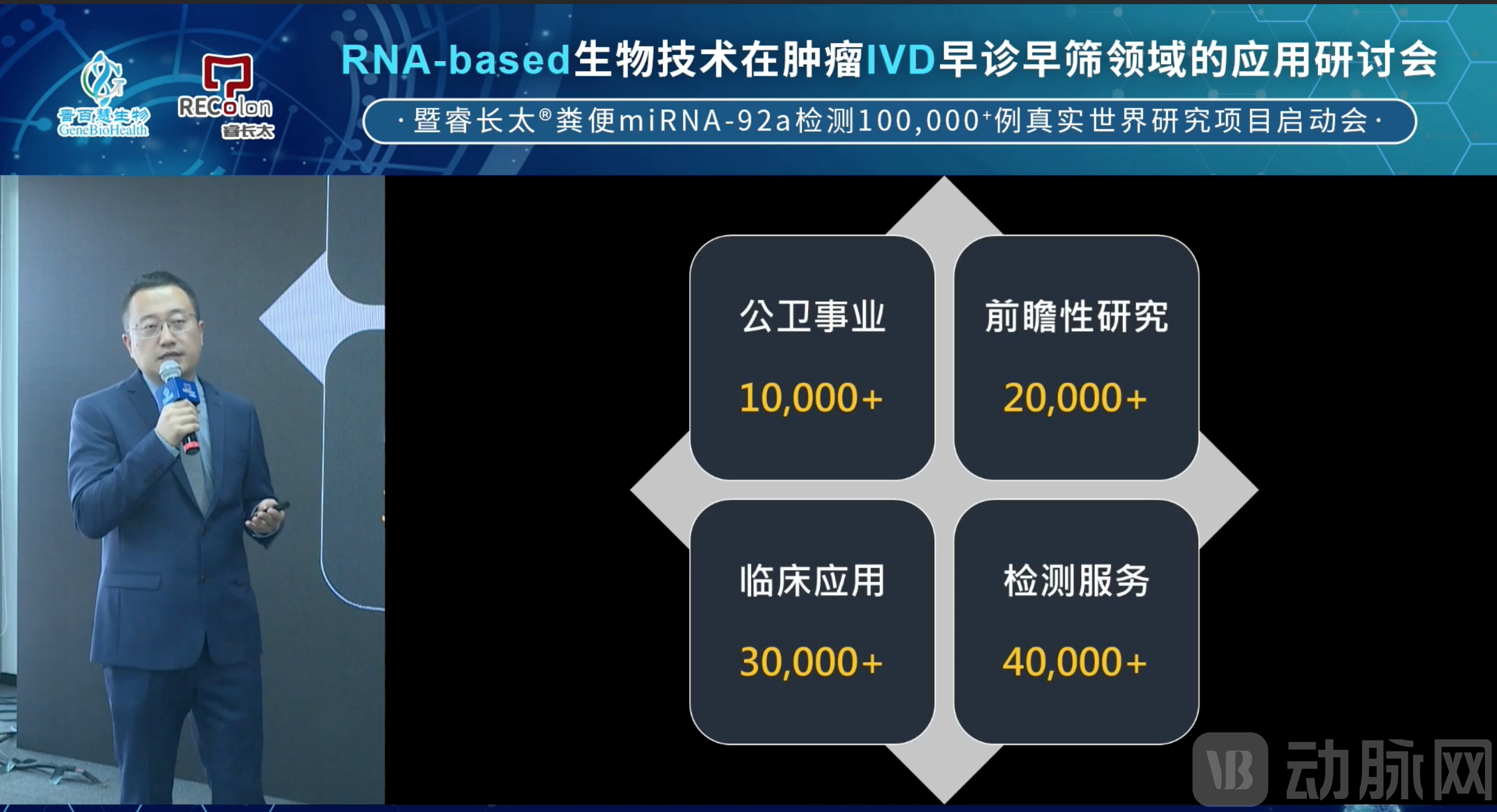
Dr. Liang Ning, Deputy General Manager of Shenzhen Genebiohealth Co., Ltd., Introduces the Strategic Framework for the “Ruichangtai® Fecal miRNA-92a Test: Real-World Study Project with Over 100,000 Cases”
Shenzhen Genebiohealth Co., Ltd., established in 2013, specializes in at-home early screening for high-incidence cancers. Guided by its original aspiration and vision to “develop affordable cancer early-screening products for the Chinese public,” the company has formed an integrated business structure encompassing R&D, product delivery, and testing services.Its RNA-based biotechnology colorectal cancer early screening product, “Ruichangtai,” has obtained certification from China’s NMPA and the EU CE.1 National Second Prize in Natural Sciences, and 6 domestic and international invention patents. Jinbaihui owns independent intellectual property rights with global equity. Currently, Genebiohealth has been conducting clinical trials, product registrations, and marketing activities in developed countries and regions across Asia, Europe, and North America.
RNA-based biotechnologies have been widely applied in cutting-edge medical research fields, including cancer therapy, treatment of immune disorders, management of genetic diseases, and prevention and control of COVID-19. Compared with traditional antigen–antibody recognition-based drugs and in vitro diagnostics, RNA-based biotechnologies offer significant advantages in drug development and in vitro diagnostics due to their targeted nature and safety profile. In the field of early cancer screening, microRNAs (miRNAs), as a class of excellent tumor biomarkers based on RNA technology, have been increasingly utilized in recent years for early screening of gastrointestinal cancers, particularly representing an innovative approach for early detection of colorectal cancer.
“Ruichangtai” was developed based on the fecal miRNA-92a detection technology.Fecal miRNA-92a levels can indicate the risk of colorectal cancer and precancerous polypoid adenomatous lesions, with strong anti-interference capability (over 95% resistance to interference from other gastrointestinal tumors and common inflammatory conditions), making it a suitable early-screening molecular biomarker for colorectal cancer and precancerous lesions.“Ruichangtai” samples are easy to obtain and allow for non-invasive collection, with a simple testing process. It is a non-invasive colorectal cancer detection product suitable for the Chinese population and has been implemented in medical institutions across China.
The launch of the “Ruichangtai® Fecal miRNA-92a Test 100,000+ Case Real-World Study” marks a significant milestone for Shenzhen Genebiohealth Co., Ltd. in the cancer early screening industry. Moving forward, the company will rapidly advance its real-world study on colorectal cancer early screening, leveraging precise tumor early detection technologies. Committed to improving human health and benefiting society, Genebiohealth aims to develop cancer early screening products better suited for the Chinese population, thereby serving millions of families.