

Yunnan Baiyao Group Transitions from Marketing-Driven Growth to a Four-Wheel Drive Model: Building a Comprehensive TCM Innovation System

Yunnan Baiyao
Pharmaceutical Manufacturers and Distributors
On June 12, the “Inheriting the Essence, Upholding Integrity and Fostering Innovation—Peking University Health Science Center Forum on Integrated Traditional Chinese and Western Medicine Innovation and Development,” co-hosted by Peking University Health Science Center and the Shi Xuemin Traditional Chinese Medicine Development Foundation, was successfully held. More than 400 experts and scholars in the field of integrated traditional Chinese and Western medicine, colleagues from various sectors of society, and students participated in the forum, which garnered over 6 million online views.
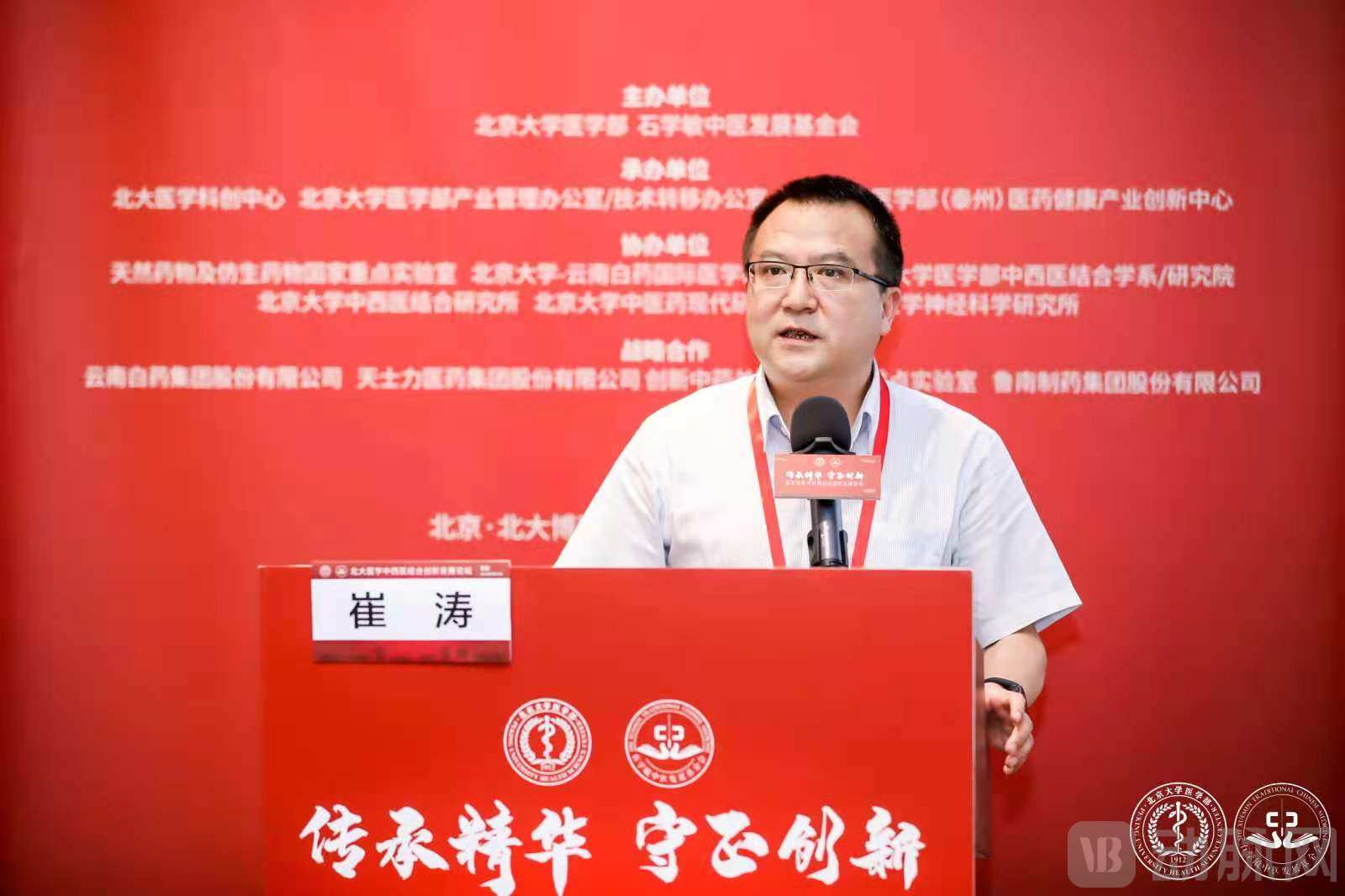
On the afternoon of the 12th, at the “Peking University Integrated Traditional Chinese and Western Medicine Drug Research Forum,” Cui Tao, Deputy Director of the Yunnan Institute of Materia Medica under Yunnan Baiyao Group, delivered a presentation titled “Reflections and Practices on R&D of New Traditional Chinese Medicines from an Enterprise Perspective.” He shared insights on the evolution of China’s TCM policies, changes in registration regulations for new TCM drugs, as well as Yunnan Baiyao Group’s R&D strategy and its pipeline of new TCM drugs. VCBeat has compiled his key viewpoints.
Policies often serve as a barometer for industry development. In recent years, China has formulated numerous policies to revitalize the development of Traditional Chinese Medicine (TCM). For instance, on February 14, 2016, the 123rd Executive Meeting of the State Council reviewed and approved the Outline of the Strategic Plan for the Development of Traditional Chinese Medicine (2016–2030), elevating TCM development to a national strategy. In October 2019, the Central Committee of the Communist Party of China and the State Council issued the Opinions on Promoting the Inheritance, Innovation, and Development of Traditional Chinese Medicine, providing direction for the inheritance, innovation, and development of TCM in the new era. In April 2021, the General Office of the State Council printed and distributed Several Policy Measures for Accelerating the Characteristic Development of Traditional Chinese Medicine, focusing on addressing weak links and reform challenges in current TCM development, targeting specific issues hindering TCM progress, and comprehensively strengthening policy support and investment in TCM.
Furthermore, regulations related to the registration of new traditional Chinese medicine (TCM) drugs in China are also evolving. Previously, the management of new TCM drugs focused more on their constituent ingredients. In 2020, the state promulgated the newly revised Measures for the Administration of Drug Registration. In September of the same year, the Classification of Traditional Chinese Medicine Registration and Requirements for Submission Materials was issued. The new regulations categorize new TCM drugs into innovative TCM drugs, improved new TCM drugs, TCM compound preparations derived from ancient classic prescriptions, and drugs with the same name and formula. Adhering to a clinical orientation, these regulations encourage innovation in TCM research and development, better align with the developmental patterns of TCM, highlight its unique characteristics, and have significantly promoted the growth of the new TCM drug industry.
Yunnan Baiyao Group is a time-honored Chinese brand. In 1993, it became the first listed company from Yunnan Province to be listed on the Shenzhen Stock Exchange. Since 2010, the company has implemented the “New Baiyao, Big Health” industrial strategy, gradually evolving from a traditional Chinese medicine enterprise into one of the leading players in China’s big health industry.
Currently, Yunnan Baiyao Group operates four major business segments: pharmaceuticals, health products, traditional Chinese medicine (TCM) resources, and pharmaceutical logistics. Its products are best-selling in China and Southeast Asia, and are gradually entering developed markets such as Europe, the United States, and Japan. Hundreds of millions of consumers have used the company’s products. In the pharmaceutical segment, products such as Yunnan Baiyao Adhesive Bandages, Yunnan Baiyao Aerosol, and Yunnan Baiyao Plaster continue to rank first in sales volume among similar products in the Chinese market. In the health products segment, Yunnan Baiyao Toothpaste ranked second in national market share among similar products in 2018, making it the leading domestic brand. In the TCM resources segment, “Baoqi” Panax notoginseng, represented by freeze-dried and ultra-fine powder technologies, has become the benchmark for high-quality Panax notoginseng in Yunnan Province.
Cui Tao stated that in recent years, Yunnan Baiyao Group has adjusted its overall strategy, shifting from a marketing-driven approach to a four-wheel drive development model. The company has established a pharmaceutical innovation system that is enterprise-led, supported by Baiyao’s R&D, market-oriented, product-centric, and integrated with industry, academia, and research. This transformation aims to enhance the company’s independent innovation capabilities, provide technical support for sustainable corporate development, and strengthen the conversion of scientific and technological achievements into practical applications.
In terms of R&D capabilities, Yunnan Baiyao ensures its iterative R&D capacity through in-depth industry and policy research, precise formulation of R&D strategies, high-efficiency R&D operations, a comprehensive end-to-end R&D system, and a global R&D ecosystem.
In terms of building its R&D system, Yunnan Baiyao Group will establish R&D centers in Kunming, Beijing, Shanghai, Shenzhen, Hainan, and South Korea through self-construction and collaboration, build a Central Research Institute, and create a global R&D network.
In terms of R&D focus, Yunnan Baiyao does not blindly follow trends by chasing currently popular fields. Instead, leveraging its core strengths and addressing actual market demands, the company has made in-depth strategic layouts in four key areas: orthopedics and traumatology, women’s health, dermatology, and oral care. “We aim to start from wellness and healthcare, natural medicines, data services, daily chemical products, medical devices, biologics, chemical drugs, basic raw materials, traditional Chinese medicine (TCM) and ethnic medicines, food, clinical medical services, and TCM-based health management, to continuously track and strategically position various product types within these four sectors, thereby constantly enriching our product portfolio,” said Cui Tao.
At the forum, Cui Tao shared multiple new traditional Chinese medicine (TCM) drug projects under Yunnan Baiyao Group, as well as successful experiences in the registration and approval process for new TCM drugs.
Yunnan Baiyao Group’s Tongshu Capsules received FDA approval in June 2018 to conduct Phase II clinical trials in the United States. Cui Tao stated that there are two main reasons for the rapid FDA approval of Tongshu Capsules: first, their favorable safety and tolerability profile; second, the selection of an appropriate indication. The indication submitted for Tongshu Capsules in the U.S. is soft tissue injury, a condition for which there is a pressing need for therapeutic options in the country, thereby significantly accelerating the approval process. “With the successful FDA approval to initiate Phase II clinical trials for Tongshu Capsules, Yunnan Baiyao Group has established a technical system for the internationalization of traditional Chinese medicines, demonstrating R&D capabilities for botanical drugs that meet international registration requirements, and paving a viable path for the global expansion of ethnic medicines.”
Furthermore, Fuxi Guben Plaster, a new TCM drug for syndrome differentiation developed by Yunnan Baiyao, has completed its Phase I clinical trial, with Phase II trials imminent. The Quansanqi Tablets have completed preclinical studies, while the classical formulas Maimendong Tang and Qingxin Lianzi Yin are currently under development. However, Cui Tao candidly acknowledged that bottlenecks and pain points persist in the R&D, registration, and commercialization of new TCM drugs, including a shortage of medical talent, a disconnect between medicine and pharmaceuticals, and an imperfect evaluation system. He expressed hope that policymakers, enterprises, industry associations, and other stakeholders will collaborate to promote the integration of medicine and pharmaceuticals, establish an evaluation system aligned with TCM theories, uncover the clinical value of TCM, and create streamlined pathways for the marketization of TCM products.