

WeCloud AI Secures Hundreds of Millions in RMB Financing as Invisible Orthodontics Emerges as a 'Gold Mine' Following Angelalign's IPO

Weiyun
Digital Dental C2M Industrial Internet Operator
VCBeat (WeChat: VCBEAT) has learned that digital dental smart healthcare services company “Weiyun” has recently announced the completion of a new round of financing amounting to hundreds of millions of RMB, less than three months after its previous funding round. This round was led by Jolmo Capital, with participation from Yimei Investment and a UK-based family office, among other institutions. Founder Liu Peng stated that the funds raised will be used to continue product and technology iterations, upgrade services, and promote the clear aligner brand “Xiangbei.”
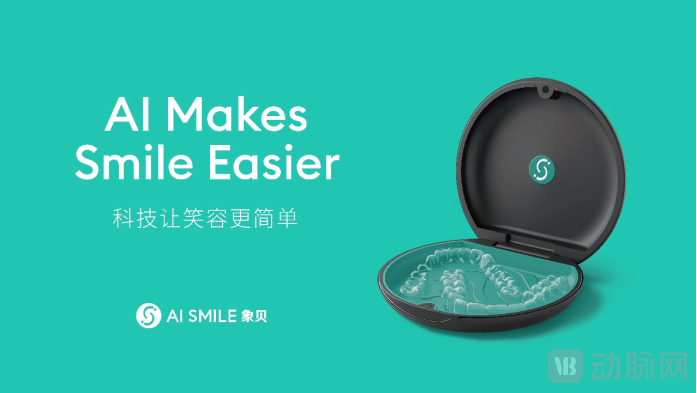
As the first intelligent, non-standard customized dental industrial internet platform in China, Weiyun’s original aspiration and philosophy are “Technology Makes Smiling Easier.” Centered on robotics and artificial intelligence technologies, Weiyun reshapes the upstream and downstream ecosystem of digital dentistry by enhancing efficiency and reducing costs. By integrating online and offline marketing systems with its self-built unmanned smart factory, proprietary supply chain, and independent sales network, Weiyun has established a comprehensive industry-wide closed-loop ecosystem.
Since its inception, Weiyun has leveraged its intelligent dental healthcare service model covering the entire network and its fully self-developed flexible smart manufacturing facility to secure angel-round investment in 2017 from Professor Wang Tianmiao, a renowned Chinese robotics expert and startup mentor as well as Honorary Director of the Robotics Institute at Beihang University, along with Yarui Capital and Zhiyou Jinmiao. In 2019, it raised over RMB 100 million from investors including Boiling Point Capital and Focus Media, achieving annual business growth exceeding 100% and demonstrating strong market potential and significant commercial value.
According to data from the White Paper on Chinese Orthodontic Consumers, the overall prevalence of malocclusion in China is as high as 74%, while the current number of orthodontic cases stands at only around 3 million. Based on China’s population base, this translates to a penetration rate of merely 0.3%. In 2020, there were approximately 1.04 billion cases of malocclusion in China (Source: Angelalign Prospectus). However, among the 3.1 million cases that received treatment, only 11% utilized clear aligners. In contrast, out of the 4.5 million treated cases in the United States, 33.1% were treated with clear aligners. Regarding China’s clear aligner market, demand-side potential is enormous; the existing backlog has yet to be fully released, while new growth is accelerating.
Meanwhile, patient demand in the dental market has quietly evolved alongside the rise of the “appearance economy,” with dental services gradually shifting from therapeutic and restorative care to cosmetic treatments and fast-moving consumer goods. Clear aligner orthodontics has become a “gold mine” for the dental industry. According to a report by Frost & Sullivan, in terms of retail sales revenue, the global clear aligner orthodontics market grew from $4 billion in 2015 to $13.1 billion in 2019, representing a compound annual growth rate (CAGR) of 35%.
Among these factors, the rapid development of the clear aligner market in developing countries, primarily China, has been the main driver of global market growth: from 2015 to 2019, the number of orthodontic cases in China increased from 1.6 million to 2.9 million, representing a compound annual growth rate (CAGR) of 15.3%. Within this period, the number of clear aligner cases rose from 47,800 to 303,900, with a CAGR of 58.8%.
Undeniably, the capital race in the orthodontics industry has only just begun. In the second half of this competition, the “entry ticket” is not only more expensive, but the dimensions of the conflict are also more complex. This is not merely a battle over funding and scale, but also one over quality, efficiency, and service. The war is no longer confined to traditional channels; it will expand to competition over core technological barriers, such as fully intelligent automated production, AI-based prediction of tooth alignment, and material upgrades. Behind the substantial growth potential lie increasingly intense supply-demand contradictions and industry pain points: a scarcity of dentists coupled with high training costs and long training cycles; reliance on imported raw materials; backward manufacturing processes; prolonged production cycles; and an urgent need to improve patient experience. Furthermore, the high cost of dental care exceeds the affordability of most Chinese residents.
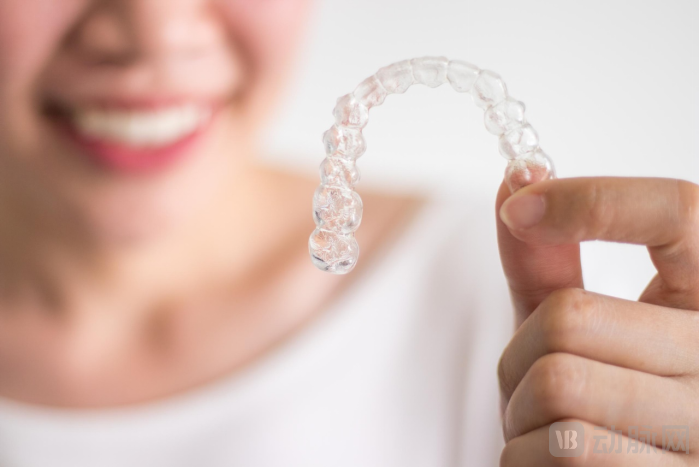
Leveraging a robust team of hundreds of professionals in product development, technology, and operations, and backed by nearly a decade of accumulation and growth, Weiyun has entered the market with core technologies as its cornerstone. Weiyun AI has built an internationalized team whose core members are PhDs, master’s degree holders, and medical experts from the United States, Australia, the Netherlands, France, India, and other countries. The company’s founder, Dr. Liu Peng, previously held positions at several renowned enterprises, including Fortune 500 companies. He holds an EMBA from Tsinghua University and has a proven track record of successful entrepreneurship. Furthermore, Professor Wang Tianmiao from Beihang University and Professor Gao Jian from Tsinghua University provide strategic guidance for the company’s technological development and business operations.
Weiyun’s digital, customized dental service workflow is divided into three stages: front-end clinics, cloud-based brain, and back-end smart factories. By applying various algorithms and intelligent software at each stage, a complete closed-loop system has been formed. This establishes a technological barrier centered on “devices, cloud, factories, and algorithms,” with hundreds of invention patents and software copyrights in total. By leveraging AI to create structural advantages, Weiyun has overcome the core pain points commonly faced by the industry.
By leveraging its proprietary edge hardware, cloud intelligence, smart factories, and supply chain to create a fully closed-loop C2M ecosystem, Weiyun is providing medical institutions, hospitals, and clinics with more precise and comprehensive technologies. This lowers the barrier for small clinics to adopt advanced equipment, enhances consultation efficiency, and drives AI-powered patient acquisition. For patients, this translates to shorter treatment times, reduced pain and waiting periods, making dental cosmetic procedures truly “what you see is what you get.”
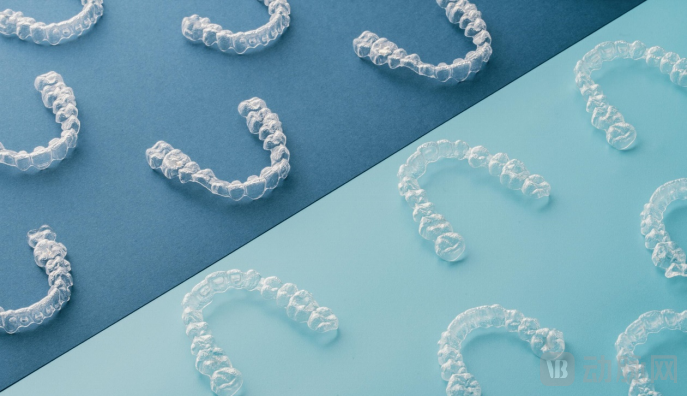
In 2020, Weiyun officially launched its AI-powered clear aligner brand, “Xiangbei,” in China. Leveraging its network of nearly 20,000 partner clinics, the brand has already delivered tens of thousands of cases. Born from a fully automated smart factory, Xiangbei utilizes cutting-edge technologies—including million-user datasets, intraoral point cloud scanning, AI simulation, AI tooth arrangement, and AI-driven automated production—to simulate clinical orthodontic processes and tooth movement patterns. It calculates and generates aligner models for the entire orthodontic treatment cycle, which are then manufactured and delivered with micron-level precision through its intelligent factory.
Beyond orthodontics, Weiyun provides a comprehensive suite of digital dental industry solutions through its unmanned smart factory, which integrates its independently developed cloud-based SaaS and MaaS platforms with a matrix of robotic terminals. With over 400 SKUs covering multiple oral healthcare sectors—including dental implants, orthodontics, aesthetic dentistry, and prosthodontics—Weiyun has reduced single-product production time by 90% while achieving a yield rate as high as 98%. Through strategic deployments targeting both B-end and C-end markets, the company aims to become the comprehensive “Invisalign” of China’s oral care market.
Wang Bin, Deputy General Manager of Jolmo Capital and General Manager of Jolmo Venture Capital, believes that the dental digitalization market offers immense potential yet currently exhibits a low level of digital adoption. There is an urgent need to integrate artificial intelligence with foundational medical practices to reshape the dental industry chain. It is against this backdrop that Weiyun has emerged as a pioneer in exploring the application of artificial intelligence in healthcare.
“Weiyun also represents Jinmao Capital’s new expansion into the field of intelligent robotics. Weiyun will support and synergize with China Jinmao’s healthy living development model across its commercial, city operation, and property management sectors, while simultaneously expanding its consumer-facing (C-end) business to provide value-added services to Jinmao homeowners.”
Ye Qing, Founding Partner of Yimei Investment, stated that against the backdrop of an aging population and heightened awareness of oral health and aesthetics, China’s dental services industry is experiencing rapid growth. Leveraging its self-developed intraoral scanners, cloud-based AI, and smart manufacturing facilities, Weiyun has established a digital closed loop spanning front-end clinics, cloud-based design, and back-end production. This approach has significantly enhanced the production efficiency and product quality of a comprehensive range of dental consumables. Backed by the team’s years of accumulated leading technology and commercial expertise, Weiyun has quickly gained market recognition.
“Yimei is highly confident in Weiyun’s development prospects. As a venture capital firm with deep roots in Shanghai, Yimei is committed to helping the company fully leverage the advantages and resources of Shanghai as a hub for the integrated development of the Yangtze River Delta, thereby furthering its strategic layout and growth.”