

Genecast and AliHealth Advance Cancer Early Screening Ecosystem to Enhance Accessibility
On June 1, the latest version of the Regulations on the Supervision and Administration of Medical Devices, issued by the State Council, officially came into effect. Article 53 of these Regulations stipulates that for in vitro diagnostic (IVD) reagents for which no products of the same variety are yet marketed in China, eligible medical institutions may, based on their clinical needs, independently develop such reagents and use them within their own facilities under the guidance of licensed physicians. As Laboratory Developed Tests (LDTs) currently represent the core commercialization channel for cancer early screening products, the introduction of these Regulations is undoubtedly a significant boon to cancer early screening companies that are at the forefront of addressing clinical needs and whose related products have no counterparts on the market. The industry is poised to enter a period of developmental dividends.
However, given China’s vast territory and the large, geographically dispersed demand for early cancer screening, relying solely on Laboratory Developed Tests (LDTs) is clearly insufficient to reach all end customers. Beyond LDT services, exploring multi-channel and multi-service model innovations to enhance the accessibility of early cancer screening has become a key focus for many companies in this sector.
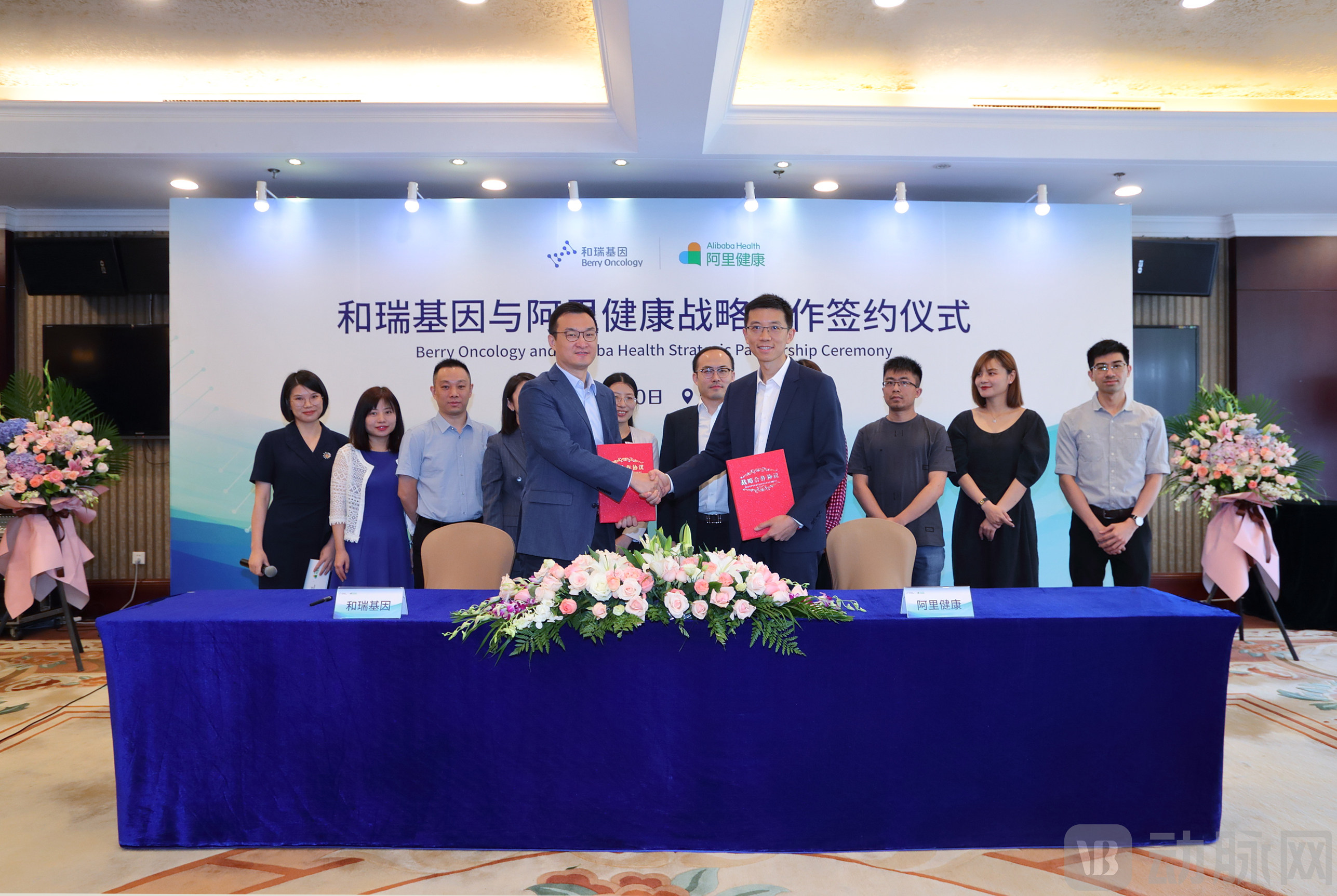
June 20, 2021,Berry Oncology and Alibaba Health Sign Strategic Cooperation Agreement,Leveraging Berry Oncology’s advantages in the cancer early screening industry, along with Alibaba Health’s medical service capabilities and big data platform strengths,Create an innovative, inclusive healthcare service model for early cancer screening, centered on the integration of “internet platforms + early cancer screening technologies + medical security.”Jointly building an ecosystem for early cancer screening to reduce the incidence of liver cancer, extend the survival period and improve the quality of life for liver cancer patients, in response to the call of the "Healthy China 2030" Planning Outline.
Cancer has become one of the major public health issues threatening global human health. According to the latest 2020 data on the global cancer burden released by the International Agency for Research on Cancer (IARC) of the World Health Organization, there were 19.29 million new cancer cases and 9.96 million cancer deaths worldwide in 2020. The situation of cancer prevention and control in China is even more severe, with 4.57 million new cancer cases in 2020, accounting for 23.7% of the global total, and 3 million cancer deaths, ranking first in the world.
Early cancer screening is a powerful means of reducing cancer incidence and mortality. The U.S. early cancer screening market started earlier, with Exact Sciences’ product Cologuard approved for marketing as early as 2014 and included in medical insurance coverage. Thanks to mature early cancer screening products and a comprehensive healthcare system, the latest annual statistical report from the American Cancer Society in 2020 showed that cancer mortality in the United States decreased by 29% from 1991 to 2017.
The success of the United States in the cancer early screening industry offers valuable lessons for China, as the development models, product strategies, and commercialization pathways of most domestic enterprises bear similarities to those of U.S. listed companies.
However, it should be noted thatChina differs from other countries in multiple aspects, including the spectrum of high-incidence cancers, payers, and the clinical ecosystem.For instance, regarding high-incidence cancer types, liver cancer ranks sixth globally in terms of cancer-related deaths, whereas in China, it ranks second, surpassed only by lung cancer. Consequently, the demand for early screening products for liver cancer is more urgent in China. In terms of payment mechanisms, while many countries have incorporated cancer early screening into their national health insurance systems, China still relies primarily on out-of-pocket payments, which to some extent limits the accessibility and coverage of cancer early screening. Within the clinical ecosystem, public hospitals dominate in China, making hospital-based patients a primary target for one of the key business models of early screening products.
Therefore,It is imperative to develop a China-specific solution for early cancer screening, tailored to the country’s actual conditions regarding high-incidence cancer types and payment systems.
As a pioneer in early cancer screening in China,At the 2020 CSCO Annual Meeting, Berry Oncology first proposed its vision: “Over the next 3–5 years, establish early screening programs for major high-risk, high-incidence cancers in China and deliver comprehensive cancer early-screening solutions for the Chinese market.”Over the past year, the company has actively collaborated with a wide range of partners, including insurance providers, internet companies, and oncology imaging enterprises, to jointly develop a Chinese solution for early cancer screening and improve the early cancer screening ecosystem. In March 2021, Berry Oncology entered into multiple collaborations with Hiscaler, Taikang Online, and Anhua Agricultural Insurance, focusing on the widespread application of early liver cancer screening and maximizing benefits for high-risk populations in areas with high tumor incidence, thereby establishing an accessible, shared, and sustainable tumor early-screening ecosystem. On June 11, Ali Health officially launched the “Chronic Disease Protection Plan,” with Berry Oncology as a partner, jointly introducing China’s first million-yuan medical insurance protection service integrating “medical care + pharmaceuticals + insurance” specifically for hepatitis B patients.
This strategic partnership with Alibaba Health represents another major step by Berry Oncology in building a Chinese solution for early cancer screening. It is understood that,The two parties will collaborate extensively across multiple domains, including medical product services, disease prevention, health management services, claims settlement systems, science popularization, and big data healthcare, to create an innovative, inclusive healthcare service model for early cancer screening centered on the integration of “internet platforms + early cancer screening technologies + medical security.”Promote the shift of treatment to earlier stages to reduce cancer incidence and mortality.
Among them,In terms of medical services,Leveraging Berry Oncology’s early liver cancer screening product, “Lesining” (search for “Lesining” on Taobao to purchase directly from the pharmacy), both parties will establish an integrated online-offline health service model, providing a comprehensive, full-course solution for individuals at high risk of liver cancer that encompasses prevention, screening, treatment, and rehabilitation.In terms of medical security,Both parties will provide users with a multi-tiered health protection and claims settlement system, with “Laisining” serving as a key component of the value-added insurance services.In terms of market education,Both parties will collaborate on science popularization and awareness campaigns to enhance public understanding of early cancer screening and encourage more individuals to undergo proactive screening.
Chen Bo, Vice President of Alibaba Health, stated, “Leveraging Alibaba Health’s comprehensive medical service capabilities across all scenarios, along with Berry Oncology’s highly specific genomic testing technology and large-scale clinical studies, this further collaboration represents a thorough exploration of disease coverage services. We will harness technological innovation to design new models of health management targeting a broader range of diseases.”
Zhou Jun, CEO of Berry Oncology, stated, “This collaboration will deliver a synergistic effect where 1+1>2. Both parties will leverage their respective strengths to provide patients and their families with comprehensive services encompassing ‘platform + technology + medical care + coverage’ to the greatest extent possible.”For Berry Oncology, building a Chinese solution for early cancer screening, prevention, and treatment requires integrating forces from all aspects, ranging from commercial to clinical, and from technology to industry.Today's collaboration is an important step.“In the future, the company will continue to deepen and broaden its collaboration with partners, expand its portfolio of early cancer screening products, inject new momentum into the research and development of early screening for high-incidence, high-risk cancers in China, and work hand in hand with ecosystem partners to fulfill the mission of ‘achieving early diagnosis and early treatment for all cancers.’”
Berry Oncology holds first-mover advantages and deep technical expertise in the field of early cancer screening. It is a key participant in advancing China’s approach to early cancer detection and a major contributor to building the early cancer screening ecosystem. Efforts to develop this ecosystem are steadily progressing. Looking ahead, Berry Oncology will continue to deepen its engagement in the early cancer screening market, strengthen the ecosystem, and promote greater accessibility to early cancer screening.