

Desun Yunsing Medical: Pioneering AI-Driven Ultrasound Diagnostics in China's 2-Billion-Annual-Examination Market
Across the medical field, ultrasound stands out as one of the fastest, safest, and more affordable diagnostic tools available to practicing physicians. It serves as a primary entry point for hospital diagnostics, naturally lending itself to the broadest range of clinical applications.
According to 2018 statistical data from the China Association of Medical Equipment, the installed base of ultrasound systems in China was approximately 190,000 units, far exceeding that of DR (55,000 units), CT (22,000 units), endoscopes (20,000 units), and MRI (9,255 units).
A large installed base corresponds to a high-value market. Data show that approximately 2 billion ultrasound examinations are performed annually in China, with the overall market size reaching hundreds of billions of yuan—several times the combined total of other radiology sectors. Taking breast cancer, the most common malignancy among Chinese women, as an example, the age-standardized rate (ASR) in China is 21.6 cases per 100,000 women, indicating substantial demand for ultrasound screening.
Following market dynamics, a large market size inevitably attracts a multitude of enterprises. In reality, however, while there are hundreds or even thousands of ultrasound hardware manufacturers, software developers providing auxiliary support remain few and far between. Compared with other imaging modalities, AI applications for CT and MRI have witnessed successive waves of development, whereas only a handful of startups have ventured into AI research in ultrasound.
The development of AI for ultrasound faces inherent technical barriers that hinder market entry by companies. Unlike static CT and MRI images, ultrasound images are dynamic and real-time. This means that image acquisition and diagnosis are temporally separated in radiology, whereas ultrasound diagnosis requires both operations to be performed simultaneously. Furthermore, while radiological images are standardized, ultrasound images are non-standardized. Coupled with lower resolution and the presence of artifacts, these factors make the development of ultrasound AI products significantly more challenging than that of radiology AI.
Founded in 2013, Zhejiang Deshang Yunxing Medical Technology Co., Ltd. (hereinafter referred to as “Deshang Yunxing”) is the earliest enterprise in China engaged in AI ultrasound research. It took the company three years to overcome the challenge of AI-assisted ultrasound diagnosis.
On June 18, 2021, the “Inaugural Conference of the Imaging and Interventional Specialty Alliance of the Affiliated Hospital of North Sichuan Medical College” and the “Launch Ceremony of the Multicenter Study on Ultrasound-Based AI for Breast Imaging” were held in Sichuan Province, with Deshang Yunxing serving as a co-organizer. Supported by this multicenter study, ultrasound AI will be better adapted for diagnostic applications in primary healthcare settings. Furthermore, through the platform’s standardization of ultrasound data protocols, imaging resources from primary care institutions will be effectively utilized, thereby further enhancing the diagnostic accuracy of ultrasound AI.
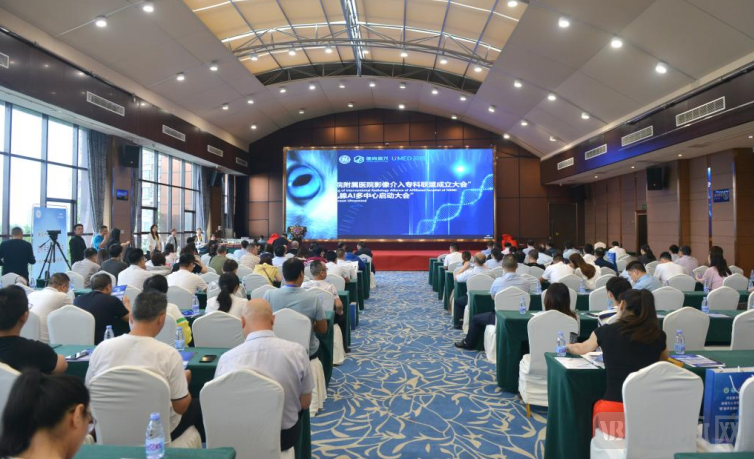
Primary care hospitals represent a critical application scenario for AI and underscore the significance of multicenter studies on breast ultrasound AI. In this regard, Deshang Yunxing has repeatedly collaborated with primary healthcare institutions to screen community residents for lesions such as thyroid and breast nodules. In 2019, Deshang Yunxing’s AI-powered ultrasound diagnostic system was deployed in 12 street-level community health service centers in Xihu District, Hangzhou, resulting in a doubling of the number of residents served by AI-assisted ultrasound clinics within one year.
“Unlike static CT images, the normalization and standardization of ultrasound diagnosis have long remained unresolved issues, heavily testing physicians’ experience and judgment. For example, different doctors may arrive at different diagnostic conclusions for the same patient, with such discrepancies sometimes being substantial. In other words, quality control in ultrasound examinations is extremely challenging,” Professor Kong Dexing, Chief Scientist at Deshang Yunxing, told VCBeat.
To address this issue, the first step is to acquire a vast amount of standardized and annotated medical images to construct a training dataset. The second step involves developing deep learning algorithms capable of accurately extracting ultrasound features, which can then be trained on the dataset to gradually generate an AI model with diagnostic capabilities for ultrasound imaging.
To construct a high-quality dataset, Deshang Yunxing has engaged in deep collaboration on AI ultrasound data with the Zhejiang Qiushi Institute of Mathematical Medicine, which builds and operates the only “National Medical Imaging Standard Database” under the National Health Commission. Together with physicians from top-tier hospitals, they have meticulously annotated the features of ultrasound images one by one. These ultrasound image datasets are characterized by exceptionally high quality standards, with volumes reaching the tens of millions—far exceeding those of industry peers. After all, AI emerges from high-quality data and expert clinicians; only by securing such fertile “soil” of robust data can the cultivation of high-performance AI be possible.
With the promulgation of the Data Security Law of the People's Republic of China on June 10, AI R&D enterprises like Deshang Yunxing, which possess substantial volumes of lawful, compliant, and high-standard data, will undoubtedly establish a profound competitive moat in the future.
Next is the algorithm. Taking breast cancer detection as an example, both mammography and ultrasound are effective methods for early screening. However, for AI, there is a generational technological gap between processing mammographic images and ultrasound images, representing a leap from two-dimensional to three-dimensional imaging.
Deshang Yunxing’s superior algorithmic advantages stem primarily from the “mathematician’s DNA” of its Chief Scientist, Professor Kong Dexing. A postdoctoral fellow at Harvard University, Professor Kong studied under the internationally renowned mathematician and Fields Medalist, Professor Shing-Tung Yau. He pioneered the disciplinary concept of “Mathematical Medicine” on the global stage and has been hailed by the Chinese Medical Association as “the pioneer of artificial intelligence in Chinese ultrasound medicine.” The project “Mathematical Theories and Techniques for Precise Analysis of Medical Imaging,” led by him, was approved as a Major Project of the National Natural Science Foundation of China (NSFC) in 2020. This marked the first time in the 34-year history of the NSFC that Zhejiang Province had secured a Major Project in the discipline of mathematics. The successful approval of this Major Project also signifies China’s forward-looking strategic layout in the field of Mathematical Medicine, promoting multidisciplinary cross-cutting and comprehensive research to enhance the country’s source innovation capabilities in this domain.
DE-LIGHT, a deep learning framework independently developed by Deshang Yunxing, is fully aligned with the needs of ultrasound AI. This framework establishes a novel image processing and analysis approach that integrates deep learning theory with variational energy functional methods. By innovatively introducing new concepts such as rotation-invariant network layers and Split dropout, it effectively balances accuracy, sensitivity, and real-time performance.
In recognition of these outstanding achievements, the Deshang Yunxing Algorithm Team has consecutively received prestigious honors, including the Second Prize for Scientific and Technological Progress from the Ministry of Education and the Best Paper Award from the International Association for Pattern Recognition. The team’s innovative machine learning research has been published at top-tier academic conferences such as ICML and NeurIPS (formerly NIPS) and has been cited by the Google DeepMind team.
In this regard, Yan Yeen, Executive CEO of Deshang Yunxing, stated, “It is crucial to have one’s own algorithmic framework. Currently, the vast majority of companies rely on open-source algorithms, particularly in the field of ultrasound, where very few enterprises possess proprietary algorithms. Unlike other radiology AI applications, ultrasound AI is heavily dependent on independently developed algorithmic frameworks, as these are closely linked to the accuracy and real-time performance of analytical products.”
We often say it is “Healthcare + AI,” not “AI + Healthcare.” In other words, the development of AI must be grounded in the genuine needs of healthcare. When designing products, Deshang Yunxing has strictly adhered to this principle.
Currently, Deshang Yunxing’s AI products have established a comprehensive, closed-loop integration of software and hardware, spanning from ultrasound diagnosis to treatment. In the diagnostic field, offerings include AI software systems for thyroid, breast, carotid artery, and pelvic floor ultrasound, as well as intelligent hardware such as automated ultrasound scanning robots. In the therapeutic field, solutions encompass AI software systems for minimally invasive interventional procedures and intelligent hardware in the form of robotic systems for minimally invasive interventions.
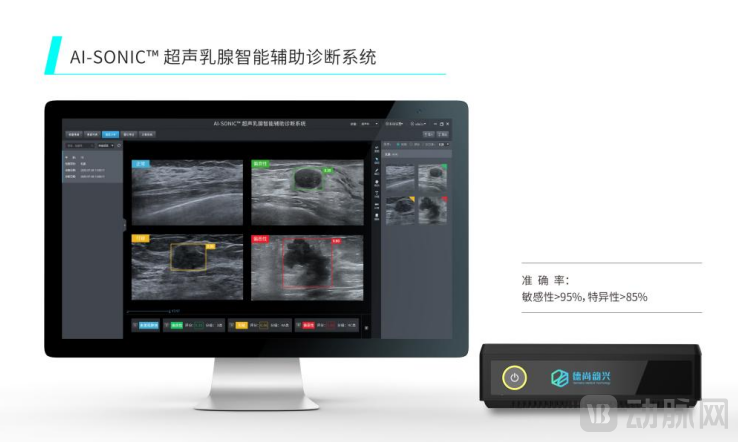
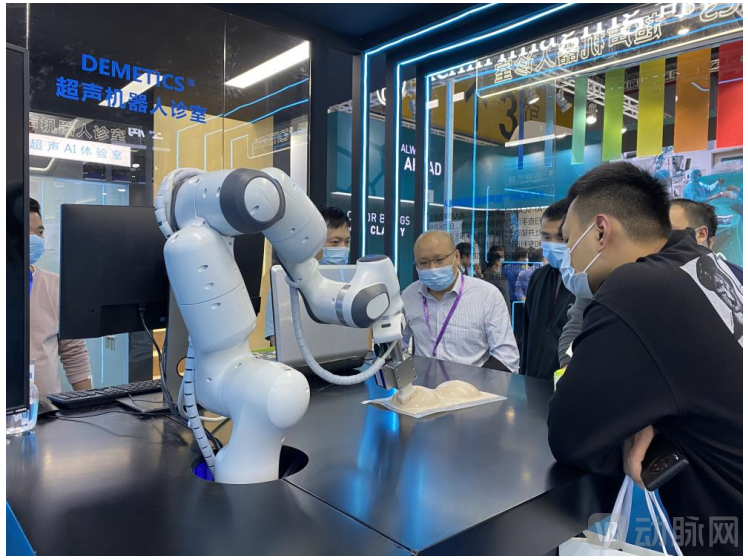
Unlike other AI software companies, Deshang Yunxing achieved breakthroughs in intelligent medical hardware at an early stage. During the 2020 China International Medical Equipment Fair (CMEF), Deshang Yunxing showcased its independently developed Demetics Automated Ultrasound Scanning Robot, which remains the only AI-powered automated ultrasound scanning robot worldwide.
Academician Pan Yunhe, Executive Vice President of the Chinese Academy of Engineering, highly praised Deshang Yunxing’s ultrasound AI products at the World Artificial Intelligence Conference, stating that “this represents a significant opportunity for Chinese medical equipment to reach the global forefront.” Professor Liang Ping, current Chair of the Ultrasound Branch of the Chinese Medical Association and Director of the Department of Ultrasound Intervention at the PLA General Hospital, noted in clinical textbooks that Deshang Yunxing’s ultrasound AI products “can provide physicians with a second objective opinion and alleviate their heavy workloads, thereby avoiding misdiagnoses caused by excessive fatigue. Furthermore, for physicians with limited clinical experience, diagnosing thyroid nodules becomes easier and more reproducible.” Research papers published by the ultrasound team at Shanghai Changzheng Hospital also stated: “After nearly two years of clinical application and validation, the sensitivity, accuracy, and specificity of Deshang Yunxing’s ultrasound AI system in differentiating benign from malignant nodules are consistent with the findings of senior physicians using conventional ultrasound, suggesting its potential as a reliable auxiliary tool for preoperative assessment of nodule malignancy.”
Regarding the next steps for Deshang Yunxing’s development, Chief Scientist Kong Dexing stated, “Currently, we are focusing on the research, development, and production of automated ultrasound scanning robots and interventional surgical robots. Following the development direction of integrated intelligent ultrasound hardware and software, as well as integrated intelligent ultrasound diagnosis and treatment, we will continue to deepen our expertise in the field of ultrasound AI, expand coverage of core disease indications, and provide AI-driven diagnostic and therapeutic services and product solutions that truly address clinical needs.”
Grasping market needs indicates the potential for practical implementation; however, transitioning from implementation to commercialization requires AI enterprises to exert effort across multiple fronts. Addressing the challenge of commercialization, Deshang Yunxing has adopted diverse pathways and achieved numerous industry innovations.
Across the entire medical AI industry, ultrasound AI was the first to secure provincial-level pricing approvals. It has already been implemented in multiple provinces and is expected to continue gaining additional provincial pricing approvals. As a result, Deshang Yunxing has pioneered an AI business model based on per-patient fees, outpacing other AI companies, and has thereby achieved scalable revenue.
More notably, Deshang Yunxing has innovatively decoupled end-users from AI payers, successfully establishing leading domestic and international ultrasound and surgical equipment manufacturers as deep strategic partners. By bundling its AI products with these manufacturers’ offerings for direct sales to large enterprise clients, the company has emerged as a benchmark AI enterprise that has achieved breakthroughs in penetrating the large B2B customer segment. Collaboration with these top-tier equipment manufacturers marks a significant milestone in Deshang Yunxing’s transition from R&D to practical application. Leveraging the substantial market share of these industry giants, Deshang Yunxing is poised to accelerate the deployment and adoption of its AI solutions.
Currently, Deshang Yunxing is on the verge of obtaining the industry’s first Class III medical device registration certificate for ultrasound AI. In other words, Deshang Yunxing’s long-standing commercial strategy is poised to enter a harvest season.
On this point, Fosun Pharma, as a long-standing shareholder, has full confidence. According to Yu Jing, Head of PE Investment at Fosun Pharma, Deshang Yunxing is on a fast track and is highly likely to grow into a company with a market capitalization of RMB 100 billion in the future. Furthermore, the ultrasound diagnostics sector offers extensive and broad opportunities, with strong momentum driving the development of ultrasound AI. Deshang Yunxing has entered a massive market serving as a high-traffic gateway, handling billions of diagnostic patient visits annually in hospitals. It covers the entire process from diagnosis to treatment, while also addressing significant demand and market potential for digital and intelligent iterative upgrades. However, the threshold and challenges for developing ultrasound AI products are substantial, rigorously testing all participants, whether they are startups or well-known large equipment manufacturers both domestically and internationally.
“Deshang Yunxing is currently the most comprehensively capable competitor we have observed, demonstrating advanced and differentiated capabilities within the industry. It possesses rare competitiveness in areas such as standardized medical imaging big data resources and the performance of its self-developed algorithm frameworks. Meanwhile, this competitor is moving at a remarkable pace, with its productization progress and scalable commercialization capabilities already fully validated. The R&D and innovation prowess of its mathematician team, combined with a product-oriented mindset and market-driven culture, along with the team’s efficient execution, are accelerating the company’s growth. We are also highly optimistic about the company’s future direction toward integrated hardware-software solutions and unified diagnosis-and-treatment systems, aiming to develop ultrasound AI and robotic products that deliver clinical-grade applications tailored for real-world clinical medical environments.”
Recent policies have provided support for the development of ultrasound AI. On April 30, 2021, the General Office of the Shanghai Municipal People’s Government issued the “Several Opinions on Promoting the High-Quality Development of the City’s Biopharmaceutical Industry,” which stated that pilot programs for the procurement of artificial intelligence (AI)-assisted diagnostic systems would be launched. These pilots would allow participating hospitals to contractually purchase technical services from providers for AI-assisted diagnostic systems that have obtained Class III medical device registration certificates. Participating hospitals purchasing these services should conduct health economic evaluations of their clinical application outcomes, pay providers based on the number of system uses, and implement an annual cap on total payments.
With dual support from the government and hospitals, ultrasound AI now possesses all the essential elements for robust growth. Ultrasound AI can enhance diagnostic accuracy and improve the work efficiency of doctors and nurses; however, how can improvements in user efficiency and capabilities be translated into greater economic benefits for AI enterprises?
Commercialization is a widespread challenge in the medical AI industry, but Deshang Yunxing has taken the lead in achieving a commercial breakthrough. The company has identified a rapidly scalable business model and already realized sales at the tens of millions level. Through innovation, Deshang Yunxing has successfully implemented a per-visit fee structure and bundled sales strategies targeting large-scale key B-end clients, establishing a scaled proprietary sales system. Looking ahead, the company will intensify its commercial expansion efforts and has the potential to become a successful exemplar of commercial innovation in the current medical AI landscape.
From this perspective, Deshang Yunxing’s next key focus will remain on R&D and commercialization. Under the DRG payment system, how to leverage AI technology to help hospitals improve efficiency and profitability will be a critical challenge for the company in the future.