

Revenue Soars by 50%: Decoding the Prospects of Medical AI from Airdoc's Prospectus

Airdoc
Retinal Imaging Artificial Intelligence Field Product Developer
On June 21, 2021, Airdoc officially filed its draft prospectus with the Hong Kong Stock Exchange. As a star company that has completed seven rounds of financing totaling over RMB 800 million in just six years since its establishment, and holds an NMPA Class III AI medical device certificate, every move by Airdoc has drawn significant industry attention. VCBeat (WeChat ID: Vcbeat) also provided an immediate interpretation of the draft prospectus.
On multiple public occasions, including in the Chairman’s Letter of this prospectus, Zhang Dalei, Founder and Chairman of Airdoc, has reiterated the original motivation behind founding the company: In 2015, after a family member was misdiagnosed and missed the optimal treatment window, Zhang Dalei decided to co-found Airdoc with his partners.
In a media interview, Zhang Dalei once mentioned that the company name “Airdoc” carries a meaningful connotation: he hopes that quality medical services can be as accessible as air, available to everyone. He also expressed his aspiration for the company’s products to become an essential part of individuals’ daily lives.
However, in reality, China currently faces a shortage of health service resources. As the population ages, the number of individuals with chronic diseases continues to rise. Taking diabetes, the most prevalent condition, as an example, there were 463 million patients aged 20 to 70 worldwide in 2020; among them, the number of diabetic patients aged 18 and above in China reached as high as 124.3 million.
A major contributor to the high prevalence of diabetes is patients’ insufficient attention to the disease and failure to undergo regular screening, thereby missing the optimal window for diagnosis and management. Overall, China faces significant challenges characterized by low rates of awareness, diagnosis, treatment, and treatment goal attainment among the general population, with an even lower proportion undergoing standardized screening for complications. It is estimated that the awareness rate of diabetes in China is only 43.3%, while the control rate stands at a mere 32.2%.
Furthermore, diabetes in China is showing a trend of rapid growth. According to Frost & Sullivan, the estimated prevalence of diabetes in China increased from 9.7% in 2008 to 11.2% in 2020. Since early-stage diabetic retinopathy is typically asymptomatic, approximately 90% of diabetic retinopathy cases in China (estimated at over 33.6 million people) remained undiagnosed in 2020, with a diagnosis rate of less than 10%.
Against this backdrop, Airdoc has set its goal to become the largest provider of AI-assisted chronic disease management solutions, offering early detection and assisted diagnosis through AI-based retinal image recognition to a vast user base, while providing health risk assessment solutions for healthy individuals.
As revealed in the prospectus, Airdoc’s product portfolio comprises three major segments: artificial intelligence software as a medical device (SaMD) for detection and assisted diagnosis, health risk assessment solutions, and proprietary hardware devices. Among these, the SaMD represented by the Airdoc-AIFUNDUS solution is the company’s most renowned product line.
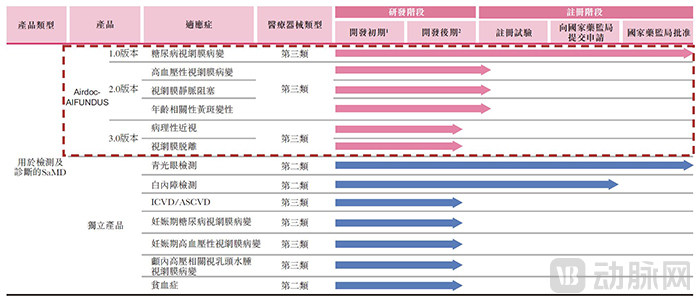
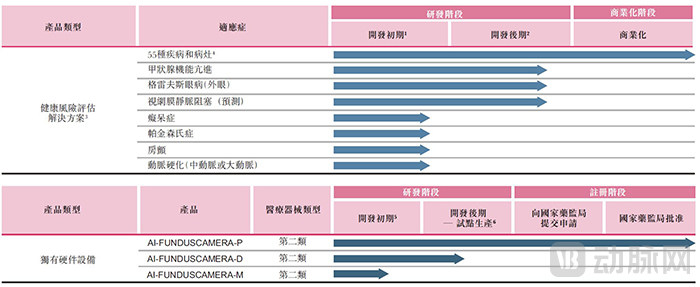
Airdoc’s Three Major Product Lines (Image Source: Prospectus)
Airdoc-AIFUNDUS Solution enhances traditional early detection and assisted diagnosis of chronic diseases through retinal imaging, multimodal data analysis, and artificial intelligence deep learning algorithms, enabling non-invasive, accurate, rapid, efficient, and scalable screening and diagnosis of chronic diseases in medical institutions and general health service providers.
The most distinctive feature of this solution is its ability to detect early retinal abnormalities indicative of disease, thereby significantly facilitating early diagnosis and intervention. Typically, patients need only spend about one minute undergoing fundus photography, after which they can quickly receive an assessment report detailing risks for multiple diseases.
Physicians may refer to this report when providing diagnoses and medical advice, or use it to determine whether a referral to another department for follow-up consultation is necessary.
Airdoc-AIFUNDUS (1.0) is an AI-based Software as a Medical Device (SaMD) that provides assisted diagnosis of diabetic retinopathy, the most common complication in patients with diabetes. In August 2020, Airdoc-AIFUNDUS received a Class III medical device certificate from the National Medical Products Administration (NMPA), becoming one of the first approved AI-assisted diagnostic products for retinal image recognition and enabling its formal clinical use in hospitals.
Seizing this opportunity, Airdoc has expanded the indications for its Airdoc-AIFUNDUS solution, encompassing both version 2.0 and version 3.0. Airdoc-AIFUNDUS (2.0) is primarily used to assist in the diagnosis of hypertensive retinopathy, retinal vein occlusion, and age-related macular degeneration. Airdoc-AIFUNDUS (3.0) is used to assist in the diagnosis of pathologic myopia and retinal detachment.
According to the prospectus, the 2.0 regimen is scheduled to initiate multicenter clinical trials in the second half of 2021 and apply to the National Medical Products Administration (NMPA) for registration approval of new indications in the first half of 2022. The 3.0 regimen is progressing at a slightly slower pace, with multicenter clinical trials planned to begin in the second half of 2022 and an application for registration approval of new indications to be submitted to the NMPA in the first half of 2024.
According to Frost & Sullivan, the potential patient populations for these indications are projected to reach 62.1 million (hypertensive retinopathy), 9.5 million (retinal vein occlusion), 52.3 million (age-related macular degeneration), 32.3 million (pathological myopia), and 150,000 (retinal detachment) by 2030.
In addition to Airdoc-AIFUNDUS, Airdoc has developed other Software as a Medical Device (SaMD) products to cover conditions such as glaucoma, cataracts, intracranial vascular disease (ICVD), atherosclerotic cardiovascular disease (ASCVD), diabetic retinopathy in pregnancy, hypertensive retinopathy in pregnancy, papilledema-associated retinopathy related to intracranial hypertension, and anemia.
Among these, the glaucoma detection SaMD obtained a Class II medical device registration certificate in June 2020. The cataract detection SaMD submitted its application for a Class II medical device registration certificate in April 2021 and is expected to be approved.
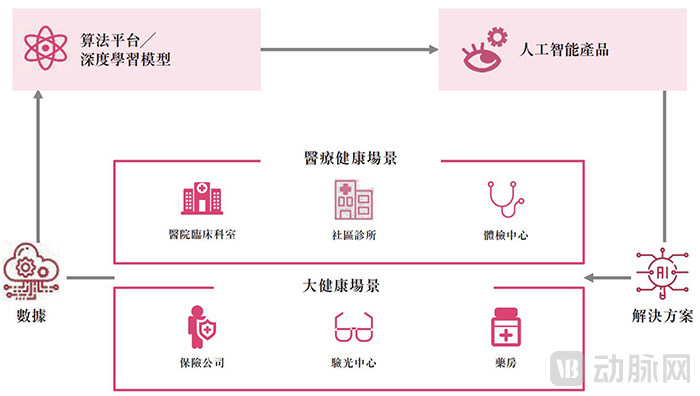
Health Risk Assessment Solution primarily provides users with basic health assessments and risk indicator detection, addressing the diverse healthcare needs of the general population across various settings, including hospitals, community clinics, health examination centers, insurance companies, optometry centers, and pharmacies.
To complement the aforementioned software solutions, Airdoc’s product portfolio includes three self-developed fundus cameras (AI-FUNDUSCAMERA-P, D, and M), thereby enabling a more effective integrated hardware-software solution. The P series obtained Class II medical device registration certification in March 2021, while applications for Class II certification for the other two models are scheduled for submission in the first half of 2022 (D series) and the second half of 2023 (M series), respectively.
Airdoc’s product portfolio clearly demonstrates its strong competitiveness in providing AI-powered retinal imaging solutions for early detection, assisted diagnosis, and health risk assessment. As both a market leader and pioneer, the company has continuously secured medical device regulatory approvals through superior product performance. Furthermore, by integrating its independently developed hardware and software into cohesive solutions, Airdoc has established significant competitive moats, raising market entry barriers to a considerable height.
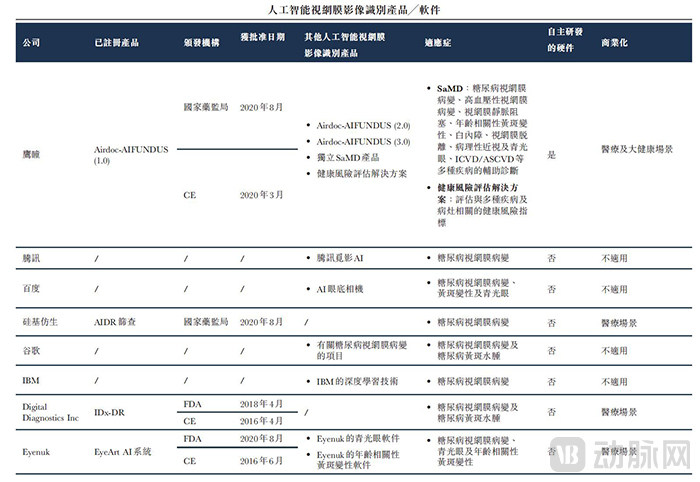
Airdoc Has Outstanding Competitiveness in Its Field (Image from the Prospectus)
On multiple public occasions, Zhang Dalei, Founder and Chairman of Airdoc, has pragmatically emphasized that accurately assessing market demand—specifically the genuine needs and scenarios of doctors and patients—is crucial; meanwhile, the presence of actual payment serves as a key indicator for determining whether such demand is real.
In the Chairman’s Letter of the prospectus, Zhang Dalei clearly stated that Airdoc’s product line would prioritize sectors meeting the following three criteria: First, areas that have been included in medical guidelines and expert consensus statements across various countries, but where the number of physicians proficient in these techniques remains low due to high learning barriers; these areas also feature a broad patient population and a stark imbalance between patients and physicians, resulting in significant supply-demand mismatches. Second, domains where efficacy can be validated through randomized, double-blind, controlled clinical trials, and where algorithms can achieve performance no inferior to that of excellent human physicians, with outcomes being reproducible, verifiable, and quantifiable. Third, fields capable of delivering value and services to each user in real-world practical application scenarios.
This steady and pragmatic approach has kept Airdoc in the spotlight since its inception. Since its founding in 2015, Airdoc has completed seven rounds of financing over six years, raising a total of more than RMB 800 million. As an artificial intelligence company focused exclusively on the healthcare sector, this achievement is remarkable.
| Date | Round | Financing Amount | Investment Institutions |
| 2015-11-17 | Pre-A | RMB 7.5 million | Jiuhe Yunteng, Zhilang Guangcheng |
| 2016-10-10 | Series A | RMB 25 million | Sogou Information, Jiuhe Yunteng, Zhilang Guangcheng |
| 2018-2-22 | Series B | 100 million yuan | Yadong Beichen, Sogou Information |
| 2018-11-30 | Series B+ | RMB 185 million | Ping An Medical Technology, CITIC Capital, CSI Investment, Kaiyan Mingzhi, Ruizhixin |
| 2020-10-23 | Series C | RMB 180 million | Chan Yan Zhongxiang, Xinyu Hangneng, Everbright Health, 3SBio |
| 2020-12-29 | Series C+ | RMB 60 million | Fanghua Investment, Aranya Holdings |
| 2021-4-30 | Series D | RMB 244.325 million | Lilly Asia Ventures (LAV), Perceptive Advisors, OrbiMed, Fullshare Capital |
Airdoc's Historical Financing Rounds
It is worth noting that after multiple rounds of financing, Yadong Beichen, Ping An Healthcare Technology, and Shiji Sisu have become some of the largest shareholders besides the co-founders. They represent Shanghai Fosun, Ping An Group, and Sogou Information, respectively. This also means that Airdoc can benefit from the top-tier resources brought by these major shareholders in the future, achieving rapid growth.
According to the prospectus, Airdoc achieved sales revenue of RMB 47.672 million in 2020. Despite the impact of the COVID-19 pandemic, which caused offline services to remain suspended or subject to capacity restrictions for an extended period, its 2020 sales revenue represented a substantial 56.7% increase compared to RMB 30.415 million in 2019. The several medical device registration certificates approved for Airdoc in 2020 clearly provided strong momentum. Given that these certificates were obtained only in mid-2020, leaving a relatively short period until the December 31, 2020 cutoff date, the company’s financial performance in 2021 is likely to reach new heights.
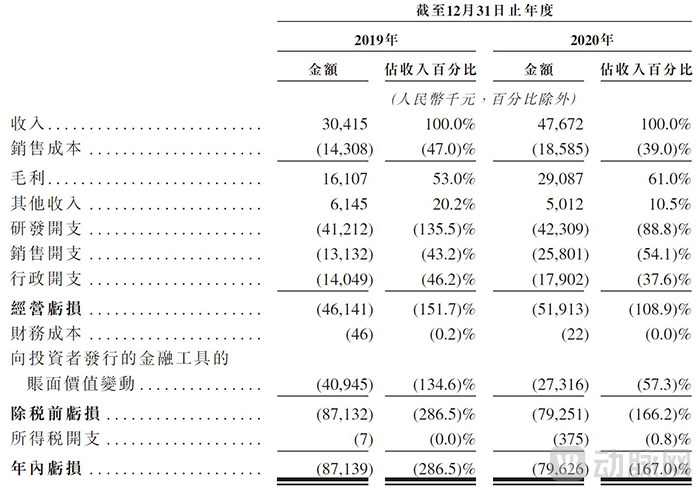
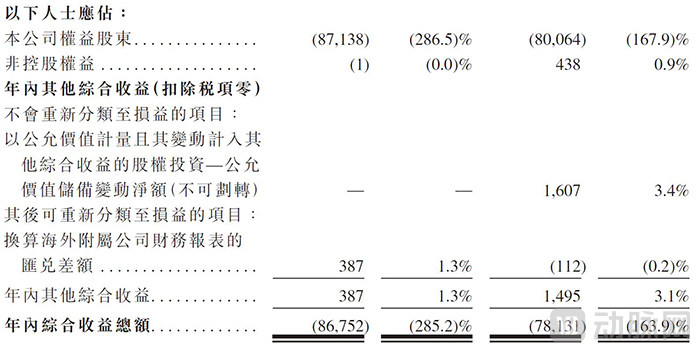
Airdoc 2019-2020 Financial Report (Image from the Prospectus)
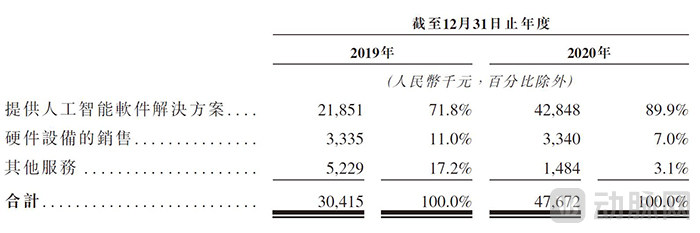
Airdoc’s Revenue Breakdown (Image Source: Prospectus)
Judging from the financial reports disclosed in the prospectus, Airdoc’s revenue demonstrates high quality. Its core business, AI solutions, generated RMB 42.848 million in revenue in 2020, accounting for a substantial 89.9% of total revenue. This represents a significant increase from the 71.8% share contributed by this segment in 2019, with the absolute revenue amount also doubling year-over-year. These figures further corroborate the substantial boost that obtaining NMPA registration certificates provides to the revenue of medical AI companies.
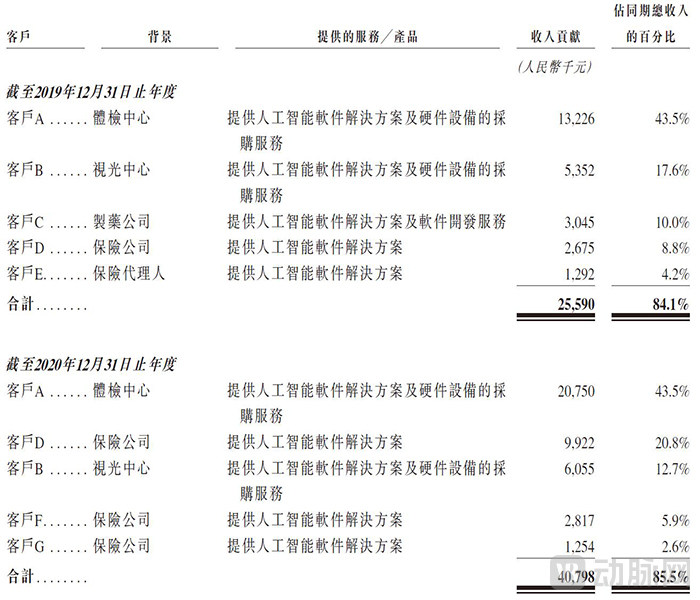
Airdoc’s Top Five Customers Account for a High Proportion of Revenue (Image from the Prospectus)
It is worth noting that Airdoc’s customer base is currently relatively concentrated, with a high proportion of total revenue derived from its top five customers, accounting for 84.1% in 2019 and 85.5% in 2020, respectively. Among these, revenue from the largest customer, a certain health examination center, accounted for 43.5% in both 2019 and 2020.
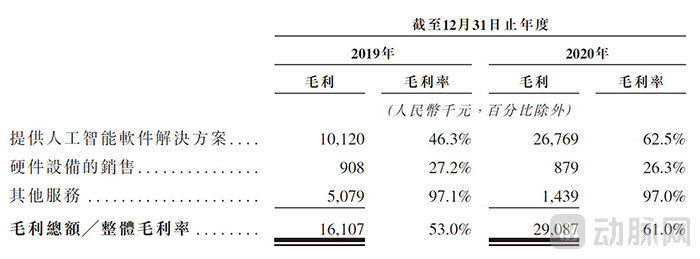
Compared with its peers, Airdoc has demonstrated a solid gross profit margin (Image source: Prospectus)
In terms of gross profit margin, Airdoc’s artificial intelligence business achieved a gross margin of 62.5% in 2020, representing a significant increase from the 46.3% recorded a year earlier. Compared with the gross margins disclosed by other AI companies, Airdoc’s performance is at a relatively high level. Given that Airdoc focuses exclusively on the healthcare sector, unlike many other AI enterprises, this achievement is particularly noteworthy.
Of course, like nearly all AI startups, Airdoc has not yet achieved profitability. However, following strong business growth in 2020, its annual net loss decreased from RMB 87.139 million in 2019 to RMB 79.626 million in 2020. Meanwhile, after completing its latest round of financing, the company still holds more than RMB 370 million in cash on hand, sufficient to sustain operations for a considerable period.
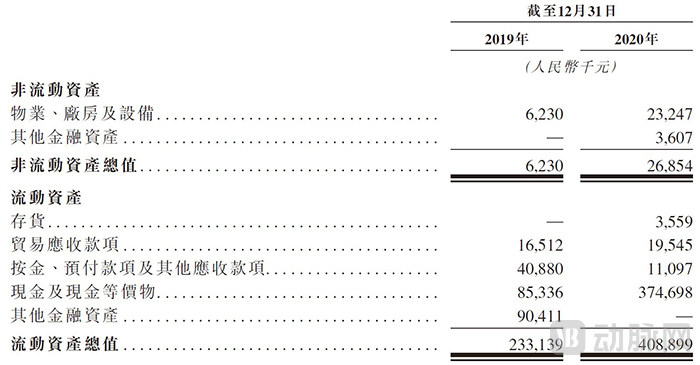
Airdoc Has Sufficient Cash on Hand (Image from Prospectus)
China's AI medical imaging market has experienced rapid growth in recent years, with its market size estimated to increase from RMB 300 million in 2020 to RMB 92.3 billion in 2030, representing a compound annual growth rate (CAGR) of 76.7%. Among these, the market for computer-aided diagnosis, which assists physicians in disease detection and diagnosis, accounted for approximately 86% of the AI medical imaging market in 2020.
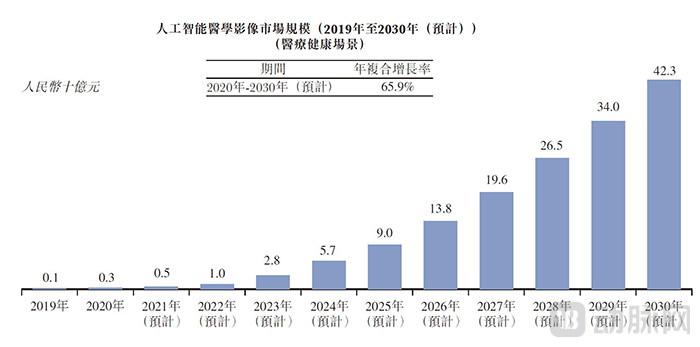
Market Size of AI Medical Imaging in Healthcare Scenarios (Image Source: Prospectus)
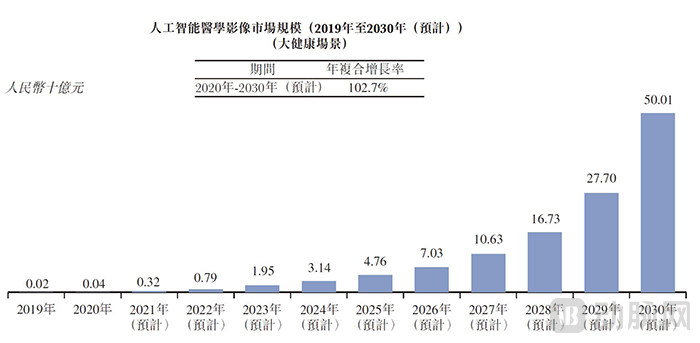
Market Size of AI Medical Imaging in the Big Health Sector (Image from Prospectus)
Meanwhile, in the broader health and wellness sector, AI-powered medical imaging is primarily used for health risk assessment. Currently, a significant amount of demand remains unmet; this market segment is projected to grow at a compound annual growth rate (CAGR) of 102.7% from 2020 to 2030, outpacing the growth of AI medical imaging in the clinical healthcare setting.
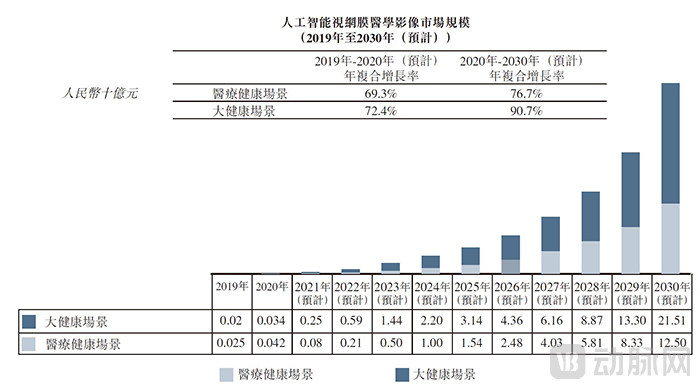
Total Market Size of AI Medical Imaging (Image Source: Prospectus)
Undoubtedly, this is a huge market, but for a long time, medical AI companies have struggled to make profits. An important reason is China's strict regulations—hospitals cannot purchase corresponding products without obtaining a medical device registration certificate. This has led to a stagnation in the promotion of medical AI.
Since the NMPA issued the first Class III medical device certificate for artificial intelligence at the end of 2019, this longstanding industry challenge has been significantly alleviated.
Secondly, selecting appropriate indications is also crucial for medical AI companies. In the early stages, many companies flocked to various nodule screening applications, but actual market demand differed somewhat from this trend. Chronic diseases, including diabetes and cardiovascular diseases, are common causes of death among individuals aged 60 and above. Many chronic conditions, such as diabetes, hypertension, and cerebrovascular and cardiovascular diseases, leave distinct markers on the retina. By using retinal imaging technology to detect these markers, physicians can treat potential diseases earlier, more successfully, and at a lower cost. In comparison, the market potential in these areas may be significantly broader.
Airdoc has garnered significant enthusiasm since its founding precisely because it meets both of these criteria. So, having completed the tasks of its first phase, how will Airdoc “capitalize on its momentum” moving forward?
The prospectus discloses that Airdoc will adopt five major strategies to position itself for the future. The first is to enhance brand awareness and strengthen its influence in healthcare scenarios. Rapidly increasing the penetration rate of its solutions in healthcare settings is of paramount importance. Airdoc plans to initially cover large hospitals with significant industry influence in China by establishing diagnostic workstations for AI-based retinal image recognition, and then gradually expand to primary healthcare institutions. This approach aims to address the current lack of chronic disease diagnostic capabilities at most primary care facilities, thereby driving sales growth. As a result, both the amount and proportion of its selling expenses increased significantly in 2020.
Second, Airdoc will continue to expand its penetration in customized large-health scenarios tailored to end-customer needs. From the perspective of actual payers, Airdoc plans to enhance the appeal of its health assessment solutions to insurers, optometry centers, and pharmacies. By further expanding the coverage of diseases and lesions in its health risk assessment solutions, and by developing capabilities to monitor and evaluate the long-term health status and chronic disease risks of insured individuals, Airdoc aims to help insurers better understand customer health profiles and offer customized insurance products.
In addition, it is also essential to further expand the application of its solutions in the broader health and wellness sector through strategies such as developing personal and family health monitoring applications and collaborating with the government on publicly funded healthcare projects.
Third, rapidly advance the development of its product portfolio to enrich its solutions for early detection, assisted diagnosis, and health risk assessment using AI-based retinal image recognition. Airdoc will continue to focus on R&D, regulatory registration, and commercialization to further strengthen its product portfolio.
Fourth, continue to invest in R&D technologies to improve deep learning algorithms, data capabilities, and service scalability. According to the prospectus data, Airdoc is a company that places significant emphasis on research and development. In 2019, its R&D expenditure accounted for 135.5% of its revenue, indicating a high R&D intensity. In 2020, R&D expenses remained relatively stable; although the proportion of R&D spending to revenue decreased as revenue grew, it still reached a substantial level of 88.8%.
Currently, Airdoc holds 134 patents and patent applications, including 22 granted patents and 112 patent applications in China, as well as six published PCT applications. In addition, the company owns 50 granted software copyrights in China.
Fifth, strategically seek collaboration, investment, and acquisition opportunities to drive long-term growth. Airdoc aims to achieve horizontal and vertical business integration in the future through partnerships, collaborations, investments, and acquisitions. Horizontally, it will partner with AI technology companies specializing in cardiovascular and neurological diseases; vertically, it will focus on raw material suppliers, biosensor companies, and medical device manufacturers to further enhance its integrated solutions.
As a highly anticipated medical AI enterprise, how will Airdoc perform once it goes public? Will it set new records in the field of medical artificial intelligence? We shall wait and see.