

Insilico Medicine Secures $255 Million Series C Funding to Advance AI-Driven Drug Discovery and Clinical Pipeline

InSilico Medicine
Intelligent Drug Development Platform and New Drug Research and Development Provider
Recently,AI drug discovery company InSilico Medicine announces completion of $255 million Series C financing round,The lead investor was Warburg Pincus, with participating investors including existing investors Qiming Venture Partners, Lantern Capital, SITO Capital, Lilly Asia Ventures, Sinovation Ventures, BOLD Capital Partners, Formic Ventures, and BV Baidu Fengtou, as well as new investors CPE Yuanfeng, OrbiMed, Mirae Asset Financial Group, Boston Consulting Group’s B Capital Group, Deerfield Management, Maxstar Investments, ClearPool Capital, Uni-President International Development under the Uni-President Group, Sequoia Capital China, and Ruizhi Capital.
The proceeds from this financing will primarily be used to advance the company’s current therapeutic programs into human clinical trials, initiate new drug discovery projects targeting novel and challenging targets, and further enhance its artificial intelligence and drug R&D capabilities.
As an AI-driven drug discovery company, InSilico Medicine’s core technology leveragesDeep generative models, reinforcement learning, transformers, and other modern machine learning techniquesto generate novel molecular structures with specific properties and predict clinical trial outcomes, thereby accelerating the new drug development process.
Since its founding in 2014, InSilico Medicine has secured significant investments from prominent backers, including WuXi AppTec, Qiming Venture Partners, Lilly Asia Ventures, Shdao Capital, and Sinovation Ventures. Whether in terms of market entry timing, technological accumulation, or strategic depth, InSilico Medicine has firmly established itself as a leading player in the AI-driven drug discovery sector.
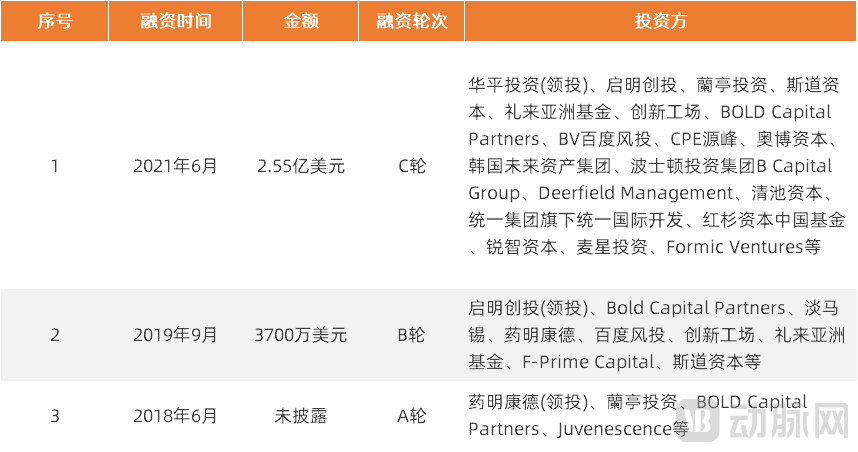
Overview of InSilico Medicine's Historical Financing
With the completion of this financing round, InSilico Medicine will continue to advance its novel-mechanism idiopathic pulmonary fibrosis program into clinical trials. By leveraging its proprietary artificial intelligence platform to develop additional programs, the company aims to further validate and enhance the efficiency of its AI engine while rapidly advancing its internal pipeline. Furthermore, through active external collaborations and feedback, InSilico Medicine seeks to achieve continuous optimization of its platform.
As is well known, the three major challenges facing the field of new drug development are its long development cycle, low success rate, and high R&D costs. The successful launch of a new drug requires not only substantial investments of time, human resources, material resources, and financial capital, but also a rare element of luck. According to rough estimates, it takes an average of $2.6 billion and up to 10 years of research and development for a pharmaceutical company to successfully bring a new drug to market.
Artificial intelligence technologies, represented by deep learning, have alleviated some of the challenges facing new drug development by virtue of their powerful capabilities in discovering relationships and performing computations. MIT Technology Review named “AI for molecular discovery” one of its “10 Breakthrough Technologies of 2020.” InSilico Medicine was among the companies prominently highlighted for this technology.
As a leader in the field of AI-driven drug discovery, InSilico Medicine has achieved significant breakthroughs this year in advancing new drug development through artificial intelligence technologies. In March 2021, InSilico Medicine announced that it had successfully integrated biology and chemistry by leveraging multiple interconnected deep learning models and other advanced AI techniques, thereby identifying a novel biological target and generating molecules capable of acting onIdiopathic Pulmonary Fibrosis (IPF)A novel small molecule for this highly refractory disease.
Remarkably,From disease hypothesis to preclinical candidate drug, InSilico Medicine’s entire drug discovery process took less than 18 months and cost approximately $2 million.Compared with the traditional drug discovery process, this achievement is several orders of magnitude faster and costs several orders of magnitude less.
Such remarkable progress would not have been possible without InSilico Medicine’s unwavering commitment and meticulous efforts in the field of AI-driven drug discovery over the past seven years. Since its inception, InSilico Medicine has continuously accumulated large volumes of high-quality data while optimizing and validating its proprietary algorithms, thereby developing three highly efficient artificial intelligence engines:PandaOmics, the new target discovery engine; Chemistry42, the innovative small molecule generation engine; and InClinico, the clinical prediction engine.These AI engines have significantly reduced R&D costs and expenses for InSilico Medicine in its project to discover clinical candidates with novel mechanisms for idiopathic pulmonary fibrosis.
In addition,Dr. Feng Ren, Chief Scientific Officer of InSilico MedicineThe company told VCBeat that since the second half of 2020, it has rapidly built a new drug R&D team comprising more than 30 senior scientists with expertise in biology, medicinal chemistry, computational chemistry, CMC, pharmacodynamics, pharmacokinetics, and safety assessment. The current success of the idiopathic pulmonary fibrosis project is inseparable from the efforts of the company’s new drug R&D team and its close collaboration with artificial intelligence.
InSilico Medicine will further optimize and enrich its artificial intelligence platform, while expanding into other AI-driven drug discovery platforms, including those for the design and evaluation of small-molecule synthesis routes and for PROTAC molecule discovery. These efforts will further expand and enhance the capabilities of its new drug R&D team, providing innovative drugs and therapeutic solutions to address unmet clinical needs in cancer, fibrosis, anti-infectives, immunology, and anti-aging.
InSilico Medicine’s recent breakthrough has once again drawn widespread attention to the field of AI-driven drug discovery. Can the wave of pharmaceutical innovation led by AI technology overcome the significant challenges facing traditional new drug development? To what extent can AI accelerate the emergence of new drugs? Can AI-powered drug discovery make a profound contribution to humanity’s fight against disease? These are questions captivating global attention.
In recent years, to enhance the overall strength of Chinese enterprises in new drug research and development (R&D) and develop truly innovative drugs that benefit people worldwide, the Chinese government has introduced a series of policies to encourage domestic new drug R&D. These measures include accelerating the review and approval process for innovative drugs, facilitating the entry of overseas new drugs into the Chinese market, implementing the Marketing Authorization Holder (MAH) system, and encouraging high-quality innovative drugs to align with international standards. The successive implementation of these significant policies has directly accelerated the development of China’s entire medical industry chain, leading to a surge in domestic innovative pharmaceutical and medical device companies. The future development potential of China’s pharmaceutical industry is clearly immense.
Insilico MedicineCEO Dr. Alex ZhavoronkovShares a similar view. Dr. Alex believes that within the next five years, Chinese innovative drug companies will experience a significant boom, and China will become the global center for pharmaceutical innovation. To this end, InSilico Medicine relocated its headquarters from the United States to China in 2019. Dr. Alex’s assessment may provide strategic direction for the future development of many enterprises.
It is well known that high-quality, standardized, large-scale drug data are particularly crucial for AI-driven pharmaceutical companies, serving as the key determinant of their ability to efficiently and accurately identify drug candidates. InSilico Medicine’s groundbreaking progress stems not only from its years of accumulated expertise in artificial intelligence technologies but also from the robust support provided by high-quality drug data.
InSilico Medicine has established a specialized data team dedicated to collecting and mining publicly available data relevant to the biopharmaceutical industry, including various omics datasets, literature-based data, information on key opinion leaders (KOLs), and details of research projects funded by grants. This team organizes, filters, and formats the data according to company specifications, thereby building a large-scale, high-quality database that supports the company’s artificial intelligence platform development. Meanwhile, active collaborations with external partners and the continuous accumulation of data from in-house research projects have further enriched InSilico Medicine’s database.
Driven by the dual engines of external collaborations and internal R&D pipelines, InSilico Medicine has accumulated more high-quality proprietary data during project execution. This data is fed back into its AI engine for further deep machine learning, continuously optimizing the efficiency of its AI platform, which in turn accelerates the R&D of both internal and external projects.
Among InSilico Medicine’s partners are pharmaceutical industry giants such as Pfizer, Johnson & Johnson, Novartis, GlaxoSmithKline, Boehringer Ingelheim, and Teva Pharmaceutical Industries, as well as top-tier research universities including Johns Hopkins University and the University of Copenhagen. In June 2018, WuXi AppTec made a strategic investment in InSilico Medicine, thereby becoming a significant and influential force behind the company. Collaborating with WuXi AppTec to serve China’s rapidly growing cohort of innovative pharmaceutical companies was also one of the strategic considerations behind InSilico Medicine’s decision to relocate its headquarters to China.