

Zhiyun Health Partners with Beijing University of Posts and Telecommunications to Accelerate Hard-Tech Integration into Digital Chronic Disease Management Ecosystem
Currently, artificial intelligence has emerged as a globally leading new technology, driving the transformation and upgrading of the trillion-dollar digital economy industry. Specifically, in the field of chronic disease management, addressing the trends of population aging and the rising incidence of chronic diseases, how to effectively translate and implement AI research achievements to provide higher-quality chronic disease management services for patients has become a key topic jointly explored by industry, academia, and research institutions under government guidance.
On June 22, the “Smart-Driven Healthcare · Committed to Innovation – High-Level Summit on Artificial Intelligence and Chronic Disease Management” was successfully held in Yuhang, Hangzhou, at the China AI Town.Guided by the Preparatory Group of the People's Government of Yuhang District, Hangzhou; the Chinese Medical Doctor Association; the Wu Jieping Medical Foundation; the Institute of Computing Technology, Chinese Academy of Sciences; the Zhongguancun High-Tech Enterprise Association; the Zhejiang Provincial High-Tech Enterprise Association; and the Beijing Youth Internet Association, this conference is hosted by Zhiyun Health and the School of Artificial Intelligence, Beijing University of Posts and Telecommunications, with support from the Hangzhou Municipal Science and Technology Bureau, the Preparatory Group of the Yuhang District Science and Technology Bureau, and the Management Committee of Hangzhou Future Sci-Tech City.
The forum attracted a distinguished gathering of industry leaders and experts. Attendees who delivered keynote addresses included Sui Xueqing, Chief Economist of the Institute of Computing Technology (ICT), Chinese Academy of Sciences (CAS), and former Deputy Director of ICT/CAS and former Director of the CAS Intellectual Property Operation and Management Center; Xie Qilin, Deputy Secretary-General of the Chinese Medical Doctor Association; Gu Guoyu, Member of the Standing Committee of the Yuhang District Committee and Deputy Leader of the District Government Preparatory Group; Jiang Taiwei, Chairman of the Zhejiang High-Tech Enterprise Association and former Party Secretary and Director of the Zhejiang Provincial Department of Science and Technology; Feng Lei, Deputy Director of the Hangzhou Municipal Science and Technology Bureau; Cai Jiangnan, Founder and Executive Chairman of the Shanghai Chuangqi Health Development Research Institute; Liu Yong, Director of the Department of Brain Cognition and Intelligent Medicine at Beijing University of Posts and Telecommunications; and Kuang Ming, Founder and CEO of Zhiyun Health.
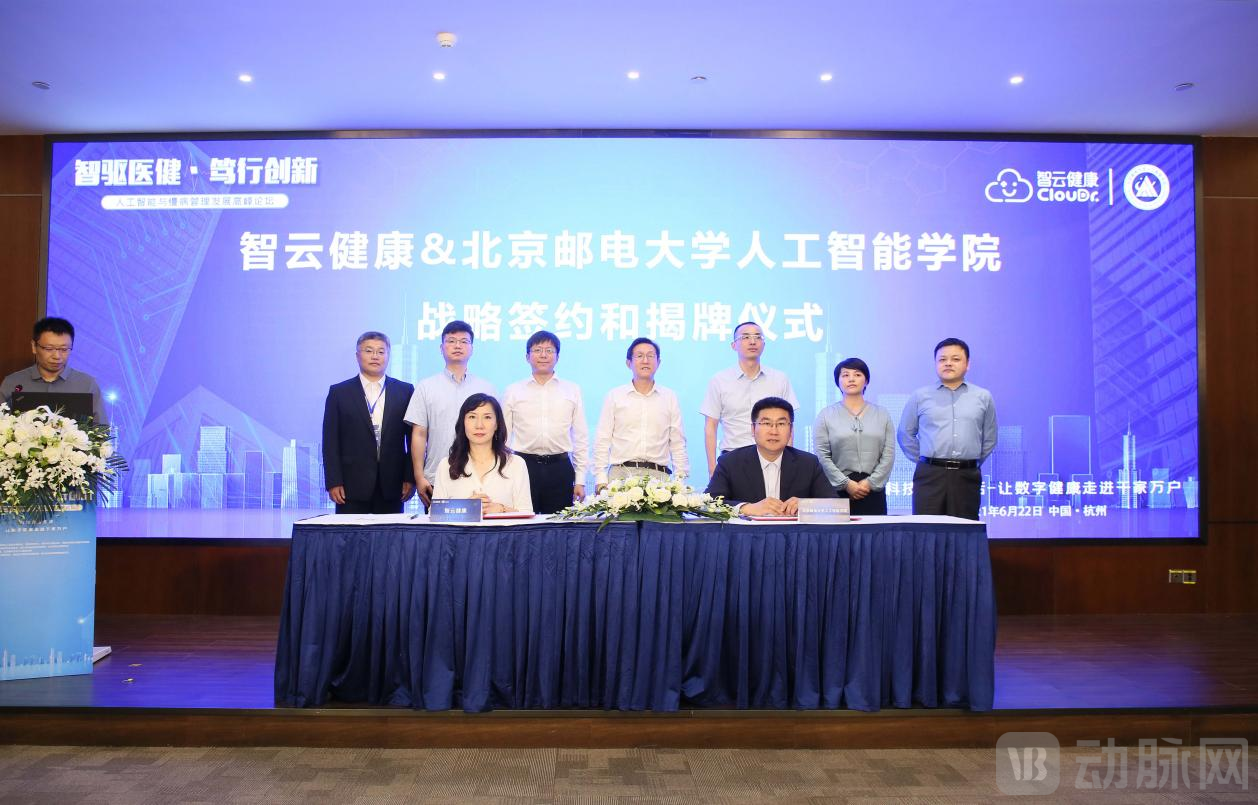
Signing Ceremony
At the meeting,Zhiyun Health and the School of Artificial Intelligence at Beijing University of Posts and Telecommunications have entered into a strategic partnership and signed a cooperation agreement. Leveraging their respective professional expertise and research strengths, the two parties will jointly establish the “Joint Laboratory for Medical Artificial Intelligence,” the “Technology Transfer Base for the Joint Laboratory for Medical Artificial Intelligence,” and the “Yuhang District University-Enterprise Joint Laboratory.” These initiatives aim to further advance the practical application of artificial intelligence technologies in chronic disease management, thereby providing higher-quality health services to the vast population of chronic disease patients in China.
I. AI Is Having Its Moment: A New Wave of Change Accelerates Into the Healthcare Sector
In recent years, the artificial intelligence revolution has continued to surge in new waves, becoming a key driving force behind the new round of technological revolution and industrial transformation, and is exerting significant and far-reaching impacts on global economic development, scientific and technological innovation, and social progress.
To seize the major strategic opportunities presented by the development of artificial intelligence (AI), China has long elevated AI development to the level of national strategy. Both the 14th Five-Year Plan and the Outline of the Long-Range Objectives Through the Year 2035 designate AI as a critical pillar for national innovation-driven development. In terms of specific policies, the State Council issued and implemented the Development Plan for Next-Generation Artificial Intelligence in July 2017, explicitly stating the goal of establishing China’s early-mover advantages in AI development and accelerating the construction of an innovative nation and a global leader in science and technology.
Thanks to the high priority placed by the government and strong policy support, new-generation information technologies, represented by artificial intelligence (AI), have greatly accelerated the transformation of traditional industries through iterative evolution. Particularly catalyzed by the COVID-19 pandemic in 2020, innovative technologies centered on comprehensive AI advancement have gradually unleashed significant momentum in the healthcare sector.
In terms of specific sub-sectors, the upstream segment of the medical artificial intelligence (AI) industry primarily provides foundational technical support to the sector, such as medical data mining and algorithms. The downstream segment mainly focuses on building application platforms for medical AI technologies, with key application scenarios including medical imaging, virtual assistants, drug discovery, health management, disease risk prediction, and analysis of medical records and literature. Furthermore, in the field of medical AI, various products have been developed to meet current demands, such as intelligent imaging-assisted diagnosis and treatment systems, triage robots, and voice-enabled electronic medical records.
In terms of practical applications, medical artificial intelligence (AI) has extensive use cases across the patient side, hospital side, and ecosystem side. First, on the patient side, AI technology enables medical services to break through the physical boundaries of hospitals, adopting a patient-centric approach that extends throughout the entire healthcare journey, including pre-diagnosis, during diagnosis, and post-diagnosis stages.
Secondly, on the hospital side, artificial intelligence is deeply integrated into core sectors such as patient management, pharmaceutical and medical device management, ward management, performance management, and back-office administration, bringing about a comprehensive upgrade and restructuring of hospital management systems. Finally, on the ecosystem side, AI technologies are leveraged to aggregate and integrate key information and data, connect communication networks across all stakeholders, and comprehensively enhance the healthcare service ecosystem.
Xie Qilin, Deputy Secretary-General of the Chinese Medical Doctor Association, stated, “Currently, China’s healthcare environment faces severe challenges, primarily manifested in the demand side. Long-standing issues include uneven distribution of high-quality physician resources, elevated rates of misdiagnosis and missed diagnosis, excessively high medical costs, and a significant gap between the supply and demand of physician resources. Consequently, the difficulty patients face in accessing medical care has become increasingly prominent. Against this backdrop,”Artificial Intelligence Will Become a New Driving Force in the Healthcare Sector, Continuously Elevating the Overall Level of Medical Services by Deeply Integrating Cutting-Edge Technologies into Various Subsectors, Thereby Improving the Current Landscape and Effectively Addressing Patients’ Challenges in Accessing Medical Care”。
II. Market Size Reaches Hundreds of Billions: How Can Artificial Intelligence Unlock the Potential of Chronic Disease Management?
The "2020 White Paper on Internet-Based Chronic Disease Management in China" points out that the market size of internet-based chronic disease management in China was RMB 26.8 billion in 2020, with a penetration rate of 11%. It is estimated that by 2025, the market size will reach RMB 235.7 billion, and the penetration rate will increase to 37%, indicating substantial growth potential for China's chronic disease management market.
However, opportunities always coexist with challenges. China’s chronic disease management sector currently faces numerous unresolved issues that pose a significant threat to the health of the Chinese population.
The most critical issue is the patient's poor adherence.Due to patients’ lack of self-management awareness, it is difficult for hospitals to assume the role of continuous care managers. In traditional chronic disease management models, reliance is placed predominantly on pharmacological interventions, reflecting a reactive “treat-the-disease” mindset rather than implementing systematic preventive and control strategies. Consequently, achieving seamless continuity across the pre-diagnostic, diagnostic, and post-diagnostic phases of patient care remains challenging.
In particular, the monitoring of indicator data for patients’ chronic diseases suffers from a “silo effect,” which hinders effective management by physicians, complicates patient management, reduces consultation efficiency, and fails to ensure the quality of medical care received by patients.
To address this challenge, artificial intelligence may offer the optimal solution. Wang Yuxian, Vice President of Products at Zhiyun Health, stated, “It is often said that while chronic disease treatment takes place in hospitals, chronic disease management rests with individuals. The most critical aspect is breaking down information silos and comprehending the meaning behind these data. In brief, this can be divided into four layers: First, the data layer, which provides comprehensive coverage of medical concepts and information; second, graph construction, where knowledge graphs are built using various algorithmic approaches such as supervised learning; third, platform development, wherein a data platform is established on the foundation of knowledge graphs and algorithms to handle data acquisition, cleaning, processing, storage, and analysis; and fourth, intelligent services, which deliver scenario-specific visualized services, such as triage robots and intelligent question-and-answer systems.”
“We hope to see AI evolve from a mere assistant in clinical practice to being deeply integrated into healthcare scenarios through intelligent hardware and big data. This integration will empower medical and diagnostic practices, truly realizing value-based care throughout the treatment process. By shifting chronic disease management from governance and administration to prevention and predictive analytics, we can leverage behavioral data to modify users’ lifestyles. Since chronic diseases are often the result of unhealthy lifestyle choices, this approach facilitates a return to human-centered medicine, thereby improving the overall health level of society.,” added Wang Yuxian.
III. With AI as its foundation, Zhiyun Health aims to create a Chinese model for “Internet + Chronic Disease Management”
As a one-stop platform for chronic disease management and smart healthcare, Zhiyun Health has emerged as an industry-leading unicorn enterprise and gradually pioneered a Chinese model for chronic disease management. To address the needs of hospitals, Zhiyun Health has specifically developed “Zhiyun Yihui,” the SaaS platform for chronic disease management with the highest coverage among mainstream hospitals in China, and “Zhiyun Internet Hospital,” the largest online communication service platform connecting chronic disease patients, doctors, and hospitals outside clinical settings in China. The former focuses on building infrastructure for hospitals to enhance their overall operational efficiency, while the latter prioritizes patient services by strengthening doctor-patient communication to optimize treatment outcomes.
In terms of medications with long-term demand among patients with chronic diseases, Zhiyun Health has meticulously developed “Zhiyun Consultation,” the most cost-effective SaaS platform for pharmacy prescription services in China. Designed around the actual needs of patients and pharmacies, the platform aims to enhance operational efficiency and profitability for pharmacies by providing professional, compliant pharmaceutical and medical services to offline pharmacies. It also establishes comprehensive health management services, thereby facilitating more convenient and inclusive access to healthy living for residents.
Meanwhile, Zhiyun Health is also actively expanding its consumer-facing (C-end) business and integrating partners from multiple industries—including medical care, media, retail, and community services—to form a full-industry-chain service platform. It is pioneering an innovative “Internet+” model for chronic disease management, exemplified by initiatives such as the Smart Community Health Kiosks developed in collaboration with A-Living and the establishment of Sweet Home, the largest vertical online community for chronic disease patients.
It can be said that Zhiyun Health has connected various scenarios across healthcare providers, pharmaceuticals, insurance, and communities through innovative and scalable solutions, empowering all collaborators in the industry chain to undergo comprehensive digital transformation. However, this is not the end point; there remains significant room for future growth and innovation for Zhiyun Health.
To integrate “hard tech” into the internet-based chronic disease management ecosystem, Zhiyun Health places great emphasis on the practical application of cutting-edge technologies such as artificial intelligence in healthcare, leveraging its leading AI algorithms,"Zhiyun Medical Brain"A comprehensive knowledge base covering medications, symptoms, standard case analyses, and diagnostics in the field of chronic diseases has been established, forming a precise and professional medical knowledge graph for chronic disease management.
Currently, the “Zhiyun Medical Brain” has been fully integrated across all product lines of Zhiyun Health, playing a significant role in specialized areas such as rational drug use, intelligent triage, and clinical decision support. On one hand, it has enhanced the efficiency and accuracy of diagnosis and treatment; on the other, it has ensured the rationality and scientific rigor of medication practices. The “Zhiyun Medical Brain” is gradually becoming a cornerstone of Zhiyun Health’s evolution toward smart healthcare.
This collaboration between Zhiyun Health and the School of Artificial Intelligence at Beijing University of Posts and Telecommunications will fully leverage their respective strengths to promote the efficient implementation of artificial intelligence technologies in chronic disease management. It not only provides a valuable reference for cooperation between enterprises and universities in the transformation of scientific and technological achievements, but also further strengthens Zhiyun Health’s “moat” in the field of artificial intelligence.
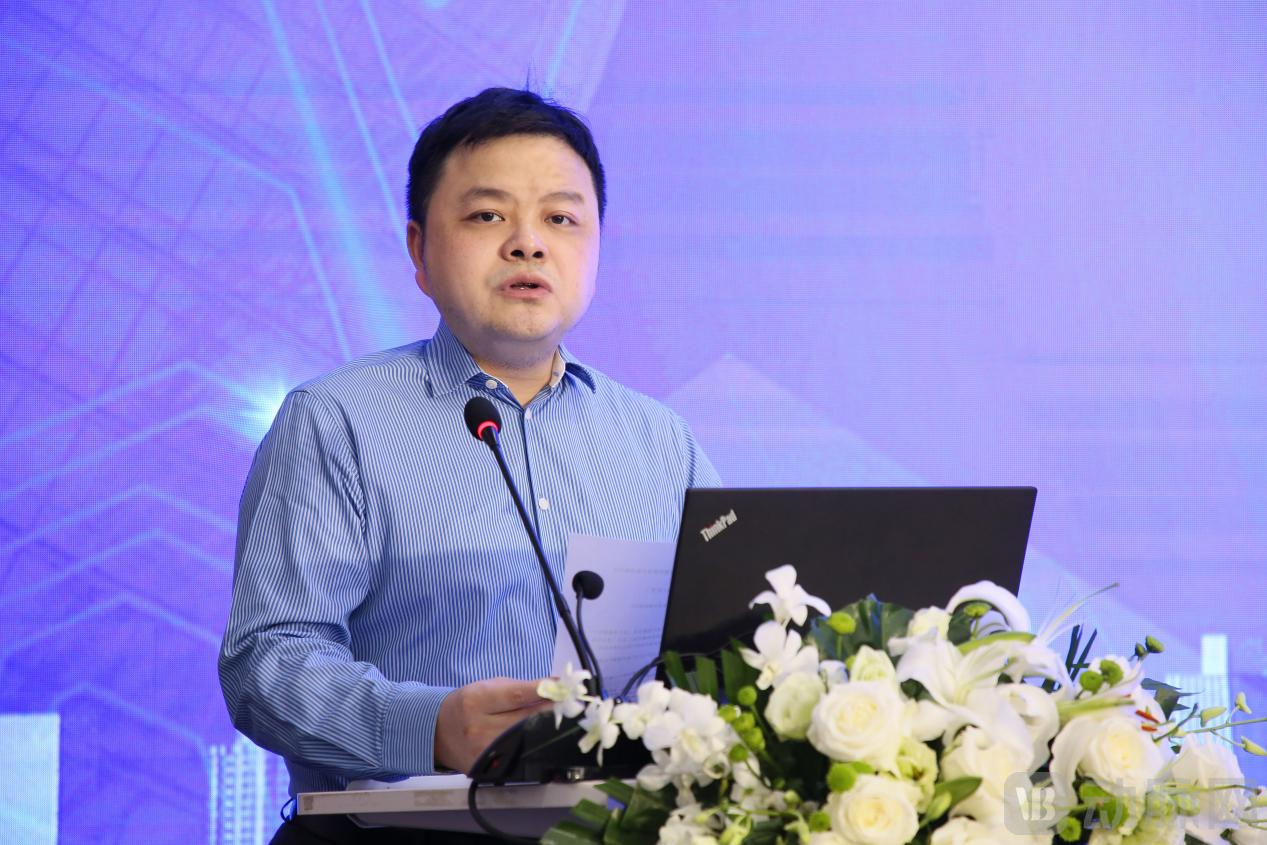 Kuang Ming, Founder and CEO of Zhiyun Health
Kuang Ming, Founder and CEO of Zhiyun Health, stated, “We look forward to further integrating Zhiyun Health’s practical achievements with the top-tier research capabilities of the School of Artificial Intelligence at Beijing University of Posts and Telecommunications, thereby facilitating the deeper application of artificial intelligence technologies in chronic disease management and delivering higher-quality health services to the vast population of chronic disease patients in China.”