

Professor Tu Pengfei of Peking University School of Pharmaceutical Sciences Builds a Complete Cistanche Industry Chain, Aiming to Cultivate a 50-billion-yuan Traditional Chinese Medicine Giant
On June 12, the “Inheriting Essence, Upholding Integrity and Fostering Innovation—Peking University Health Science Center Forum on Integrated Traditional Chinese and Western Medicine Innovation and Development,” co-hosted by Peking University Health Science Center and the Shi Xuemin Traditional Chinese Medicine Development Foundation, was successfully held. More than 400 experts and scholars in the field of integrated traditional Chinese and Western medicine, representatives from various sectors of society, and students participated in the forum, which garnered over 6 million online views.
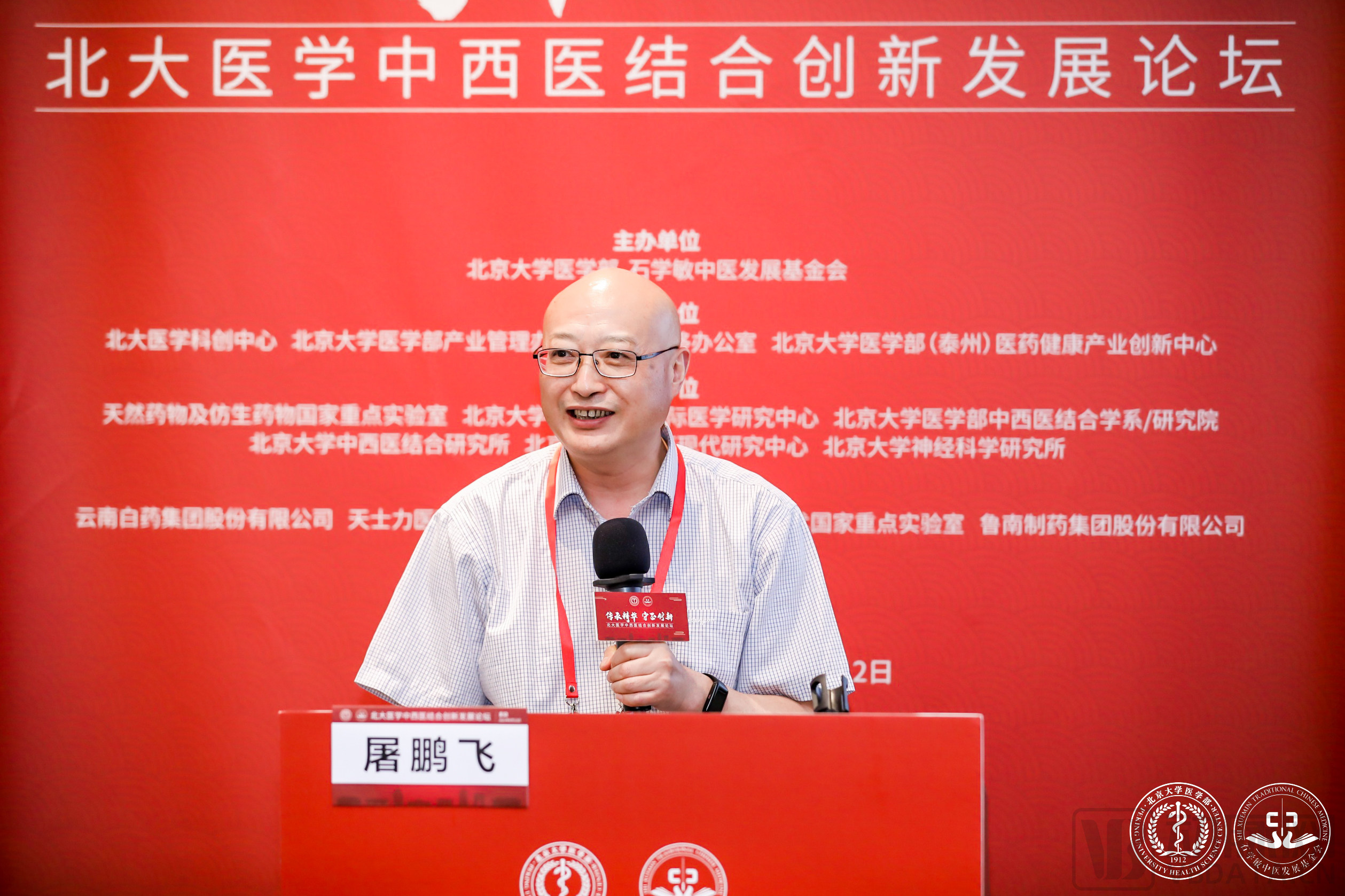
On the afternoon of the 12th, at the “Peking University Integrated Traditional Chinese and Western Medicine Drug Research Forum,” Professor Tu Pengfei, a professor and doctoral supervisor at the School of Pharmaceutical Sciences, Peking University, and Director of the Peking University Modern Research Center for Traditional Chinese Medicine, delivered a presentation titled “Systematic Research and Industrial Promotion of Cistanche.” He shared how his team has built a complete industry chain for Cistanche. VCBeat has compiled and edited his key insights.
Cistanche is a commonly used tonic in traditional Chinese medicine. It warms kidney yang, replenishes essence and blood, and moistens the intestines to relieve constipation. With its high medicinal value, it is extensively used in clinical prescriptions, proprietary Chinese medicines, and health products, earning it the reputation of “Desert Ginseng.”
Meanwhile, Cistanche is also an endangered desert parasitic plant with very weak natural reproductive capacity, relying on hosts such as Haloxylon ammodendron and Tamarix. Due to long-term indiscriminate harvesting and excavation, Cistanche faced three major problems before the 1990s. First, its resources were endangered; the source plant for Cistanche listed in the Chinese Pharmacopoeia prior to the 2000 edition was Cistanche deserticola, which has been included in Appendix II of the Convention on International Trade in Endangered Species of Wild Fauna and Flora (CITES) and is a protected plant species in China. Second, desert destruction led to ecological deterioration. Third, research on Cistanche was insufficient, resulting in a scarcity of products.
To address these three major challenges, Professor Tu’s team implemented three key strategies. First, they resolved the issue of medicinal raw material supply through large-scale cultivation of Cistanche deserticola. Second, the mass cultivation of Cistanche deserticola and its host plants also contributes to desertification control and ecological improvement. Finally, through systematic research and in-depth development, they have built a complete industrial chain for Cistanche deserticola.
Professor Tu shared the overarching strategy for building an ecological industry around Cistanche deserticola. “By elucidating the medicinal resources of Cistanche deserticola, revealing its parasitic mechanisms, establishing a cultivation technology system for high and stable yields, and promoting it comprehensively, we have addressed the shortage of medicinal resources, developed eco-agriculture for Cistanche deserticola, and promoted development in border ethnic regions. Meanwhile, as a traditional Chinese medicine, we have clarified its bioactive constituents and mechanisms of action, discovered new medicinal values, and established a quality standard system to ensure clinical efficacy. Ultimately, by innovating processing technologies and developing a series of products, we have built a complete industrial chain for Cistanche deserticola, forming a distinctive specialty industry.” Through these measures, Professor Tu’s team successfully resolved the issue of medicinal supply for Cistanche deserticola, improved the ecological environment, cultivated a characteristic sand-based industry in western China, helped farmers and herders increase their income, and established a new model for the research and development of the entire industrial chain of endangered medicinal plants.
Professor Tu reviewed the three-decade journey of his team in building an ecological industry for Cistanche.
First, Professor Tu spent five to six years traveling through the desert regions where Cistanche is distributed, from western Inner Mongolia to Gansu, Ningxia, and Xinjiang. Through field investigations, he clarified the species, resource distribution, and yield of Cistanche. “In 1992, the national yield of desert Cistanche was approximately 150 tons, while that of Cistanche tubulosa was 250 tons, which was insufficient to meet medicinal demands.” Therefore, in 1992, Professor Tu first proposed four recommendations for the conservation and sustainable utilization of wild resources. These measures, including strengthened management, zoned harvesting, and the development of large-scale cultivation, aimed to address the shortage of wild Cistanche resources and protect the desert environment.
Subsequently, Professor Tu clarified the material basis underlying the traditional efficacy of Cistanche deserticola through systematic studies on its chemical constituents and biological activities. “We identified 172 small-molecule compounds from Cistanche deserticola, discovered 31 novel structures and 26 bioactive compounds, isolated and characterized 17 new polysaccharides, and identified six immunologically active polysaccharides. Meanwhile, we established a rapid preparation method for reference standards such as echinacoside using high-speed counter-current chromatography, thereby systematically elucidating the material basis of Cistanche deserticola’s pharmacological effects.”
Meanwhile, Professor Tu conducted systematic studies on the pharmacological effects and molecular mechanisms of Cistanche deserticola, elucidating the bioactive constituents and mechanisms underlying its efficacy in tonifying kidney yang and moistening the intestines to relieve constipation. He discovered that the phenylethanoid glycosides in Cistanche deserticola exhibit novel effects in combating Alzheimer’s disease and Parkinson’s disease, as well as extending lifespan, thereby creating new clinical value for this herb.
Furthermore, Professor Tu established a comprehensive analytical method for all constituents of Cistanche and constructed a robust quality standard system. A total of 513 chemical components were identified from Cistanche, and their relative quantification was performed. The study clarified that Cistanche deserticola exhibits superior efficacy in moistening the intestines and relieving constipation, while Cistanche tubulosa demonstrates better effects in tonifying kidney yang and replenishing essence and blood. Based on Professor Tu’s research findings, Cistanche tubulosa was included as a botanical source of Cistanche in the 2005 edition of the Chinese Pharmacopoeia.
After elucidating the pharmacological mechanisms of Cistanche deserticola, Professor Tu initiated research on its cultivation techniques. In light of the parasitic nature of Cistanche deserticola, his team conducted in-depth studies on its parasitic biological mechanisms, laying the foundation for artificial cultivation. Meanwhile, Professor Tu’s team invented seed germination inducers, seed treatment agents, inoculation fusion agents, pelleted seeds, and integrated “Cistanche–host” seedlings. They established a new “autumn sowing–autumn harvesting” model, developed machinery for inoculation and harvesting, effectively increased the inoculation rate, and raised the yield of Cistanche deserticola from 18 kg per mu to over 300 kg per mu. In 2019, Professor Tu’s team identified Atriplex canescens (four-wing saltbush) as a new host for desert Cistanche. Atriplex canescens is not only an excellent forage grass but also supports high-yielding and high-quality parasitic Cistanche. Currently, Professor Tu is vigorously promoting the use of Atriplex canescens as a host for desert Cistanche cultivation.
On the basis of establishing high-yield and stable-yield cultivation techniques for Cistanche, Professor Tu’s team has vigorously promoted Cistanche cultivation in the deserts of western China through multiple initiatives, including establishing demonstration bases for Cistanche planting, regularly convening the “International Symposium on Cistanche and Sandy Medicinal Plants,” offering various forms of training courses free of charge, and distributing seeds at no cost. To date, the team has promoted the planting of Haloxylon ammodendron over 3.83 million mu, with 1.27 million mu inoculated with Cistanche deserticola, yielding an annual production of 2,500 tons; and 400,000 mu inoculated with Cistanche tubulosa, yielding an annual production of over 5,000 tons. This effort has created a new model for sustainable desert control and targeted poverty alleviation in desertified regions.
Addressing the availability of Cistanche resources is not the ultimate goal of Professor Tu’s team. Currently, the team has shifted its research focus to the development of downstream Cistanche products, aiming to establish a complete industry chain for Cistanche. The team has developed a Class 2 new drug, total phenylethanoid glycosides of Cistanche, and its capsule formulation for the treatment of vascular dementia. Additionally, a Class 1 new drug, echinacoside, and its tablet formulation for treating vascular dementia, as well as a new laxative drug, total oligosaccharides of Cistanche, and its oral solution, have all entered Phase II clinical trials. Furthermore, the research group has developed a wide range of health-related products and dietary supplements.
Finally, Professor Tu summarized the value of the Cistanche project from three dimensions: economic benefits, social benefits, and ecological benefits. He pointed out, “The Cistanche project has saved the nation over RMB 12 billion in sand control funds, with related products generating more than RMB 9 billion in economic benefits and contributing over RMB 2 billion in profits and taxes in the past three years. Meanwhile, the project has addressed the shortage of Cistanche medicinal resources, incubated eight specialized enterprises, lifted 200,000 people out of poverty, effectively protected wild Cistanche resources, and restored large areas of desertified land.”
The “Healthy China 2030” Planning Outline set targets to raise the average life expectancy to 79 years and expand the health service industry to a scale of RMB 16 trillion by 2030. The 14th Five-Year Plan and the Long-Range Objectives Through the Year 2035 proposed the restoration and control of 7.5 million hectares of newly desertified land. Meanwhile, the National Health Commission has included Cistanche deserticola (desert broomrape) in the pilot program for substances managed as both food and medicine. The issuance of these favorable policy documents has created new development opportunities for the ecological industry of Cistanche deserticola.
In 2016, Professor Tu proposed a ten-year plan for the ecological industry of Cistanche. He stated that by 2026, a comprehensive health industry centered on Cistanche would be established, involving the cultivation of one million mu of Cistanche and its host plants, the development of 100 Cistanche-related product varieties, and the achievement of an annual output value of RMB 50 billion.