

Peking University Cancer Hospital Team Develops AI-Powered Oculomotor Diagnostic System for Malignant Tumor Detection and Prognosis Assessment
Recently, the First Peking University Health Science Center Forum on Integrated Traditional Chinese and Western Medicine, co-hosted by Peking University Health Science Center and the Shi Xuemin Traditional Chinese Medicine Development Foundation, was held at the Boya International Hotel of Peking University. The event brought together more than 400 participants, including practitioners in the field of integrated traditional Chinese and western medicine, administrators of traditional Chinese medicine hospitals, clinicians, and investment institutions, with online views exceeding 6 million.
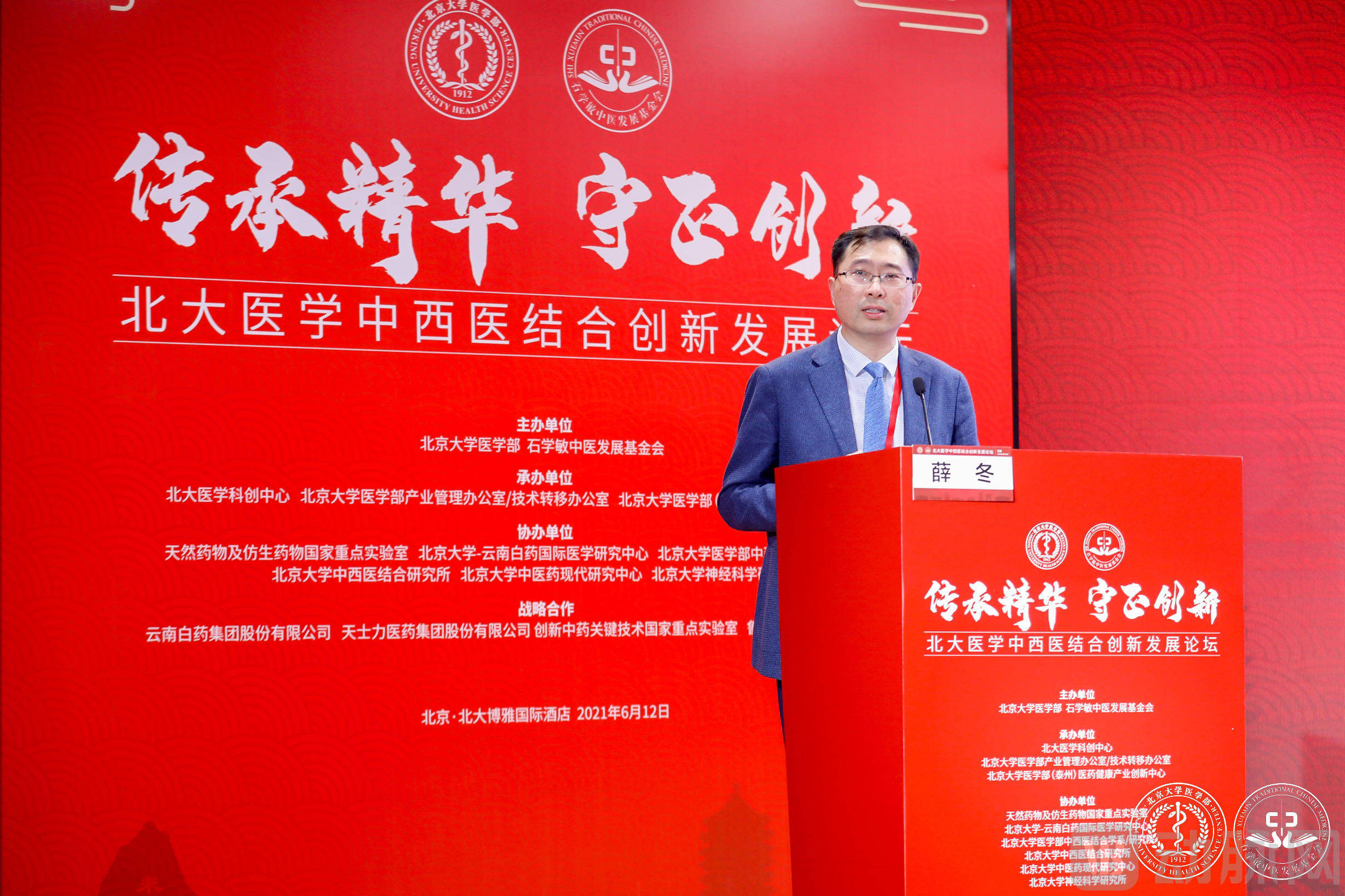
At the parallel forum on the synergistic development of traditional Chinese and Western medicine held that afternoon, Xue Dong, Deputy Secretary of the Party Committee of Peking University Cancer Hospital and Deputy Director of the Department of Integrated Traditional Chinese and Western Medicine and the Department of Geriatric Oncology, shared his and his team’s endeavors to apply TCM diagnostic theories through modern scientific approaches—specifically, their clinical exploration of the Sclera Shadowless Imaging Acquisition System in the diagnosis and prognostic assessment of malignant tumors. VCBeat has compiled and edited his presentation for our readers.
According to statistical data from the National Cancer Center, with the improvement of medical quality and diagnostic and treatment capabilities in China, the five-year survival rate for malignant tumors has increased from 30.9% ten years ago to the current 40.5%, an increase of nearly 10 percentage points. For certain malignant tumors, such as esophageal cancer, the five-year survival rate is even higher than that in developed countries like the United States.
As an oncologist, Xue Dong stated that cancer remains an awkward and heavy topic. “Although progress has been made, the outlook for cancer treatment is still far from optimistic.” As a country with a large population, the absolute number of cases for all diseases becomes significantly burdensome when combined with our demographic base. Data show that in 2020, China ranked first worldwide in both the number of new cancer cases and cancer-related deaths. Moreover, China’s cancer spectrum is transitioning toward that of developed countries, and the cancer burden in China is expected to continue increasing in the future. Therefore, achieving early diagnosis and treatment of cancer will help improve cure rates and bring substantial benefits in alleviating suffering and enhancing the quality of life for cancer patients.
Current diagnostic approaches for malignant tumors encompass clinical symptoms and signs, imaging examinations, tumor marker assays, and pathological diagnosis, which is regarded as the “gold standard” for tumor diagnosis. Can traditional Chinese medicine (TCM) clinical practice, guided by TCM theoretical frameworks, facilitate early diagnosis and treatment of tumors?
Xue Dong explained that in the theory of Zang-Xiang (visceral manifestation) in Traditional Chinese Medicine (TCM), “Zang” refers to the internal organs hidden within the body, while “Xiang” denotes the physiological and pathological manifestations observable externally. In other words, external signs can reflect an individual’s health status. In TCM diagnostics, the holistic principles that “internal conditions must manifest externally” and “one can infer internal states by observing external signs” form the theoretical foundation for the Four Diagnostic Methods of TCM—inspection, auscultation and olfaction, inquiry, and pulse-taking.
With the advancement of modern sciences, including 5G communication networks and artificial intelligence (AI) technologies, diagnostic and therapeutic approaches in Traditional Chinese Medicine (TCM) have undergone significant transformations. China’s highest leadership has repeatedly emphasized the need to “scientifically summarize and evaluate the efficacy of both traditional Chinese and Western medicines in the treatment of COVID-19, and to demonstrate the therapeutic effects of TCM in treating COVID-19 using scientific methods,” thereby charting the future development direction for TCM and Chinese herbal medicine.
In Xue Dong’s view, scientific theories and methodologies remain an area requiring exploration. “We believe that, with the aid of technological tools, at the very least, the traditional Chinese medicine (TCM) diagnostic approach—integrating inspection, auscultation and olfaction, inquiry, and pulse-taking—can be extended.”
Xue Dong and his team’s selection of the ocular diagnostic instrument for research on early screening of malignant tumors represents an extension of the clinical exploration and attempts within the “scope of vision.”
According to The Yellow Emperor's Inner Canon, eye diagnosis can determine the nature and location of a disease, estimate its duration, and predict its progression, providing clear guidance for diagnosis, treatment, and prognosis assessment.
Modern medicine holds that pathological changes in a specific part of the body can trigger the endocrine system to release certain hormones or neurotransmitters, which in turn elicit responses from the nervous system and manifest in the corresponding reflex zones of the iris. Within the human ocular structure, the sclera is the only organ with directly exposed blood vessels, making it less susceptible to external interference during image acquisition. Ocular diagnostic instruments assess disease characteristics by analyzing features of the sclera and its vascular patterns. “Guided by Traditional Chinese Medicine (TCM) theory, technological advancements can help uncover objective evidence underlying TCM wisdom, thereby enhancing clinical diagnosis and assessment of diseases.”
The Scleral Shadowless Imaging Acquisition System used by Xue Dong’s team is an AI-based ocular imaging-assisted disease diagnosis system. It employs the common zoning method of Zhuang medicine ophthalmic diagnosis—the 12-hour clock division marking method for the sclera. This method likens the eye to a clock face, dividing it evenly into 12 regions. With the center of the pupil as the focal point, horizontal and vertical lines are drawn for division. The upper and lower intersection points of the vertical line with the conjunctival margin correspond to 12 o’clock and 6 o’clock, respectively, while the left and right intersection points of the horizontal line with the bulbar conjunctiva correspond to 9 o’clock and 3 o’clock, respectively.
“The quantification process that divides the scleral region into twelve segments based on different characteristics constitutes the deep learning phase of this system. ‘The ocular features and optical responses in different regions yield corresponding numerical values, thereby generating an ocular assessment result,’ introduced Xue Dong.”
The system automatically captures images of the patient’s bilateral ocular regions, performs focus assessment and corneal tracking, extracts ocular image features, identifies scleral characteristics, and subsequently establishes classification models to conduct case-control studies and prospective cohort studies, ultimately generating an ocular imaging-based health assessment report.
According to previous literature, findings from Zhuang medicine’s ocular zone analysis indicate that in patients with hypertension, the conjunctival vessels in the 11- and 12-o’clock regions of the sclera exhibit thickening, dilation, and tortuosity. In patients with peptic ulcer, scleral blood vessels extend from the 6-o’clock position toward the pupil, showing marked vascular tortuosity, dark red coloration, and the presence of petechiae and ecchymoses on the sclera.
Xue Dong introduced that the establishment of a diagnostic model for malignant tumors requires three steps: data collection, model development, and validation and optimization.
Data Collection: Scleral images of patients with common malignant tumors (gastric cancer, lung cancer, breast cancer, and colorectal cancer) were acquired using a shadow-free scleral imaging system under visible light. Ocular features were extracted to establish a database. Model Development: Artificial intelligence technology was employed to analyze the correlation between scleral ocular features and malignant tumors, thereby constructing an ocular feature model for malignant tumors. Additionally, the relationship between this malignant tumor model and Traditional Chinese Medicine (TCM) syndrome differentiation patterns was preliminarily analyzed. Validation and Optimization: The diagnostic model for ocular features of common malignant tumors was validated and optimized. Preliminary work by our team revealed that the incidence of red misty features in zones 9 and 10 of the sclera was significantly higher in patients with gastric cancer than in healthy controls. Ocular features associated with other common tumors, including lung cancer, colorectal cancer, and breast cancer, also exhibited specific trends.
Next, Xue Dong and his team will build a prognostic model for malignant tumors based on the diagnostic model, incorporating patients’ ocular manifestations and Traditional Chinese Medicine (TCM) syndrome patterns. They will fully leverage big data and AI to analyze the relationship between clinical tumor characteristics and ocular signs, explore objective indicators for TCM diagnostic elements, and put into practice the TCM principle that “internal pathological changes are invariably reflected in external manifestations.”
In fact, as Xue Dong stated, this study represents only a preliminary attempt to apply iris imaging technology to oncological diseases under the guidance of traditional Chinese medicine (TCM) theory. It leverages modern technology for verification and exploration, with the ultimate aim of informing clinical practice. Although this work is still in its early stages, there is an urgent need to expand sample sizes, conduct multicenter studies, and perform validations under diverse conditions. Nevertheless, we are encouraged to observe that related research on pulse diagnostic instruments and tongue imaging devices is progressing vigorously. We firmly believe that the organic and deep integration of traditional TCM diagnostic methods with modern technology will contribute to the advancement of TCM and ultimately benefit the public.