

AI Medical Service Files for IPO After Raising Over 5 Billion Yen in Four Years to Advance Real-Time Endoscopic AI Diagnostics

AI Medical Service
Endoscopic Diagnostic Technology R&D Provider
On June 15, the World Economic Forum in Davos announced its 2021 list of “Technology Pioneers.”
The companies it evaluates are innovative technology firms with industry-leading core technologies, leadership potential, and significant social impact on a global scale. Since its inception 21 years ago, the list has included such notable companies as Airbnb, Bluebird Bio, Cyberdyne, Editas Medicine, Foundation Medicine, Google, Proteus Digital Health, Spotify, and Twitter.
This year, the list selected 100 emerging technology companies in the field of frontier technology from around the world. These technological pioneers will collaborate with one or more relevant platforms of the forum to help shape the global agenda on key issues and contribute new solutions to overcome the crises facing the world.
Among them is a company named AI Medical Service (hereinafter referred to as “AIM”). Established in 2017, this Japanese enterprise is dedicated to developing endoscopic AI using deep learning technology.
From Doctor to Entrepreneur: AIM Targets Endoscopy AI
According to World Health Organization statistics, among the most common cancers in 2020 (in terms of new cases), colorectal cancer ranked third and gastric cancer ranked fifth.
Although gastrointestinal cancers are highly prevalent, their progression is slow and the window for early screening is extended; earlier detection and treatment significantly improve survival rates. As the “gold standard” for screening gastrointestinal diseases, endoscopy and endoscopic biopsy play a crucial role in disease control and enhancing patient survival.
Endoscopy is a medical field in which Japan maintains a global lead, yet it faces a significant challenge: approximately 20% of lesions are overlooked in clinical practice. Furthermore, the widespread adoption of endoscopic examinations has led toThe enormous volume of examinations makes it difficult for endoscopists to ensure both the quality and quantity of endoscopic procedures.Thus, AI-assisted diagnostic systems related to this field have emerged. AIM is dedicated to developing an endoscopic AI system designed to support endoscopists in their diagnostic procedures.
Toshihiro Tada, the founder of AI Medical Service (AIM), is an experienced physician who has performed numerous endoscopic examinations. Yet he too faced the challenge of missing cancer diagnoses due to undetected lesions. However, the opportunity to overcome this challenge is quietly approaching.

AIM Founder Toshihiro Tada Source: AIM Official Website
In late 2016, Toshihiro Tada began to explore deep learning and artificial intelligence. Inspired and encouraged by Associate Professor Fumiyuki Matsuo of the University of Tokyo, an AI expert, who stated that “AI’s ability to recognize images has begun to surpass that of humans,” he embarked on his endeavor to apply AI to endoscopy.
In early 2017, Toshihiro Tada began collaborating with an engineer on research into endoscopic AI for the detection of gastric cancer lesions. The project progressed smoothly, yielding preliminary results by July 2017, approximately six months later.
Toshihiro Tada revealed in an interview that at this time, he strongly feltTo advance the ongoing research of endoscopic AI until it is clinically available as a medical device, one must go beyond individual research efforts and establish a company capable of sustaining continuous R&D.
Introduced by a friend, Toshihiro Tada participated in the BRAVE project pitch competition. BRAVE is one of Japan’s largest accelerator platforms and has to date provided financing and business growth opportunities to over 100 startups. Shortly thereafter, Toshihiro Tada joined Incubate Camp, an entrepreneur-investor co-managed training program. Subsequently, AIM secured ¥1 billion in Series A funding from Incubate Fund.
In short, these experiences equipped Toshihiro Tada with the knowledge of how to establish a company. In September 2017, AI Medical Service Inc. was successfully founded.
Leveraging the Strength of a Giant: AIM Capitalizes on Japan’s Endoscopy Industry Advantages
Companies that make the list of Technology Pioneers typically possess immense potential, either leading significant transformations or exerting a major impact on society. So, how does AI Medical Service stand out?
AIM is dedicated to creating truly useful AI for gastrointestinal endoscopy to save patients worldwide, with the goal of becoming the most trusted partner for endoscopists in clinical practice.
Even the tallest towers require a solid foundation.First, AIM has a strong technical foundation.On one hand, AI Medical Service (AIM) fully leverages deep learning algorithms and incorporates the latest AI knowledge and technologies to the greatest extent possible. With the rapid advancement of research on Convolutional Neural Networks (CNNs) in image recognition worldwide and improvements in hardware performance, AIM believes that AI can support real-time detection of lesions during endoscopic examinations.
On the other hand, the quantity and quality of training sample data are critical in AI development. Japanese endoscopes not only account for 70% of the global equipment market share, but Japan also ranks among the leaders in terms of endoscopy specialists and operational expertise. Leveraging the advantages of Japan’s endoscopy industry,First, AIM can leverage Japan’s significant advantage in the overseas endoscopy equipment market by bundling its AI-powered endoscopy system for international export.
Second, AIM has collaborated with multiple advanced hospitals in Japan and dozens of endoscopists to collect a large volume of high-quality images, which are continuously screened and ranked.Ultimately, an AI database was established, providing a vast number of high-quality training samples for its endoscopy AI.
Some Research Partners Source: AIM Official Website
Furthermore, AIM has established an internal operations platform, driven by its belief that robust operational practices can enhance work efficiency and accelerate AI development. The platform has developed “image anonymization processing software” and an “image sorting web system” to help its partner physicians improve the efficiency of medical data processing.
Driven by the impact of COVID-19, there is a growing demand among physicians to access professional information via the internet. In response, AI Medical Service Inc. (AIM) launched “gastroAI Online,” an online media platform for endoscopists this year, to provide them with updates on the latest research and developments in endoscopic AI.
Secondly, AIM is supported by cutting-edge theoretical frameworks.It collaborates with medical institutions on research and has published more than 40 articles in prestigious journals. Examples include the world’s first paper on AI-based diagnosis of gastric cancer, published in Gastric Cancer, and a paper on AI-based diagnosis of Helicobacter pylori, published in EBioMedicine. Furthermore, AIM has submitted and published the world’s first papers on topics such as colitis and endoscopic resection for esophageal cancer.
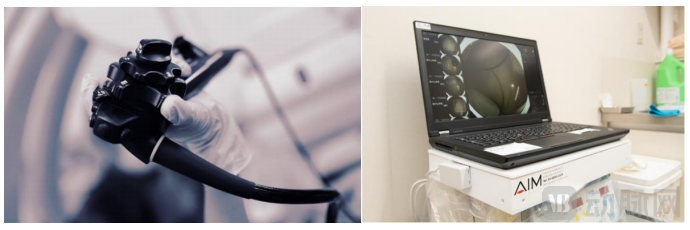
Source: Publicly available online information
With the support of theory and technology, how effective is AIM’s endoscopic AI? AIM states that, similar to the field of Go, its AI competed against more than 20 endoscopists and achieved accuracy in diagnosing gastritis that surpassed the physicians’ average, effectively identifying cancerous lesions that are difficult to detect during endoscopy.
Its endoscopic AI also boasts an astonishingly fast diagnostic speed. For instance, in the results of a study on gastritis diagnosis published by AIM in March 2019, its endoscopic AI took only 261 seconds to analyze 23,699 images.
At the world’s largest Digestive Disease Week (DDW) conference, AI Medical Service (AIM) participated in the presentation of 12 studies, one of which was awarded “Best of DDW.” This demonstrates that AIM’s endoscopic AI has gained significant recognition within the industry.
Secured JPY 5.6 billion in financing, with global ambitions for the future
AIM claims that its competitive advantage lies in the versatility of its endoscopic AI, which can be applied to gastric cancer, colorectal cancer, and esophageal cancer, whereas other AI-assisted detection technologies often focus solely on colorectal cancer or a single type of cancer. Its founder, Toshihiro Tada, stated that AIM’s endoscopic AI will ultimately cover the entire gastrointestinal tract.
In terms of products and technology, AIM aims to cover the entire gastrointestinal tract. Commercially and in the market, AIM’s ambitions extend beyond Japan, as it strives to expand globally.Currently, AIM is actively seeking approval in Japan and will continue to complete regulatory processes in the United States and other countries to expand globally.
In November 2019, AI Medical Service’s (AIM) AI for the diagnosis of early gastric cancer received Breakthrough Device Designation from the U.S. Food and Drug Administration (FDA), which grants priority review in device development and evaluation. This April, AIM entered into a joint research agreement with the National University Hospital in Singapore, aiming to secure regulatory approval for its endoscopic AI system in Singapore through this collaborative study.
In terms of capital, AIM has completed two rounds of financing since its establishment four years ago, raising a total of 5.6 billion yen.These funds serve as a catalyst for AIM to achieve its global objectives.
Its latest funding round was the Series B round in November 2019, which raised JPY 4.6 billion for AIM. Investors included Globis Capital Partners, World Innovation Lab, and Sony Innovation Fund from IGV. AIM stated that the funds would be used for product development of its endoscopy AI, clinical trials, and overseas expansion, aiming to contribute to the development of global endoscopic medical services.

Source: Crunchbase
It is also worth noting that the integration of endoscopic AI with 5G technology can play a role in mitigating regional healthcare disparities.In March this year, as part of Japan’s Cabinet Office Strategic Innovation Promotion Program (SIP), AI Medical Service Inc. and SoftBank Corp. conducted a trial involving the transmission of endoscopic images via 5G networks and the use of AI for auxiliary image diagnosis.
Experimental results indicate that 5G and AI-based image analysis systems play a significant role in implementing remote diagnostic assistance systems. The two companies will continue to collaborate on the development of remote diagnostic assistance systems leveraging 5G and AI technologies.
In fact, AI+Healthcare holds significant importance for China. The healthcare disparity between urban and rural areas in China is substantial, and AI+Healthcare can help bridge this gap by providing standardized products to rural medical and health institutions. Currently, AI+Healthcare in China has entered a phase of rapid growth.
There are also notable projects in the development of endoscopic AI. For instance, in April 2020, China’s first real-time auxiliary diagnostic device for digestive endoscopy imaging received approval from drug regulatory authorities. This device was launched by the West China–C-Image Medical Artificial Intelligence R&D Center, jointly established by West China Hospital and C-Image Medical Technology Co., Ltd.