

JuRong Medical Files IPO Prospectus: Pioneering BTM Technology and HI Imaging Platform to Deliver a Comprehensive Ultrasound Product Portfolio
As the largest segment of China’s medical device market, the medical imaging equipment sector has consistently held a prominent position in the development of the industry and serves as a representative of high-end industrialization in medical devices. Currently, clinical applications of medical imaging are primarily reflected in two aspects: diagnosis and treatment. Treatment is guided by the results of imaging-based diagnosis, and the accuracy of diagnostic findings directly determines the quality of image-guided therapy.
However, as China’s medical imaging industry started relatively later than leading international enterprises, foreign giants control approximately 80% of the domestic market for high-end imaging equipment, and 92% of the market share in high-end ultrasound devices. In recent years, the localization and indigenous innovation of medical devices have gradually become a consensus and goal within the industry. With increased national policy support, advancements in industrial technology, and an influx of market capital, a wave of high-quality companies focused on domestically produced high-end medical equipment has emerged. Jurong Medical Technology (Hangzhou) Co., Ltd. (hereinafter referred to as “Jurong Medical”) is one such enterprise.
Just this May, Jurong Medical announced the completion of a new round of financing nearing RMB 100 million. Why has Jurong Medical continued to attract favor from the capital market? What are its core competencies? With these questions in mind, VCBeat interviewed Luo Zhijian, CEO of Jurong Medical.
Targeting the Ultrasound Sector, Driven by Clinical Needs
As the only modality among the four major imaging technologies that offers radiation-free, real-time imaging, ultrasound has become the preferred diagnostic method for many clinical conditions. With technological advancements, there is a growing public demand for non-invasive and non-destructive examination equipment. The trends of “routine interventional procedures, miniaturization of surgical practices, and the surgicalization of internal medicine” represent a significant direction in precision medicine. Furthermore, the close integration of ultrasound technology with clinical medicine has driven the expansion and specialization of ultrasound diagnostic equipment in clinical applications. Fields such as anesthesiology, interventional therapy, and minimally invasive surgery have further increased market demand for ultrasound devices. Clearly, ultrasound diagnostic equipment with stronger clinical specificity is better positioned to meet the diverse needs of the market.
For Luo Zhijian, CEO of Jurong Medical, the ultrasound market is far from unfamiliar. His years of experience working at both international and domestic medical device companies have enabled him to accumulate extensive expertise in the R&D and marketing of imaging products, while also allowing him to witness the continuous deepening of clinical applications for ultrasound equipment.
Furthermore, compared with foreign markets, China has substantial demand for both the popularization and upgrading of ultrasound equipment, offering significant growth potential. In light of this, Jurong Medical was officially established in May 2014, focusing on clinical ultrasound applications as its strategic direction. The company aims to achieve import substitution through product innovation and empower clinical practice with technological advancements.
To safeguard the core competitiveness of its products, Jurong Medical has assembled a large team of outstanding industry professionals. The core R&D team members generally possess over 15 years of industry experience, with R&D personnel accounting for as high as 60% of the workforce. Meanwhile, the company invests substantial funds annually in product and technological research and development.
From the perspective of its current product portfolio, Jurong Medical’s strategic direction extends beyond standalone ultrasound equipment; rather, it aims to establish itself as an innovation-driven clinical ultrasound company. Currently, Jurong Medical has deployed products across ultrasound diagnostics, breast cancer screening, and interventional and minimally invasive surgical scenarios. Its product development fully accounts for physicians’ operational habits and disease-specific requirements, thereby achieving genuine integration with clinical practice.
Taking the Cygnus Fully Automated Breast Tomosynthesis Whole-Breast Screening System, launched by Jurong Medical, as an example, its whole-breast screening probe enables operators to easily acquire comprehensive breast data from patients. This allows for precise screening of dense breasts, which account for more than 70% of the Asian population. Additionally, the system is equipped with a computer-aided diagnosis (CAD) function based on 3D data, significantly reducing the workload of chief physicians and realizing the vision of “empowering devices with artificial intelligence to enable physicians to diagnose with confidence.”
Currently, Jurong Medical has obtained NMPA registration certificates for more than ten models across three product series. The products are available in both portable and desktop forms and have also received CE certification. In terms of market presence, Jurong Medical’s products have covered more than 20 provinces and municipalities in China and have successfully entered the Asian and European markets. At present, the company is actively pursuing FDA certification for its products, laying the foundation for future expansion into broader international markets.
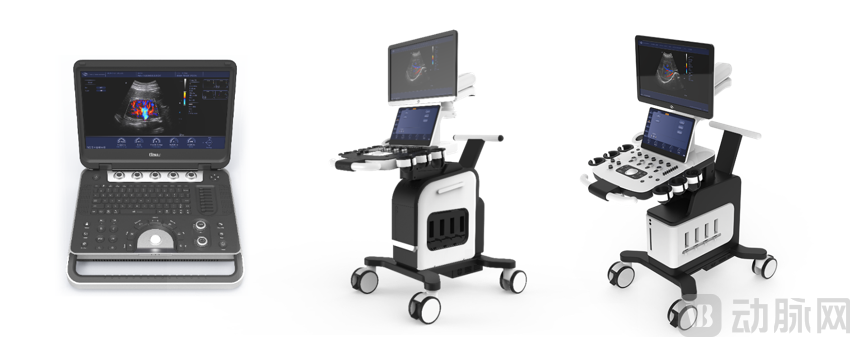 Selected Products from Jurong Medical
Focusing on Core Components: Independently Developed Ultrasound Single-Crystal Probe
Since ultrasound imaging is primarily achieved based on the physical properties of ultrasonic wave propagation in continuous media, the probe used to generate incident ultrasound waves and receive reflected ultrasound waves is a core factor determining image quality and also the central component of the entire ultrasound system. During the imaging process, the probe converts high-frequency electrical energy into ultrasound waves for outward radiation through the piezoelectric effect of its crystals, and receives ultrasound echoes, converting them back into electrical energy via the same piezoelectric effect. Currently, commonly used piezoelectric crystals are generally made of PZT material, a composite consisting of zirconium, titanium, and lead. The same materials, when subjected to different cutting methods, sintering processes, etc., can yield diverse finished products, resulting in variations in frequency bands, imaging clarity, and overall image quality.
At present, some technologically mature domestic imaging companies are capable of researching, developing, and manufacturing high-quality ultrasound probes; however, the industry as a whole still lags behind its international counterparts in ultrasound probe R&D.
Jurong Medical not only provides PZT probes, but also offers single-crystal probes and piezoelectric composite probes. Leveraging its unique BTM technology and probe packaging technology, the company has achieved a 40% increase in product sensitivity and bandwidth, a 37% improvement in consistency, and a 42% enhancement in long-term stability. The multi-layer active matching technology employed in the products further optimizes the matching for signal transmission and reception, reduces acoustic energy loss during propagation, and improves probe sensitivity and bandwidth.
Furthermore, another advantage of Jurong Medical lies in its proprietary imaging technology platform, the “Hi Platform.” In the field of ultrasound, image acquisition and processing constitute the foundation of ultrasound technology. The Hi Platform, independently developed by Jurong Medical, employs multi-beam imaging technology combined with coherent beam reconstruction algorithms to achieve fully dynamic focusing for both signal transmission and reception. This enables parallel computing of massive amounts of data, thereby increasing frame rates and detection sensitivity for moving tissues, ultimately enhancing image resolution, penetration depth, and contrast.
Integrating Breadth and Depth to Build a Comprehensive Line of Ultrasound Diagnostic Products
Currently, there remains substantial demand for the widespread adoption and upgrading of ultrasound imaging equipment in China. Jurong Medical’s breakthroughs in core components and imaging technologies for ultrasound systems have not only endowed its own products with significant competitive advantages but also expanded the range of product options available to other industry players.
Meanwhile, in response to the current demand for high-quality equipment among primary healthcare institutions, Jurong Medical is also exploring the handheld ultrasound market. According to Signify Research, the global ultrasound equipment market was valued at $6.9 billion in 2018, with handheld ultrasound devices accounting for less than 2% of total sales. Given the limited number of players in this segment, it remains a vast blue-ocean market.
Going forward, Jurong Medical will continue to explore both the breadth and depth of its product portfolio, extending ultrasound technology into more specialized clinical segments while completing its full line of ultrasound diagnostic products—a rarity in China. Currently, Jurong Medical is planning to launch a new round of financing, which will be primarily used for continuous product research and development to enhance its independent innovation capabilities.
Since its inception, Jurong Medical has consistently upheld the philosophy of “Technology Ignites the Light of Life,” with the goal of achieving self-reliance and controllability in “Intelligent Manufacturing in China.” Looking ahead, Jurong will leverage innovation-driven technologies to provide the industry with more valuable solutions and products, thereby benefiting the general public.