

Over RMB 4 Billion Invested: Who Will Emerge Victorious in China's Booming Mitral Valve Market?
Author: Valve Little Superman
Interventional therapy for heart valve disease has emerged in recent years as one of the hottest areas in cardiovascular intervention and one of the most sought-after sectors for capital investment. Globally, the field of interventional heart valve therapy has given rise to Edwards Lifesciences, a company with a market capitalization approaching $50 billion. In China, the transcatheter aortic valve replacement (TAVR) sector alone has spawned three publicly listed companies—MicroPort CardioFlow, Venus Medtech, and Peijia Medical—each with a market valuation in the tens of billions of yuan. According to forecasts by multiple institutions, mitral regurgitation is considered the next major hotspot in cardiovascular intervention following TAVR and is currently the sector attracting the most investment bets. The domestic mitral regurgitation landscape is equally fervent, with dozens of companies competing in this space. This article provides an analysis of the position of Chinese companies in this sector.
Mitral regurgitation (MR) is the most common valvular heart disease. According to an authoritative large-scale epidemiological survey in the United States, the prevalence of MR reaches as high as 9.3% among patients aged 75 and older. In China, the team led by Academician Ge Junbo from Zhongshan Hospital in Shanghai estimated through analysis that there are 7.5 million patients requiring interventional treatment for moderate-to-severe or severe MR. According to Frost & Sullivan projections, the market for transcatheter mitral valve repair will reach $2 billion by 2024 and eventually grow to three to four times the size of the TAVR market, amounting to tens of billions of dollars (Figure 1). In recent years, international giants such as Edwards Lifesciences, Medtronic, Abbott, and Boston Scientific have heavily invested in this sector, either by developing their own products or acquiring startups’ technologies at substantial costs. In the primary market, valuations in the mitral valve field have surged dramatically, leading to intense competition for investment opportunities.Statistical data on financing in the domestic mitral valve sector shows that the field of transcatheter mitral valve interventions attracted over RMB 4 billion in funding between 2020 and 2021.(Table 1). In addition, several companies have recently initiated their initial public offering (IPO) processes and are poised to list on the secondary market.
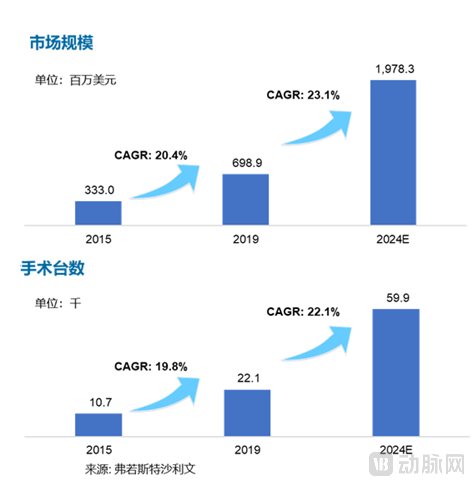
Figure 1 Forecast of the Global Market Size for Mitral Valve Interventional Therapy
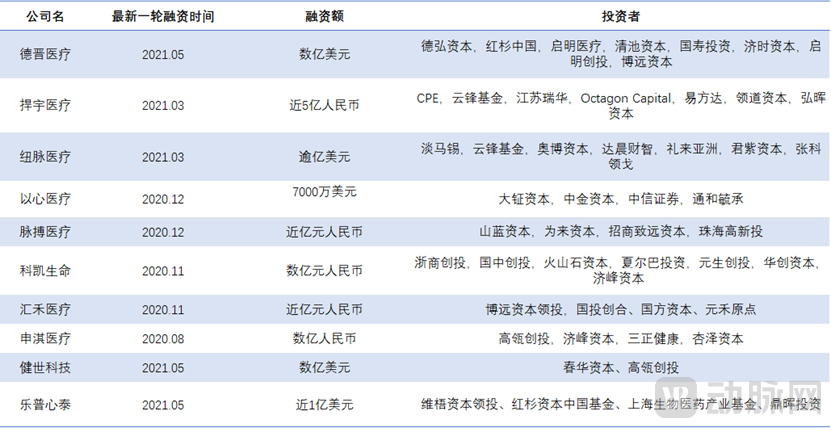
Table 1 Mitral Valve Primary Market Financing in China, 2020–2021
Surgical open-chest procedures were historically the only effective treatment for mitral regurgitation (MR), but their significant drawbacks—including high invasiveness, elevated risk, and prolonged recovery—have limited surgical intervention to merely 2% of patients. Transcatheter therapies offer advantages such as minimal invasiveness, lower risk, and faster recovery, providing new treatment options for these patients. This approach has also become one of the most prominent research areas in international cardiovascular interventions. Over the past decade, dozens of transcatheter devices for MR intervention have been developed, with technologies largely derived from the principles of surgical valve repair.
Transcatheter Mitral Valve Interventions can be categorized based on their technical principles as follows: (1) Transcatheter Edge-to-Edge Repair (TEER); (2) Transcatheter Mitral Annuloplasty, including direct and indirect annuloplasty; (3) Transcatheter Implantation of Artificial Chordae Tendineae; (4) Ventricular Annular Remodeling; and (5) Transcatheter Mitral Valve Replacement (TMVR). Table 1 lists the internationally approved interventional products for mitral regurgitation. Currently, seven products from five companies have received CE marking for market approval. Among them, Carillon utilizes an indirect annuloplasty approach via the jugular vein and coronary sinus; MPAS (Mitralign) performs indirect annuloplasty via the femoral artery; Cardioband conducts direct annuloplasty via the femoral vein; NeoChord involves transapical chordae implantation; MitraClip and PASCAL are transfemoral TEER devices; and Tendyne is a transapical mitral valve replacement system.
Although there are numerous technical approaches for transcatheter mitral valve interventions, only Abbott’s MitraClip, based on the “edge-to-edge” repair technique, has been approved by the U.S. Food and Drug Administration (FDA) due to technical limitations or other reasons. It has been widely used in clinical practice and was approved for market launch by the National Medical Products Administration (NMPA) in 2020. The extensive use of MitraClip (in over 100,000 cases) has also demonstrated the definitive feasibility of the “edge-to-edge” repair technique. Transcatheter Edge-to-Edge Repair (TEER) is currently the only mitral valve intervention technique for regurgitation recommended by European and American guidelines. Many industry experts consider this approach the only mature technical direction at present, and it will continue to lead the interventional treatment of mitral regurgitation in the short to medium term.
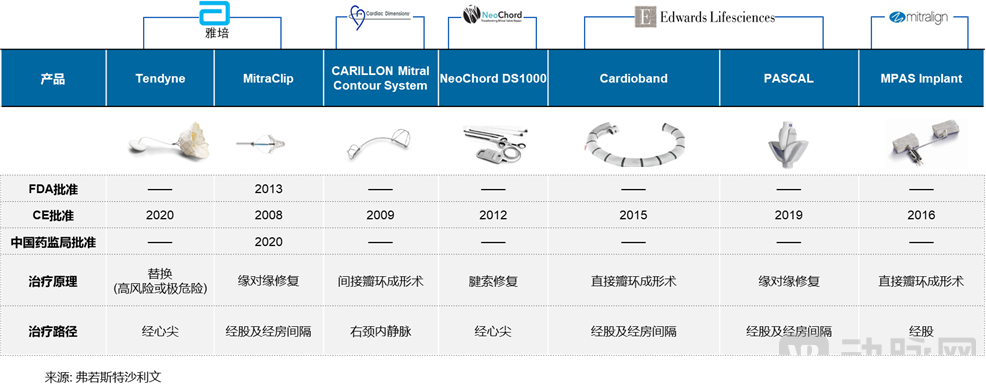
Table 2 Interventional Therapy Products for Mitral Regurgitation Launched in China and Abroad
There are numerous domestic players in the interventional valve industry. In the TAVR sector, the three major giants are Venus Medtech, Peijia Medical, and MicroPort CardioFlow. Key participants in the mitral valve space include Dejin Medical, Hanyu Medical, Jenscare Scientific, Nuomai Medical, and HeartCare Medical. Many of these companies are preparing for or undergoing initial public offerings (IPOs), with Hanyu Medical, Jenscare Scientific, and HeartCare Medical having already filed their prospectuses.
Hangzhou Qiming MedicalVenus Medtech (Hangzhou) Inc. was established in 2009 and listed on the Main Board of The Stock Exchange of Hong Kong Limited (HKEX) in December 2019 (stock code: 02500.HK). The company developed China’s first transcatheter aortic valve replacement (TAVR) device, Venus-A, which was approved for marketing and sales in May 2007, as well as China’s first transcatheter pulmonary valve, Venus-P. In May 2020, Venus Medtech entered into a collaboration with Opus Medical Therapies to jointly develop, manufacture, and market innovative transcatheter mitral valve replacement (TMVR) and transcatheter tricuspid valve replacement (TTVR) products, which are currently in the exploratory phase of animal studies.
Peijia MedicalEstablished in 2012 (Stock Code: 9996.HK) and headquartered in Suzhou, Jiangsu Province, the company was listed on the Hong Kong Stock Exchange in May 2020. The company operates two major business segments: interventional valve solutions and neurointerventional solutions. Its R&D efforts in interventional aortic valve products led to the approval and market launch of TaurusOne in April 2021 and its second-generation retrievable product, TaurusElite, in June 2021 in China. In December 2020, Peijia Medical signed a licensing and technology transfer agreement with HighLife for transseptal mitral valve replacement products. Under this agreement, HighLife granted Peijia Medical an exclusive license for its patented TMVR products under development, empowering Peijia Medical to manufacture, develop, and commercialize these products in the Greater China region. HighLife’s TMVR technology employs a transseptal approach to treat patients with mitral regurgitation and is currently undergoing international exploratory clinical trials.
MicroPort CardioFlow MedicalMicroPort CardioFlow Medtech Corporation (02160.HK), a subsidiary of MicroPort Scientific Corporation, was successfully listed on the Main Board of the Hong Kong Stock Exchange in February 2021. The company developed VitaFlow, China’s second transcatheter aortic valve replacement (TAVR) valve, which received regulatory approval for market launch in China in July 2019 and is now widely commercialized. MicroPort CardioFlow’s strategy in the mitral valve market combines independent research and development with overseas mergers and acquisitions. In terms of international collaboration, MicroPort CardioFlow has invested in 4C Medical and ValCare, both of which specialize in the development of medical devices for mitral and tricuspid valves. 4C Medical has developed the AltaValve transcatheter mitral valve replacement system, which features full recapturability and retrievability. ValCare has developed the Amend transapical annuloplasty system, which has completed clinical cases.
Hangzhou Dejin MedicalAs part of the Denovo Medical platform, alongside Venus Medtech, Dejin Medical was established in 2015 and is currently preparing for an initial public offering. In the field of mitral valve therapy, Dejin Medical developed MitralStitch, China’s first transapical mitral valve repair product. The device entered exploratory clinical trials in May 2018 and is currently undergoing pivotal pre-market clinical trials. Data from completed cases indicate that the device primarily works through mitral valve chordae tendineae implantation. In July 2020, Dejin Medical launched DragonFly™, China’s first transfemoral transcatheter edge-to-edge repair (TEER) product, and successfully completed its first-in-human clinical application. Pre-market clinical trials for this product commenced in May 2021.
Shanghai Hanyu MedicalFounded in 2016, the company submitted its IPO application to the Hong Kong Stock Exchange in April 2021. In July 2018, it launched ValveClamp, the world’s first transapical TEER device, and completed the first-ever implantation. The product finished enrollment for its pre-market clinical trials in March 2021, making it the fastest-developing product of its kind in China. According to Hanyu Medical’s prospectus, its transfemoral venous TEER device, ValveClasp, has completed long-term animal study evaluations and is scheduled to enter clinical trials in the third quarter of 2021.
Shanghai Nuomai MedicalFounded in 2015, the company is currently preparing for an initial public offering (IPO). In May 2019, MicroPort MedTech launched Asia’s first transapical mitral valve replacement system (Mithos) and completed the first implantation at Zhongshan Hospital, Fudan University in Shanghai. In February 2021, the company announced that Mithos had entered pre-market registration clinical trials; however, there have been no news reports on patient enrollment to date. The company is also developing a transfemoral transcatheter edge-to-edge repair (TEER) device, which is expected to enter clinical trials this year. Additionally, it has developed PrizeValve, China’s first balloon-expandable transcatheter aortic valve replacement (TAVR) prosthesis, which is currently in exploratory clinical studies and is anticipated to enter pre-market clinical trials this year.
Ningbo Jianshi TechnologyFounded in 2011, the company submitted its listing application to the Hong Kong Stock Exchange in June 2021. In September 2018, it launched Lux-Valve, the pioneering first transcatheter tricuspid valve replacement product in Asia. In June 2020, the product entered pre-market clinical trials, which are currently ongoing. The company has also developed the transapical TAVR system, Ken-Valve, which has likewise entered pre-market clinical trials. Its TEER device is currently in the animal testing phase.
Lepu MedicalThe controlled subsidiary, Lepu HeartCare Medical Technology (Shanghai) Co., Ltd. (“HeartCare Medical”), secured nearly USD 100 million in financing in late May and submitted its listing application to the Hong Kong Stock Exchange on June 25. The company is primarily engaged in the research, development, and sales of products for structural heart disease, with its mitral valve product currently in the sample development stage.
Mitral valve interventional devices have become the next “golden track” in China after TAVR, and are expected to give rise to several publicly listed companies. In terms of technological approaches, transcatheter edge-to-edge repair (TEER) is currently the most mature pathway and will be a key area of competition among companies. Many domestic firms are investing heavily in R&D in this direction.
Currently, domestic companies in China are pursuing three distinct R&D pathways for transcatheter edge-to-edge repair (TEER) devices. The first involves mimicking the MitraClip system; the second focuses on incremental innovation based on the MitraClip design (such as Dejin Medical’s DragonFly system); and the third entails replicating the PASCAL system. In China, the term of protection for invention patents is 20 years. The patent application for MitraClip was filed around 2000, whereas the patent application for PASCAL was filed in 2019. From a patent protection perspective, the second pathway carries the lowest risk of patent infringement, followed by the first, while the third poses significant potential legal risks. China is making rapid progress in the development of interventional devices for mitral regurgitation, with market growth expected to surge within the next few years, giving rise to several companies with considerable global influence.