

Lepu Medical Subsidiary Achieves First-in-Human Clinical Implantation of Novel Peripheral Deep Vein Thrombectomy Catheter

LeoMed
Interventional Device R&D and Manufacturer
On June 18, 2021, the first clinical enrollment for the peripheral venous thrombectomy catheter developed by Weiyu Medical, a subsidiary of LeoMed, was completed by Professor Lu Xinwu’s vascular surgery team at Shanghai Ninth People’s Hospital, Shanghai Jiao Tong University School of Medicine.This successful procedure pioneered interventional deep vein thrombosis clearance without reliance on proprietary devices or thrombolytic agents.
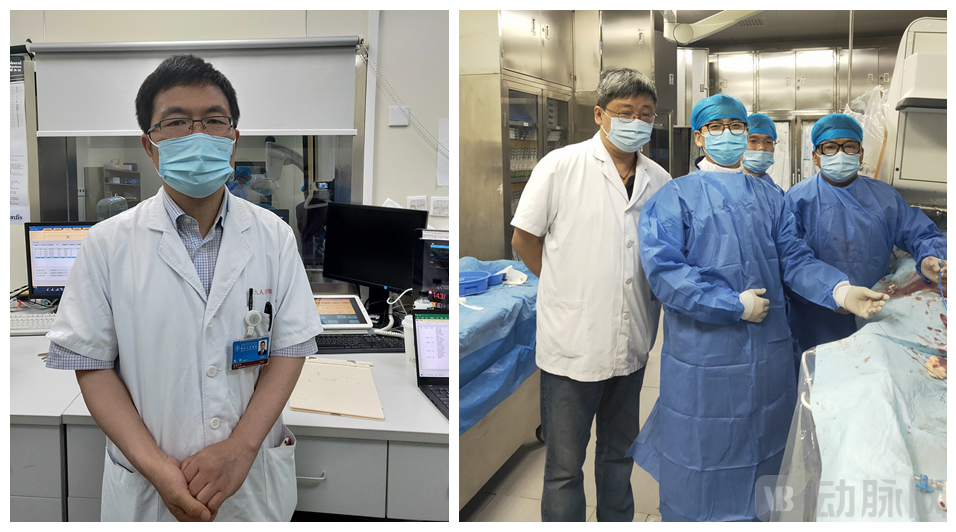
(Director Lu Xinwu and the physician team from Shanghai Jiao Tong University Affiliated Ninth People’s Hospital who performed the first clinical enrollment of the thrombectomy catheter)
According to reports, the first patient enrolled in the clinical trial was a female whose deep vein thrombosis had progressed to the subacute stage.Professor Lu Xinwu’s team employed an innovative thrombectomy device for this patient, successfully removing the venous thrombus with a clearance rate of95%。
Data indicate that the current benchmark for successful thrombus removal is a clearance rate of over 50%. In this case, the venous thrombectomy catheter achieved a 95% thrombus clearance rate, significantly improving upon previous standards. Meanwhile, the clinical trial of this venous thrombectomy catheter substantially reduced patient blood loss. LeoMed stated, “Currently, thrombectomy procedures using aspiration devices typically result in patient blood loss exceeding 300 ml, whereas in our trial, patient blood loss was only approximately 50 ml, greatly minimizing surgical trauma to patients.”
Deep vein thrombosis is a disorder of venous return caused by abnormal blood clotting. It is a highly dangerous condition that can lead to severe complications such as phlegmasia cerulea dolens, pulmonary embolism, shock, venous gangrene, and even death. Pulmonary embolism, in particular, has a mortality rate second only to cardiovascular and cerebrovascular diseases.
According to U.S. clinical statistics, the incidence of deep vein thrombosis (DVT) is 0.7‰–1.4‰, and the case fatality rate of pulmonary embolism (PE) caused by DVT is 25%. Furthermore, DVT has a rapid onset and a narrow therapeutic window, necessitating immediate emergency treatment at nearby medical facilities. Previously, due to the lack of effective medical devices, treatment for DVT was largely limited to surgical thrombectomy and catheter-directed thrombolysis.
Surgical thrombectomy refers to the removal of thrombi via open surgical procedures. This treatment modality is associated with a high incidence of postoperative complications, including renal dysfunction, hemorrhage, pulmonary embolism, hemoglobinuria, and swelling. Due to its prolonged operative time, significant invasiveness, and procedural complexity, it has gradually ceased to be a mainstream therapeutic approach.
Catheter-directed thrombolysis involves the direct infusion of thrombolytic agents into the thrombus via a catheter to achieve rapid dissolution. However, thrombolytic drugs are ineffective against organized (chronic) thrombi, and their impact on the clinical manifestations of venous thrombosis is often delayed. Moreover, these agents carry a significant risk of hemorrhage; elderly patients, in particular, face a substantially elevated risk of fatal intracranial hemorrhage. Furthermore, extensive comparative clinical studies have demonstrated that the therapeutic efficacy of thrombolysis is not superior to that of anticoagulant therapy.
In recent years, percutaneous mechanical thrombectomy, promoted in China by multinational medical device giants, has seen increasing adoption. This procedure involves inserting a catheter into the lesion site and using specialized equipment to simultaneously inject medication and aspirate thrombi for treatment. Although such mechanical thrombectomy devices address the issues of significant trauma and prolonged duration associated with open surgery, they often lead to complications such as hematuria due to excessive blood loss during the procedure. Furthermore, this treatment modality requires expensive equipment costing millions of RMB and disposable consumables priced at tens of thousands of RMB per unit, imposing a substantial financial burden on both patients and the medical insurance system. Currently, only large hospitals in China have the financial capacity to procure such costly equipment, hindering widespread adoption and failing to meet the principle of providing accessible, emergency care for deep vein thrombosis.
In this context, Weiyu Medical, a subsidiary of LeoMed, has innovatively developed a deep vein thrombectomy device with a unique structure through in-depth collaboration with physicians. This device enables direct and highly efficient removal of acute and subacute thrombi via minimally invasive interventional therapy, without relying on specialized equipment or thrombolytic agents.LeoMed’s thrombectomy catheter has successfully completed its first clinical enrollment and achieved excellent clinical outcomes, signifying that patients with deep vein thrombosis in China will now have access to a minimally invasive, safe, and effective innovative therapy, representing a new treatment option for the disease.
Currently, the domestic market for deep vein thrombosis (DVT) thrombectomy is predominantly occupied by overseas brands. The high pricing of imported consumables places them beyond the financial reach of many patients. Furthermore, this procedure requires specialized equipment and thrombolytic agents, resulting in high procurement costs that hinder its adoption by primary-care hospitals.
The R&D team stated, “The removal of peripheral thrombi has long been a global challenge. Given the high risks associated with deep vein thrombosis (DVT), including potential disability or fatality, timely local intervention is a fundamental principle. Consequently, there is a potential demand for a device that does not rely on proprietary equipment or thrombolytic agents and can be deployed in primary healthcare institutions.”
Based on the above considerations, Weiyu Medical, a subsidiary of LeoMed, has jointly developed with physicians a thrombectomy catheter that requires no specialized equipment and is independent of thrombolytic agents. With advantages such as reasonable pricing and no need for dedicated supporting equipment, this product can be directly deployed in primary healthcare institutions. The widespread adoption of this device will help patients with deep vein thrombosis in China receive timely treatment.
The R&D team stated, “The technical inspiration for the thrombectomy catheter stems from minimizing the invasiveness of the classic Fogarty open surgical embolectomy. While surgical intervention is effective and direct, offering favorable thrombectomy outcomes, it causes significant trauma to patients. By transforming this approach into a minimally invasive endovascular procedure combined with negative pressure aspiration, we have addressed the drawbacks of open surgery while achieving an integrated advantage that is minimally invasive, safe, and clinically effective.”
After five years of product development and research, LeoMed’s R&D team adopted a globally pioneering unique design that combines device cleaning with negative-pressure thrombus aspiration, successfully transforming the surgical Fogarty embolectomy into a minimally invasive endovascular procedure, thereby giving rise to a deep vein thrombosis (DVT) thrombectomy device.
With the advancement of interventional technologies, minimally invasive thrombectomy is gradually becoming the primary procedure for deep vein thrombosis (DVT) clearance, owing to its advantages such as minimal invasiveness, shorter operative time, and faster postoperative recovery. It is expected that the launch of LeoMed’s thrombectomy catheter will enrich the product landscape of the DVT thrombectomy market by offering more minimally invasive, safer, and more efficient clinical outcomes, along with fewer complications and sequelae, thereby providing clinicians with a more powerful tool for DVT removal. LeoMed stated to VCBeat, “We hope that upon its market launch, the thrombectomy catheter will generate economic returns while also fulfilling social responsibility, contributing our modest efforts to alleviating patient suffering and facilitating surgical procedures for physicians.”
LeoMed finally revealed: “As a globally first-of-its-kind device, the thrombectomy catheter is currently applying for designation as a National Innovative Medical Device and is expected to be launched in 2024.”