

Chongqing Maternal and Child Health Hospital Launches Telemedicine Workstation for Reproductive Medicine to Drive High-Quality Healthcare Resource Decentralization
The uneven distribution of high-quality medical resources has long been a perennial issue in China’s healthcare industry, leading to a mismatch between the structure of the medical service system and patients’ healthcare needs. Furthermore, the fragmentation among medical institutions has created gaps in service provision.
To promote the decentralization of high-quality medical resources and maximize the rational utilization of healthcare resources, Chongqing Health Center for Women and Children convened the Fourth Council Meeting of its Medical Consortium in Chongqing on June 24, 2021. At the meeting, it unveiled the Reproductive Medicine (Infertility) Remote Physician Workstation (hereinafter referred to as the “Physician Workstation”), jointly established by Chongqing Health Center for Women and Children and China SDIC High-Tech Industry Investment Co., Ltd. (hereinafter referred to as “SDIC High-Tech”).Aimed at collaborating with medical institutions at all levels to provide assisted reproductive technology (ART) diagnosis and treatment services across different stages, offering high-quality and convenient remote professional guidance and clinical services for ART to district- and county-level medical institutions and patients.。
Building a Tiered Diagnosis and Treatment System for Reproductive Medicine Based on Business Processes
Over the past decade, the incidence of infertility in China has been rising steadily, reaching 15%. Nearly 50 million people across the country are affected by infertility. The continuous delay in marriage and childbearing age, coupled with the growing number of advanced-age pregnant women driven by the three-child policy, as well as the urgent need for eugenics and healthy childbirth due to concerns about birth defects, have made the assisted reproductive technology (ART) industry one of the markets with the greatest potential demand and fastest growth in China’s healthcare services sector.
However, most primary-level maternal and child health hospitals are not qualified to provide in vitro fertilization (IVF) services, which forces infertility patients in districts and counties to seek medical treatment elsewhere, thereby increasing both the time and financial costs of care.
In fact, there are many specific disease-related causes of infertility, such as female pelvic and ovulatory factors, as well as male endocrine dysfunction. A small proportion of cases are due to immunological factors. Therefore, not all infertile patients need to rely on in vitro fertilization (IVF) to address their infertility. However, due to patients’ limited understanding of treatment options for infertility and their demand for high-quality medical resources, some patients choose to seek care directly at provincial- or municipal-level assisted reproductive technology hospitals, which has led toLarge hospitals face difficulties in accessing medical care and long waiting lists, while small and local hospitals suffer from a lack of patients.contradiction.
By analyzing the clinical pathways for assisted reproductive technology services, it can be observed thatReproductive medicine services exhibit distinct characteristics of tiered diagnosis and treatment., district- and county-level maternal and child health hospitals can establish effective coordination with provincial- and municipal-level maternal and child health hospitals. The former can handle patients’ preoperative baseline examinations as well as subsequent services such as pregnancy preservation, rehabilitation, and follow-up, while the latter can provide remote technical guidance and focus on licensed-restricted services such as in vitro fertilization (IVF).
Sinking Medical Resources to Achieve a Win-Win Situation for All Parties
As the first human assisted reproduction center approved by the former Ministry of Health and one of the 12 national training bases for human assisted reproduction technology, Chongqing Health Center for Women and Children has long made strategic arrangements to address the issue of uneven distribution of medical resources.
It is reported that since last year, Chongqing Health Center for Women and Children has partnered with SDIC High-Tech to develop a physician workstation and jointly build a tiered diagnosis and treatment system as well as an “Internet+” healthcare service platform. Through remote medical solutions, the collaboration aims to enhance the diagnostic and therapeutic capabilities of primary healthcare institutions in managing infertility, while simultaneously addressing the challenges faced by infertile patients in accessing medical care.
During the development of the physician workstation, SDIC High-Tech leveraged information technology to address the fragmentation and bottlenecks in Chongqing’s tiered diagnosis and treatment system. By capitalizing on the advantages of its industrial fund and aggregating resources from various stakeholders, the company successfully created a novel “Remote Physician Workstation for Reproductive Medicine (Infertility).” This initiative not only established a new model for tiered maternal and child healthcare but also facilitated the closed-loop management of maternal and child diagnosis, treatment, and health services across the city.
Specifically, what benefits does the establishment of the physician workstation bring to various stakeholders throughout the business operations? Looking ahead, how will Chongqing Health Center for Women and Children plan and deploy its business strategies?
Huang Guoning, Head of the Reproductive Medicine Center at Chongqing Health Center for Women and Children and Chairperson of the Reproductive Medicine Branch of the Chinese Medical Association, stated that to ensure the sustained operation of the tiered diagnosis and treatment system and to leverage the technical radiation and leading role of Chongqing Health Center for Women and Children, a centralized training mechanism has been established through physician workstations to enable medical personnel from alliance units to “move up” for advanced training; meanwhile, functional modules such as remote consultations, two-way referrals, and instant communication have been implemented to allow high-quality medical resources to “sink down” to grassroots levels.By establishing standardized protocols for the diagnosis and treatment of infertility and implementing mutual recognition of laboratory and imaging results, we help member institutions of medical consortia strengthen specialty development and enhance professional capabilities, ultimately establishing a homogeneous model for medical quality management.。
FromPatient SideFrom this perspective, the medical service model covering the entire process of “pre-diagnosis, during diagnosis, and post-diagnosis,” built through functional modules such as consultations and a green channel for two-way referrals, enables patients to access high-quality medical services at primary care institutions, thereby addressing the difficulty of accessing medical care.
FromDoctor's SideFrom this perspective, the establishment of a centralized training mechanism for physician workstations enables doctors in primary healthcare institutions to enhance their diagnostic and treatment capabilities. Meanwhile, leveraging the tiered diagnosis and treatment system allows physicians at the Municipal Maternal and Child Health Hospital to devote less effort to outpatient services, thereby enabling them to focus more on IVF-related services.
Finally fromHospital SideFrom this perspective, driven by the tiered diagnosis and treatment system of the medical consortium—with Chongqing Health Center for Women and Children as the core and infertility diagnosis and treatment as the link—primary healthcare institutions can undertake a large volume of pre-diagnostic examinations and post-treatment rehabilitation services. This not only optimizes the allocation of overall medical resources but also significantly increases the revenue of primary healthcare institutions.
Overall, the implementation of this physician workstation system has standardized infertility services across the city under a unified platform and set of standards. It enables individualized electronic health records for each infertility patient with comprehensive documentation of the entire diagnosis and treatment process. Furthermore, it establishes a business-driven tiered diagnosis and treatment system, optimizes patient care workflows, empowers medical institutions at all levels, and facilitates the broader delivery of infertility diagnosis and treatment services.
Guided by “Cloud-Based Maternal and Child Health,” Serving the Full Spectrum of Maternal and Child Healthcare Services
At the launch event, Chongqing Health Center for Women and Children signed agreements and awarded plaques to the first six pilot medical institutions: The Three Gorges Central Hospital Affiliated to Chongqing University, Wanzhou District Maternal and Child Health Hospital, Fuling District Maternal and Child Health Hospital, Yongchuan District Maternal and Child Health Hospital, Bishan District Maternal and Child Health Hospital, and Xishui County Maternal and Child Health Hospital in Guizhou Province. Together, they will strengthen the development of a regional healthcare system centered on Chongqing Health Center for Women and Children, while breaking down information silos among maternal and child health institutions at all levels and establishing mechanisms for information sharing and operational collaboration.
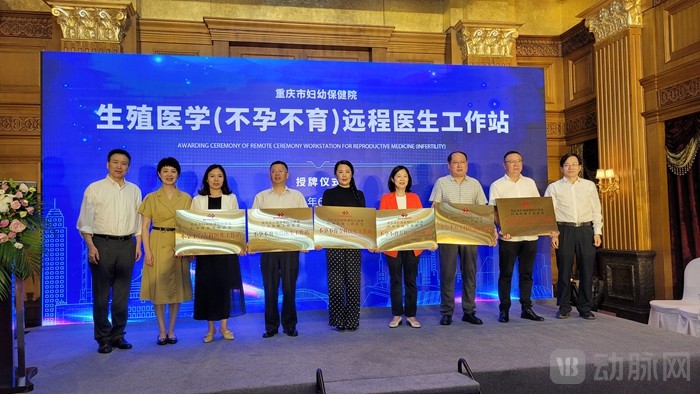
Awarding Ceremony
In the long run, the launch of this remote reproductive medicine workstation can serve as a breakthrough point in the construction of the entire tiered diagnosis and treatment system and the “Internet+” service framework.Drawing on existing experience in establishing remote workstations for reproductive medicine, Chongqing Health Center for Women and Children and SDIC High-Tech will gradually establish additional specialist physician workstations in fields such as pediatric asthma, polycystic ovary syndrome (PCOS), preconception eugenics, psychology, and nutrition. Concurrently, they will build a collaborative diagnosis and treatment platform for specialist alliances to support the full spectrum of maternal and child health services.。
Furthermore, throughout the entire process of advancing this work, Chongqing Health Center for Women and Children and SDIC High-Tech Industry Investment Co., Ltd. will consistentlyGuided by the “Cloud-Based Maternal and Child Health” initiative, integrate “Internet + Healthcare” to achieve cloud migration for operations, services, data, quality control, and training within the maternal and child health system., to build a provincial-level "Cloud Maternal and Child Health" platform with demonstrative value, meet the public's needs for maternal and child health services, and gradually promote this service model nationwide in the future.