

Yunjian Medicine's Oncology Personalized Therapy Protein Test Receives U.S. Medicare/Medicaid Preliminary Reimbursement Approval
Recently, Yunjian Medicine launched Ankanglai, a personalized oncology medication testing product based on mass spectrometry proteomics technology.TMSecured pre-approval for fee schedule pricing under the U.S. Medicaid and Medicare programs (CPT code: 84999) and successfully completed integration with 62 U.S. insurance companies, with formal approval expected by the end of this year. Obtaining Medicaid and Medicare fee schedule approval signifies that Ankanglai has been formally included in the U.S. healthcare coverage system.
Medicaid is a joint federal and state program for low-income households, primarily providing coverage to low-income U.S. citizens or lawful immigrants.
Medicare is a health insurance program for individuals aged 65 and older or those with certain disabilities.
Products included in the two programs will receive certain policy support.

Studies have shown that molecular testing at the gene and protein levels can provide pre-treatment guidance for cancer patients. In particular, genetic testing has ushered in a new era of “personalized medicine” in oncology. Since targeted cancer drugs act on specific links within tumor molecular signaling pathways, genetic testing is generally performed prior to treatment to determine whether a patient is suitable for such therapy. However, an increasing body of research demonstrates that relying solely on genetic testing to guide clinical treatment carries risks, potentially leading to false-positive results or treatment failure.
Most antitumor drugs target proteins; therefore, detecting these drug-targeted proteins is the most accurate and direct approach, providing patients with a more precise basis for medication.Relying solely on gene-guided therapy without simultaneously measuring downstream proteins is essentially a “guess” regarding the transcription and expression of that gene. Since most currently used anti-tumor drugs exert their effects by relying on or targeting proteins, detecting tumor proteins is essential. Mass spectrometry-based proteomic testing can compensate for the limitations of genetic testing; the two approaches are complementary, providing more precise medication recommendations for patients.

Currently, commonly used clinical protein detection techniques include immunohistochemistry (IHC) and enzyme-linked immunosorbent assay (ELISA), both of which rely on the specific reaction between protein antigens and antibodies. However, these methods are limited in their clinical application due to constraints imposed by antigen-antibody specificity, inability to achieve accurate quantification, subjective interpretation errors, and low throughput. Taking HER2 protein IHC testing as an example, literature reports indicate a 20% false-positive rate and a 9% false-negative rate, with 5%–12% of patients yielding indeterminate results (neither clearly negative nor positive). Consequently, these patients may be misclassified or receive inappropriate treatment due to ambiguous test results, thereby delaying optimal therapeutic intervention.
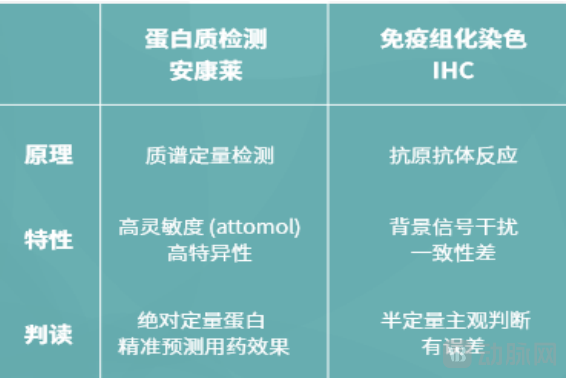
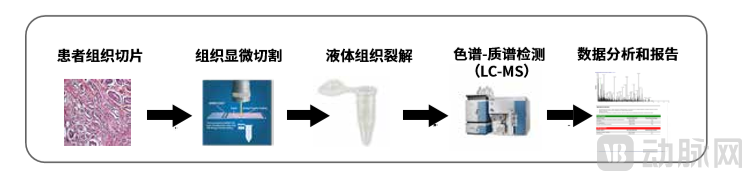
AnkanglaiTMLeveraging laser capture microdissection technology, tumor cells are precisely isolated from tissue sections, resolving the challenge of mixed tumor and non-tumor tissues in specimens. Following liquefaction, the tumor cells undergo absolute quantification of tumor-associated proteins on a high-resolution mass spectrometry platform. This approach combines mass spectrometry with isotope-labeled internal standard peptides, significantly reducing the probability of false positives. It enables the simultaneous detection of 72 clinically significant specific target peptides, providing recommendations for targeted therapies, chemotherapy, and immunotherapy for patients with lung cancer, colorectal cancer, breast cancer, soft tissue sarcomas, bone tumors, and other malignancies.
Given the substantial value of personalized oncology medication testing, Yunjian Medicine has received preliminary pricing approval from the U.S. Medicaid and Medicare programs. This means that the majority of cancer patients in the United States can now identify appropriate therapeutic drugs through protein testing. Furthermore, this development advances clinical proteomics based on mass spectrometry technology.
Currently, Yunjian Medicine provides proteomics-based personalized oncology medication guidance to individuals across the United States through its LDT laboratory. Meanwhile, in China, we are committed to advancing the clinical application of this product, enabling more cancer patients to benefit from Ankanglai.TMThe 2021 revised version of the Regulations on the Supervision and Administration of Medical Devices provides a legal basis for domestic medical institutions to develop in-house laboratory-developed tests (LDTs). With the implementation of these regulations, the LDT sector in China is poised for significant growth. In the future, Yunjian Medicine will continue to prioritize R&D as the core driver of corporate development, launch more health testing products, and contribute to the “Healthy China” initiative.