

JiCui PharmaRoc: The Biotech Startup Backed by CDH, Hillhouse, Yunfeng, Sequoia, and Morgan Stanley Generating $37M Revenue by Selling Lab Mice

GemPharmatech
R&D, Production, and Non-Clinical Research Service Provider for Laboratory Mouse Models
June 30, 2021, the information disclosure website of the SSE STAR MarketThe prospectus of GemPharmatech was posted.
As of the formal disclosure of the prospectus, GemPharmatech had been in existence for less than four years. Throughout its development, despite completing only two rounds of financing, GemPharmatech attracted a total of RMB 560 million in investment from renowned institutions such as CDH Investments, Hillhouse Capital, Yunfeng Capital, Sequoia Capital, and Morgan Stanley. CDH Investments led the Series A round, while Hillhouse Capital took the lead in the Series B round with strong support.
Moreover, within the niche segment of model animals where GemPharmatech operates, although there are not many players, two companies have successively filed for listings on the STAR Market. The other company, Shanghai Southern Model Organisms, which filed for listing at the end of 2020, has had its status updated to “Under Inquiry.”
What is the allure of this niche sector, and why has it attracted so many prominent investment firms? What unique characteristics does this sector possess that have enabled two companies to enter the IPO process among such a small number of players? What is the background of GemPharmatech, which filed for an IPO less than four years after its establishment?
With these questions in mind, we examined GemPharmatech’s prospectus and historical materials to seek answers to each of these intriguing queries.
When it comes to the success of GemPharmatech, the first name that must be mentioned is Professor Gao Xiang, the key figure leading the company.
Gao Xiang is a pioneer in the field of model animal research in China. Under his leadership, his team not only produced China’s first conditional gene-knockout mouse—a technically challenging achievement—but also created the world’s first gene-edited dog and the world’s first gene-edited monkey, thereby securing a prominent place for China’s model animal industry on the international stage. Gao Xiang himself has received numerous honors, including appointment as a Distinguished Professor under the Ministry of Education’s Changjiang Scholars Program, recognition as a recipient of the National Science Fund for Distinguished Young Scholars, the Second Prize of the National State Scientific and Technological Progress Award, and the Grand Prize of the Ministry of Education’s Scientific and Technological Progress Award. To this day, Gao Xiang continues to serve as Director of the National Resource Center for Mutant Mice, a member of the National Expert Committee on Laboratory Animals, and a member of the Steering Committee of the International Mouse Phenotyping Consortium.
With such pioneering leadership, GemPharmatech has achieved a dimensional advantage over its competitors in technical capabilities.
When Professor Gao Xiang returned to China in 2000, it coincided with the national launch of the “National Genetic Engineering Mouse Resource Bank” project. Despite having limited financial support, the team led by Gao Xiang at Nanjing University outcompeted teams from three other municipalities directly under the central government and provincial capitals with a high-quality proposal, ultimately securing the project for Nanjing. In 2003, Gao Xiang founded the Model Animal Research Institute of Nanjing University and served as its director.
In 2009, to promote the sharing and utilization of resources, Nanjing University and the Nanjing Jiangbei New Area jointly established the technology transfer platform “Nanjing University–Nanjing Institute of Biomedicine,” leveraging the National Resource Center for Mutant Mice. Gao Xiang was appointed as the Director of the Institute. With its one-stop specialized services for mouse models covering research and development, production, and sales, the Nanjing Institute of Biomedicine successfully gained entry into the market.
In December 2017, to further promote the industrial translation of model animal resources, Jiangsu Jicui Pharmaron Biotechnology Co., Ltd. was jointly established by Gao Xiang’s innovation team, the Jiangsu Industrial Technology Research Institute, and Nanjing Bio-medicine Valley in the Jiangbei New Area, with support from Nanjing University and under the policy impetus of the Nanjing Municipal Government for new-type R&D institutions.
Thus, although GemPharmatech has been established for less than four years, it is backed by more than two decades of technological accumulation.
GemPharmatech’s team is composed almost entirely of the original members from Professor Gao Xiang’s group. Professor Gao personally serves as the company’s Chairman; Dr. Zhao Jing, the CEO, brings over 16 years of experience in model editing and analysis as well as key account development; Dr. Ju Cunxiang, the R&D Director, has successfully developed hundreds of humanized animal models; and Dr. Wang Hongyu, the Technical Director, earned his degree from Saarland University in Germany and subsequently conducted postdoctoral research at the University of Oxford in the UK, specializing in model construction and drug screening.
This team has been honed over many years, reaching a benchmark level in the field of mouse models. Moreover, this research-savvy team can provide assistance that other teams cannot. VCBeat first reported on GemPharmatech during its Series A financing round. At that time, Professor Gao Xiang told VCBeat, “We not only provide customers with mouse models but also help them select appropriate models and design experiments. Sometimes customers are unsure which mouse model to choose; at other times, their choices are not optimal or do not fully align with their needs. Most members of our team come from scientific research backgrounds and are highly familiar with mouse experimental design. Therefore, we can help customers select the most suitable mouse models based on their specific requirements and offer recommendations for subsequent experimental design—a capability that many other companies in the same sector lack.”
With its state-backed pedigree and a highly competent team, GemPharmatech has been inundated with interest from major primary-market investment firms.In June 2019, GemPharmatech, which had been established for less than two years, secured RMB 160 million in Series A financing from CDH Investments and Sinopharm Group. Subsequently, in September 2020, GemPharmatech announced that it had completed over RMB 400 million in Series B financing, led by Hillhouse Investment Management, with participation from Yunfeng Capital, Morgan Stanley, Sequoia Capital, Talford Capital, and other investors.
Jicui Yaokang is positioned upstream of the pharmaceutical industry and contract research organizations (CROs), serving as a supplier of materials for drug research. All its business activities revolve around model animals, primarily mice.
Model animals are the “gold standard” for validating the efficacy of preclinical candidate drugs, permeating every stage of the pharmaceutical R&D industry chain and serving as a core resource in translational medicine. In lay terms, model animals are experimental animals used to substitute for humans in in vivo studies. Mouse models are considered the most important model animals.
So, what can mouse models do? GemPharmatech’s business portfolio essentially covers all application scenarios for mouse models.
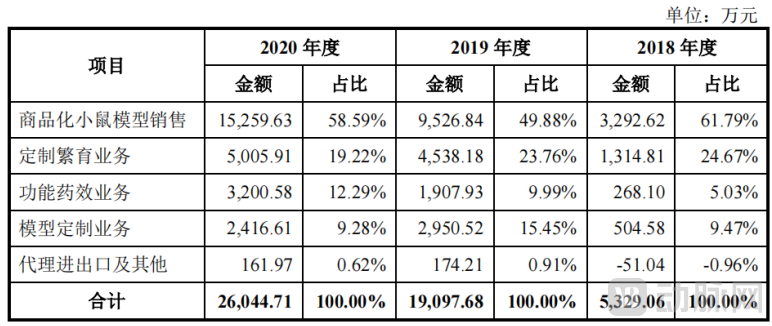
The most critical business of GemPharmatech is the sales of commercialized mouse models. This segment accounted for nearly 60% of GemPharmatech’s revenue in 2020. Specifically, the mouse strains offered by GemPharmatech primarily include the following types.
1. Basic Mouse Strains:GemPharmatech offers a comprehensive portfolio of commonly used inbred and outbred mouse models. Furthermore, the company has mastered axenic purification technology and developed six germ-free mouse strains. Germ-free mice are subject to more stringent standards than SPF (Specific Pathogen-Free) mice; in addition to being free of major pathogens, they must be completely devoid of any living organisms, including bacteria, viruses, and parasites, both on their body surfaces and within their bodies.
2. Spotted Mouse:Gene knockout mouse models, generated via gene editing and homologous recombination techniques to induce complete or partial loss of function of target genes in mice, are primarily categorized into global knockout (KO) mice and conditional knockout (CKO) mice. These models hold significant value in the study of specific genes or drug targets.
As the number of genes involved in research within the scientific and pharmaceutical sectors continues to grow, GemPharmatech has responded to market demands by launching the “Spotted Mouse Project.” This initiative aims to pre-establish a comprehensive library of knockout (KO) and conditional knockout (CKO) mouse strains covering all more than 20,000 protein-coding genes in mice. When VCBeat interviewed GemPharmatech in June 2019, the Spotted Mouse Project had just completed its first phase, comprising a resource library of 3,000 models. By the end of 2020, the project had accumulated 15,000 strains, achieving the construction of 12,000 mouse models in just a year and a half. The customer delivery timeline for these strains was significantly reduced from the original 4–7 months to merely 7 days.
3. Immunodeficient Mouse Models:Immunodeficient mouse models exhibit significantly reduced rejection of xenogeneic tissues and cells due to partial dysfunction of the immune system, thereby playing an irreplaceable role in a series of immune system-related studies, such as preclinical research on tumor immunotherapy and CAR-T therapy, which have gained substantial attention in recent years.
The so-called "nude mice" commonly referred to are one of the immunodeficient mouse models, characterized primarily by a certain degree of T-cell deficiency, and belong to the first generation of immunodeficient mouse models. The products provided by GemPharmatech have advanced to the third generation, namely the NCG mouse model, which exhibits not only T-cell deficiency but also congenital defects in B cells and NK cells. This severely immunodeficient strain is currently among the most profoundly immunocompromised mouse models available.
4. Humanized Mouse Models:Although the genomes of mice and humans are highly similar, subtle differences can still affect the accuracy of mouse experiments. In such cases, introducing human drug target genes into the mouse genome via gene editing enables precise validation of the neutralizing effects of macromolecular drugs on human targets. This approach is particularly valuable in the study of immune checkpoint inhibitors. GemPharmatech currently offers a comprehensive portfolio of humanized mouse models targeting both single and multiple antigens, catering to both monotherapy and combination therapy research scenarios.
5. Disease Mouse Models:GemPharmatech’s disease mouse models can fully recapitulate the entire process of disease onset and progression. For instance, when a specific gene mutation is clinically identified as causing a certain disease, GemPharmatech can introduce the same mutation into mice, thereby inducing the corresponding disease. Such mouse models authentically mimic clinical disease conditions, maintaining high consistency with clinical scenarios in further drug development and studies on disease mechanisms.
Overall, mouse models, as essential tools for preclinical drug research, are becoming increasingly diverse in response to the growing precision of drug development needs. By the end of 2020, GemPharmatech had developed more than 16,000 commercially available mouse models with independent intellectual property rights, covering nearly all research scenarios. This figure not only ranks among the highest in China but is also comparable to that of The Jackson Laboratory, the world’s largest supplier of mouse models.
Jicui Yaokang also provides supporting model customization services and custom breeding services. Models not currently available can be custom-developed, and large-scale experimental demands can be met through custom breeding.
In addition to directly providing mouse models, GemPharmatech’s services are gradually extending downstream, offering not only mouse models but also supporting pharmacodynamic services. The growth potential of these value-added services is significantly greater than that of GemPharmatech’s current core business. While sales of mouse models generate one-time revenue, supporting pharmacodynamic studies can deliver long-term value creation. According to GemPharmatech’s revenue data, pharmacodynamic services are the fastest-growing segment among its major business units and are likely to become a key revenue pillar for the company in the future.
Due to its technological advantages and the irreplaceable role of mouse models in research, GemPharmatech’s clients include major domestic scientific research institutions, top-tier (Grade 3A) hospitals, leading innovative pharmaceutical companies, and CRO firms. Internationally, not only have large pharmaceutical companies such as Novartis partnered with GemPharmatech, but even Charles River Laboratories, which possesses its own mouse model R&D capabilities, is among its clients, underscoring GemPharmatech’s robust R&D prowess.
Moreover, due to the irreplaceable role of mouse models in biomedical research, GemPharmatech’s customer base is highly diversified. In 2020, revenue from its top five customers accounted for only 18.93% of its total revenue, and to date, the company has served more than 1,000 clients. This also indicates that GemPharmatech faces low operational risk and is unlikely to be significantly affected by changes involving a small number of customers.
Logically speaking, GemPharmatech is currently in a stage of rapid business expansion and surging revenue growth. However, its revenue in 2020 did not maintain this high-speed growth trajectory. While the revenue growth rate exceeded 250% from 2018 to 2019, it dropped to merely 36.4% from 2019 to 2020.
So, has GemPharmatech gradually approached its ceiling? While GemPharmatech has indeed encountered a revenue bottleneck, the constraint on its revenue growth is not industry demand but rather the company’s production capacity.
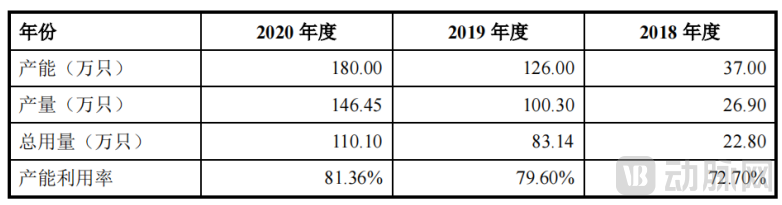
It is evident from GemPharmatech’s production capacity that its revenue growth has largely kept pace with the expansion of its capacity. In 2020, GemPharmatech’s capacity utilization rate reached 81.36%, indicating that the company was operating at near-full capacity.
It is evident that GemPharmatech has fully utilized its production capacity to provide external services; however, given the unprecedented boom in China’s biopharmaceutical industry and biomedical research, the downstream demand facing GemPharmatech will only continue to grow in the future.Moreover, if the company’s production capacity continues to expand, GemPharmatech’s animal models will have the opportunity to be exported overseas and compete in the global market. Therefore, industrial demand is unlikely to become a business ceiling for GemPharmatech in the near term.What GemPharmatech needs to do now is expand its production capacity to meet the growing industry demand.
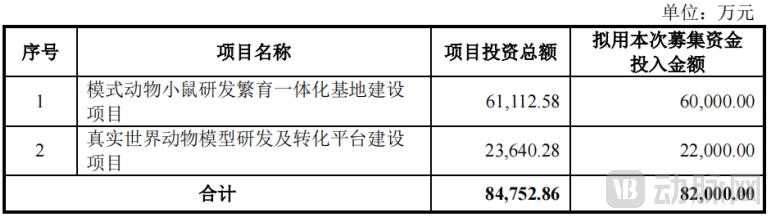
Therefore, GemPharmatech will allocate the majority of the funds raised from this IPO to the construction of an integrated R&D and breeding base for model mice.One of the primary objectives of this project is to augment product supply and technical service capabilities to better meet market demand. According to disclosures in the prospectus, the Health Office of Nanjing Jiangbei New Area has proposed to provide the company with approximately 60 mu of industrial land for the project. Upon completion, GemPharmatech’s production capacity will increase significantly, breaking through its current revenue bottleneck.
Without being immersed in the industry, it is difficult to imagine that the research, development, and breeding of model animals would require an investment of 600 million yuan for facility construction. In reality, due to stringent standards, the model animal industry demands high-standard supporting infrastructure.
When VCBeat visited GemPharmatech two years ago, Gao Xiang earnestly told us, “Many people mistakenly believe that raising mice requires little technical expertise and incurs low costs, as if one could simply find any space, set up cages, and start breeding. This misconception has led to lax quality control at many domestic model organism companies, even to this day. In reality, the opposite is true: the supply of model animals is a capital-intensive industry.”
Based on varying levels of environmental cleanliness, laboratory animals are classified into different hygiene grades, including conventional, clean, and specific pathogen-free (SPF) levels, with the SPF grade being the most commonly used. SPF-grade animals refer to specific pathogen-free laboratory animals that are required to be free from major potential infections, opportunistic pathogens, and other agents that could significantly interfere with scientific experiments. To ensure the hygienic status of these animals, all solid items in contact with SPF-grade mice—including cages, feed, bedding, and even water—must undergo sterilization via ionizing radiation. All personnel entering the animal facility must change into full sterile gowns and masks, leaving only their eyes exposed. Furthermore, strict air control measures are implemented: the animal rooms are maintained under positive pressure, meaning the internal pressure is higher than the external pressure. This ensures unidirectional airflow from inside the room to the outside, preventing the ingress of airborne pathogens.
This series of protective measures requires a complete set of supporting processing equipment to ensure the cleanliness of materials, personnel work supplies, and ventilation facilities in breeding rooms, among other things. These factors are among the reasons why the model animal industry has become a “capital-intensive sector.”
In the niche segment of model organisms, GemPharmatech has grown into an industry leader in less than four years. Its next steps are to rapidly increase production capacity and expand vertically along the industrial chain.
In this 21st century of biomedicine, GemPharmatech still has tremendous room for growth before reaching its ceiling.