

Under New Policy Tailwinds, Huazhuo Technology Builds a Government-Enterprise Collaborative Model for Healthcare Digitalization
With the release of the "Implementation Opinions on Effectively Linking the Consolidation of Health Poverty Alleviation Achievements with Rural Revitalization" by the National Health Commission and 12 other ministries on June 11, the development of medical consortia within healthcare reform has gained clear direction. This undoubtedly serves as a positive signal for Huazhuo Technology, which focuses on this sector.
“First, underdeveloped regions, primarily in the central and western parts of China, are the main beneficiaries of this policy. Second, regarding specific objectives, the ‘Opinions’ state that by 2025, lifecycle health management services will be gradually improved, the allocation of healthcare resources across regions will become increasingly balanced, and gaps in rural medical and health institutions and personnel will be continuously and dynamically eliminated. This ‘Opinions’ document corresponds to the national policies on medical consortia.” Commenting on the newly released policy, Li Tanwei, CEO of Hangzhou Huazhuo Information Technology Co., Ltd., interpreted it as providing valuable guidance and supplementation to the current medical consortium policies.
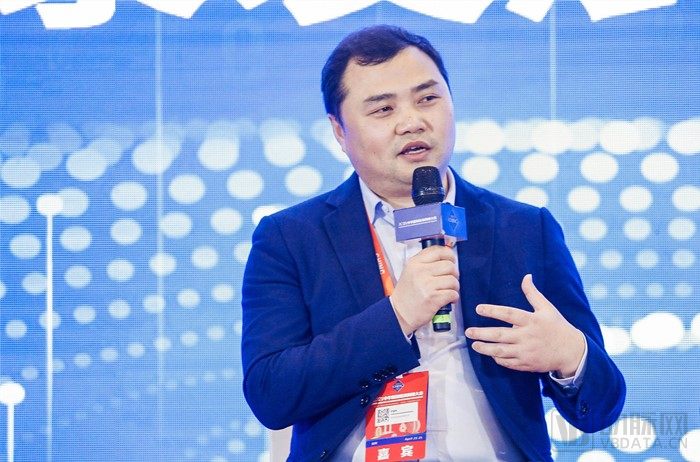
Li Tanwei, CEO of Huazhuo Technology
Huazhuo Technology is a leading provider of comprehensive hospital informatics solutions in China, pioneering the proposal of cloud computing-based hospital system architectures. Since its inception, smart construction for medical consortia, healthcare groups, and large multi-campus hospitals has been a core component of its business. When this concept was first introduced in 2014, it faced considerable skepticism within the industry. However, after developing Version 1.0 of the underlying architecture and successfully implementing it at Shulan Healthcare Group, Huazhuo Technology’s subsequently released Version 3.0 secured deep collaborations with top-tier domestic hospital group system builders and suppliers. The solution has now been deployed in more than ten provinces and municipalities across China.
“Based on our years of observation in the healthcare informatics industry, we have found that prefecture-level cities are the optimal units for implementing Medical Community (Yi Gongti) initiatives, as they strike the best balance between coverage and service quality. The primary objectives of this new policy highlight the many urgent challenges currently facing primary care institutions,” analyzed Li Tanwei. He pointed out that, in terms of physical space, primary care institutions are small in scale and dispersed, making management difficult; in terms of hardware infrastructure, their facilities and technical conditions are relatively lagging, with a low level of informatization; furthermore, due to poorer economic conditions in grassroots areas, it is difficult to retain medical and IT talent, and the self-construction of data centers by medical institutions, along with subsequent operations and maintenance management, is unsustainable.
“To drive the development of medical consortiums, it is essential to possess a unique understanding of healthcare operations and a comprehensive system for product technology R&D and delivery services.” In this regard, Li Tanwei interprets the construction of medical consortiums as a “Three Ones” project: consolidating medical institutions within a region into a single legal entity to enable the relative concentration and effective allocation of talent; integrating all medical resources, spatial resources, and equipment resources onto a single network; and implementing unified management of government and medical institution personnel, finances, and assets under a single set of accounts. In short, this means a unified healthcare workforce, a single network for medical resources, and a single ledger for hospital finances.
Guided by this business vision, Huazhuo Technology first established a business system centered on medical service capabilities. By integrating physicians’ clinical, research, and academic expertise and experience, the company developed an AI-assisted diagnostic system. As more physicians join the platform, the system continuously accumulates learning samples, thereby delivering more accurate auxiliary diagnostic results and improving physicians’ work efficiency. Second, Huazhuo Technology drives the development of its medical business systems from the perspective of health economics. It uses medical payment settlements to inform and refine hospital management practices, fostering greater integration between clinical care capabilities and preventive health services within the healthcare system. In conjunction with DRG/DIP-based cost-containment measures implemented by medical insurance programs, the company helps hospitals achieve lean management. “The integration and incorporation of these two perspectives are indispensable to Huazhuo’s Medical Consortium business system,” said Li Tanwei.
With regard to medical resources, Huazhuo Technology implements networked management of spatial and hardware resources to facilitate their efficient allocation and utilization by government bodies, healthcare providers, and patients, thereby reducing redundant equipment investments. In terms of hospital financial management, it has established an integrated platform encompassing equipment, supplies, and supply chain operations, providing healthcare institutions with comprehensive inventory management covering procurement, sales, and stock control.
Regarding the conceptual framework for product R&D and the establishment of delivery service systems, the focus of hospital informatization construction in China has historically been confined to Hospital Information Systems (HIS) centered on “financial management.” The absence of “top-level design” has rendered foundational data, services, and business processes inadequate to meet the current requirements for building Medical Consortia. In response, Hangzhou Huazhuo Information Technology Co., Ltd. has launched a multi-hospital Smart Hospital solution based on the “One Medical Cloud” model.
“Medical Cloud” offers an innovative approach to government-enterprise collaboration in the digitalization of the healthcare industry: while ensuring the steady development of medical consortium hospitals in terms of talent pool, resource integration, and unified financial management, it also addresses economic pressures from the perspective of primary healthcare institutions, thereby delivering cost-effective services with minimal costs and greater efficiency.
This solution comprises a local cloud computing data center, a standardized hospital-wide business system, and a regulated, unified medical business data platform. The local cloud computing data center provides unified development tools and service governance, enabling regional healthcare institutions to rapidly deploy and go live without the need for redundant construction of data centers and computing environments. The standardized hospital-wide business system allows local government authorities to procure a single system, eliminating duplicate purchases of similar software and preventing the chaos and non-standardization often seen across disparate institutional information systems. The regulated, unified medical business data platform helps healthcare institutions better standardize and manage medical data, while also enabling patients to access various medical services across different institutions.
From a business deployment perspective, Huazhuo Technology has established differentiated competitive barriers through its technical architecture, medical microservices, and application platform.
From a technical architecture perspective, medical consortia cover extensive geographic areas and impose extremely high requirements on the technological sophistication and maturity of informatics solutions. Leveraging a hybrid cloud computing architecture, Huazhuo Technology not only meets hospitals’ confidentiality requirements for certain business data but also enables hospital storage and computing environments to achieve near-boundless scalability.
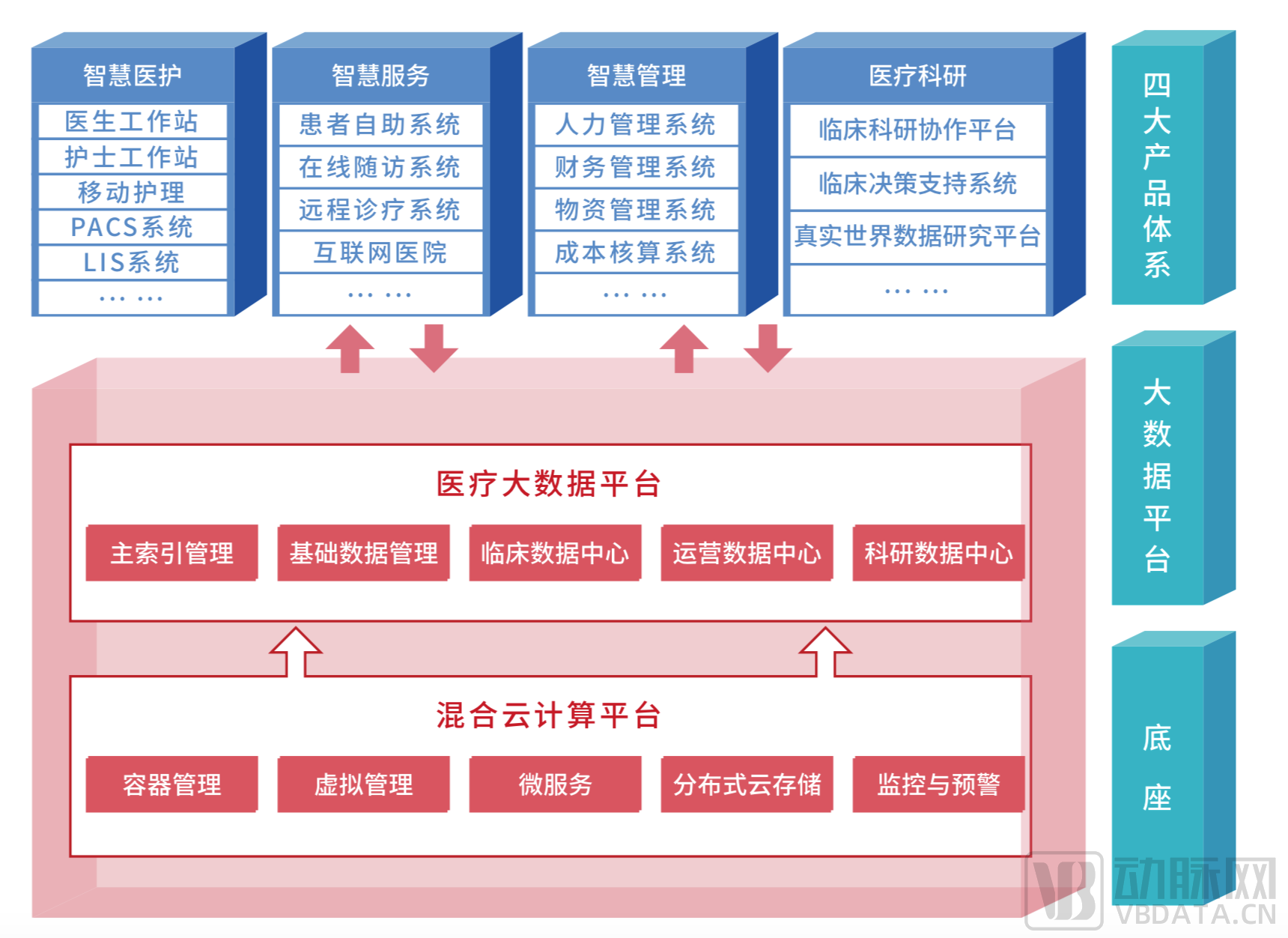
Smart Hospital Business Architecture Diagram Based on Hybrid Cloud Architecture
Medical cloud platforms boast high availability and strong scalability, among other features. They decompose complex healthcare operations into granular functional modules, enabling on-demand invocation and flexible combination of different applications. Similar to the developer platforms of Facebook and WeCom, they support secondary application development based on mature business modules. Within Huazhuo Technology’s product ecosystem, these microservices can be provided either by Huazhuo Technology or by specialized third-party providers.
Huazhuo Technology’s open application platform represents a major innovation, breaking down the historical silos of in-hospital software by offering a marketplace model akin to the “Android App Store.” This platform not only supports applications developed by Huazhuo Technology itself but also enables third-party enterprises to leverage its development tools. By fostering the emergence of more diverse business systems and integrating them into the healthcare industry ecosystem, it better meets the needs of hospitals.
In terms of project implementation, the regional pilot program between Huazhuo Technology and the Tongren Municipal Government in Guizhou Province has yielded initial results. Leveraging a medical cloud platform as its foundation, Huazhuo Technology has connected tertiary hospitals, leading specialists, and primary healthcare institutions at the county, township, and village levels within Tongren City, facilitating the transformation of medical services from a “disordered state” to one that is efficient and convenient. In terms of applications, the platform enables functionalities such as medical business data utilization, smart public health services, three-tier coordinated emergency care, and internet hospital services. From a management perspective, the cloud platform integrates with the Tongren Medical Big Data Platform, centrally archiving medical information from 30 public hospitals at the secondary level and above across the city, thereby achieving the consolidation of basic public health data and health records.
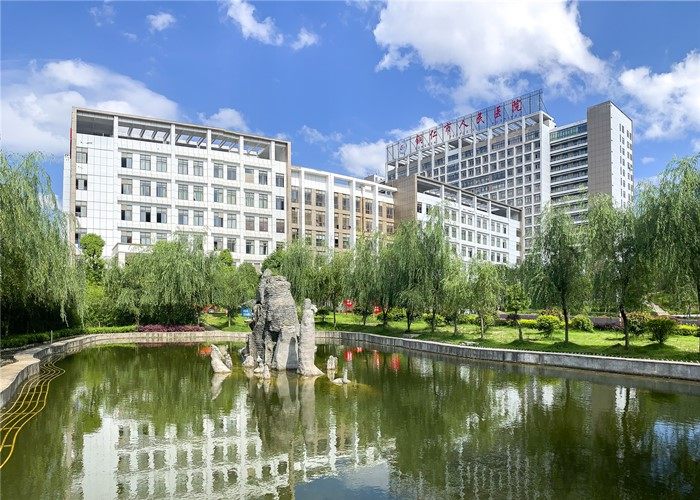
Tongren People's Hospital: Real-Scene View
Furthermore, Huazhuo Technology is advancing the construction of medical big data platforms and public health service platforms in regions including Shandong, Heilongjiang, and Hainan.
Although economic development levels vary across regions, the public’s demand for medical care remains the same. Reducing regional disparities in healthcare resources requires not only professional third-party enterprises to deliver high-quality information technology services through technological tools and methods, but also support from local governments. It is reported that during its collaboration with the Tongren Municipal Government, Huazhuo Technology received strong support from the Tongren Municipal Health Commission, which stated, “We trust those we appoint; therefore, proceed boldly—we will provide our full support.”
It is evident that the business model developed by Huazhuo Technology is deeply rooted in serving physical medical institutions, rather than relying on one-time software sales. By providing lifelong services and continuous upgrades to these institutions, Huazhuo has, to a certain extent, revolutionized the traditional “one-off transaction” approach. It is reported that from 2020 to the present, Huazhuo Technology expanded its products to 200 medical institutions across more than ten provinces and municipalities in China within just one year. In response, Huazhuo Technology stated that it will continue to strengthen collaboration with local governments and advance the construction of its business ecosystem. The company also hopes that more professional third-party product providers will join the Huazhuo Medical Cloud ecosystem, working together to build a high-quality service system for medical institutions.