

MicroPort EP Medtech: First Domestic Provider of Integrated 3D Cardiac Electrophysiology Solutions Files for STAR Market IPO

MicroPort EP
R&D Producer of Cardiac Electrophysiology Interventional Medical Devices
Recently, according to the Shanghai Stock Exchange, Shanghai MicroPort EP MedTech Co., Ltd. (hereinafter referred to as “MicroPort EP”) has submitted an IPO application, seeking a listing on the STAR Market of the Shanghai Stock Exchange, with Huatai United Securities Co., Ltd. serving as the sponsor.
MicroPort EP, established in 2010, is a subsidiary of MicroPort Medical.A high-tech enterprise focused on the research and development, production, and sales of innovative medical devices in the field of electrophysiology interventional diagnosis and treatment and ablation therapy, committed to providing “an integrated solution for diagnosis and ablation therapy centered on precise interventional navigation.”
For this A-share listing, the company plans to raise RMB 1 billion. The net proceeds, after deducting corresponding issuance expenses, will be entirely invested in fundraising projects related to the company’s core business, specifically the following projects:
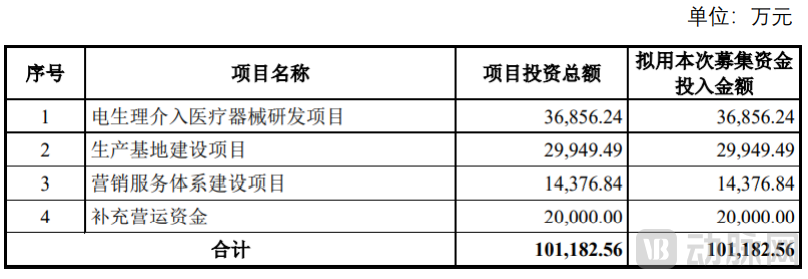 Source: Prospectus
In 2024, the market size of electrophysiology devices in China is estimated to be RMB 21.11 billion, with domestically producedAccelerated Substitution Process
Cardiac electrophysiology interventional techniques enable physicians to assess the electrophysiological properties of the cardiac conduction system and elucidate the mechanisms underlying arrhythmias, thereby facilitating the selection of appropriate clinical treatment strategies.
With advancements in positioning and navigation technologies and the maturation of minimally invasive interventional techniques, the detection rate of heart diseases has increased significantly, and cardiac electrophysiology interventional technology has rapidly developed in the diagnosis and treatment of arrhythmias.
China has a large patient base of approximately 30 million individuals with tachyarrhythmias, and the penetration of electrophysiology surgery among these patients is continuing to increase. It is reported that the volume of cardiac electrophysiology procedures has grown from 118,000 cases in 2015 to 212,000 cases in 2020. The number is projected to reach 489,000 cases by 2024, representing a compound annual growth rate (CAGR) of 23.3%.
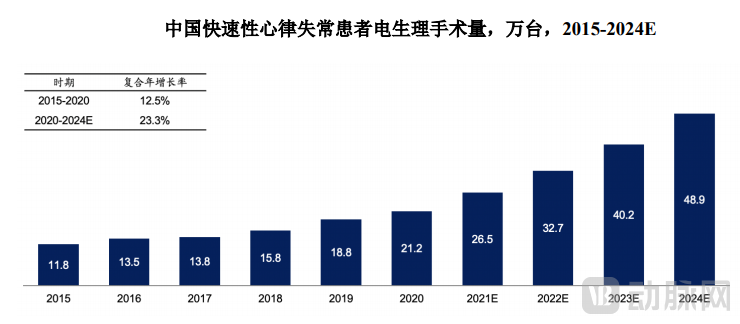
Source: National Center for Quality Control in Interventional Arrhythmia, Frost & Sullivan’s “Research Report on the Cardiac Electrophysiology Device Market in China”
According to Frost & Sullivan’s analysis, the market size of cardiac electrophysiology devices in China grew from RMB 1.48 billion in 2015 to RMB 5.15 billion in 2020. The market size is projected to reach RMB 21.11 billion by 2024, representing a compound annual growth rate (CAGR) of 42.3%.
However, in China’s cardiac electrophysiology device market, there remains a significant gap in market share between domestic manufacturers and international industry giants. In 2020, domestically produced electrophysiology devices accounted for only 9.6% of the market, whereas international leaders Johnson & Johnson, Abbott, and Medtronic collectively held over 85% of the market share.
However, the pace of domestic substitution is accelerating. On one hand, breakthroughs by Chinese enterprises in technological R&D and industrial application have narrowed the gap between domestically produced and imported products. The market size of domestic electrophysiology medical devices is steadily growing, with their market share expected to reach 12.9% in 2024.
On the other hand, with the gradual implementation of favorable policies by the State Council and local governments to promote the domestic substitution of medical devices, the market size growth rate of domestically produced electrophysiology medical devices is expected to surpass that of imported products, thereby accelerating the process of domestic substitution. It is projected that from 2020 to 2024, the compound annual growth rate (CAGR) of the domestic electrophysiology medical device market will reach 42.3%, higher than the CAGR of the import market during the same period.
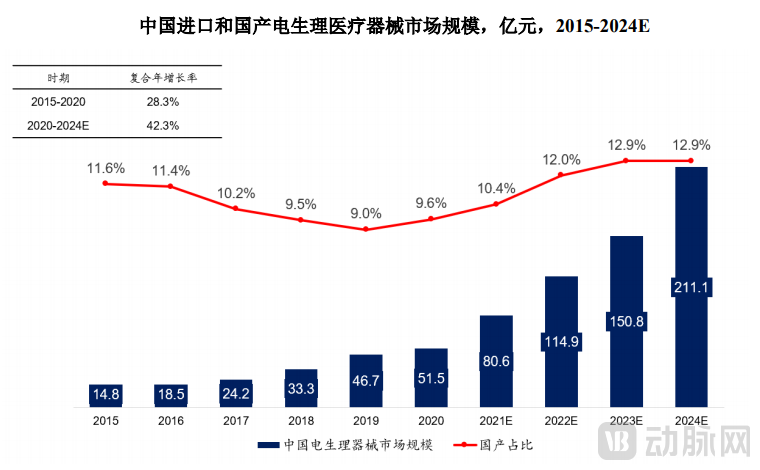
Source: Frost & Sullivan, “Research Report on the Cardiac Electrophysiology Device Market in China”
Breaking the Monopoly: Strategic Layout in Cardiac Electrophysiology Devices and Consumables
In the field of cardiac electrophysiology, although domestic manufacturers as a whole are not yet able to compete with international industry giants, the monopoly position of foreign manufacturers has been broken. Domestic cardiac electrophysiology manufacturers include MicroPort EP, Huitai Medical, Lepu Medical, Sichuan Jinjiang Electronics, and Sinopulse, among others.
Among them,MicroPort EP is one of the few companies in the global market to have achieved a comprehensive portfolio of both cardiac electrophysiology devices and consumables, and it is the first Chinese manufacturer capable of providing a complete solution for 3D cardiac electrophysiology devices and consumables.
After years of research and industrial practice, MicroPort EP has mastered and achieved breakthroughs in core design and manufacturing technologies related to electrophysiology interventional diagnosis, treatment, and ablation therapy. These technologies primarily include high-precision positioning and navigation technology, acquisition, processing, and analysis technology for micro-electrocardiographic signals, rapid 3D cardiac chamber modeling algorithms, catheter positioning and visualization technology, and intelligent control of cryoablation with multi-channel temperature sensing technology.
In the field of electrophysiology interventional diagnosis and treatment,MicroPort EP's Independently Developed Columbus®The 3D cardiac electrophysiology mapping system is the first domestically produced magnetic-electric dual-positioning mapping system approved for market launch, marking the first time that Chinese manufacturers have reached an internationally advanced level in the field of high-end cardiac electrophysiology equipment.
In terms of ablation therapy,MicroPort EP has achieved breakthroughs in the two mainstream ablation energy technologies, “radiofrequency + cryoablation,” leveraging its energy-based therapeutic technology platform. In addition to mature products such as cardiac radiofrequency ablation catheters and saline-irrigated radiofrequency ablation catheters, high-precision catheter projects represented by pressure-sensing, magnetically localized irrigated radiofrequency ablation catheters, as well as next-generation cardiac cryoablation projects, have entered clinical trial stages.
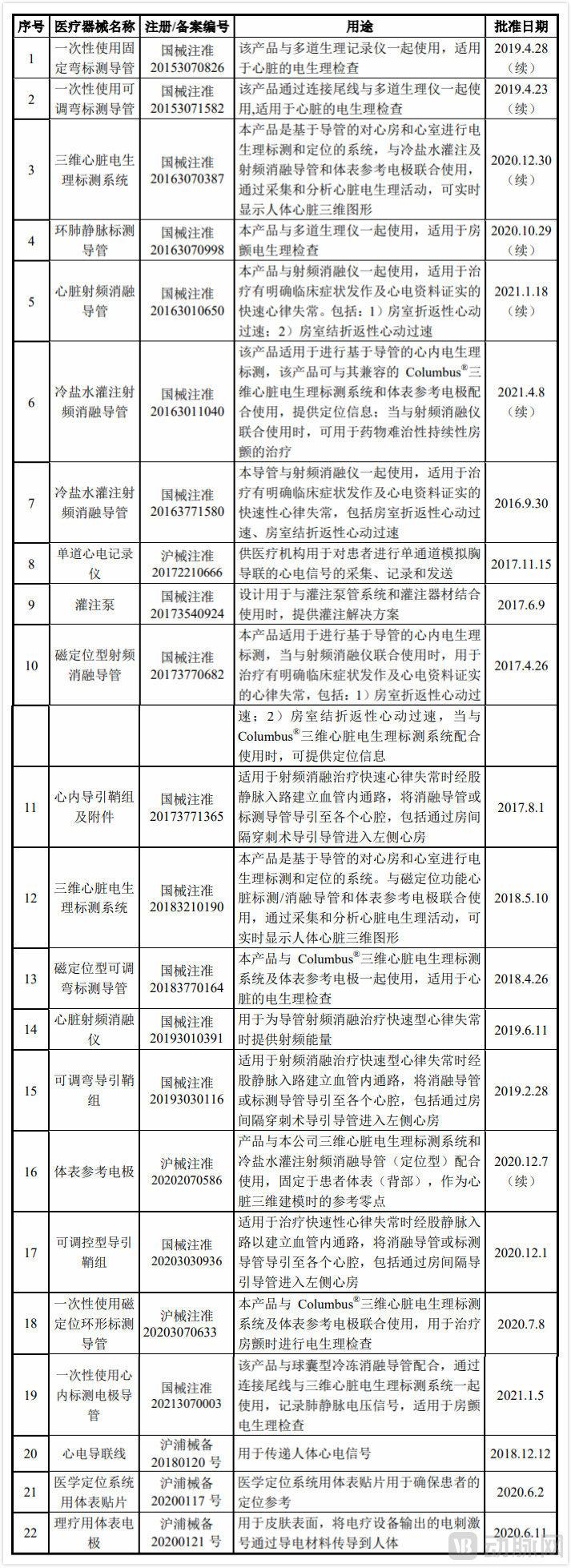
Currently, the main products launched by MicroPort EP are cardiac electrophysiology diagnostic and therapeutic devices, covering two major categories: cardiac electrophysiology equipment and consumables. These include one mapping system, six mapping catheters, three 3D ablation catheters, two 2D ablation catheters, two ablation therapy systems, and three accessory products, totaling 17 items.
The applications of its main products in 3D and 2D cardiac electrophysiology procedures are as follows:
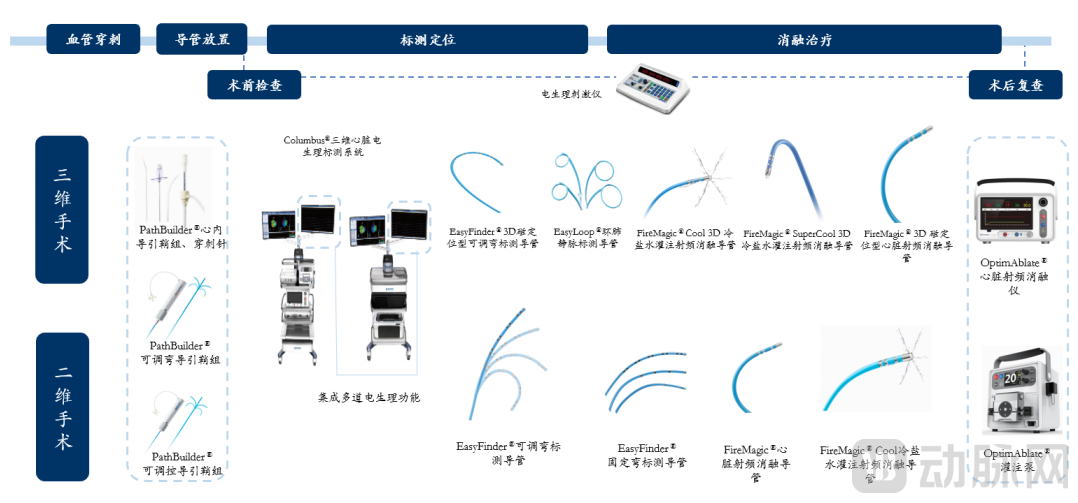
Source: Prospectus
In terms of product sales, MicroPort EP primarily adopts the distribution model in the domestic market, supplemented by a small proportion of delivery and consignment models; overseas sales are conducted exclusively through the distribution model. According to statistics from Frost & Sullivan, in 2020, MicroPort EP held approximately 2.7% of the Chinese cardiac electrophysiology device market in terms of sales revenue, ranking fifth.
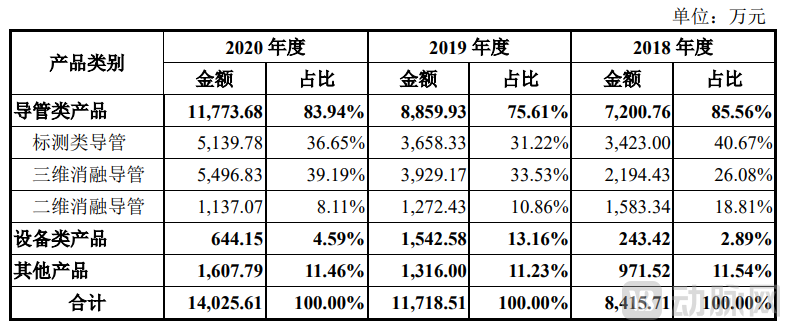
Its products have reached more than 600 end-user hospitals across 31 provinces, autonomous regions, and municipalities directly under the Central Government in China, and have been exported to 21 countries and regions, including France, Italy, and Spain. The composition of its main business revenue is shown in the figure below.
Source: Prospectus
Columbus® 3D Cardiac Electrophysiology Mapping System Updated to Version 3.0, with Continued Product Portfolio Expansion
Three-dimensional cardiac electrophysiology procedures represent a significant advancement over two-dimensional techniques. By utilizing magnetic and/or electric field localization, these procedures construct a three-dimensional electroanatomical map of the cardiac chambers, enabling more precise visualization of pathological sites. Between 2000 and 2010, China’s cardiac electrophysiology field transitioned from the era of two-dimensional mapping to that of three-dimensional mapping. Major companies such as Johnson & Johnson, Abbott, and Boston Scientific subsequently launched three-dimensional electrophysiology systems and consumables.
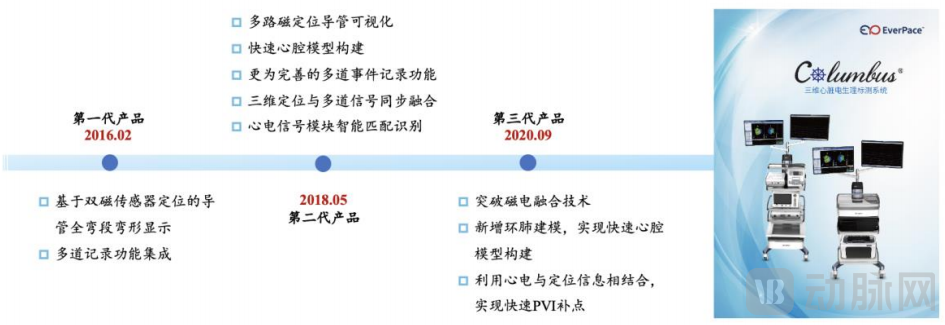
Among domestic manufacturers, Sichuan Jinjiang Electronics’ 3D mapping system has been approved for market launch. Huitai Medical’s 3D mapping products are expected to be launched within this year. MicroPort EP has Columbus®The system, currently updated to the third generation,Achieved the upgrade of 3D electrophysiological mapping systems from magnetic positioning technology to integrated magneto-electric positioning technology.
MicroPort EP’s Self-Developed First-Generation Columbus®The 3D cardiac electrophysiology mapping system was included in the Special Examination and Approval Procedure for Innovative Medical Devices in 2015 and received market approval from the NMPA in 2016. In 2020, the system completed its upgrade to the third-generation product and obtained NMPA approval for market launch.
According to Frost & Sullivan’s research report, in terms of the number of surgical procedures by product application, MicroPort EP ranked third in China for 3D cardiac electrophysiology procedures in 2020, and first among domestic manufacturers. Columbus®The product iteration of the 3D cardiac electrophysiology mapping system is as follows:
Source: Prospectus
Since its establishment in 2010, MicroPort EP has been dedicated to overcoming technical challenges and bottlenecks in the field of electrophysiology interventional diagnosis and treatment and ablation therapy. After more than a decade of development, the company hasEstablished three core technology platforms centered on image navigation, precision instruments, and energy-based therapy, to achieve precision, visualization, and intelligence in electrophysiological interventional diagnosis and treatment as well as ablation therapy. Notably, leveraging the image navigation platform, MicroPort EP successfully upgraded its 3D electrophysiological mapping system.
As of June 24, MicroPort EP has obtained 120 authorized patents domestically and internationally, including 69 invention patents; it holds 22 NMPA medical device registration certificates and filing credentials, 4 EU CE registration certificates, and multiple other overseas product registration certificates.
Source: Prospectus
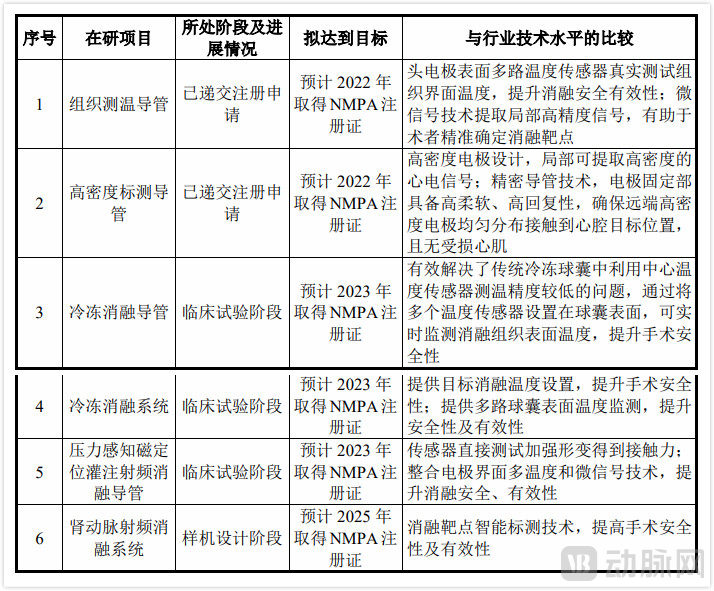
In addition to the 22 products that have already obtained NMPA registration certificates, MicroPort EP has six other key projects under development, as follows:
Source: Prospectus
R&D Investment Ratio Rises Year on Year, Accelerating International Expansion
MicroPort EP, with a portfolio of multiple products, reported operating revenues of RMB 84.2178 million, RMB 117.4393 million, and RMB 141.2866 million over the three-year period. This demonstrates a year-on-year increase in revenue; however, as of the end of 2020, its accumulated unrealized losses amounted to RMB 44.9913 million.
The company is not yet profitable, primarily for two reasons. First, electrophysiology interventional diagnostic and therapeutic devices feature high technical barriers, long R&D cycles, and substantial capital requirements, necessitating continuous and significant investment in research and development. Second, foreign manufacturers dominate the domestic market for electrophysiology interventional diagnostic and therapeutic devices. As MicroPort EP’s products have been on the market for a relatively short period and are still in the market expansion phase, its revenue scale remains comparatively small.
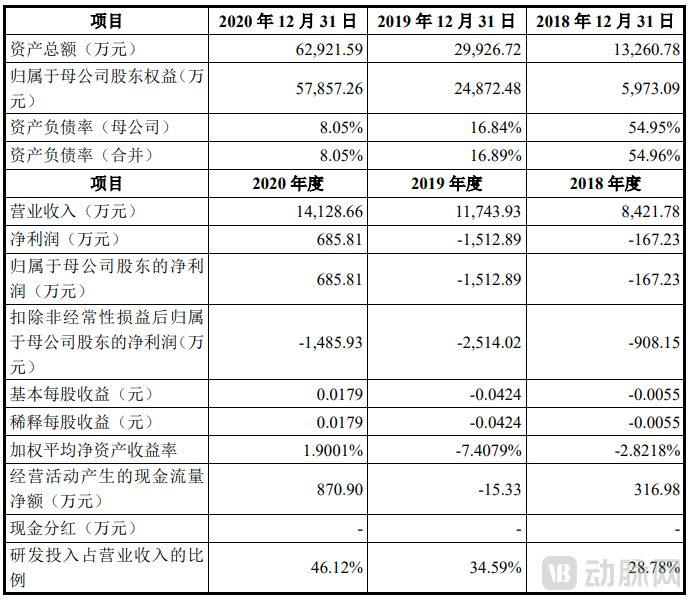
Source: Prospectus
As a technology-intensive enterprise, core technologies are one of the key factors for MicroPort EP to maintain its core competitiveness. MicroPort EP stated that it will continue to increase R&D investment to upgrade existing products and develop new products and technologies.
Continuously research and improve commercially available 3D mapping systems, develop high-density mapping catheters, and obtain regulatory approvals both domestically and internationally; continue research on cryoablation systems and pressure-sensing catheter projects that have entered clinical trials to secure regulatory certifications; and conduct R&D on cutting-edge technologies such as renal artery ablation systems, new energy source technologies, all-in-one 3D mapping systems, and new navigation technologies.
Looking ahead, MicroPort EP will further accelerate the strategic layout of its international development, strengthen its global sales network, and continuously enhance its brand recognition overseas, striving to become an international medical device enterprise rooted in China with a global presence.
Furthermore, it will continue to enrich its technological reserves in the field of electrophysiological interventional diagnosis and treatment and ablation therapy. By integrating emerging technologies such as big data and artificial intelligence, the company will intensify its research and development efforts in areas including image navigation, ablation energy delivery, and precision sensing. These initiatives aim to continuously strengthen its technological advantages, expand the application scope of its core products, and increase market share.
As MicroPort EP continues to expand its distributor channels, intensify product promotion efforts, and achieve the gradual successful launch and sales of products under development, its future operating revenue is expected to maintain a trend of rapid growth, making it highly likely that the company will reduce losses or even achieve profitability in the future.
In 2021, the field of vascular intervention remained highly active, and the cardiac electrophysiology sector also garnered significant attention. Although domestically produced products do not hold a competitive advantage in the field of cardiac electrophysiology, imported products have been able to dominate the market largely because they have established complete industrial chains and offer comprehensive solutions with deep specialization in specific areas.
In recent years, outstanding domestic manufacturers, including MicroPort EP, have emerged as a powerful force. Benefiting from the successive introduction of favorable policies and the continuous improvement of the market environment, these Chinese manufacturers are steadily strengthening their R&D capabilities. This will not only increase the market share of domestically produced electrophysiology devices but also further accelerate their expansion into international markets.