

ByteDance, Kuaishou, Pinduoduo, and Meituan Double Down on Internet Healthcare: Can They Crack the Code?
New Turmoil Rocks the Internet Healthcare Arena.
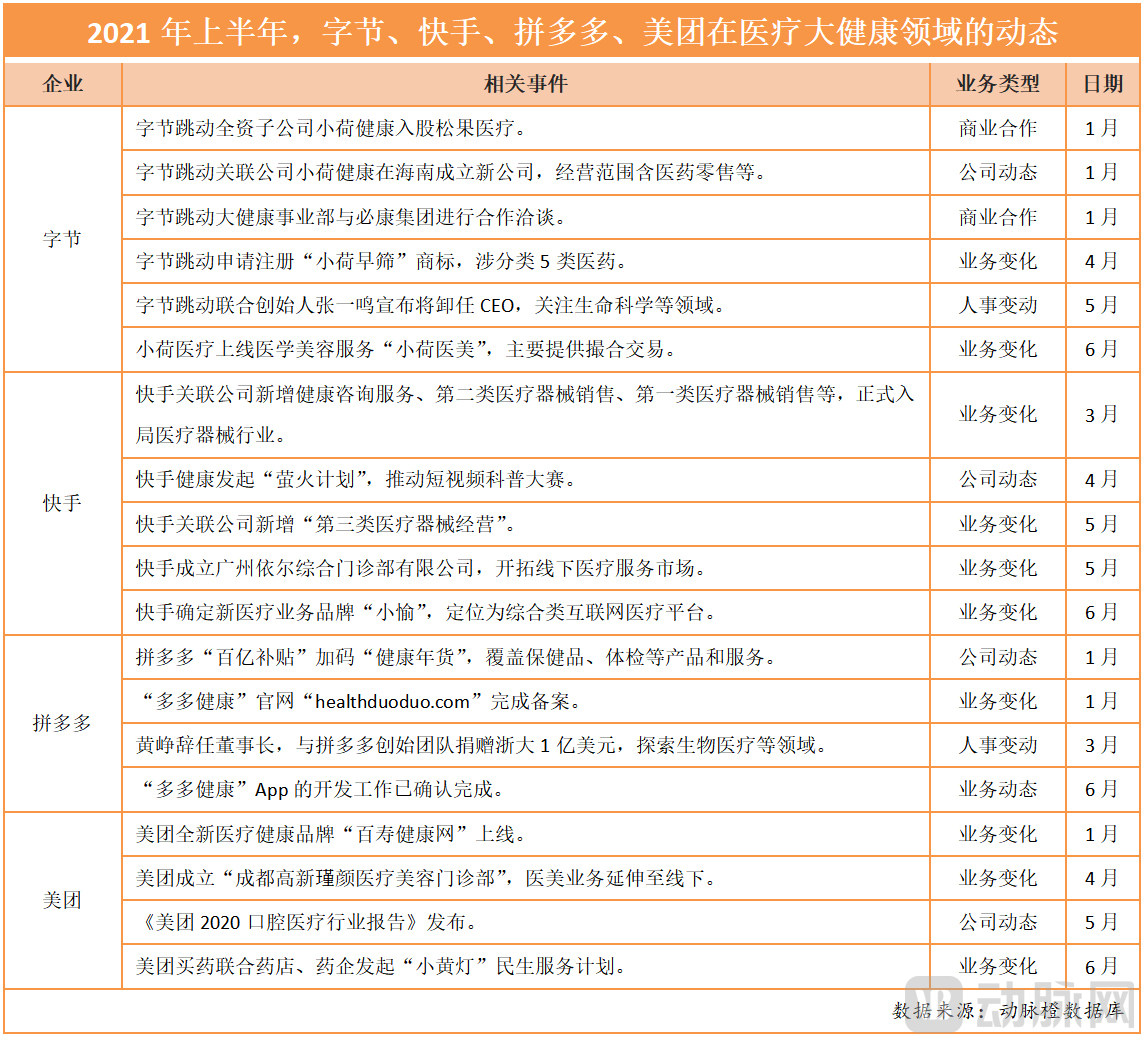
Over the past six months, major internet giants such as ByteDance, Kuaishou, Pinduoduo, and Meituan have taken frequent actions to ramp up their investments in internet healthcare.Major developments disclosed to date include:
· ByteDance has listed “Xiaohe Clinic,” while its subsidiary Xiaohe Medical has launched the medical aesthetics service brand “Xiaohe Medical Aesthetics” and is accelerating collaborations with multiple hospitals on lesion screening, thereby developing its proprietary healthcare initiative “Xiaohe Early Screening.”
· Kuaishou has confirmed the launch of its new comprehensive healthcare project brands, “Xiaoyu” and “Qingchan,” and has established Guangzhou Yier Comprehensive Outpatient Clinic Co., Ltd. offline; its affiliated companies have also added “Class III medical device distribution” to their business scope;
· Pinduoduo is developing the "Duo Duo Health" app, which has completed official website registration; its business scope includes internet hospital and related services;
· Following the launch of “Baishou Health Network” earlier this year, Meituan is planning to advance its medical aesthetics services with a focus on the offline market, potentially starting in Chengdu in the form of outpatient clinics.
It can be observed that,Major tech giants are expanding their existing internet healthcare services toward greater diversification.: ByteDance is expanding into more specialized categories, Kuaishou and Pinduoduo aim to spin off their internet healthcare services as independent entities, while Meituan continues to deepen its presence in the medical aesthetics sector through online-offline integration.Although there are some differences in the specific business layouts of various companies, their core logic remains consistent: they remain bullish on internet healthcare and are backing this conviction with substantial financial investments.
As is well known,It is no longer novel for tech giants to enter the healthcare sector.In recent years, tech giants such as Alibaba, Tencent, JD.com, Ping An, and Baidu have made significant strides in the healthcare sector: Alibaba Health has been listed for seven years, with over 280 million active consumers on its pharmaceutical e-commerce platform as of April this year; Tencent, in addition to building its own smart healthcare systems, has invested across multiple fields including retail pharmacies, healthcare informatics, gene therapy, and gene sequencing; JD Health saw its stock surge by more than 40% upon its listing late last year and currently boasts a market capitalization exceeding HK$300 billion; Ping An Health achieved total revenues of RMB 6.866 billion last year, a year-on-year increase of 35.5%, making notable progress in closing the loop among pharmaceuticals, insurance, and healthcare services; and Baidu Health continues to refine its “Internet + Healthcare” service chain, intensifying efforts in health science popularization, pharmaceutical e-commerce, and the development of internet hospitals.
With the experience of “predecessors” to draw on, can the tech giants that have poured in heavy investments successfully master internet healthcare?
Despite being among the late-entrant giants,ByteDance was not the first to venture into healthcare, but it is currently the fastest-moving player in terms of product form and business breadth.
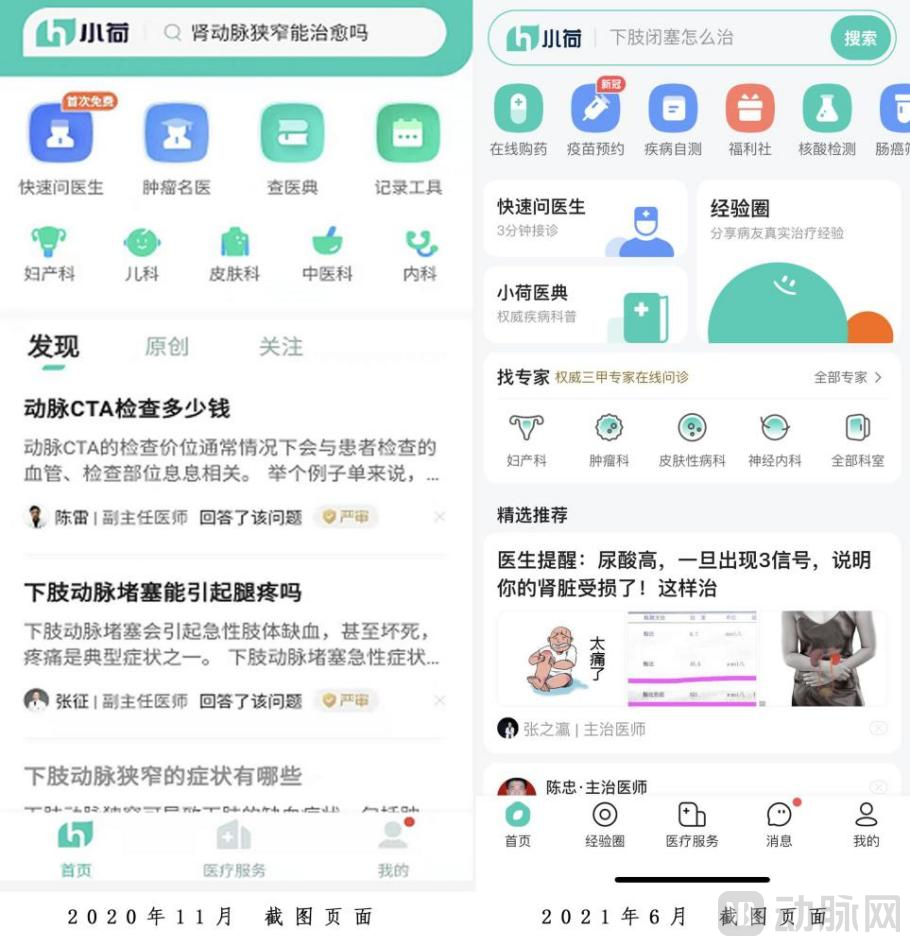
At the end of last year, ByteDance launched its independent brand “Xiaohe Medical” and released the “Xiaohe” app. This product is a typical comprehensive internet healthcare platform. After more than six months of refinement, it now covers multiple modules, including “Quick Doctor Consultation,” “Xiaohe Medical Encyclopedia,” “Patient Community,” “Online Pharmacy,” “Colorectal Cancer Screening,” “Vaccination Appointment,” and “Self-Test for Diseases.”
(Image created by VCBeat)
From the interface perspective, the “Xiaohe” app is very similar in functionality to apps such as Yilu (formerly “AliHealth”), Ping An Health (formerly “Ping An Good Doctor”), JD Health, and Chunyu Doctors.
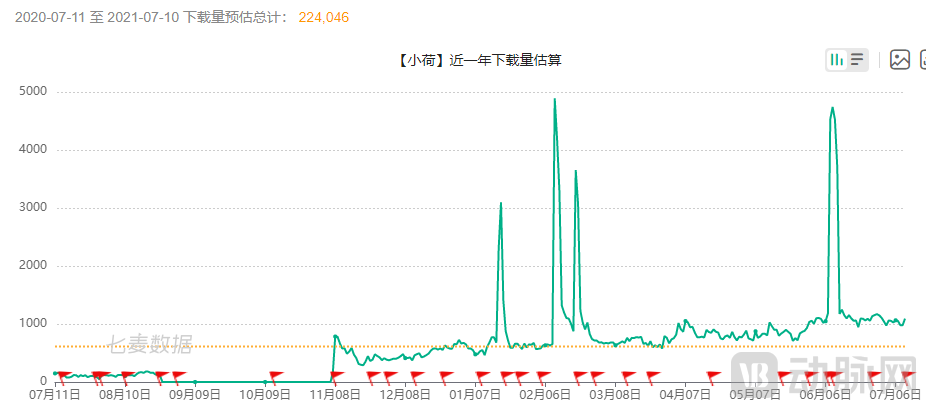
Specifically in terms of operations, the “Xiaohe” app has already accumulated a certain amount of data. For instance, in terms of download volume, according to monitoring data from Qimai Data, the “Xiaohe” app reached a historical high on the iPhone platform in the first quarter of this year, with a peak single-day download count of 4,892. The average daily downloads over the past month stood at 1,536, bringing the cumulative total since its launch to 210,000 downloads.
(Image source: Qimai Data)
Taking Alibaba Health’s “Yilu” app as a benchmark, monitoring data from Qimai shows that the average daily downloads of the “Yilu” app on the iPhone platform over the past month were 8,394, approximately 5.5 times that of the “Xiaohe” app. In other words, “The “Xiaohe” app has made certain progress in catching up with the leading internet healthcare apps, but a significant gap remains.
From a business perspective, the overall operations of “Xiaohe Medical” can be broadly categorized into three main segments: “Medical Services,” “Patient Community,” and “User Tools.”The following provides a detailed analysis based on these three major sections.
First,"Medical Services" SectorIt includes the recently launched “Premium Aesthetic Medicine” as well as six sections: “Online Consultation,” “Pharmaceutical E-commerce,” “Vaccine Appointment,” “Cancer Screening,” and “Clinical Trial Recruitment.”
Drawing from the development experience of internet-based healthcare, the “medical services” segment is key to whether ByteDance can establish a viable profitability model in the healthcare sector: online consultations enable the connection between doctors and patients and help identify patient needs, on the basis of which the platform can achieve commercial monetization by selling products and services. Among these, pharmaceuticals are currently the highest value-added products in medical service scenarios.
Meanwhile, the three service modules—“Vaccine Appointment,” “Cancer Screening,” and “Clinical Trial Recruitment”—primarily serve to provide users with more diverse options, thereby increasing app usage frequency and enhancing user stickiness. Additionally, as traffic on the app platform reaches a significant scale, these three categories of services will open up greater commercialization opportunities for ByteDance, such as collaborating with pharmaceutical companies for digital marketing of new drugs and driving patient referrals to health examination institutions.
Furthermore,"Patient Community" SectionByteDance has launched “Experience Circle,” a feature that allows users to upload and share their disease treatment experiences on the “Xiaohe” app. Currently, “Experience Circle” encompasses 11 major categories and nearly 300 subcategories of disease-specific communities.
According to data from the “Xiaohe” app, content related to oncology diseases has the highest volume of shares and the highest number of views. Taking breast cancer as an example, there have been 436 experience-sharing posts on this disease, with a viewership of 232,000 people.
Interestingly, after entering a community focused on a specific disease category, users will find popular science content about that disease at the top of the page, labeled as provided by “Xiaohe Medical Encyclopedia.” It is worth noting that “Xiaohe Medical Encyclopedia” is an upgraded version of “Baike Mingyi,” which ByteDance fully acquired last year for RMB 500 million. According to officially released data, “Xiaohe Medical Encyclopedia” currently features more than 32,000 health-related educational entries.
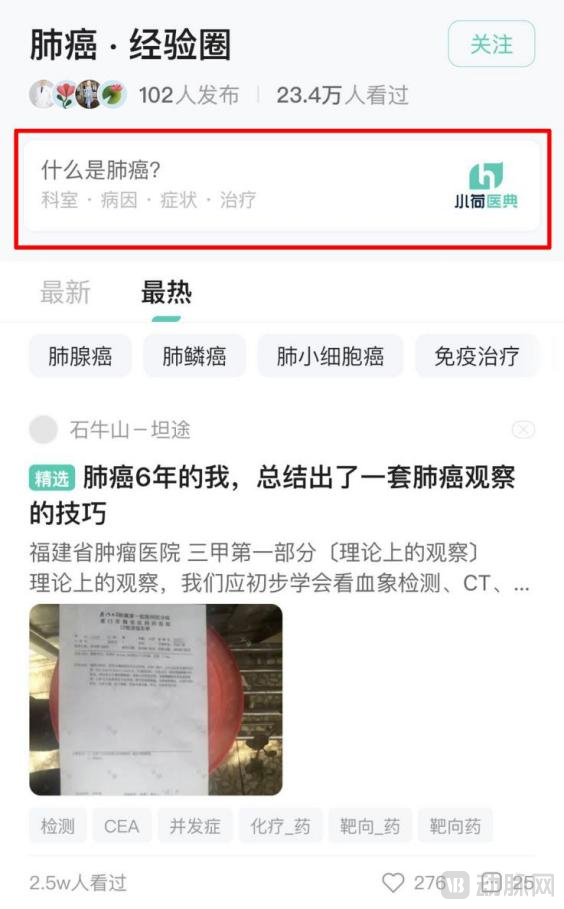
It is not difficult to observe that, on the demand side, ByteDance has strategically developed disease-centric online communities facilitating doctor-patient interactions. By fostering emotional engagement through experience-sharing content and complementing it with health education, the company aims to enhance user retention and deepen reliance on its platform.
Additionally,"User Tools" SectionThe “Xiaohe” app has launched practical mini-features such as “Disease Self-Assessment,” “Symptom Tracker,” “Can I Eat This?,” and “Menstrual Cycle Assistant.” From an evolutionary perspective, when the “Xiaohe” app was first launched, this section was prominently displayed on the homepage. Currently, however, most of these features have become less conspicuous, indicating that ByteDance has not yet established a clear strategic positioning for such functionalities. Nevertheless, from another standpoint, as the user base expands in the future, the “User Tools” section may potentially be spun off into an independent offering, given that the health management market is also a area of significant interest within the internet healthcare sector.
Finally,In terms of offline clinical services, ByteDance’s “Songguo Clinic,” applied for last year, has recently been officially branded as “Xiaohe Clinic” and is now fully operational. On the “Xiaohe” app platform, it is evident that Xiaohe Clinic has launched the “Bright Eyes and White Teeth” program, which includes dental cleaning services and ophthalmic examinations. From this perspective, ByteDance has taken a substantive step toward building an integrated online-to-offline service loop, although its profitability remains to be tested.

("Xiaohe Clinic")
In summary, ByteDance has established a relatively comprehensive and clear business line in the healthcare sector through its “Xiaohe” app. The company focuses primarily on “medical services,” generating revenue through “online consultations” and “pharmaceutical sales.” It further strengthens its “patient community” to enhance user stickiness via “disease experience sharing” and “health science popularization.” Finally, by laying out “user tools” and offline services, it leverages practical health management features and an online-to-offline closed loop to create greater potential for future commercialization.
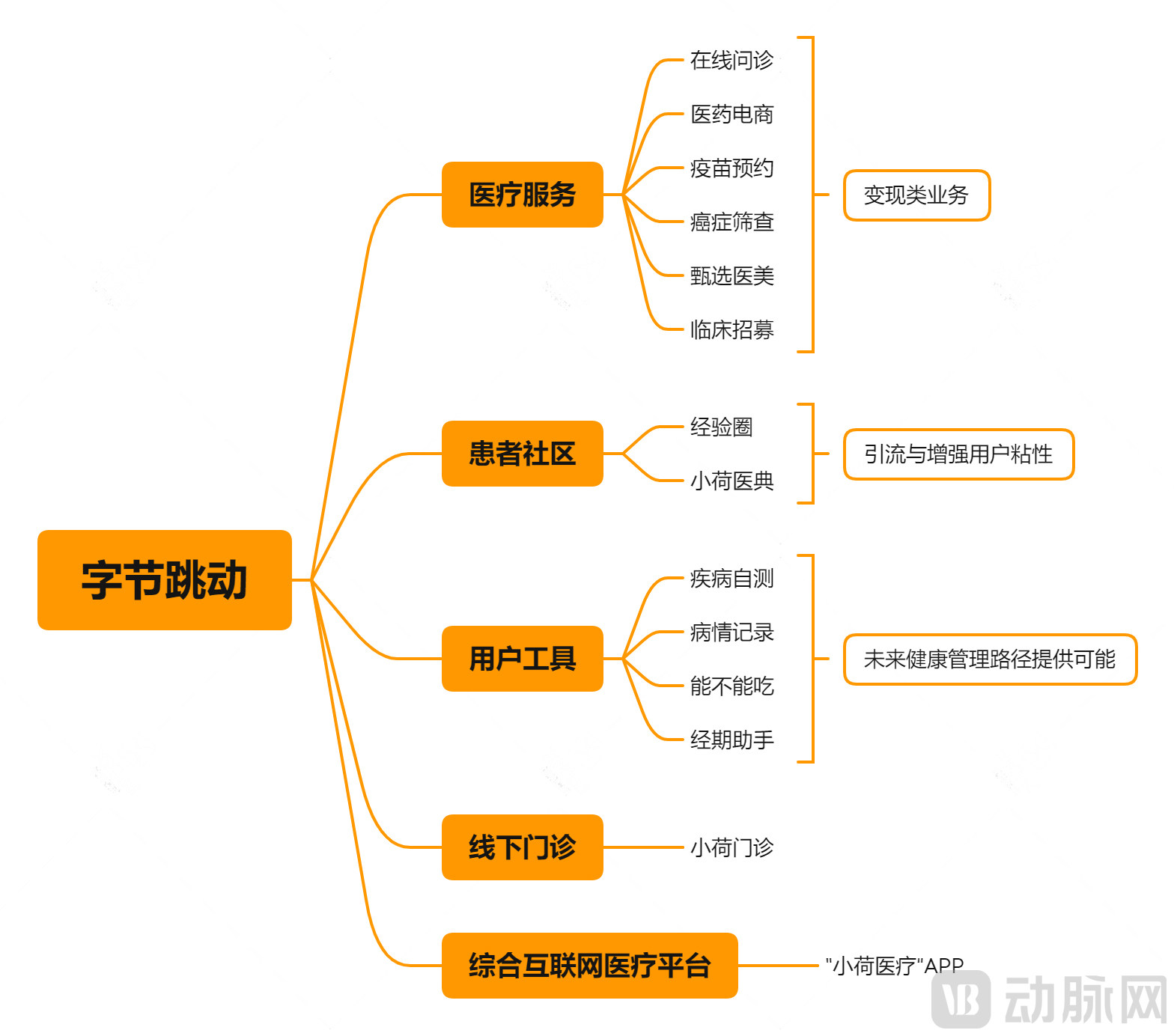
(Information sourced from the “Xiaohe” APP; graphic by VCBeat)
In the healthcare sector, Meituan has been strategically positioning itself for several years, while Pinduoduo and Kuaishou have also intermittently revealed related moves in the past one to two years, butThe external perception of the presence of these three giants in the big health sector remains insufficient.
This lies in,Among the three giants, their healthcare-related businesses were extensions of their core businesses in terms of product categories.For instance, Meituan’s “pharmaceutical sales” and “medical aesthetics” services represent sub-segments of its food delivery business and local lifestyle services, respectively. Similarly, Pinduoduo’s “Pharmacy Pavilion” constitutes a specialized category within its core e-commerce operations. For Kuaishou, the “health content matrix” is one of many content verticals within its short-video business.
However,In recent times, three industry giants have begun to expand from their core businesses into diversified healthcare services, and, similar to ByteDance, all aim to build comprehensive internet-based healthcare platforms.
· Mid-June,KuaishouHaving established “Xiao Yu” as a new brand for its integrated healthcare services, the product may be offered to users in the form of a standalone app. Additionally, similar to ByteDance, Kuaishou recently established Guangzhou Yier Comprehensive Outpatient Clinic Co., Ltd., actively expanding into the offline healthcare market.
· Relevant media reports indicate that, since last year,PinduoduoWe are currently developing a healthcare initiative named “Duoduo Health,” have completed the development of the “Duoduo Health” mobile app, and finalized the ICP filing for its official website, healthduoduo.com, in January this year.
· Early this year,Meituan“Baishou Health Network” has been launched, offering features such as “pharmaceutical supply/demand” and “pharmaceutical investment promotion/agency,” which gives it the characteristics of a pharmaceutical e-commerce platform. Furthermore, the activities of the team behind “Baishou Health Network” (whose core manager, Li Jinfei, previously worked at Baidu Wenku, among other places) and its affiliated enterprises (Hainan Baishou Information Technology Co., Ltd. is located in Chengmai County, Hainan Province, where most companies holding internet hospital licenses in Hainan are clustered) all point to the possibility that “Baishou Health Network” may build a full-chain internet medical service system.
As can be seen,The three giants have already made moves in the comprehensive internet healthcare sector, but judging from their implementation status, none of them has achieved substantial progress.“Judging by the moves of various companies, these tech giants have all made plans to continuously deepen their involvement in internet healthcare in terms of overall direction, but they have not been so aggressive in resource allocation. First, because the giants have many business lines and need to consider priorities; second, they also need time to determine how to maximize the benefits of this business line by matching their own resources (such as traffic, capital, talent, etc.),” an internet healthcare investor told VCBeat.It is expected that major industry players will take a critical step in the second half of this year.
Despite sharing the same goal, the three internet giants have taken different paths.The reason lies in the distinct “DNA” of each of the three companies, as well as their differing areas of expertise. Therefore, by examining their existing strategic layouts and operational performance, we may gain insights into how they will evolve in the future.
Kuaishou: Focusing on Health-Related Video Content, Strengthening Online Consultations and E-commerce for Medical Devices
Since the year before last, Kuaishou has been building a health communication matrix centered on medical popular science and information. Interestingly,By aggregating these healthcare-related contents, Kuaishou has established a dedicated “Kuaishou Health” section and launched service portals for online medical care, including “Expert Consultation” and “Hospital Appointment Registration.”
On the other hand, Tianyancha shows that Chengdu Kuaigou Technology Co., Ltd., a wholly-owned subsidiary of Kuaishou, underwent multiple changes in its industrial and commercial registration information during the first half of this year. Its business scope now includes “health consulting services, sales of Class I medical devices, sales of Class II medical devices, and sales of Class III medical devices.” In other words,On the Kuaishou platform, it is now permissible to sell various types of medical devices in compliance with laws and regulations.
From the current progress,Health-related video content is the sector where Kuaishou has made the most significant and rapid moves.At the end of 2019, during the inaugural Healthy China Innovation Communication Conference and the 6th China Medical Brand Construction Conference, Kuaishou partnered with the Chinese Medical Doctor Association to create a new health communication ecosystem. This ecosystem spans health institutions at four administrative levels—central, provincial, municipal, and county—and brings together health commissions, hospitals, science popularization organizations, and medical professionals. Taking the official National Health Commission’s Kuaishou account, “Healthy China,” as an example, it has published nearly 1,000 videos since its launch over two years ago, accumulating more than 6.4 million followers—a strong performance for a science popularization video account.
Moreover, Kuaishou has allocated hundreds of millions in traffic exposure to vigorously support the development of official health accounts, with a focus on cultivating 50 health science popularization influencers with over one million followers. In conjunction with its content creator incentive program, the platform aims to attract more physicians and science communication influencers to join.
Based on the content,Kuaishou has also launched a health column to serve as a section with functions similar to “Medical Encyclopedia.”, as seen on the page, this column covers public health and categories of common diseases.
With health-related video content driving traffic, Kuaishou has pivoted toward medical services.Based on the interface of Kuaishou Health, Kuaishou has currently launched sections such as “Expert Consultation,” “Hospital Appointment Registration,” “Nucleic Acid Testing,” “COVID-19 Vaccines,” and “Symptom Checker.”
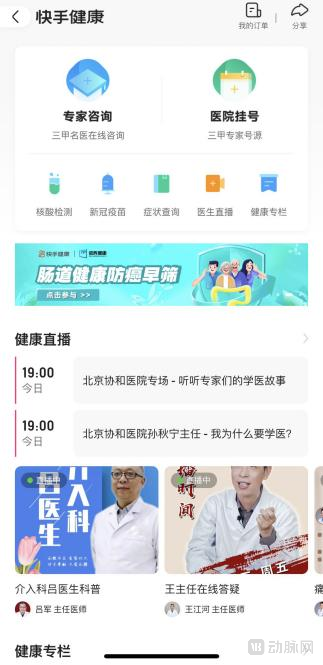
After VCBeat tested each feature,Related medical service functions are still in the early stages of operation.Taking “Expert Consultation” as an example, only eight doctors are currently available, and reviews for these physicians consistently include comments about “slow response times.” Furthermore, the geographic regions and institutions integrated into other sections, such as “Nucleic Acid Testing” and “Hospital Appointment Registration,” are also quite limited. The remaining sections, including “Health Column” and “COVID-19 Vaccines,” primarily feature video content.
In terms of e-commerce for medical devices, merchants are already selling on the Kuaishou platform, but the overall order volume remains low.Taking common home blood pressure monitors as an example, VCBeat found in the “Shopping” section of Kuaishou that even top-selling merchants had only double-digit sales volumes for their devices.
Notably, Kuaishou has established an offline entity named Guangzhou Yier Comprehensive Outpatient Clinic Co., Ltd., although no information on its actual operations has been disclosed to date. In the medium to long term, however, this clinic may enable Kuaishou to build an integrated online-to-offline (O2O) diagnosis and treatment pathway.
In summary, it is evident that Kuaishou has established a diversified presence across multiple healthcare sectors.Despite the breadth of its operations, the core logic lies in leveraging the massive traffic from short-form videos to offer medical device sales and healthcare services, thereby innovating its sales model. In terms of progress, Kuaishou’s performance over the past six months has not been aggressive.
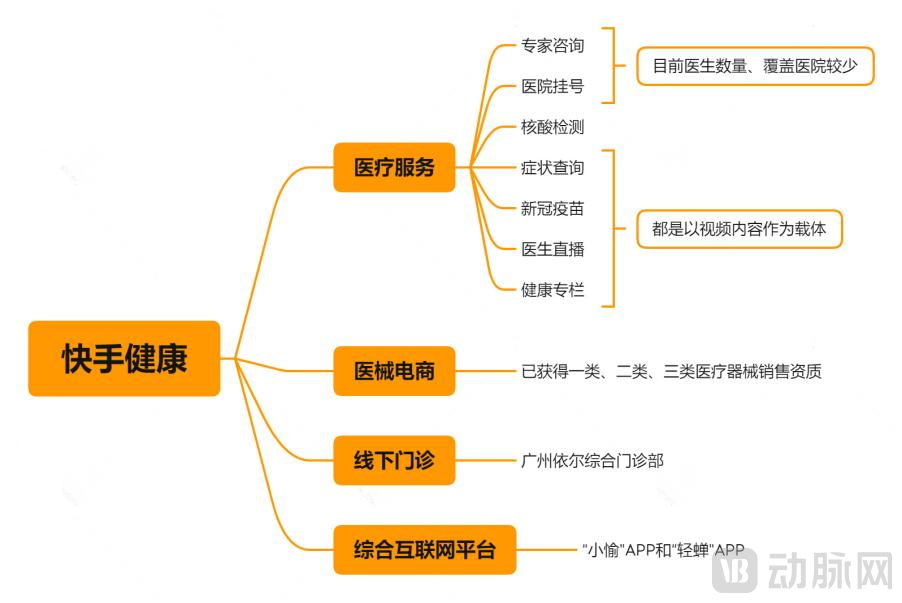
(Information sourced from the health section of the Kuaishou app; graphic by VCBeat)
Pinduoduo: Centered on Pharmaceutical E-Commerce, Extending to Online Diagnosis and Treatment Services
Like Alibaba and JD.com, Pinduoduo naturally possesses the inherent aptitude and capability to operate in pharmaceutical e-commerce.
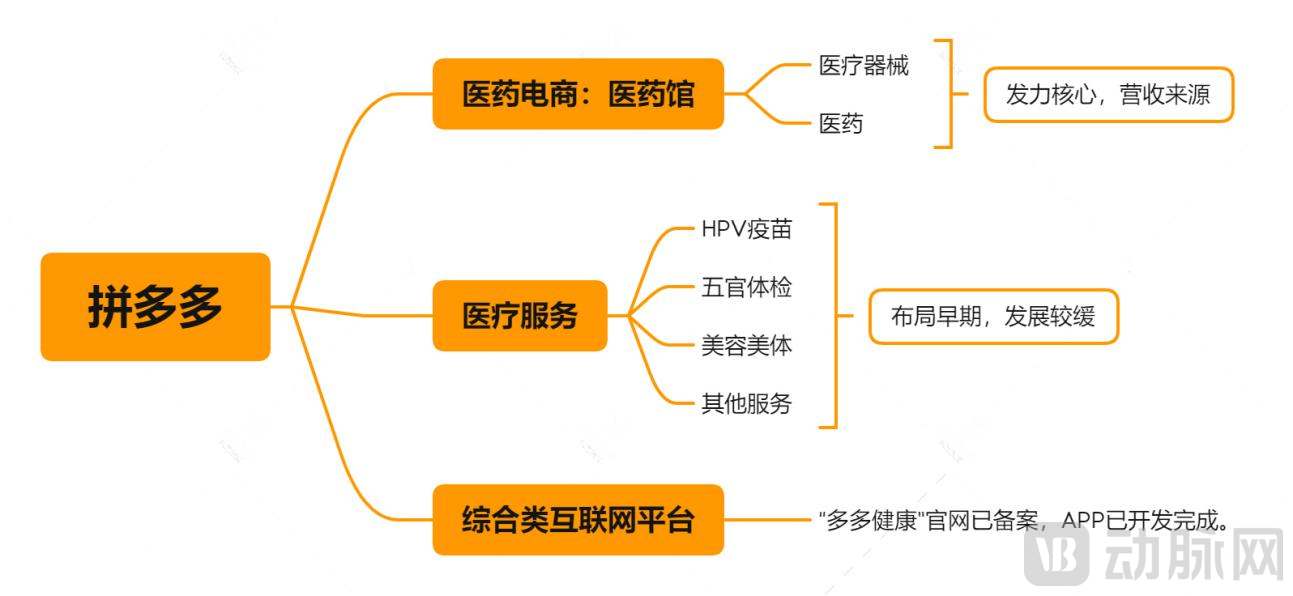
Therefore, during the initial exploratory phase of the business,Pinduoduo has created a "Pharmacy Pavilion" section as a top-level entry point in its app.This section is divided into three major categories: first, “Quality Assurance” (primarily covering medical devices, health checkups, etc.); second, “Targeted Medication Search” (mainly focused on pharmaceutical sales); and third, “Health Picks” (platform-recommended medical products).
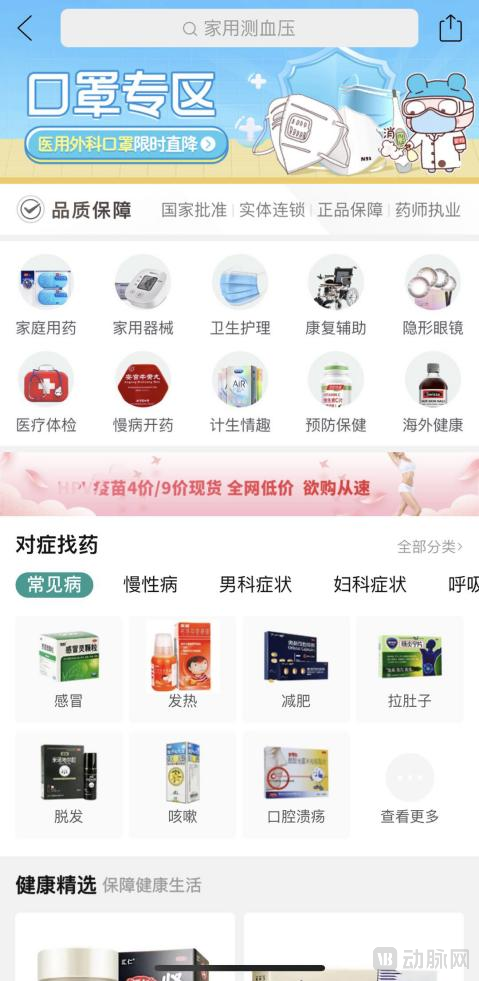
As is well known, in the e-commerce industry, Pinduoduo differs from the traditional sales models of Alibaba and JD.com. Its signature “group-buying” model enables lower overall product prices. In the pharmaceutical e-commerce segment, Pinduoduo has followed the same approach. Taking Pinduoduo’s best-selling “Huiren Shenbao Tablets” (126-tablet pack) as an example, the group-buying price is RMB 69.89, whereas the same product is priced at RMB 198 on the JD Health platform.
After reviewing the “Pharmacy” section, it is evident that family planning products and common household medicines such as Banlangen (Isatis Root Granules), Qiuli Gao (Autumn Pear Paste), and Piyanping (Compound Dexamethasone Acetate Cream) are best-sellers on Pinduoduo. Their characteristics, including being “essential staples” and “easy to store,” make them well-suited for the platform’s group-buying model.However, certain highly specialized medications require physician guidance, and Pinduoduo has made relatively limited efforts in this category of pharmaceuticals.
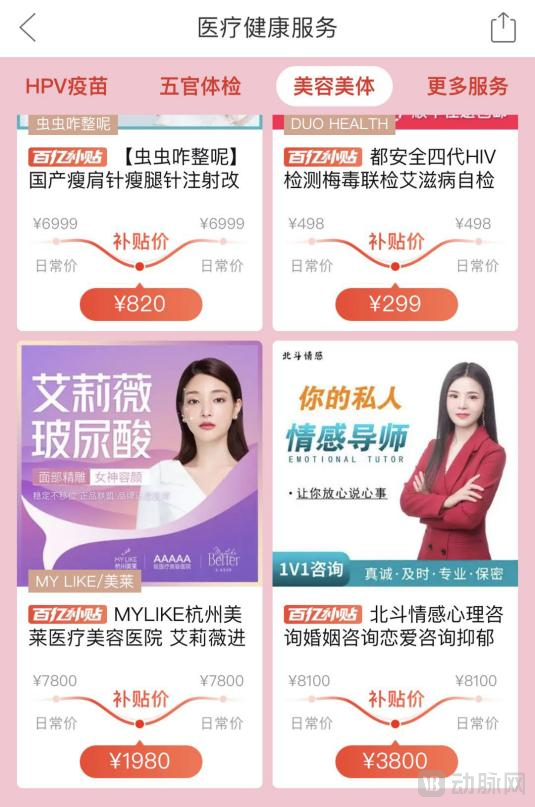
It is worth noting that between the page sections,Pinduoduo has also launched a “Medical and Health Services” section.Upon accessing VCBeat, it was found that this sector currently covers four categories: “HPV Vaccines,” “ENT and Ophthalmology Checkups,” “Cosmetic and Body Care,” and “Additional Services” (primarily health checkups). To attract more users to these services, Pinduoduo has implemented a RMB 10 billion subsidy program as part of its group-buying pricing strategy. For example, the listed price for a 9-valent HPV vaccine appointment is RMB 4,000; with a platform subsidy of RMB 891 and additional coupons, the actual group-buying price comes down to RMB 2,909.
But on the supply side,Pinduoduo’s medical service offerings are still in their early stages.Taking “beauty and body care” services as an example, Pinduoduo currently offers only four products for users to choose from, with just two truly involving medical aesthetics.
In terms of building its internet hospital infrastructure, Pinduoduo has successively established Duoduo Health Technology (Hainan) Co., Ltd. and Xichang Health Technology (Shanghai) Co., Ltd. Additionally, it has applied to register the “Duoduo Health” trademark, laying the groundwork for the future spin-off of an independent internet healthcare division.
As can be seen, with pharmaceutical e-commerce at its core, Pinduoduo has already begun evolving toward internet-based medical consultation services.In the later stages, leveraging pharmaceutical e-commerce as a catalyst and benefiting from mature distribution channels, Pinduoduo holds certain advantages in building comprehensive internet healthcare platforms.However, given the first-mover advantages held by JD Health and AliHealth, aggregating a sufficient volume of medical resources may become the primary challenge that Pinduoduo needs to overcome.
 (Data sourced from the Medical Pavilion section of the Pinduoduo app; graphic by VCBeat)
Meituan: Focusing on Pharmaceutical Sales and Medical Aesthetics, with Ground Promotion Capabilities, Operations, and Traffic as Core Drivers
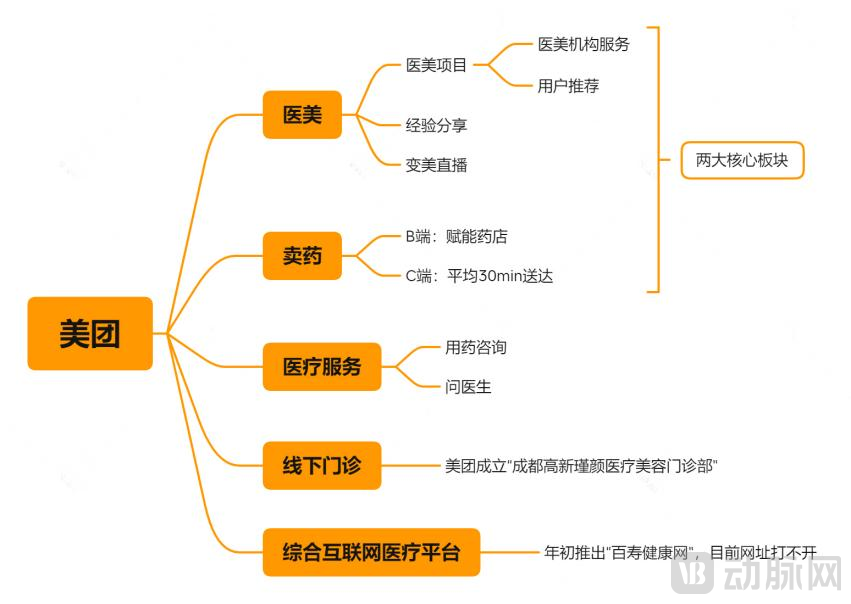
In the healthcare and wellness sector, Meituan’s relatively mature business lines primarily consist of two segments: medical aesthetics and pharmaceutical sales.
In the medical aesthetics sector, Meituan is continuously accelerating its strategic expansion.According to recent media reports, Meituan’s medical aesthetics business plans to deepen its offline presence by operating through outpatient clinics. Data from Qichacha shows that in April this year, Meituan established a limited liability company named “Chengdu High-Tech Jinyan Medical Aesthetics Outpatient Clinic,” indicating that Meituan may open its first medical aesthetics clinic in Chengdu.
In contrast, in the online space, Meituan has consistently adopted a strategy focused on non-surgical aesthetic medicine to rapidly enter the market, leveraging a “high-frequency, low average transaction value” model. Specifically, Meituan Aesthetic Medicine provides users with an end-to-end service solution for discovering brands, clinics, and treatment plans through online displays. As a key segment of local community lifestyle services, and bolstered by Meituan’s substantial traffic advantages along with its “community + reviews + e-commerce” model, aesthetic medicine has quickly become one of Meituan’s fastest-growing business segments.
It should be noted that in the medical aesthetics industry, “light” and “heavy” are imprecise, relative concepts. Procedures requiring surgical intervention, such as rhinoplasty and bone contouring, fall under the category of “heavy medical aesthetics,” while injectables and cosmetic skincare belong to “light medical aesthetics.” Although heavy medical aesthetics commands a higher average transaction value, it suffers from low purchase frequency. In contrast, light medical aesthetics, despite its lower unit price, boasts a broader customer base and higher repurchase rates. For most consumers, light medical aesthetics does not involve surgery and is therefore not perceived as a medical procedure, resulting in lower decision-making costs. Consequently, Meituan’s accumulated base of local lifestyle users is naturally better suited for this segment. This explains why numerous medical aesthetics providers choose to partner with Meituan Medical Aesthetics.
Of course, with the entry of Alibaba and JD.com, as well as the intensified efforts by industry-native players such as So-Young and Gengmei, Meituan still needs to explore new commercial pathways. In terms of vertical expansion, although Meituan has experimented with installment payment plans for medical aesthetic services, it has yet to demonstrate significant room for further extension or differentiation.
In pharmaceutical sales, Meituan is strengthening its own dominance.Since partnering with Laobaixing Pharmacy’s online store in 2015, Meituan has integrated a pharmaceutical delivery module into its app, subsequently expanding its offerings to include a range of services such as online medication purchasing and delivery. In terms of its business model, Meituan serves as an intermediary, platform provider, and logistics partner for pharmaceutical sales. This enables users to more conveniently locate nearby pharmacies and place orders through the Meituan app, while Meituan’s delivery team ensures that medications are promptly delivered to customers.
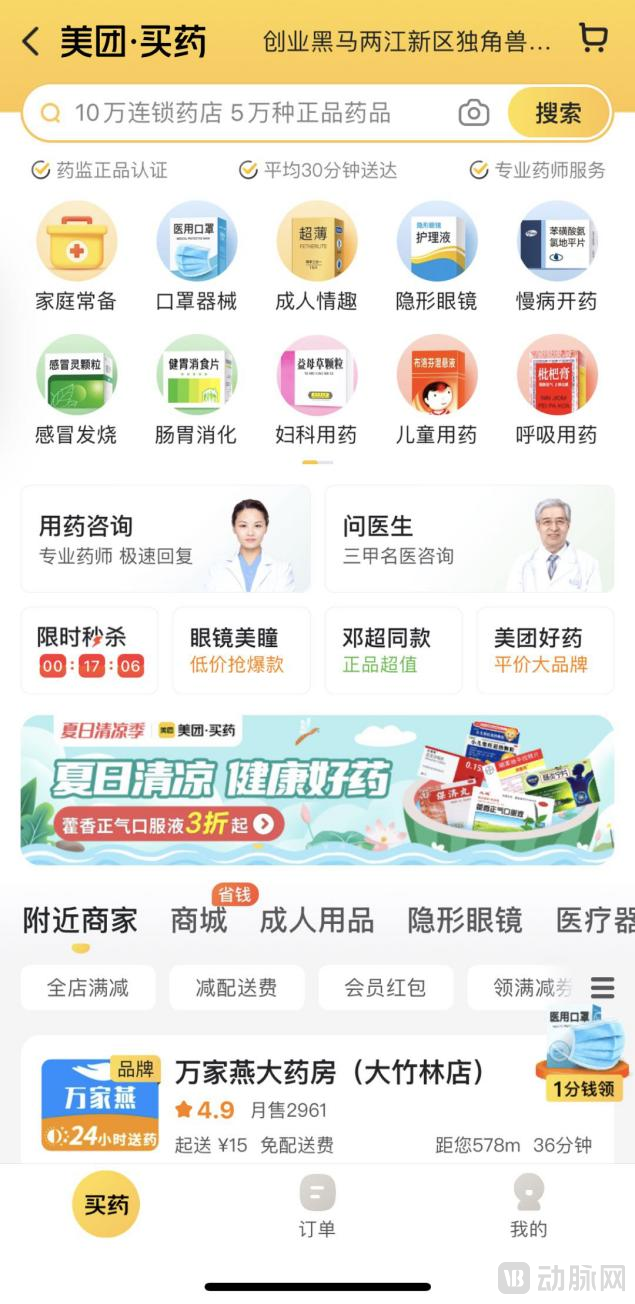
Leveraging its pharmacy network and delivery team, the platform can meet users’ routine medication needs for acute conditions such as diarrhea and stomach pain within 23 minutes. With 24/7 service, it ensures timely delivery of medications at all hours, even for orders placed in the early morning. For business clients (B-side), in addition to empowering pharmacies, Meituan’s support is further reflected in the fact that as user frequency and stickiness increase, the accumulated user behavior data on the platform will provide a digital foundation for traditional pharmacies to optimize their drug supply and sales strategies.
Additionally,In the “Buy Medications” section, Meituan has already rolled out medical service segments such as “Medication Consultation” and “Ask a Doctor.”According to official data from Meituan, the platform has served 50 million online consultations, with a user satisfaction rate of 97%. In terms of physician supply, Meituan has aggregated a significant number of doctors from Grade A tertiary hospitals. Taking “Dermatology” as an example, after VCBeat manually counted 50 physicians upon entering this section, the progress bar indicated that many more online doctors were still available to load. This suggests that Meituan has made considerable progress in aggregating medical service resources, such as online consultations.
It is worth noting that VCBeat has recently observed that the website for “Baishou Health Network,” launched by Meituan at the beginning of this year, is currently inaccessible. This may be related to internal integration efforts within Meituan. When Meituan will spin off its internet healthcare services remains to be seen.
In summary, Meituan continues to deepen its competitive moat in the online medical aesthetics sector, while achieving breakthroughs in pharmaceutical O2O and online consultations. Moving forward, how Meituan builds an independent third-party healthcare application will become a focal point of industry attention.
(Data sourced from the relevant section of the Meituan app; graphic by VCBeat)
The outbreak of the COVID-19 pandemic last year has ushered in a period of accelerated growth for internet healthcare, which originated in 2014. According to statistics from China Business Industry Research Institute, the market size of China’s internet healthcare industry reached RMB 196.1 billion in 2020, and is projected to expand to RMB 283.1 billion this year. Data from Tianyancha shows that there are currently nearly 9,700 internet healthcare-related enterprises in China, with nearly 70% of them established within the past year.
The sector is heating up, with capital rushing in and large-scale financing rounds occurring frequently in the market.For example, in June, Dingdang Kuaiyao completed a new round of financing worth $220 million, and Yaoshibang secured $110 million in Series B funding. Meanwhile, tech giants are also making aggressive moves: Baidu Health led a 200-million-yuan Series B investment in Youlai Doctor, and Alibaba Health completed a joint investment in Yingsheng Biology. Moreover, leading native digital health players such as WeDoctor and Dingdang Kuaiyao have all filed prospectuses this year, racing toward initial public offerings.
In such a fiercely competitive landscape, can latecomers like ByteDance, Kuaishou, Pinduoduo, and Meituan make significant waves? One thing is certain: similar to Alibaba, JD.com, Tencent, Baidu, and Ping An,These giants command vast pools of tech talent, ample capital, massive traffic, and even powerful distribution channels, enabling them to make rapid and dominant inroads whenever they initially enter a specific niche market.
But"In the later stages of development, industry giants often encounter numerous dilemmas."For instance, companies are still struggling to break away from a revenue structure heavily reliant on “drug sales.” According to the financial reports of the “three giants” of internet healthcare, pharmaceutical e-commerce remains the primary source of income for the industry. For example, over 87% of JD Health’s revenue comes from the sale of pharmaceuticals and health products; Ali Health’s self-operated pharmaceutical business accounts for 84.76% of its total revenue; and 57% of Ping An Good Doctor’s revenue is derived from its Health Mall.
It is important to recognize that since its inception, internet healthcare has been held in high expectation for its unique connectivity capabilities—specifically, its ability to reconcile the mismatch between medical supply and demand. This mismatch is evident both spatially and temporally, with the health needs of 1.4 billion people served by only slightly more than 3 million licensed physicians.Therefore, if the internet healthcare industry relies primarily on “drug sales” for support, it clearly falls far short of public expectations.
Looking at ByteDance, Kuaishou, Pinduoduo, and Meituan, all have expanded from their core businesses into the healthcare and wellness sector, with each having established a certain presence.From the perspective of building comprehensive internet healthcare platforms, ByteDance is undoubtedly at the forefront, while Meituan and Pinduoduo have established advantageous niche businesses. Kuaishou, overall, is progressing more slowly.
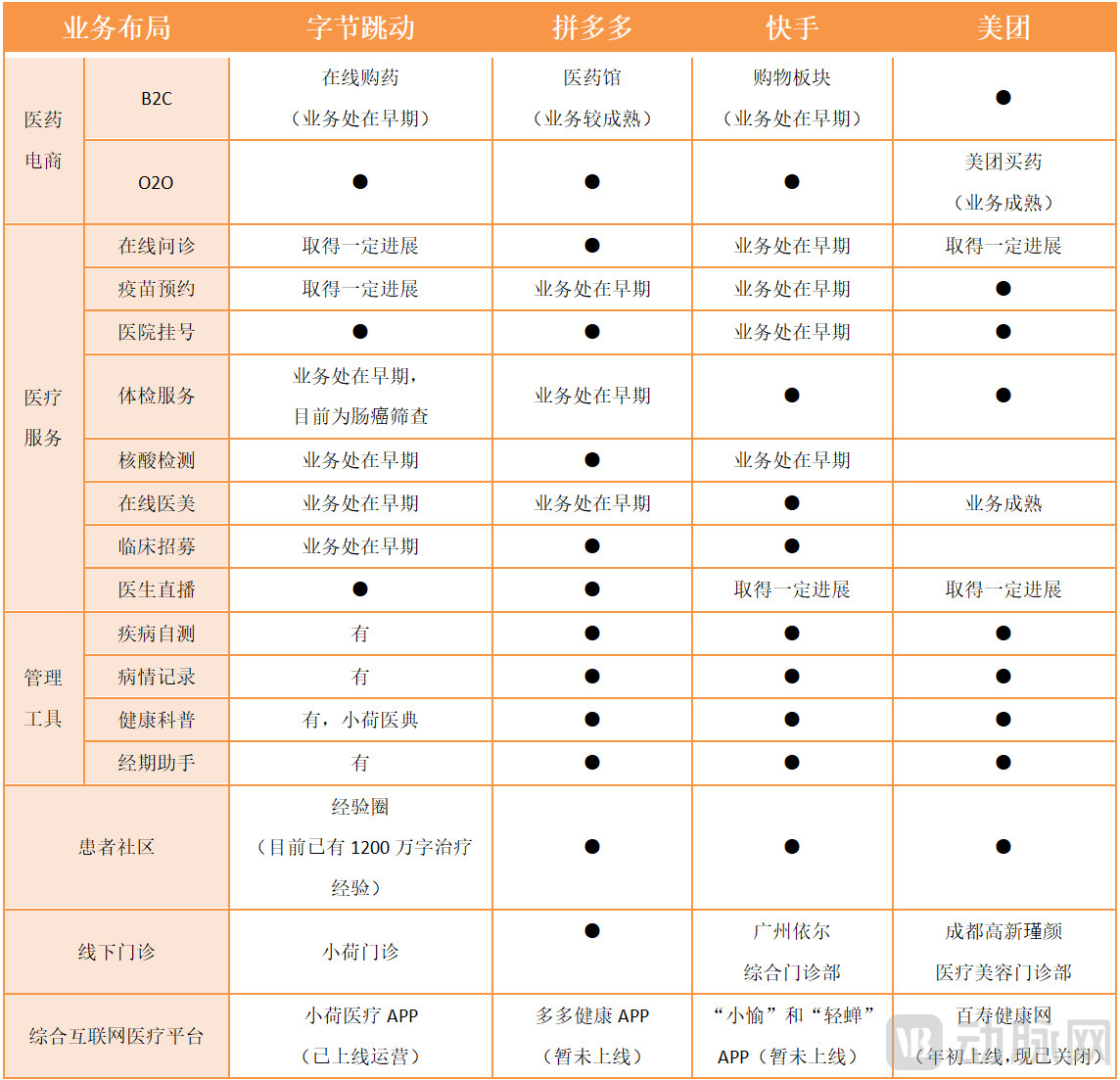
As is well known,After a market leader has secured its dominant position in its established areas of strength, it often seeks to identify second or third growth curves for its future development. Consequently, such companies consistently extend their reach into other high-potential sectors, with healthcare and wellness undoubtedly being one such area.: According to data from PwC, the current market size of China's healthcare and wellness industry has reached RMB 13 trillion. Meanwhile, in 2019, China's healthcare expenditure accounted for 6.6% of its GDP, compared with 19.4% in the United States, indicating substantial room for growth.
Faced with a vast market, industry giants are making heavy investments in hopes of cultivating the next mega-unicorn valued at tens or even hundreds of billions. However, failure to understand and adhere to industry dynamics will cause even trillion-dollar giants to stumble, as evidenced by the many companies that have crossed over into the healthcare sector.
After all, the combination of capital, talent, technology, and traffic is not a panacea for Internet giants entering the healthcare industry.
Because, in addition to a deep understanding of the industry and sufficient patience, every participant must also maintain compassion, humility, and reverence for this sector.