

Zhang Boli: Exploring Integrated Chinese and Western Medicine Innovation Models Based on TCM's Success in Combating the Pandemic
On June 12, the “Inheriting Essence, Upholding Integrity and Fostering Innovation—Peking University Medicine Forum on Integrated Traditional Chinese and Western Medicine” was successfully held, co-hosted by Peking University Health Science Center and the Shi Xuemin Traditional Chinese Medicine Development Foundation. More than 400 experts, scholars, professionals from various sectors, and students in the field of integrated traditional Chinese and Western medicine participated in the forum, which garnered over 6 million online views.
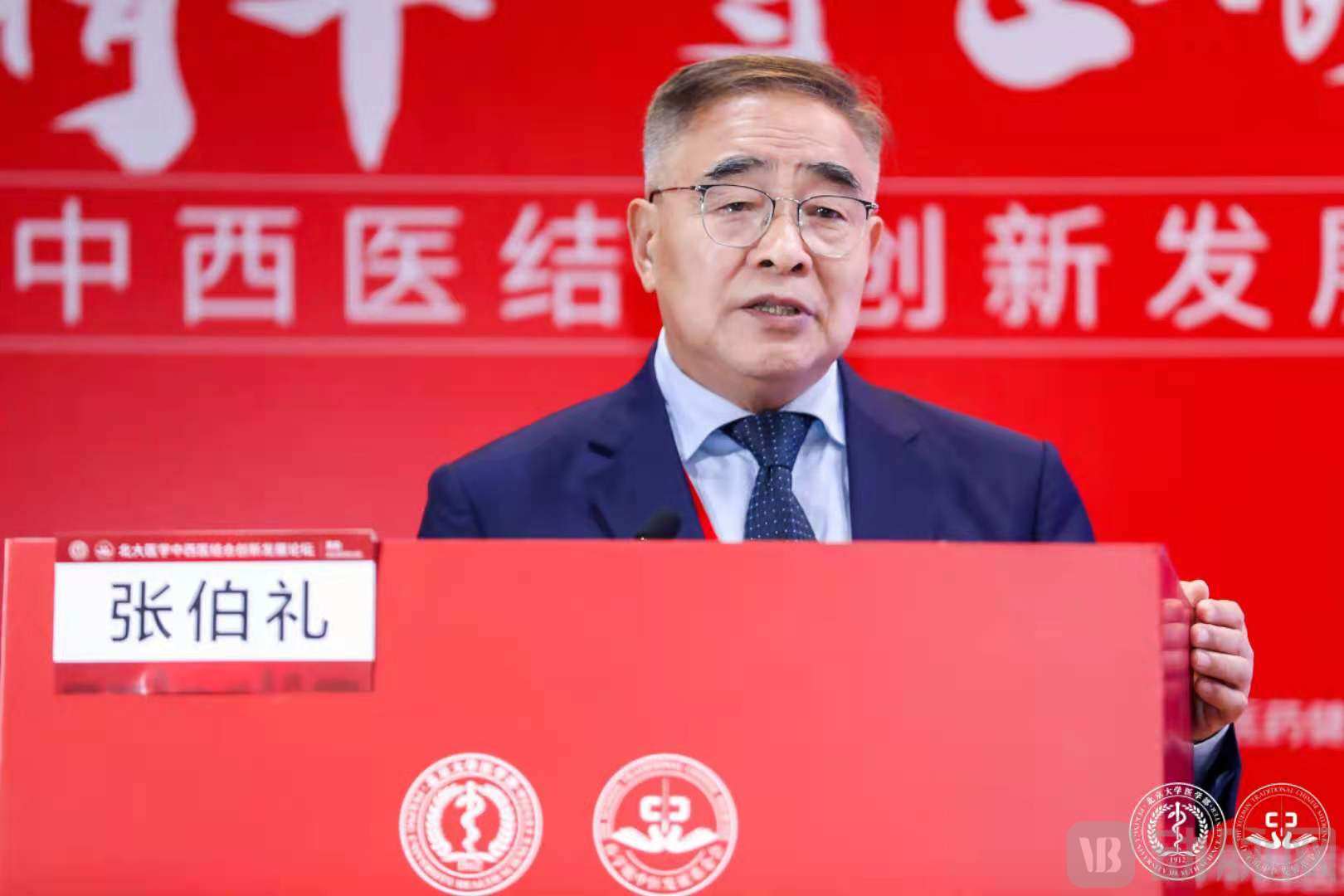
At the conference, Zhang Boli, an academician of the Chinese Academy of Engineering, honorary president of Tianjin University of Traditional Chinese Medicine, and honorary dean of the China Academy of Chinese Medical Sciences, shared the successful experiences and outstanding contributions of traditional Chinese medicine (TCM) in the prevention, treatment, and rehabilitation of COVID-19. He also discussed the characteristics and patterns of TCM’s clinical efficacy against COVID-19 and analyzed the models and entry points for integrating traditional Chinese and Western medicine based on anti-epidemic practices. VCBeat has compiled his insightful remarks.
On March 11, 2020, the WHO declared the current COVID-19 outbreak a global pandemic. As a pioneer in combating the epidemic, China has accumulated a wealth of successful experience.
At the onset of the COVID-19 pandemic, Academician Zhang Boli and colleagues successfully mapped the disease progression of COVID-19 based on syndromic evidence from over 1,000 confirmed cases across more than 20 hospitals in four provinces and municipalities. This effort clarified the disease course, symptoms, laboratory indicators, and pathological diagnostic criteria for COVID-19, while a consensus on the core syndromic characteristics of “damp-toxin plague” was rapidly established.
In China, Traditional Chinese Medicine (TCM) has a history of thousands of years in combating epidemics. As early as the pre-Qin and Han dynasties, The Yellow Emperor’s Inner Canon stated that “when the five types of epidemics strike, they are all contagious; regardless of age, the symptoms are similar.” The Treatise on Cold Damage Disorders established the “Six Meridians Differentiation” for staging “exogenous febrile diseases,” laying the theoretical foundation for TCM in the treatment of infectious diseases. During the recent COVID-19 pandemic, TCM was involved throughout the entire process, playing a significant role in prevention, treatment, critical care, and rehabilitation, thereby addressing numerous challenging issues.
Academician Zhang Boli Shared Four Outstanding Contributions of Traditional Chinese Medicine in the COVID-19 Pandemic.
First, the spread and expansion of the epidemic were effectively contained. In the early stages of the COVID-19 outbreak, there was a severe shortage of specific therapeutic drugs. Academician Zhang Boli took the lead in implementing the widespread administration of Traditional Chinese Medicine (TCM) to control the epidemic. Through strict isolation measures combined with the widespread use of TCM, the number of confirmed cases in Wuhan decreased day by day, and China effectively halted the diffusion and spread of the epidemic. On March 18, Wuhan reported zero new confirmed cases, marking the victory of the first phase of China’s fight against the epidemic.
Second, the comprehensive application of Traditional Chinese Medicine (TCM) effectively reduced the rate of progression to severe disease among patients. Due to the large number of confirmed cases, hospitals faced a critical shortage of beds. Academician Wang Chen proposed the establishment of makeshift cabin hospitals to admit patients with mild and ordinary-type symptoms, which not only conserved hospital medical resources but also ensured that patients received appropriate treatment. In these cabin hospitals, Academician Zhang Boli advocated for the principle of “TCM entering cabin hospitals, with TCM covering cabin hospitals.” By adopting comprehensive TCM therapies—including herbal decoctions, proprietary Chinese medicines, acupuncture, tuina massage, acupoint massage, Tai Chi, and Baduanjin qigong—the therapeutic efficacy was improved, keeping the rate of progression to severe disease at a low level. The average rate of progression to severe disease in cabin hospitals was 2.5%, significantly lower than the 13.8% reported by the World Health Organization (WHO).
Third, the integration of traditional Chinese medicine (TCM) and Western medicine has improved treatment outcomes for critically ill patients. Academician Zhang Boli stated that for patients on mechanical ventilation, administering Shengmai Yin can help stabilize blood oxygen saturation. During the cytokine storm associated with COVID-19, the use of key TCM formulations with heat-clearing and detoxifying effects demonstrated synergistic action with antibiotics, achieving significant therapeutic efficacy.
Fourth, the integration of Traditional Chinese Medicine (TCM) and Western medicine facilitated patient recovery. TCM offers unique advantages in rehabilitation. During the pandemic, Academician Zhang Boli established a rehabilitation platform for medical personnel in Wuhan and organized the compilation of guidelines for integrated TCM and Western medicine rehabilitation for COVID-19. In April 2020, the China Association of Chinese Medicine and the Chinese Association of Rehabilitation Medicine jointly released the Guidelines for Integrated TCM and Western Medicine Rehabilitation in the Convalescent Phase of Novel Coronavirus Pneumonia (First Edition). As the first domestic guideline of its kind, it outlines rehabilitation methods with distinct TCM characteristics and advantages, including herbal medicine, TCM physical therapies, and psychological rehabilitation, providing significant guidance for the recovery of patients in the convalescent phase of COVID-19.
Drawing on the successful experience of Traditional Chinese Medicine (TCM) in combating the COVID-19 pandemic, Academician Zhang Boli screened multiple effective TCM components from hundreds of TCM fractions and developed three TCM compound formulations with definitive efficacy and a complete chain of evidence: Qingfei Paidu Decoction, Huashi Baidu Formula, and Xuanfei Baidu Formula.
Among them, Yifei Baidu Granules are one of the first batches of traditional Chinese medicine (TCM) compound preparations in China with fully independent intellectual property rights, derived from ancient classic prescriptions modified for the treatment of epidemic diseases.
Yifei Baidu Granules are composed of various Chinese herbal medicines, including Verbena officinalis, raw Ephedra sinica, bitter apricot kernel, raw gypsum, and raw Coix seed. They have the effects of ventilating the lung to resolve dampness, clearing heat and expelling pathogens, and draining the lung to detoxify. The indication is for the syndrome of damp-toxin stagnation in the lung in patients with ordinary-type novel coronavirus pneumonia. By identifying the structures and molecular weights of 169 compounds in Yifei Baidu Granules, it was found that they can regulate overly activated immune responses, inflammatory cytokine storms, and apoptosis through 286 related targets and 21 pathways, thereby counteracting the disruption of the body's biomolecular network system caused by viral infection and lung injury.
It is reported that Yifei Baidu Granules received FDA approval for Phase II clinical trials in the United States on July 16, 2020. On March 2, 2021, the National Medical Products Administration approved the drug for marketing.
Academician Zhang Boli summarized four key experiences of Traditional Chinese Medicine (TCM) in combating the COVID-19 pandemic: promoting the theoretical development of TCM, innovatively proposing the “dampness-toxin epidemic” theory, elucidating the mechanisms of action of TCM, and facilitating the repurposing of existing TCM drugs as well as the research and development of new ones. Meanwhile, Academician Zhang stated, “This pandemic has provided us with an important insight: when a new infectious disease emerges, in the early stages when there are no vaccines or specific therapeutic drugs available, the accessibility of TCM holds significant value.”
From May 17 to June 1, 2020, all cases of COVID-19 in China were treated with traditional Chinese medicine (TCM) or integrated TCM and Western medicine, achieving significant results and a case fatality rate far lower than that observed overseas. The integration and concurrent use of TCM and Western medicine constituted a major feature of the epidemic prevention and control efforts, serving as a vivid practice of inheriting the essence of TCM while upholding integrity and fostering innovation.
Integrating traditional Chinese medicine (TCM) with Western medicine aims to leverage complementary strengths, maximize the respective advantages of both systems, and utilize their distinct characteristics to enhance endogenous momentum. This approach fosters mutual learning, reciprocal promotion, and collaborative efforts to tackle complex medical challenges. Academician Zhang Boli stated that the integration of TCM and Western medicine progresses through several stages: the初级 model involves a simple combination of Chinese and Western pharmaceuticals; the intermediate stage focuses on combining disease diagnosis with syndrome differentiation; and the advanced stage achieves deep fusion and interoperability between the two systems. Integration can begin with interventions for sub-health conditions and disease rehabilitation. Diseases lacking effective Western medical treatments also serve as entry points for integrated approaches. For instance, integrated TCM-Western medicine has demonstrated significant potential in treating viral infections, degenerative diseases, and functional disorders. Furthermore, TCM can complement Western medicine in cancer radiotherapy and chemotherapy, as well as in the prevention and management of diabetic complications, thereby enhancing therapeutic efficacy and reducing side effects.
The integration of traditional Chinese medicine (TCM) and Western medicine has become an innovative development trend, making it imperative to promote their combined advancement. Academician Zhang Boli emphasizes that the widespread acceptance of traditional medicine depends on the validation of its efficacy, with the scientific rigor of research methodologies being a critical link. China has already undertaken substantial work in the clinical evaluation of TCM, demonstrating the efficacy of Yinqiao San combined with Maxing Shigan Decoction in treating influenza A (H1N1), and conducting studies on the integrated TCM-Western medicine treatment of IgA nephropathy as well as the secondary prevention of myocardial infarction using Qishen Yiqi Dripping Pills. Academician Zhang Boli’s team has established a clinical evidence database for TCM. “In the future, we will uphold equal emphasis on both TCM and Western medicine, strengthen their integration, continuously explore and verify, and forge an integrated approach that surpasses both TCM and Western medicine individually, thereby establishing a healthcare model with distinct Chinese characteristics.”