MRG002 Achieves Complete Response in Just 6 Weeks with Nearly 78% Reduction in Target Lesion Size, Offering New Hope for Patients with Advanced HER2-Positive Urothelial Carcinoma
MRG002, a next-generation antibody-drug conjugate (ADC) with a unique design and innovative mechanism, has demonstrated exceptional efficacy in the treatment of HER2-positive advanced urothelial carcinoma.
Urothelial carcinoma is a heterogeneous malignant tumor originating from urothelial cells, encompassing bladder cancer, ureteral cancer, and renal pelvic cancer. It is the most common malignancy of the urinary system, accounting for approximately 90.0% of all bladder cancers and 10.0%-15.0% of adult renal cancers. The HER2 positivity rate in urothelial carcinoma is approximately 36.0%. Platinum-based regimens are effective first-line treatment options for patients with advanced urothelial carcinoma; however, patients often develop chemotherapy resistance over time, leading to tumor recurrence and progression. Currently, PD-1/PD-L1 immunotherapy is a Grade II recommendation for second-line treatment in China, but the overall response rate is only around 20%. Participation in clinical trials remains the Grade I recommendation. Furthermore, patients are prone to developing local and systemic complications during treatment. Local complications include chemical cystitis, which can cause lower urinary tract symptoms such as urgency, frequency, pain, or hematuria. Systemic complications can lead to systemic symptoms such as myelosuppression and renal insufficiency. In summary, there is currently a lack of effective second-line treatment options for advanced metastatic urothelial carcinoma. Clinical information registries indicate that clinical studies for advanced metastatic urothelial carcinoma primarily focus on PD-1/PD-L1 inhibitors. Among these is an open-label, single-arm, multicenter Phase II clinical trial of MRG002 for the treatment of HER2-positive, unresectable locally advanced or metastatic urothelial carcinoma in patients who have received at least one line of systemic chemotherapy. Enrollment for this trial began in February 2021. It is understood that the team led by Professor Han Weiqing at Hunan Cancer Hospital has enrolled patients in this clinical center.In one subject, after only 6 weeks of treatment with MRG002, the bladder mass disappeared (from 14.2 mm to 0 mm), and the retroperitoneal lymph nodes significantly decreased in size (from 15.5 mm to 6.5 mm). The sum of diameters of target lesions decreased by nearly 78% compared to baseline (from 29.3 mm to 6.5 mm).The therapeutic efficacy is surprisingly impressive.
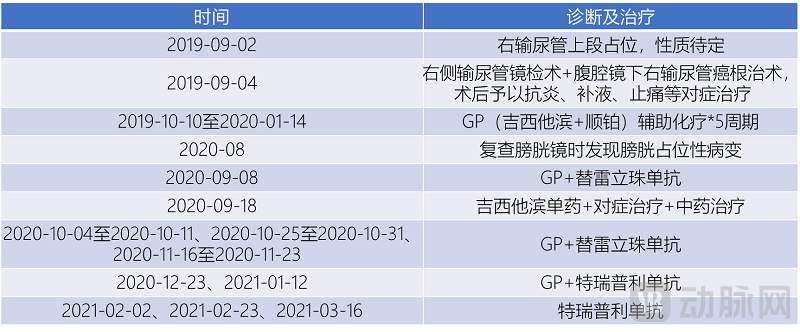
The patient is male., was diagnosed with urothelial carcinoma in September 2019. After undergoing multiple treatment regimens, including surgery, chemotherapy, and combined immunotherapy,Disease continued to progress with metastasis (Table 1).
Table 1. Summary of Patients' Previous Diagnosis and Treatment History
In the open-label, single-arm, multicenter Phase II clinical trial of MRG002 for HER2-positive unresectable locally advanced or metastatic urothelial carcinoma after at least one line of systemic chemotherapy, patients received MRG002 monotherapy. After two cycles of treatment, all non-target lesions disappeared, one target lesion disappeared, and another target lesion (retroperitoneal lymph node) shrank to 6.5 mm, as shown in the figure below:
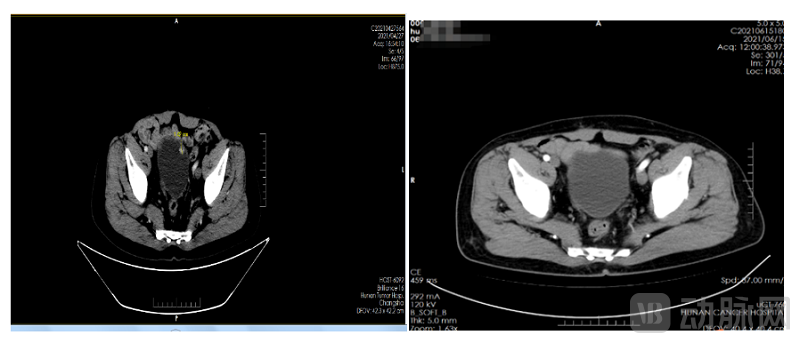
Figure 1. Baseline bladder mass (left) and bladder mass at 6 weeks after the first dose (right)
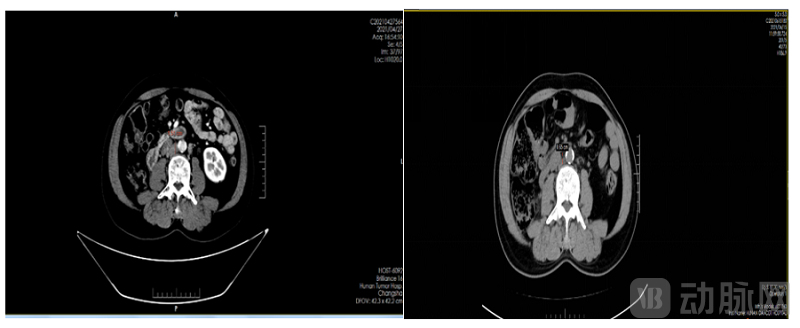
Figure 2. Retroperitoneal lymph nodes at baseline (left) and 6 weeks after the first dose (right).
Currently, platinum-based combination chemotherapy is the standard treatment for recurrent and metastatic urothelial carcinoma, but it offers limited survival benefits. For patients who have failed chemotherapy, immunotherapy and antibody-drug conjugates (ADCs) are currently the most promising therapeutic options. In this case, the patient’s target lesions continued to enlarge despite six consecutive months of prior chemotherapy and immunotherapy before receiving MRG002 treatment. However,After only 6 weeks of MRG002 treatment, both target and non-target lesions showed significant shrinkage, with efficacy assessed as complete response (CR), holding promise for translating into prolonged survival benefits for patients.. Describes the preliminary efficacy of MRG002 in the treatment of locally advanced or metastatic urothelial carcinoma, and indicates that MRG002 continues to demonstrate superior performance in HER2-positive advanced urothelial carcinoma that is refractory to chemo-immunotherapy.
The remarkable efficacy of MRG002 is closely associated with its unique structure and innovative mechanism of action. As an antibody-drug conjugate (ADC) with significant application potential in the oncology field, MRG002MRG002 is an antibody-drug conjugate (ADC) composed of glycoengineered trastuzumab linked to monomethyl auristatin E (MMAE) via an enzyme-cleavable valine-citrulline (vc) linker. Through unique design and innovative modifications to trastuzumab, MRG002 enhances antitumor efficacy while improving patient safety and tolerability. It binds specifically with high affinity to HER2 antigens on the surface of tumor cells, undergoes internalization, and releases the cytotoxic payload MMAE, which effectively inhibits tubulin polymerization, thereby disrupting microtubule-related functions such as mitosis and ultimately leading to tumor cell death. Furthermore, the innovatively modified trastuzumab features selectively increased fucosylation levels in its Fc region, resulting in reduced binding of the Fc fragment to effector immune cells. This minimizes the potential killing of immune cells by MRG002, thereby lowering the risk of adverse immune-related effects in patients.
Currently, no drugs for the treatment of HER2-positive urothelial carcinoma have received marketing approval either domestically or internationally. Given that the HER2 positivity rate in urothelial carcinoma is approximately 36.0%, developing therapeutic agents targeting HER2 represents a highly promising avenue of exploration. MRG002 is a next-generation antibody-drug conjugate (ADC) targeting HER2, which combines the strong targeting specificity and selectivity of monoclonal antibodies with the potent antitumor activity of cytotoxic drugs. Furthermore, its optimized chemical design has demonstrated certain competitive advantages over currently marketed HER2-targeting ADCs in the treatment of solid tumors. It is hoped that MRG002 will continue to make significant strides in the treatment of HER2-positive urothelial carcinoma, delivering superior efficacy and promptly addressing the current unmet clinical need in this field.
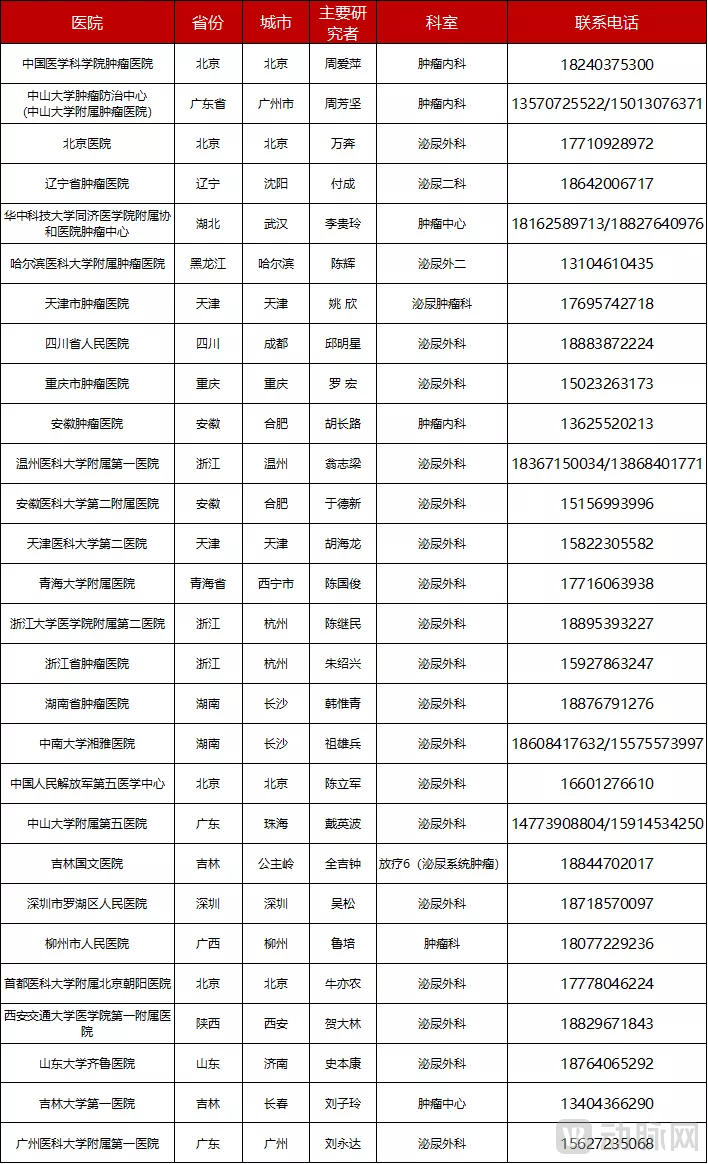
Currently, the open-label, single-arm, multicenter Phase II clinical trial titled “MRG002 in the Treatment of HER2-Positive Unresectable Locally Advanced or Metastatic Urothelial Carcinoma After at Least One Line of Systemic Chemotherapy,” sponsored by Shanghai Meiyake Biotechnology Co., Ltd., a subsidiary of Lepu Biopharma, and led by Professor Zhou Aiping from the Cancer Hospital of the Chinese Academy of Medical Sciences and Professor Zhou Fangjian from Sun Yat-sen University Cancer Center, is being conducted at more than 20 centers across China. Enrolled patients can receive ADC drug treatment free of charge. Patients who are HER2-positive and diagnosed with unresectable locally advanced or metastatic urothelial carcinoma are welcome to inquire.
If you are interested in this clinical study, you may consult by checking the outpatient schedules of the investigators online and visiting accordingly: